Golyama Kosmatka Tomb of Seuthes III
A monumental Thracian burial complex attributed to the world of Seuthes III
Understand sacred places, explore living traditions, and learn how to engage respectfully with Pilgrim Map.
Access has not been verified. Check current local guidance before planning a visit.
Shipka, Stara Zagora Province, Bulgaria
Read the sources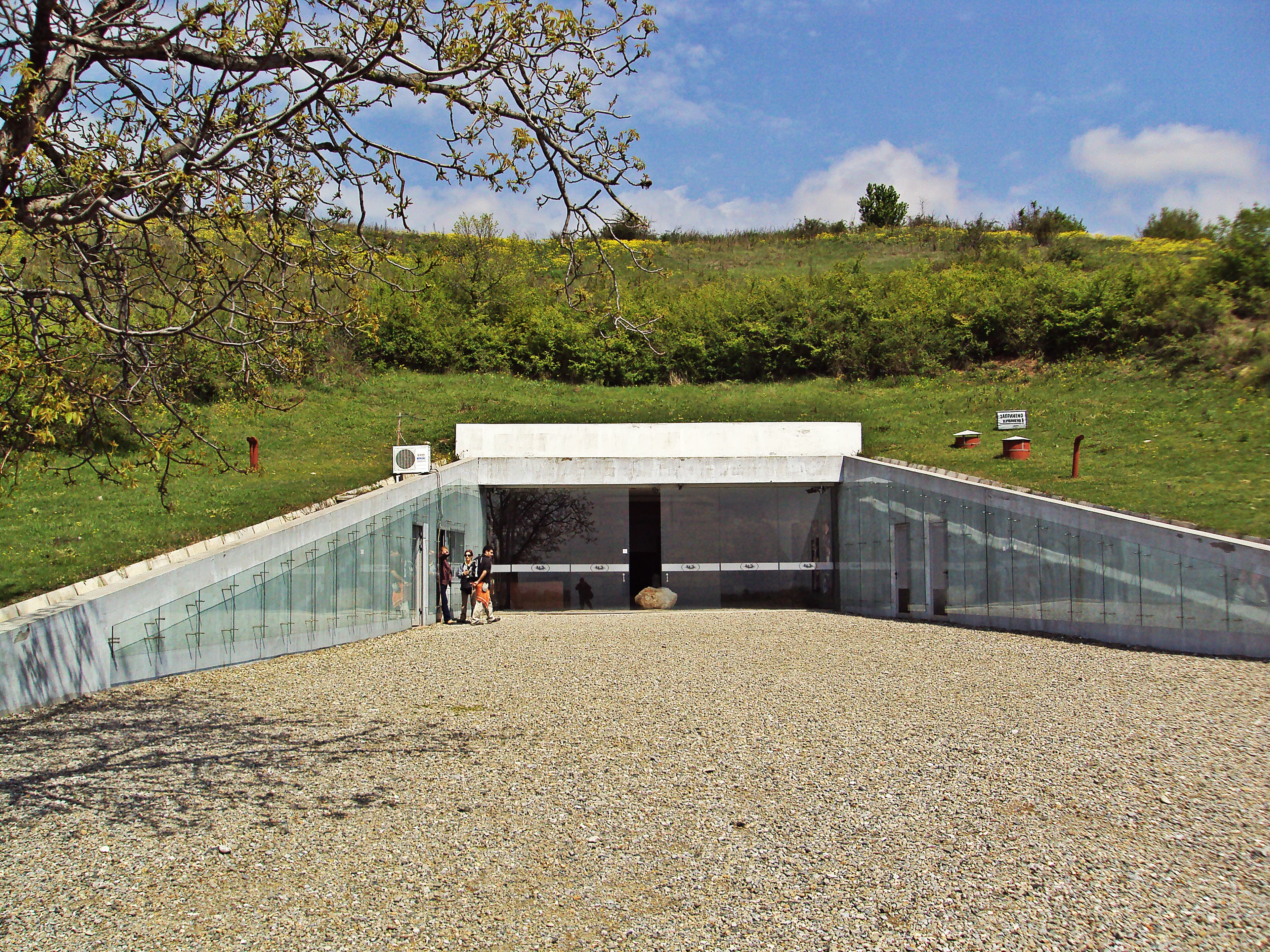
Image of Golyama Kosmatka Tomb of Seuthes III. Image source · CC BY-SA 4.0
Visit essentials
A quick read before you go
- Access
- 6150, Bulgaria
- Etiquette
- Follow the museum’s access rules, remain within barriers, and do not touch stonework or deposit…
Overview
Excavation revealed a long corridor, successive chambers, stone doors, and objects associated with elite burial and commemoration. A bronze head and inscribed or royal objects support the prevailing connection with the Odrysian ruler Seuthes III. The complex should therefore be described with both its familiar name and a clear distinction between physical evidence and interpretive identification.
Why this place is sacred
Architecture, deposition, and grave goods support a ritual and commemorative function, but they do not answer every question about who was buried or how each chamber was used. Respectful interpretation leaves room for that uncertainty.
Experience and orientation
Keep the exact monument or complex distinct from its wider landscape and nearby sites.
Context and lineage
The mound forms part of the wider Kazanlak landscape known as the Valley of the Thracian Kings. It illuminates the political and religious world of the late fourth and early third centuries BCE while remaining one distinct monument among many nearby tombs.
Traditions and practice
Observe the remains without touching, moving, climbing, or depositing objects.
Historical Thracian religion
HistoricalThe monument is studied in relation to historical Thracian religion, elite burial, and royal commemoration.
No ancient funerary or religious practice is available for reenactment. Archaeological discussion may address burial, commemoration, offerings, and royal symbolism, but visitors should not add objects, touch surfaces, or imitate speculative rites.
Perspectives and open questions
Golyama Kosmatka is important for both the material record of Thracian elite culture and the questions it continues to raise. The association with Seuthes III is strong and widely used, but responsible wording preserves its archaeological character.
Scholarly perspective
Historical, archaeological, and conservation claims are kept distinct from confessional tradition and personal testimony.
Living and traditional perspectives
The monument is studied in relation to historical Thracian religion, elite burial, and royal commemoration.
Open questions
The exact occupant, sequence of funerary use, and interpretation of some objects and spaces are not settled beyond dispute.
Plan your visit
Access and arrival
6150, Bulgaria
Respectful visit
Wear footwear and clothing suitable for a protected outdoor archaeological visit.
Follow current conservation rules and treat photography as permission-based.
Do not leave offerings or other material at protected archaeological remains.
Respect barriers, timed entry, staff instructions, and areas closed for conservation or religious use.
Do not convert archaeological interpretation into a claim of living ritual continuity.
Location
Map loads as you approach this section.
Pilgrim reflections
A portrait of encounter, not a score
Pilgrims describe what they felt, how present they could become, and whether the place would shape a journey. There are no stars and no ranking of traditions.
No reviewed reflections yet
The first pilgrims can help describe the character of being here.
Share a reflection
Available after an account-backed “Been there.” Every reflection is reviewed before publication.
Nearby sacred places
Explore other sacred places in the region. Proximity does not establish access or travel time; check each place’s guidance.

References
Sources consulted for this page. Source categories describe the publication, not a guarantee that every claim is verified. Traditional accounts and outside interpretations may differ.
- 01Iskra History Museum Kazanlak — Iskra History Museum KazanlakofficialRegional museum custody and Valley of the Thracian Kings context. accessed 2026-09-04.
- 02The royal necropolis of the Thracian city of Seuthopolis – a serial site, extension of the Kazanlak Thracian tomb — UNESCO World Heritage CentreofficialOfficial Tentative List record names the tomb in Golyama Kosmatka mound as a constituent element; this does not confer World Heritage inscription.
- 03Tomb of Seuthes III — Wikipedia contributorsacademicIdentity and historical overview; key claims require cautious framing.
- 04Wikidata record Q3992623 — Wikidata contributorsacademicStructured identity, coordinate, and heritage metadata.
- 05Google Maps listing for Tomb of Seuthes III — Google MapsSource contextWhole-site identity, coordinates, website, and current practical listing only.
- 06Website listed for Golyama Kosmatka Tomb of Seuthes III — Golyama Kosmatka Tomb of Seuthes IIIofficialWebsite supplied by the accepted whole-site Google Places record; editorial verification still required.
- 07File:GM Kazanluk BG.jpg — Filipov IvoacademicExact image-subject and reuse-license provenance only; not used for historical claims.
- 08Thracian Tombs — Free Speech International FoundationSource contextComparative archaeological context and exact mound identity. accessed 2026-09-04.
Share a photo
Help visitors recognize Golyama Kosmatka Tomb of Seuthes III. Every submission is reviewed before publication.