Thracian Tomb of Kazanlak
A painted vision of the Thracian afterlife, sealed underground for twenty-three centuries
Understand sacred places, explore living traditions, and learn how to engage respectfully with Pilgrim Map.
Access has not been verified. Check current local guidance before planning a visit.
Kazanlak, Stara Zagora, Bulgaria
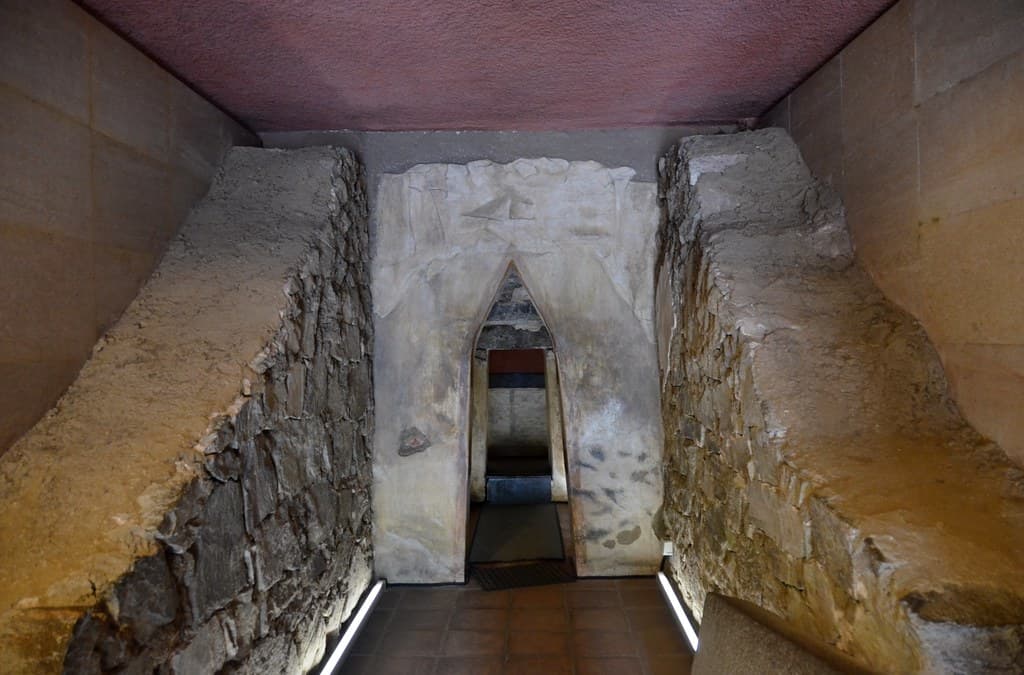
Image of Thracian Tomb of Kazanlak. Image source
Visit essentials
A quick read before you go
- Duration
- Thirty to forty-five minutes for the tomb replica.
- Etiquette
- The tomb replica is a museum space.
Overview
In 1944, Bulgarian soldiers digging a trench near Kazanlak entered a space sealed for twenty-three centuries and found a complete painted record of Thracian beliefs about death.
Murals cover a beehive-shaped burial chamber barely two and a half meters across and three meters high. At a funeral feast, the enthroned deceased and his wife clasp hands while servants bring food and drink, musicians play, and horses process. The scene joins farewell and beginning: a last earthly feast becoming the eternal feast of the afterlife.
UNESCO recognized the murals as a masterpiece of human creative genius, making the tomb one of Bulgaria's earliest World Heritage sites. Hellenistic technique blends with distinct Thracian iconography, evidence of Greek-Thracian exchange in the ancient Balkans.
The tomb lies in the Valley of Thracian Rulers near Seuthopolis, the ancient Odrysian capital. Over 1,500 tumuli form one of Europe's densest concentrations of ancient burial mounds. Thracian heroization held that proper ritual could let a great warrior transcend death; the intimate murals depict that transition and suggest the artist knew those portrayed.
Sealed since 1984 to protect its fragile paintings, the original is represented by an adjacent exact 1:1 replica reproducing every brushstroke. Visitors enter a Thracian afterlife preserved in paint and plaster since the age of Alexander.
Why this place is sacred
Enter the replica chamber. The space is small enough to make the murals inescapable. You do not view them from a distance. You stand among them, surrounded by a painted world that someone created twenty-three centuries ago to accompany the dead.
The handclasp between husband and wife is the image that anchors the experience. His hand reaches for hers. She receives it. The gesture is quiet, private, and entirely human. It is not a symbol of power or theological abstraction. It is a man and a woman touching for what may be the last time, or for what the painter believed would be the first time of eternity. The two readings are not contradictory.
The Thracians understood the funeral feast as both farewell and welcome, the end of one form of existence and the beginning of another.
The servants bringing food and drink are not decorative. They are provisions for the afterlife, painted into being so that the deceased would never lack sustenance. The musicians are not performing for the living audience but for the dead, whose feast would continue in the chamber forever. The chariot procession is not a memorial but a conveyance, carrying the hero to his place among the divine.
The dome above completes the cosmology. Painted in concentric bands, it represents the celestial realm toward which the hero ascends. The chamber beneath the dome is the transitional space, the threshold between the earthly feast and the heavenly destination. The entire structure, from corridor to dome, maps the Thracian understanding of what happens when a great person dies.
The thinness of the Kazanlak tomb is not metaphorical. The murals literally make the invisible visible. They paint the afterlife into existence on the walls of a sealed chamber, creating a permanent record of a civilization's answer to the most universal of human questions.
The tomb served as the burial and heroization site for a Thracian nobleman or ruler of the Odrysian Kingdom. The murals were designed to accompany the deceased into the afterlife, providing a permanent painted record of the funeral feast and the journey to the realm of the gods.
The tomb was sealed after the burial in the 4th century BC and remained undiscovered until 1944. Archaeological documentation began immediately after discovery. The original tomb was sealed to the public in 1984 due to the fragility of the murals. The 1:1 replica was built adjacent to the original and is the structure visitors enter today.
Experience and orientation
Kazanlak sits in the Rose Valley of central Bulgaria, a landscape known for the roses that produce the country's famous rose oil. The tomb is in Tyulbeto Park, a short walk from the town center. The setting is peaceful, a green space around a burial mound that has been here for twenty-three centuries.
The replica entrance leads through a narrow corridor, the dromos, that replicates the approach to the original tomb. The corridor narrows as it progresses, creating a physical sense of passage from the world of the living into the space of the dead. The transition is deliberate. Ancient visitors would have experienced this narrowing as a ritual threshold.
The antechamber opens first, with painted scenes on its walls. Then the round burial chamber reveals itself. The dome rises above, and the murals surround you. The funeral feast occupies the central band. The deceased and his wife sit facing each other, their hands clasped. Servants approach with trays and vessels. Musicians play instruments. Horses are led in procession.
The colors, faithfully reproduced, are warm: earth tones, deep reds, blacks, and whites that give the scenes a vitality that belies their age.
Stand in the center of the chamber and look up. The dome above represents the celestial realm. The circular bands of decoration ascend toward the apex, creating a visual ascent that mirrors the theological ascent of the hero from the feast below to the divine realm above. The entire chamber is a cosmological diagram, read from floor to dome.
The intimacy of the space is its most powerful quality. The chamber is barely two and a half meters across. You cannot maintain distance from the murals. They are within arm's reach, and the figures depicted are life-sized or nearly so. The handclasp is at eye level. The effect is not of viewing art in a museum but of standing inside someone else's vision of eternity.
Afterward, visit the Iskra History Museum in Kazanlak, which houses artifacts from the Valley of Thracian Rulers and provides context for the tomb's place within the broader necropolis of over 1,500 tumuli.
The tomb replica is in Tyulbeto Park on the outskirts of Kazanlak. Enter through the main entrance and follow the corridor into the domed chamber. The Iskra History Museum is in the town center. The Valley of Thracian Rulers extends around Kazanlak with additional tumuli accessible by car.
Context and lineage
The Valley of Thracian Rulers, centered on Kazanlak, was the heartland of the Odrysian kingdom, the most powerful Thracian state. Their capital, Seuthopolis, now lies beneath the Koprinka Reservoir nearby. The valley served as the necropolis for the Odrysian elite. Over 1,500 tumuli dot the landscape, creating a city of the dead that paralleled the city of the living.
The Kazanlak tomb was built for someone important enough to warrant master painters. The murals blend Hellenistic artistic technique with Thracian iconographic traditions, suggesting that the artist had been trained in or influenced by the Greek world while working for Thracian patrons. The funeral feast scene does not merely illustrate a ceremony. It creates one: the painted feast was intended to provide the deceased with eternal nourishment, eternal companionship, eternal music.
The discovery in 1944 was accidental. Soldiers digging a trench broke through the mound. The archaeologists who entered found the murals largely intact, their colors preserved by the sealed chamber. The documentation that followed established the tomb as a masterwork of ancient painting.
The Kazanlak tomb belongs to the Odrysian Thracian tradition of royal and noble burial, which combined Orphic religious beliefs with Hellenistic artistic influence. The tomb is the finest surviving example of a practice that produced over 1,500 tumuli in the Valley of Thracian Rulers alone. The Thracian concept of heroization, depicted in the murals, influenced and was influenced by Greek religious and artistic traditions.
Dimitar Mikov and Christo Tsankov
First archaeologists
Unknown Thracian master painter
Artist
Seuthes III
Regional ruler
Traditions and practice
The Thracian funeral included an elaborate feast with food, wine, and music to honor the deceased and provide for their afterlife. A chariot procession conveyed the body to the burial site. Heroization rites elevated the deceased to semi-divine status. Grave offerings of weapons, jewelry, and vessels were placed in the chamber. The tomb was sealed permanently after burial.
The tomb replica serves as a museum. The annual Rose Festival in Kazanlak (first weekend of June) brings additional visitors. The Valley of Thracian Rulers continues to be explored through archaeological survey and excavation.
Enter the replica chamber slowly and allow the murals to reveal themselves as your eyes adjust. Stand in the center and turn slowly, taking in the entire painted surface. Look for the handclasp between husband and wife. Consider what it means that this gesture of intimacy was chosen as the central image of a nobleman's passage into the afterlife. Look up at the dome and trace the bands of decoration ascending toward the celestial realm.
Visit the Iskra Museum afterward to see artifacts from the valley and deepen the context.
Thracian religion (funerary heroization)
HistoricalThe tomb represents the Thracian belief in heroization, the transformation of a noble warrior or ruler into a semi-divine being through proper funeral ritual. The murals depict this transformation as a feast, a journey, and an ascent.
Funeral feast, chariot procession, heroization ceremony, grave offerings, permanent sealing of the tomb.
Archaeological research and heritage conservation
ActiveThe site is a UNESCO World Heritage Site and the focal point of ongoing archaeological work in the Valley of Thracian Rulers. The 1984 decision to seal the original and build a replica set a conservation standard.
Conservation of the sealed original tomb, maintenance of the replica, ongoing archaeological survey of the valley, museum interpretation at the Iskra Museum.
Perspectives and open questions
The Thracian Tomb of Kazanlak invites reading as one of the ancient world's finest surviving painted records of the afterlife, as evidence of the cultural exchange between Greek and Thracian civilizations, and as an intimate human document about love, death, and the desire to transcend both.
Scholarly perspective
Art historians and archaeologists recognize the Kazanlak murals as the best-preserved examples of Hellenistic painting in the Balkans and among the most important ancient murals in the world. The style blends Hellenistic artistic conventions with distinctly Thracian iconographic elements. UNESCO's citation emphasizes the murals as 'a masterpiece of human creative genius.' The Valley of Thracian Rulers, with over 1,500 tumuli, is one of the most significant archaeological landscapes in Europe.
Living and traditional perspectives
For modern Bulgarians, the tomb and the valley are a source of national pride, demonstrating that a sophisticated and artistically accomplished civilization flourished on Bulgarian soil centuries before the Slavic migrations. The Thracian heritage has become an increasingly important component of Bulgarian national identity.
Alternative interpretations
Some interpreters connect the tomb's imagery to Orphic mystery traditions, seeing the funeral feast as a depiction of the soul's journey through the afterlife. The handclasp has been interpreted as a psychopomp motif, the wife or a goddess guiding the soul across the threshold of death. The Valley of Thracian Rulers has been compared to the Egyptian Valley of the Kings.
Open questions
The identity of the tomb's occupant is unknown. Whether the funeral feast represents a specific historical event or an idealized afterlife vision is debated. The relationship between the murals and Orphic religious beliefs has not been definitively established. Over 1,500 tumuli in the valley remain partially or wholly unexcavated.
Plan your visit
Access and arrival
Kazanlak offers hotels and guesthouses. The town is a convenient base for exploring the Valley of Thracian Rulers. During the Rose Festival (first weekend of June), book accommodation well in advance.
Respectful visit
No formal dress code. The tomb replica is an indoor space.
Photography policies vary. Check current rules at the entrance. Flash photography typically prohibited.
Not applicable. Museum site.
Do not touch walls or murals. The original tomb is permanently sealed. Follow guide instructions. Large bags may need to be left outside.
The replica chamber is small and can feel crowded when tour groups visit simultaneously. Morning visits offer a quieter experience. The original tomb is permanently sealed and cannot be visited.
Current practical details
Address
Thracian Tomb of Kazanlak, Partyulbe, 6102 Kazanlak, Bulgaria
Hours, fees, and access can change — verify on the official source before you travel. Practical details last checked Jun 2026.
Location
Map loads as you approach this section.
Pilgrim reflections
A portrait of encounter, not a score
Pilgrims describe what they felt, how present they could become, and whether the place would shape a journey. There are no stars and no ranking of traditions.
No reviewed reflections yet
The first pilgrims can help describe the character of being here.
Share a reflection
Available after an account-backed “Been there.” Every reflection is reviewed before publication.
Nearby sacred places
Explore other sacred places in the region. Proximity does not establish access or travel time; check each place’s guidance.
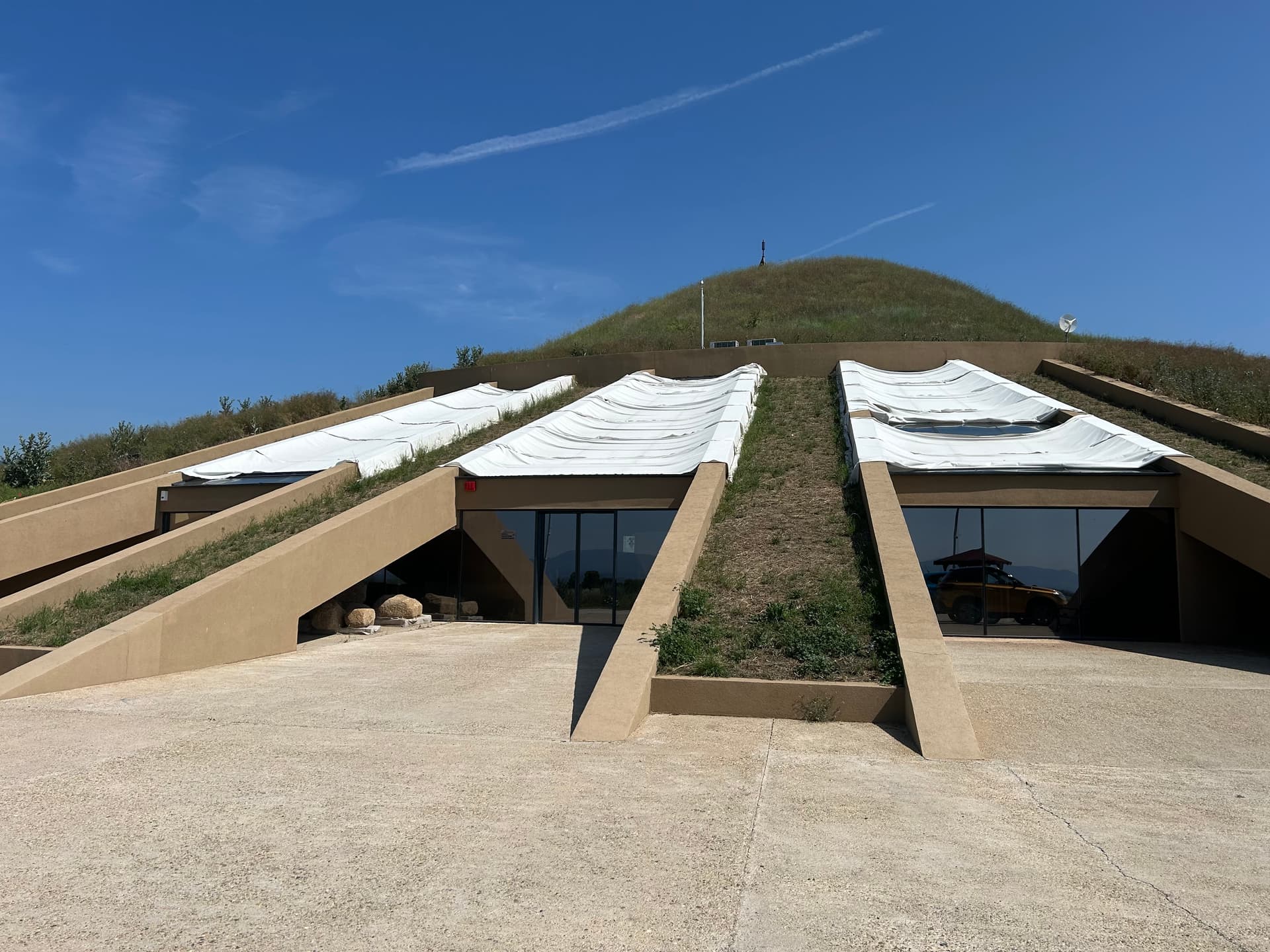
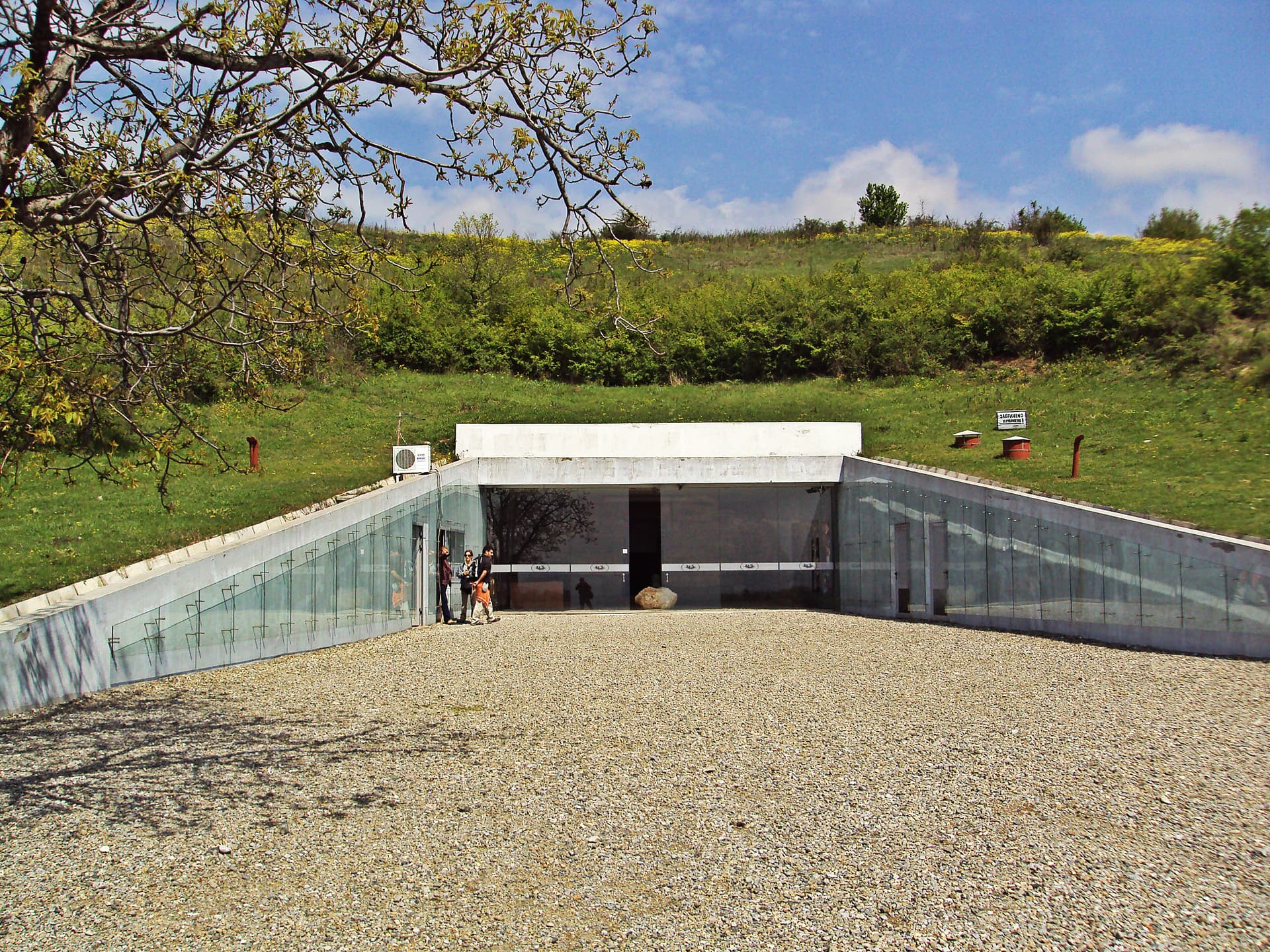

Photo gallery
3 curated photos
Share a photo
Help visitors recognize Thracian Tomb of Kazanlak. Every submission is reviewed before publication.