Ganghwa Dolmen Site
High island dolmens anchored by Bugeun-ri’s table tomb
Understand sacred places, explore living traditions, and learn how to engage respectfully with Pilgrim Map.
Access has not been verified. Check current local guidance before planning a visit.
Ganghwa-gun, Incheon, South Korea
Read the sources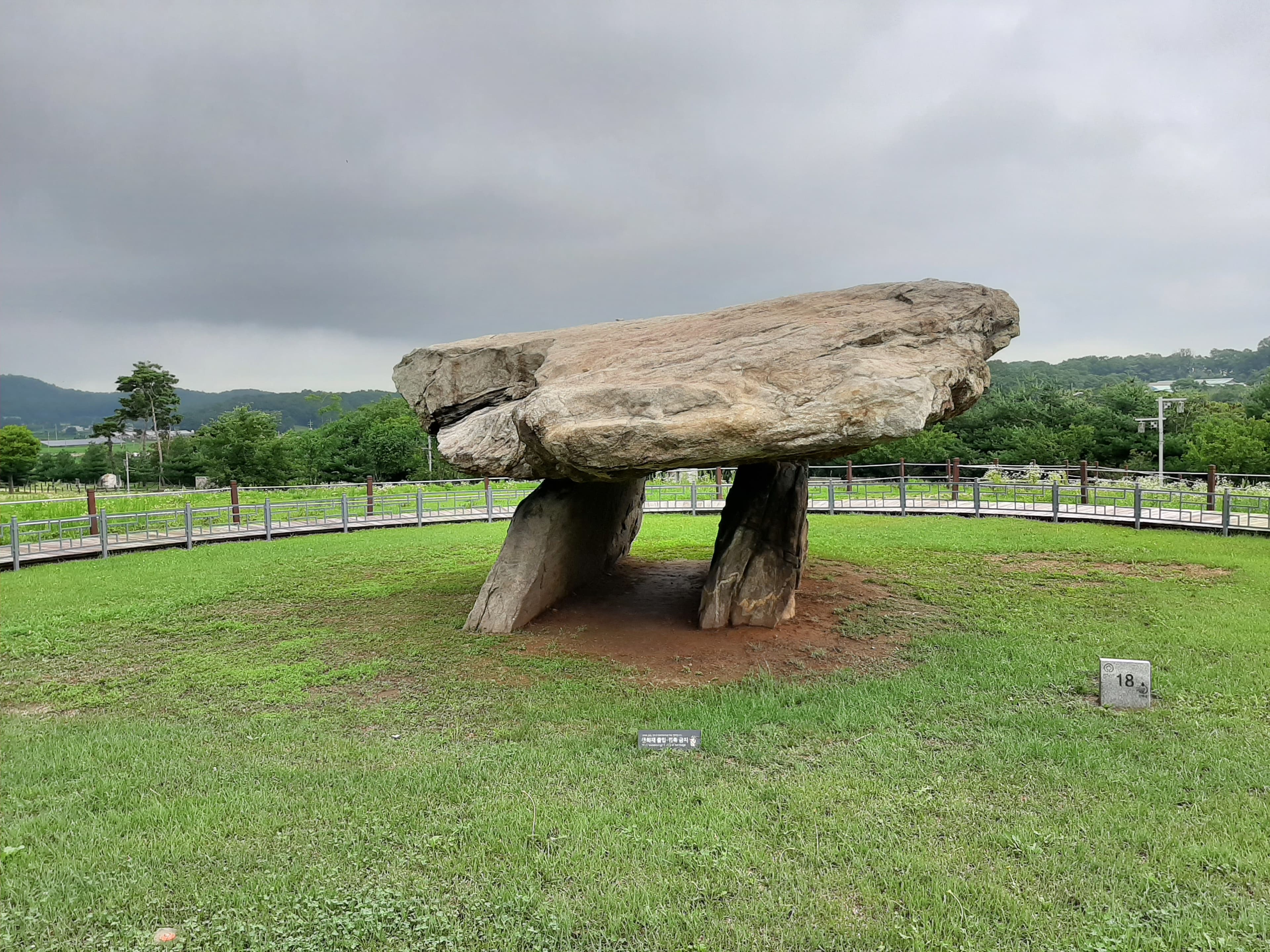
Ganghwa Dolmen Site in Ganghwa-gun, Incheon, South Korea. Image source · CC BY-SA 4.0
Visit essentials
A quick read before you go
- Duration
- Allow a calm, condition-aware visit.
- Access
- Prepare for the exact route described above.
Overview
Bugeun-ri’s immense capstone resting on supports makes the northern table form easy to recognize. Korea Tourism Organization describes Bronze Age funerary value, while the heritage service protects the exact monument. A striking silhouette should not encourage a visitor to treat it as furniture, viewing platform, or free-standing sculpture. It remains part of a prehistoric cemetery and a much wider archaeological distribution.
Why this place is sacred
Ganghwa’s island topography distinguishes this component. Monuments occur across varied slopes and elevations, prompting questions about visibility, community territories, transport, and changing styles. Those questions are archaeological, not invitations to invent astronomical alignments or a universal sacred geometry. UNESCO states that dolmens inform understanding of prehistoric social and political systems, beliefs, rites, arts, and ceremonies without naming a particular deity.
Original function follows the cited authorities.
Material continuity is not presumed.
Experience and orientation
Begin at Bugeun-ri for orientation, then use museum or county interpretation before seeking outlying groups. Do not assume every map pin has equivalent access, parking, or conservation conditions. Remain on public routes, close gates, avoid farmland, and respect temporary barriers. Never climb the capstone, sit against supports, make rubbings, insert coins, or clear vegetation around a monument.
Use the verified public approach.
Context and lineage
A restrained contemplation can focus on elevation. Observe where the tomb sits relative to fields, water, ridges, and other markers, then consider what communal effort was required to place stone there. This recognizes burial, memory, and labor without reenacting an unknown rite. Visitors have no basis to leave food, cairns, ribbons, incense, or written petitions at the prehistoric structures.
Prehistoric Korean funerary and ritual tradition
Traditions and practice
Google’s exact record gives 317 Bugeun-ri in Hajeom-myeon, telephone 032-933-3624, and operational status. KTO reports the representative dolmen as open twenty-four hours, year-round, with no fee, but exposed access remains subject to weather, maintenance, fire prevention, events, and county decisions. Confirm current conditions through Ganghwa County before traveling to more remote groups.
Current use remains custodian-led.
Attend quietly before drawing conclusions.
Prehistoric Korean funerary and ritual tradition
HistoricalSacred meaning follows the documented local tradition.
Practice remains governed by present custodians.
Perspectives and open questions
Several disciplines illuminate this sacred place.
Scholarly perspective
Ganghwa supports readings through mortuary archaeology, ancient engineering, island landscape, and conservation. Its heritage metadata identifies burial, megalithic construction, ceremonial significance, and cultural value, but no living pilgrimage program or singular venerated figure. Modern impressions of power or ancestral presence may be personally meaningful; this research found no sufficiently prevalent claim to include as a site effect. The representative Bugeun-ri monument can dominate photographs, but conservation depends on recognizing the less monumental groups too.
A single accessible capstone cannot stand in for every island cluster, period, or construction method. Future route descriptions should identify whether they concern Bugeun-ri, Gocheon-ri, or another protected group and should check county access rather than generalizing the twenty-four-hour listing across the serial component. Island roads, village edges, and agricultural parcels also require route-specific courtesy beyond the stone boundary. Museum interpretation should precede exploration of dispersed hill groups.
Living and traditional perspectives
Community meanings retain their own authority.
Open questions
Unsupported effects remain explicitly unverified.
Plan your visit
Access and arrival
Prepare for the exact route described above.
No lodging claim was researched.
Respectful visit
Dress for dignity and terrain.
Ask before recording people or ritual.
Use authorized channels only.
Obey every closure and barrier.
Do not invent or imitate rites.
Current practical details
Address
317 Bugeun-ri, Hajeom-myeon, Kanghwa, Incheon, South Korea
Phone
Hours, fees, and access can change — verify on the official source before you travel. Practical details last checked Jul 2026.
Location
Map loads as you approach this section.
Pilgrim reflections
A portrait of encounter, not a score
Pilgrims describe what they felt, how present they could become, and whether the place would shape a journey. There are no stars and no ranking of traditions.
No reviewed reflections yet
The first pilgrims can help describe the character of being here.
Share a reflection
Available after an account-backed “Been there.” Every reflection is reviewed before publication.
Nearby sacred places
Explore other sacred places in the region. Proximity does not establish access or travel time; check each place’s guidance.


References
Sources consulted for this page. Source categories describe the publication, not a guarantee that every claim is verified. Traditional accounts and outside interpretations may differ.
- 01Gochang, Hwasun and Ganghwa Dolmen Sites — UNESCO World Heritage CentreofficialAuthoritative serial-property scope, early high-slope Ganghwa character, inscription, criterion, and protection.
- 02Nomination 977 — Republic of Korea via UNESCOofficialPrimary dossier and component maps for Bugeun-ri, Gocheon-ri, and the island groups.
- 03Dolmen in Bugeun-ri, Ganghwa — Korea Heritage ServiceofficialExact Historic Site record for the representative northern table-type monument.
- 04Dolmen in Bugeun-ri — Korea Tourism OrganizationofficialExact visitor record confirming open access, county website, telephone, facilities, and Bronze Age funerary significance.
- 05Ganghwa Bugeun-ri Dolmen — Google Maps place record — GoogleSource contextStrong exact Bugeun-ri landmark identity, current coordinates, address, phone, and status.
Share a photo
Help visitors recognize Ganghwa Dolmen Site. Every submission is reviewed before publication.