Black Madonna of Oropa
InsideSantuario di N.S. di Oropa, Italy
A medieval wooden Madonna at the heart of Oropa's mountain sanctuary
Understand sacred places, explore living traditions, and learn how to engage respectfully with Pilgrim Map.
Access has not been verified. Check current local guidance before planning a visit.
Oropa, Biella, Italy
Read the sources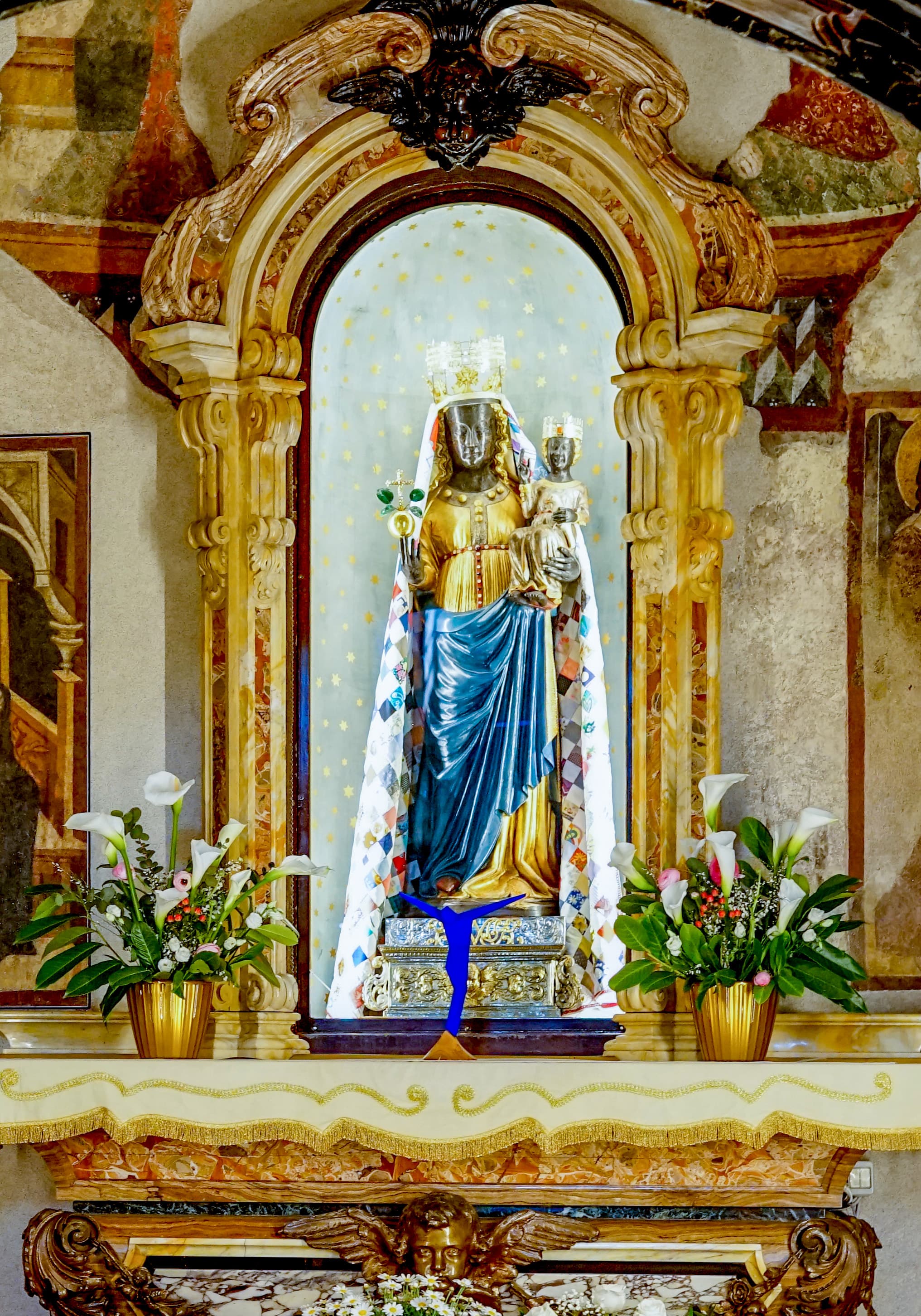
The Black Madonna of Oropa in the Sacello of the Ancient Basilica. Image source · CC0
Visit essentials
A quick read before you go
- Etiquette
- Respect active worship, dress modestly, keep voices low, and follow local photography…
Overview
Oropa's official account describes a thirteenth-century Swiss-pine sculpture, probably made by an Aosta Valley artist. It also reports the older devotional tradition connecting the image with Saint Eusebius while separating that tradition from the sculpture's supported date. The page keeps those two forms of knowledge distinct. The statue's present location is the Sacello of the Ancient Basilica, so its map pin follows the basilica rather than a broad regional coordinate.
Why this place is sacred
A medieval wooden Madonna at the heart of Oropa's mountain sanctuary
Experience and orientation
Visitors encounter the image within a small, active sanctuary interior. Pause outside the Sacello if prayer is under way and avoid obstructing the narrow devotional space.
Context and lineage
The Sanctuary of Oropa identifies the object, material, approximate date, and exact housing chapel in the Ancient Basilica.
Traditions and practice
Marian prayer, Mass, votive offerings, and Oropa's periodic solemn coronation tradition frame the image's living use.
Roman Catholic
ActiveA medieval wooden Madonna at the heart of Oropa's mountain sanctuary
Marian prayer, Mass, votive offerings, and Oropa's periodic solemn coronation tradition frame the image's living use.
Perspectives and open questions
This page distinguishes documented custody and institutional history from living devotional tradition and claims that remain uncertain.
Scholarly perspective
The Sanctuary of Oropa identifies the object, material, approximate date, and exact housing chapel in the Ancient Basilica.
Living and traditional perspectives
Marian prayer, Mass, votive offerings, and Oropa's periodic solemn coronation tradition frame the image's living use.
Open questions
Devotional continuity does not by itself establish the object's earliest provenance or the historicity of every associated tradition.
Plan your visit
Inside the Ancient Basilica at the Sanctuary of Oropa. Check the sanctuary's official liturgy and access notices before travel.
Respectful visit
Respect active worship, dress modestly, keep voices low, and follow local photography restrictions.
Location
Map loads as you approach this section.
Pilgrim reflections
A portrait of encounter, not a score
Pilgrims describe what they felt, how present they could become, and whether the place would shape a journey. There are no stars and no ranking of traditions.
No reviewed reflections yet
The first pilgrims can help describe the character of being here.
Share a reflection
Available after an account-backed “Been there.” Every reflection is reviewed before publication.
Nearby sacred places
Explore other sacred places in the region. Proximity does not establish access or travel time; check each place’s guidance.

References
Sources consulted for this page. Source categories describe the publication, not a guarantee that every claim is verified. Traditional accounts and outside interpretations may differ.
- 01Sanctuary of Oropa — The Ancient Basilicaofficial
- 02Wikimedia Commons exact-subject file and license recordSource context
Share a photo
Help visitors recognize Black Madonna of Oropa. Every submission is reviewed before publication.