Plakovo Monastery
A quiet monastery of St Elijah, rebuilt through faith, art, and public memory
Understand sacred places, explore living traditions, and learn how to engage respectfully with Pilgrim Map.
Access has not been verified. Check current local guidance before planning a visit.
Plakovo, Veliko Tarnovo Province, Bulgaria
Read the sources
Image of Plakovo Monastery. Image source
Visit essentials
A quick read before you go
- Duration
- One hour; two to three hours if paired thoughtfully with Kapinovo Monastery
- Best time
- Late spring and early autumn are usually suited to the wooded foothill road; winter weather can…
Overview
Plakovo is the quieter of the neighbouring monasteries often called the twins, a name describing proximity rather than sameness. Dedicated to the Prophet Elijah, it has distinct medieval foundation traditions, art, revolutionary history, and a patronal feast. National sources say a monastery stood here during Tsar Ivan Asen II's reign and the community moved to the present location in the later thirteenth century; a municipal account instead dates its foundation to the fourteenth century.
It therefore belongs to the Second Bulgarian Empire's religious landscape, although its exact beginning remains disputed. The community endured destruction after Ottoman conquest and later rebuilding. Plakovo is closely associated with Velcho's Conspiracy of 1835 and was again burned after it. The present church dates to 1845.
Published sources connect its icons and sole major mural of Elijah's ascent with leading Revival-era artists, while crediting master builder Kolyo Ficheto with the residential wing and a bell tower nearly twenty-six metres high. Today it is a functioning Orthodox monastery where prayer and stewardship continue on a smaller scale.
Why this place is sacred
The church is the centre of Plakovo's meaning. Its dedication to the Prophet Elijah connects the monastery with a biblical figure revered in Orthodox Christianity for fidelity to God, prophetic courage, and the ascent in a fiery chariot represented above the entrance. The annual feast on July 20 brings that dedication into the present.
The monastery's architecture also carries a theology of endurance: buildings destroyed or burned were raised again, and sacred images, books, worship, and memory continued across political rupture. The single prominent mural of Elijah's ascent and icons attributed to Zahari Zograf place the monastery within the flowering of Bulgarian Orthodox art during the Revival. Yet an art-historical visit remains incomplete if it ignores the resident cleric, services, candles, and ordinary maintenance that keep the enclosure religious.
Plakovo's association with Velcho's Conspiracy adds the memory of sacrifice for political freedom. That history matters, but the monastery is not sacred because rebellion occurred here. The conspiracy was organized within a place already shaped by prayer, trust, hospitality, and communication. PilgrimMap therefore presents its revolutionary, artistic, and devotional meanings together while avoiding claims of supernatural energy or guaranteed spiritual effects.
The monastery was established for Orthodox worship and monastic life within the Tarnovo region. According to national sources, its origin belongs to the reign of Ivan Asen II and its present location to the later thirteenth century, while the municipality gives a fourteenth-century date. The exact chronology remains open, but religious residence, prayer, hospitality, and the preservation of texts and images define the institution across the sources.
After destruction during the Ottoman conquest, the monastery was restored and damaged repeatedly. It became a setting for Velcho's Conspiracy in 1835 and was burned after the plot failed. Reconstruction began with the present church in 1845. Residential wings, a stone fountain, and the tall bell tower associated with Kolyo Ficheto followed in the mid-nineteenth century; a later fire damaged residential buildings in 1949. Heritage recognition and tourism now accompany a modest continuing Orthodox presence.
Experience and orientation
The road enters the foothills south of Veliko Tarnovo and reaches a monastery enclosure whose gate and bell tower announce the complex before the church is fully visible. Once inside, orient yourself to the church and residential buildings without assuming that every doorway is public. The open courtyard allows the height of the bell tower to be read against the wooded setting.
In the church, look for the image of Elijah's ascent and the iconographic work associated in published sources with Zahari Zograf and other Revival painters. Observe from a respectful distance and do not use flash. Plakovo can feel unusually quiet outside its patronal feast, but quiet does not mean abandoned or unrestricted. A resident cleric is reported by current tourism information, and the church remains a worship space.
The most attentive visit recognizes modest upkeep and weathering without turning them into spectacle. If no one is present, do not enter closed buildings or invent permission. The neighbouring Kapinovo Monastery can extend the journey, though comparison should illuminate their distinct histories rather than rank them.
The monastery is about eighteen to twenty kilometres south of Veliko Tarnovo, near Plakovo and Velchevo, and roughly two kilometres from Kapinovo Monastery. Official visitor guidance directs drivers toward Velchevo and then beyond the village. Road signs, surface conditions, and public transport can change, so download the location and confirm the route before leaving town.
Context and lineage
According to a national pilgrimage guide and Visit Bulgaria, the monastery's foundation is connected with Tsar Ivan Asen II, followed by a move from an earlier location south of the present complex in the thirteenth century. Veliko Tarnovo's municipal page assigns a fourteenth-century foundation. Rather than selecting one version without decisive evidence, this page treats Plakovo as a medieval monastery of the Second Bulgarian Empire whose precise chronology remains unsettled.
The monastery was destroyed after the Ottoman conquest, restored around the mid-fifteenth century, and damaged again in later periods. In 1835 it became associated with Velcho's Conspiracy, an attempted uprising involving the monastery's former abbot Father Sergius and other organizers. After the plot was suppressed, the monastery was burned. The present church was built in 1845. Sources describe a rare architectural form, a carved iconostasis, an image of Christ with the apostles, and Elijah's ascent above the entrance.
According to the reviewed accounts, Kolyo Ficheto carried out major residential and bell-tower work, although published dates vary between 1856 and 1865. These differences are retained as part of the record rather than silently harmonized.
Plakovo belongs to Bulgarian Orthodox Christianity and the monastery network surrounding medieval Tarnovo. Its dedication to Elijah shapes the annual feast and the church's visual language. Its proximity to Kapinovo led to the popular name twin monasteries, but Plakovo's lineage is not derivative: its patron, architecture, art, clergy, historical traumas, and communal responsibilities are distinct.
The Prophet Elijah
Biblical prophet and patron of the monastery
Father Sergius
Former abbot associated with Velcho's Conspiracy of 1835
Kolyo Ficheto
Master builder who, according to reviewed sources, worked on the bell tower and residential range
Zahari Zograf
Revival painter associated with icons in the church
Velcho Atanasov
Tarnovo organizer remembered in the 1835 conspiracy
Traditions and practice
The patronal feast on July 20 is the clearest documented recurring observance. Orthodox practice at a monastery may include the Divine Liturgy, prayer, candle lighting, veneration of icons, and commemoration, but the exact local pattern belongs to the resident clergy and community. The icon of Elijah and the monastery dedication frame prayer within the Church's understanding of the prophet rather than a generalized nature cult.
Current tourism information reports a resident cleric who can explain the monastery's history in Bulgarian. Visitors may enter the church during open periods and participate in public worship when invited. There is no admission charge according to the official listing, but donations toward religious life and preservation may be appropriate through designated channels.
Begin with silence at the church entrance. If worship is under way, stand back and follow local cues. Read the Elijah imagery as part of Orthodox devotion and ask before photographing. A paired walk or drive to Kapinovo can reveal how two nearby monasteries sustained different dedications and communities. Leave time for road conditions and for the possibility that parts of the complex are closed.
Bulgarian Orthodox Christianity
ActivePlakovo is an active Bulgarian Orthodox monastery dedicated to the Prophet Elijah. Its church, icons, feast, clergy presence, and continuing care sustain that identity. The monastery's role in national history is interpreted within, not apart from, its religious community and the trust historically placed in monastic space.
Public worship when scheduled, prayer, candle lighting, veneration of icons, commemoration, the July 20 patronal feast, donations, and respectful encounter with the resident clergy, subject to local direction.
Perspectives and open questions
Plakovo can be approached through Orthodox devotion, medieval and Revival history, architecture, art, and national memory. A complete account keeps the present religious community visible while acknowledging gaps and disagreements in the written record.
Scholarly perspective
The strongest historical interpretation is chronological and cautious. Medieval foundation traditions are plausible but not identical across official sources. The nineteenth-century phase is more concrete: the 1835 conspiracy, subsequent destruction, 1845 church, Revival icons, and Ficheto-associated bell tower can be located within Bulgaria's religious and political renewal. Art and architecture show continuity with older Orthodox forms while serving a community rebuilding under Ottoman rule. Heritage status recognizes that material record, but preservation alone does not define the monastery's contemporary meaning.
Living and traditional perspectives
In Orthodox tradition, Plakovo is a monastery under the patronage of the Prophet Elijah. According to the monastery's living ecclesial frame, the July feast, sacred images, candles, prayers, and clergy presence belong together. In Orthodox understanding, the prophet's ascent is not simply a dramatic art motif; it participates in scriptural and liturgical memory. Visitors may respect this meaning without claiming authority to explain it on behalf of the community.
Open questions
The exact foundation century, the date of the bell tower work, some artistic attributions, current service timetable, conservation condition, and accessibility details are not fully resolved by the reviewed sources. These are recorded as open questions rather than filled with inference.
Plan your visit
When to visit
Late spring and early autumn are usually suited to the wooded foothill road; winter weather can complicate rural access.
Access and arrival
From Veliko Tarnovo, official guidance sends visitors toward Velchevo; Plakovo Monastery is several kilometres beyond the village and Kapinovo is about two kilometres farther. A private vehicle or arranged taxi is the most reliable assumption. Confirm road, parking, and mobility conditions locally; no verified detailed step-free access information is available.
The monastery does not offer overnight guest accommodation according to the current official listing. Use lodging in Veliko Tarnovo or another confirmed local property. Do not assume Kapinovo's guest facilities apply to Plakovo.
Respectful visit
Wear clothing that covers shoulders and is appropriate for an Orthodox church. Practical shoes help on rural roads and uneven historic surfaces. Carry a layer for the cooler church interior.
Exterior photography is generally less intrusive, but permission should still be sought when people or a service are present. Ask before photographing inside and never use flash on icons, murals, or books.
Use a donation box or ask the resident cleric how to contribute. Purchase candles only where indicated. Do not leave improvised objects, food, or money on icons or at the fountain.
Current official tourism information lists no guest accommodation. Residential and farm buildings are not public lodging or exploration areas. Access may change during worship, repairs, winter weather, or the July feast.
Do not assume that posted visitor hours guarantee a service, a guide, or access to residential buildings. Do not repeat a single foundation year as settled fact. According to their publication dates, older condition reports are historical records rather than verified descriptions of current stewardship.
Location
Map loads as you approach this section.
Pilgrim reflections
A portrait of encounter, not a score
Pilgrims describe what they felt, how present they could become, and whether the place would shape a journey. There are no stars and no ranking of traditions.
No reviewed reflections yet
The first pilgrims can help describe the character of being here.
Share a reflection
Available after an account-backed “Been there.” Every reflection is reviewed before publication.
Nearby sacred places
Explore other sacred places in the region. Proximity does not establish access or travel time; check each place’s guidance.

Kapinovo Monastery
Kapinovo, Veliko Tarnovo Province, Bulgaria
1.5 km away
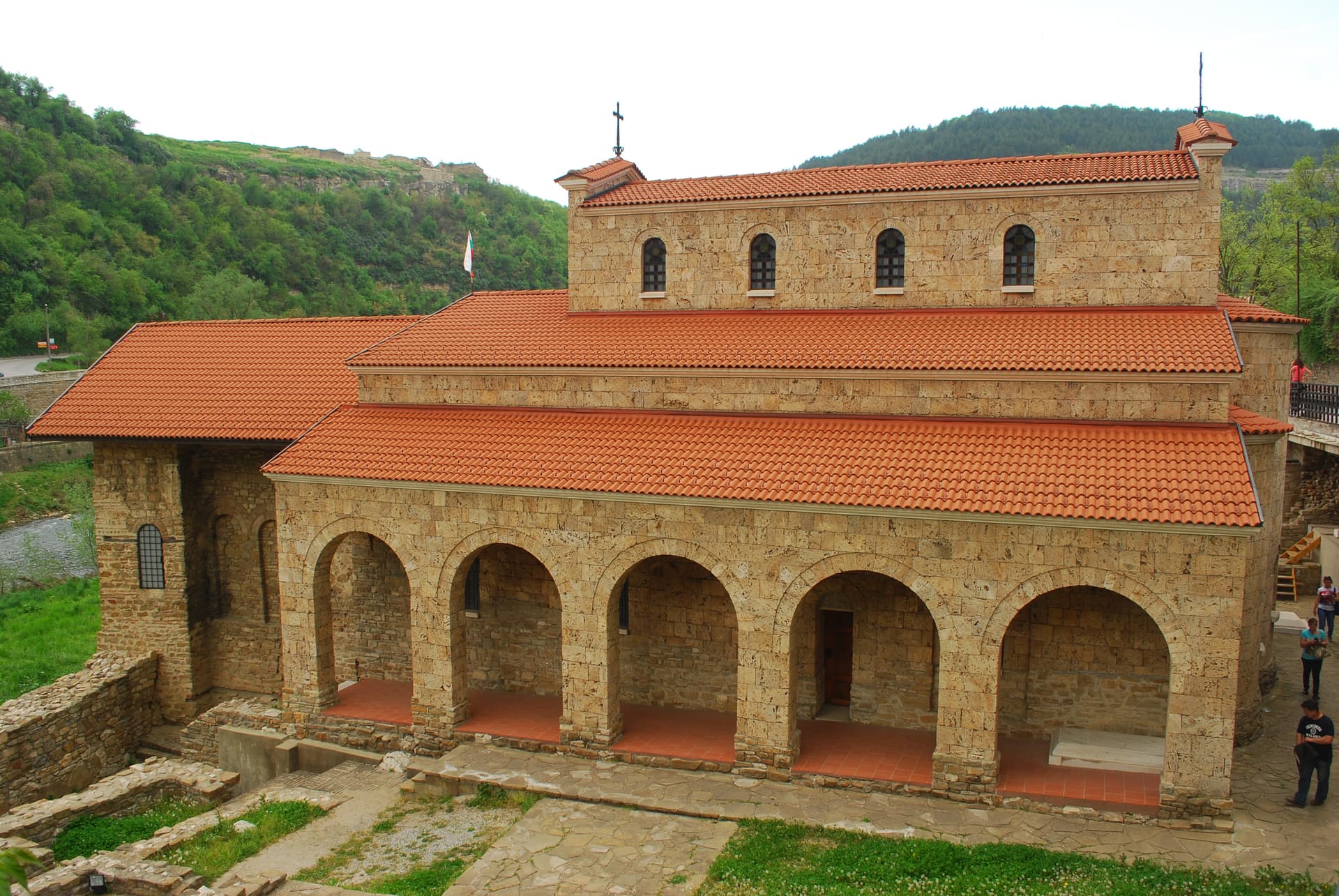
Church of the Holy Forty Martyrs
Veliko Tarnovo, Veliko Tarnovo Province, Bulgaria
13.5 km away
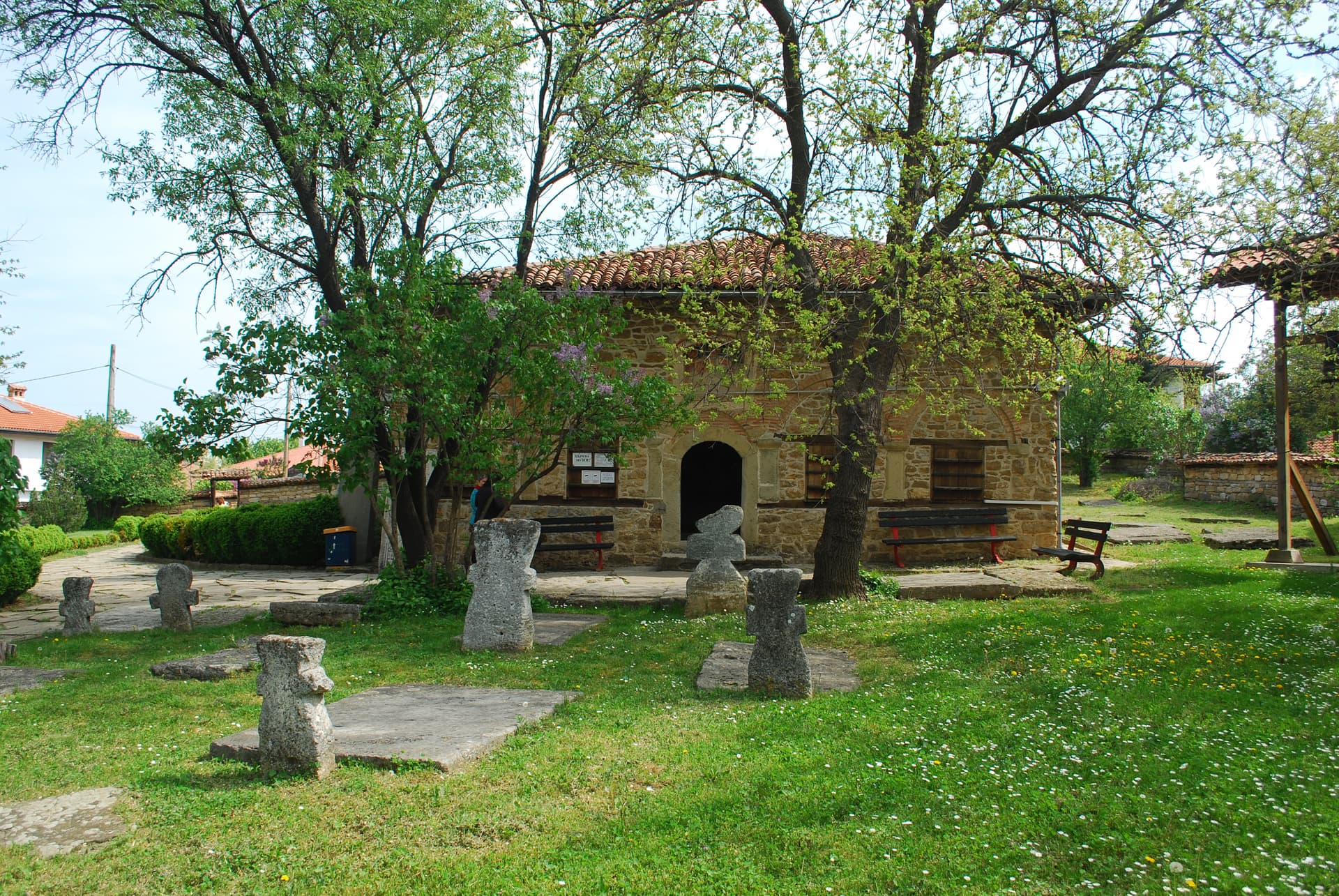
Church of the Nativity of Christ
Tarnovo pilgrimage circuit, Arbanasi, Bulgaria
14.4 km away

Transfiguration Monastery
Samovodene / Veliko Tarnovo, Veliko Tarnovo Province, Bulgaria
18.4 km away
References
Sources consulted for this page. Source categories describe the publication, not a guarantee that every claim is verified. Traditional accounts and outside interpretations may differ.
- 01Pilgrimage Tourism in Bulgaria — Ministry of Tourism of BulgariaofficialNational pilgrimage-tourism publication identifies Plakovo Monastery as an Orthodox monastery.
- 02The Plakovo Monastery — Visit BulgariaofficialNational tourism presentation for the twin-monastery relationship, heritage status, destruction and rebuilding, church art, July 20 feast, hours, admission, resident cleric, access, and lack of guest lodging.
- 03Plakovo Monastery of St Elijah the Prophet — Veliko Tarnovo MunicipalityofficialMunicipal heritage account for location, twin-monastery relationship, Velcho's Conspiracy, icon painting, Kolyo Ficheto's work, and continuing Orthodox residence. Its fourteenth-century dating is retained as a conflict with national sources.
- 04Pilgrimage Tourism in Bulgaria (2025) — Ministry of Tourism of BulgariaofficialAccording to the current national pilgrimage guide, the record includes the medieval foundation tradition, relocation, repeated rebuilding, and Kolyo Ficheto bell tower.
- 05Plakovo — Veliko Tarnovo MunicipalityofficialMunicipal local-history context for Plakovo village, the monastery burial of priest Neyko, and Kolyo Ficheto's documented regional building activity.
- 06Плаковски манастир — Wikipedia contributorsacademicIdentity and historical overview resolved through a country-validated Wikidata sitelink.
- 07Wikidata record Q20499477 — Wikidata contributorsacademicCountry-claim-validated structured identity and coordinate record.
- 08File:Plakovski Monastery Iz8.jpg — IzvoraacademicExact image-subject and reuse-license provenance only; not used for historical claims.
- 09Plakovo Monastery of St Elijah near Veliko Tarnovo — Pravoslavieto.comspiritualDetailed Orthodox cultural history for Velcho's Conspiracy, the 1845 church, iconography, old books, and the bell tower. According to its 2004 publication date, the included visitor account is historical rather than current access evidence.
Share a photo
Help visitors recognize Plakovo Monastery. Every submission is reviewed before publication.
Key questions
What pilgrims usually ask
When is the best time to visit Plakovo Monastery?
Ceremony: July 20 is the documented annual feast of St Elijah. Confirm the current programme and expect worshippers to take priority. Solitude: A weekday outside the feast period may be quieter, but the presence of clergy and open access cannot be guaranteed. Avoid: Avoid arriving near closing, relying on same-day public transport without confirmation, or expecting ordinary sightseeing access during services and repairs.