Kapinovo Monastery
A living Orthodox monastery shaped by prayer, learning, and Bulgarian renewal
Understand sacred places, explore living traditions, and learn how to engage respectfully with Pilgrim Map.
Access has not been verified. Check current local guidance before planning a visit.
Kapinovo, Veliko Tarnovo Province, Bulgaria
Read the sources
Image of Kapinovo Monastery. Image source
Visit essentials
A quick read before you go
- Duration
- One to two hours; longer if combining a service, overnight stay, or the neighbouring monastery
- Best time
- Spring and early autumn usually make the wooded river setting easier to explore than summer heat…
Overview
Kapinovo Monastery's sacredness extends beyond an inscription linking a church here to 1272. It rests on worship returning after destruction, monks' and neighboring communities' work, and remembered lives. The present church dates to 1835; residential buildings funded by brothers Hadji Theodosius and Hadji Kesariy Horozov form the fortress-like northern face. Icons, carved liturgical furnishings, and memory preserve its religious and educational role.
St Sophronius of Vratsa served as abbot in 1794 and helped circulate Paisius's History of the Slavo-Bulgarians around Tarnovo. Church tradition also associates St Sergius of Kapinovo, though his grave and relics remain unresolved.
The monastery now advertises baptisms, church weddings, and guest accommodation. Visitors enter a working religious community, not a historical set; services and residents precede sightseeing, even for those drawn by architecture and Revival history.
Why this place is sacred
Kapinovo's threshold is layered. The river and wooded foothills make the enclosure feel apart from ordinary movement, but Orthodox sacredness here is expressed through the church, liturgy, icons, prayer, commemoration, and hospitality. The dedication invokes St Nicholas the Wonderworker, honoured in Orthodox Christianity as a bishop and intercessor. A national pilgrimage guide records a holy well in the courtyard and valuable eighteenth- and nineteenth-century icons, carved royal doors associated with Tryavna craftsmanship, and an eighteenth-century bishop's throne.
These are not decorative props; they belong to a setting ordered around worship. The monastery's historical role adds another register. A cell school and literary activity linked religious formation with Bulgarian-language learning. St Sophronius's presence connects the monastery with ecclesial renewal and the transmission of Paisius's history. The memory of St Sergius is preserved within the Church even though accounts of his relics cannot be confirmed archaeologically.
For pilgrims, that uncertainty does not erase the devotional tradition; for historical reporting, it must remain clearly labeled. The place becomes thin through this coexistence of prayer, inherited memory, and documented communal work rather than through claims about measurable energy or supernatural effects.
Sources distinguish between what is documented and what is inherited. According to the cited apse inscription, a church stood here in 1272, while another foundation tradition reaches back to Tsar Ivan Asen II. During the Second Bulgarian Empire the monastery served Orthodox religious life near Tarnovo. Its basic purposes were worship, monastic residence, teaching, copying and preserving texts, receiving believers, and sustaining the church's presence in the region.
After Tarnovo fell under Ottoman rule, the monastery was burned and later restored with the aid of nearby villagers. The current church was erected in 1835, and the Horozov brothers financed substantial residential construction in the 1860s. During the Revival the monastery supported education, the movement for an independent Bulgarian church, and people involved in anti-Ottoman organizing. Modern heritage attention now sits alongside continuing church use, accommodation, baptisms, and weddings.
Those functions make preservation and visitor restraint part of the same responsibility.
Experience and orientation
From the north, the high residential range and narrow openings create the impression of a fortified complex. Passing through the gate changes the scale: the church, courtyard, domestic buildings, and spaces used by guests form a working enclosure rather than a single attraction. Begin by identifying whether a service, baptism, wedding, or private prayer is under way. If the church is open, pause at the entrance and let your eyes adjust before moving.
Icons and carved furnishings reward close attention, but distance and silence matter more than obtaining a photograph. The official pilgrimage guide identifies the holy well in the courtyard; approach it as part of the monastery's devotional landscape, not as a guaranteed source of healing. The Veselina River and nearby waterfall draw recreational visitors, particularly in warm weather, so the tone can change between the monastery interior and its surroundings.
Holding that distinction helps protect the church as a place of prayer. If staying overnight, remember that guest lodging is hospitality within a religious property and confirm expectations directly with the monastery.
The monastery lies near Velchevo, south of Veliko Tarnovo, beside the Veselina River. According to official sources, the distance varies between roughly fourteen and eighteen kilometres depending on route and reference point. Arrive with enough daylight for the rural road. The nearby Plakovo Monastery is about two kilometres away and can form a paired visit, but each monastery has its own dedication, community, history, and visitor conditions.
Context and lineage
The most careful starting point is the apse inscription cited by monastery, municipal, and national sources: it records a church on the site in 1272, during the reign of Tsar Constantine I Tih. According to a separate tradition, Tsar Ivan Asen II founded the monastery, and the monastery preserves a story of an earlier Holy Trinity community farther into the gorge. These traditions should not be collapsed into a single certain date.
After Ottoman conquest, the monastery was burned and later re-established. St Sophronius of Vratsa served as abbot for part of 1794, bringing a copy of Paisius's History of the Slavo-Bulgarians and contributing to its circulation in the Tarnovo area. A cell school and literary activity made the monastery an educational centre. The present church was built in 1835.
In the following decades the Horozov brothers supported major residential construction, while monastery leaders participated in struggles for ecclesiastical independence and aided revolutionary networks. Scholarly and municipal histories associate the monastery with Hadji Stavri's movement, Vasil Levski, Angel Kanchev, Matey Preobrazhenski, and preparations for the April Uprising. These episodes are part of Bulgarian public memory, but the monastery's primary continuity remains religious rather than military.
Kapinovo belongs to Bulgarian Orthodox Christianity and to the ecclesiastical landscape around medieval and Revival-era Tarnovo. Its cell school, texts, icons, and links with St Sophronius place it within a network in which monasteries carried worship, literacy, and communal memory. The neighbouring Plakovo Monastery is often called its twin because of proximity, not because the two are interchangeable. Kapinovo is dedicated to St Nicholas and developed its own community, artistic holdings, feast traditions, and historical associations.
St Sophronius of Vratsa
Abbot in 1794, cleric, writer, and Bulgarian Revival educator
St Nicholas the Wonderworker
Patron saint of the monastery church
St Sergius of Kapinovo
Monastic saint preserved in Bulgarian Orthodox memory
Hadji Theodosius Horozov
Abbot, church-independence advocate, and benefactor
Hadji Kesariy Horozov
Monastic leader and benefactor associated with the residential range
Traditions and practice
Orthodox monastic life is centred on prayer and the Divine Liturgy. Historical accounts describe believers attending services for health, submitting names for commemoration, bringing gifts, and gathering on the church's feast days. These records explain the monastery's relationship with surrounding villages, but they do not establish a fixed modern schedule. The monastery's dedication makes St Nicholas Day especially meaningful, while Presentation of the Mother of God is also part of its inherited feast memory.
The monastery's own site currently offers arrangements for baptisms and church weddings and describes guest lodging. Visitors may light candles, pray, attend a public service, or request pastoral guidance when permitted. Participation should follow the direction of clergy or monastery staff. A tourism visit does not grant access to every residential or liturgical space.
Enter quietly, make space for worshippers, and begin with observation rather than narration. A non-Orthodox visitor may stand respectfully without imitating actions they do not understand. If attending worship, remain toward the back until local practice is clear. Donations can be offered through designated channels. Ask before drawing water, photographing icons, or arranging any rite or overnight stay.
Bulgarian Orthodox Christianity
ActiveKapinovo is an active Bulgarian Orthodox monastery dedicated to St Nicholas the Wonderworker. Its sacred life is expressed through worship, icons, commemoration, pastoral rites, hospitality, and the memory of saints and monastics associated with the community. Its role in Bulgarian education and church independence grew from that religious setting rather than replacing it.
Divine services, personal prayer, candle lighting, veneration of icons, commemoration of names, baptisms, weddings, feast observance, charitable giving, and monastery hospitality, subject to current clergy guidance.
Perspectives and open questions
Kapinovo can be read as a living Orthodox monastery, a medieval foundation memory, a Revival educational centre, a work of religious architecture, and a place in Bulgaria's liberation narrative. These perspectives overlap but should not erase one another.
Scholarly perspective
Historical research emphasizes the monastery's connection with education, Bulgarian-language texts, ecclesiastical independence, community labour, and political networks. The surviving complex is largely nineteenth-century even though the religious presence is traced to the medieval period. Responsible interpretation separates the 1272 inscription, later rebuilding, and inherited foundation stories. It also recognizes that nationalist memory can overshadow ordinary monastic work and the relationships through which nearby communities sustained the monastery.
Living and traditional perspectives
Within Bulgarian Orthodox memory, the monastery is a holy dwelling dedicated to St Nicholas, shaped by prayer and the service of monks and clergy. St Sophronius is remembered not merely as a historical author but as a saint and church teacher. St Sergius belongs to the monastery's sacred memory even though the physical history of his relics remains uncertain. Pilgrimage language should respect that devotional frame without turning it into a claim that every visitor must share.
Open questions
The exact circumstances of the earliest foundation, the location of an earlier community in the gorge, and the fate and burial place of St Sergius's relics remain uncertain in the reviewed evidence. Current service schedules, some object attributions, and full accessibility details are not confirmed by the monastery.
Plan your visit
When to visit
Spring and early autumn usually make the wooded river setting easier to explore than summer heat or winter road conditions.
Access and arrival
Reach the monastery by the road toward Velchevo south of Veliko Tarnovo. Public transport does not appear to serve the gate directly; confirm the final connection locally. Rural roads, steps, historic thresholds, and uneven surfaces may limit mobility. Contact the monastery for current accessibility information.
The monastery's official site advertises about one hundred guest beds, including rooms with private and shared facilities, plus breakfast by advance request. Availability, prices, check-in, accessibility, and conduct rules require direct confirmation.
Respectful visit
Cover shoulders and wear clothing suitable for a functioning Orthodox monastery. Avoid beachwear even if also visiting the nearby river or waterfall. Carrying a light layer is practical for entering the church.
Ask before photographing inside the church, during services, or anywhere residents are present. Never use flash on icons or painted surfaces. Outdoor photography may still be restricted during rites or conservation work.
Use official donation boxes or instructions from clergy and staff. Candles may be available in the church. Do not leave food, coins, ribbons, or personal objects at the holy well or icons unless monastery guidance explicitly permits it.
The altar, monastic quarters, service areas, and rooms assigned to guests are not general visitor space. Access may narrow during worship, private ceremonies, maintenance, or major feast days.
Do not present the holy well as medically curative, and do not convert the ecclesial account of St Sergius's relics into an archaeological certainty. Avoid treating revolutionary associations as the monastery's only significance. No verified permanent schedule covers all ceremonies, lodging, prices, and access, so confirm them directly.
Location
Map loads as you approach this section.
Pilgrim reflections
A portrait of encounter, not a score
Pilgrims describe what they felt, how present they could become, and whether the place would shape a journey. There are no stars and no ranking of traditions.
No reviewed reflections yet
The first pilgrims can help describe the character of being here.
Share a reflection
Available after an account-backed “Been there.” Every reflection is reviewed before publication.
Nearby sacred places
Explore other sacred places in the region. Proximity does not establish access or travel time; check each place’s guidance.

Plakovo Monastery
Plakovo, Veliko Tarnovo Province, Bulgaria
1.5 km away
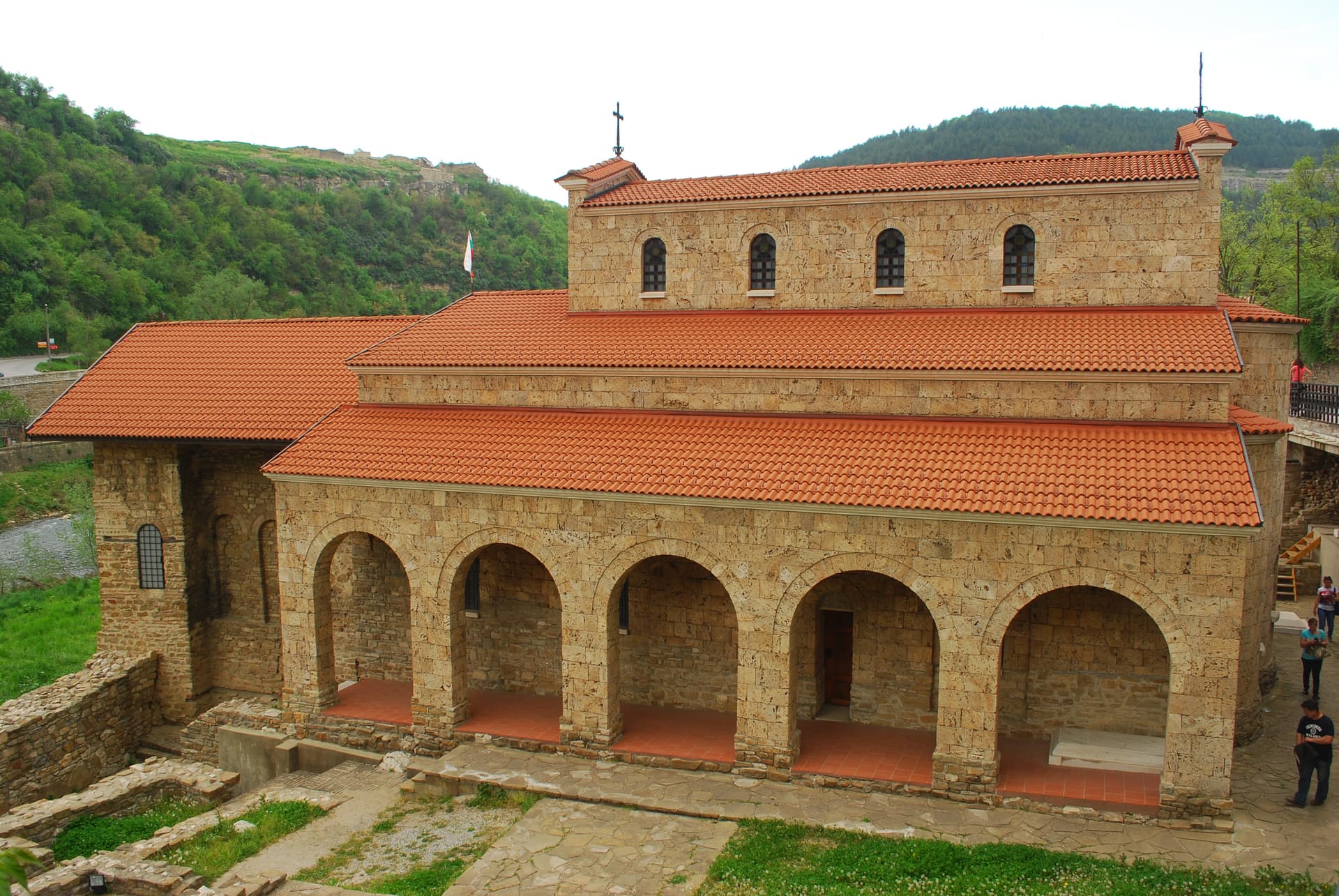
Church of the Holy Forty Martyrs
Veliko Tarnovo, Veliko Tarnovo Province, Bulgaria
14.1 km away
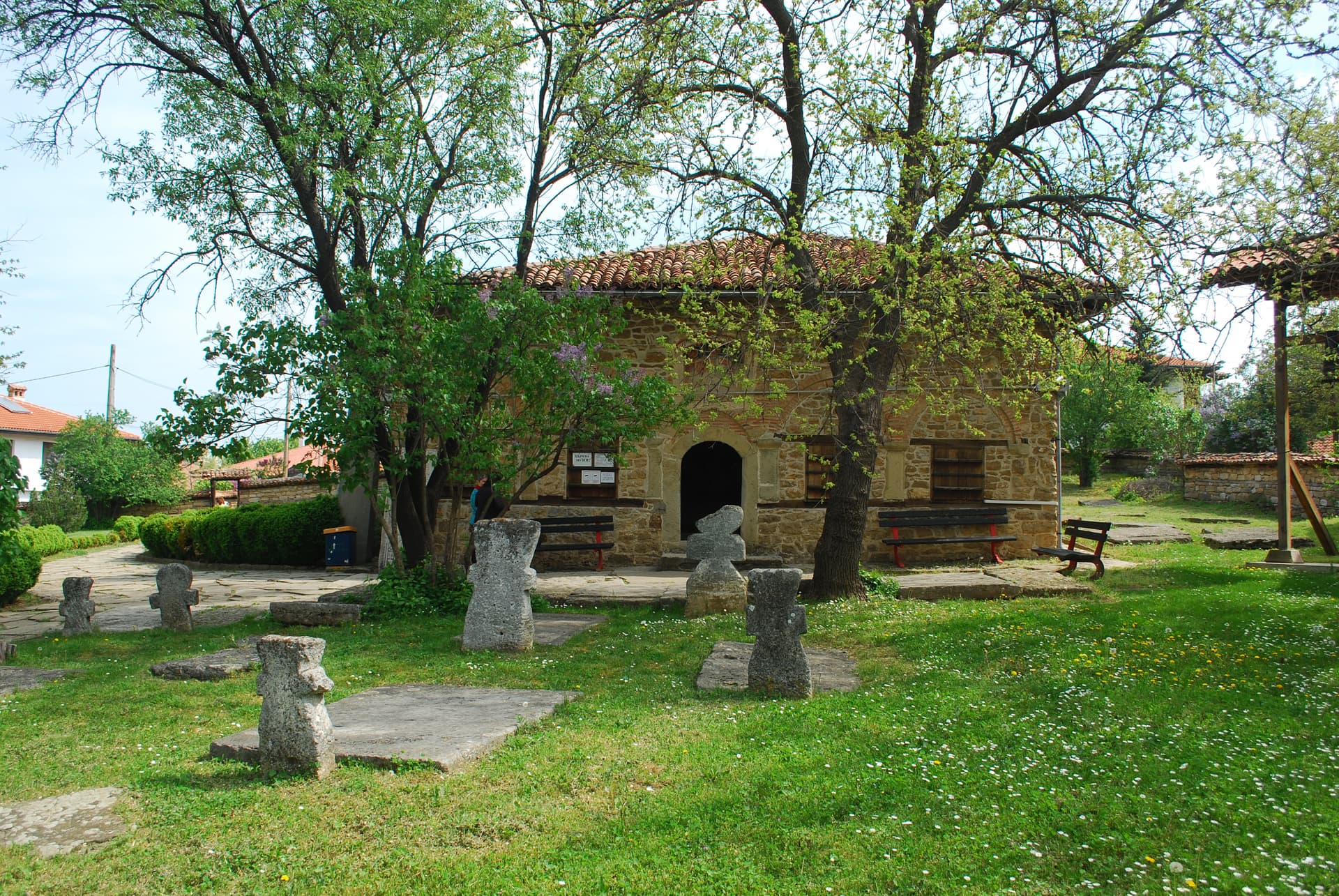
Church of the Nativity of Christ
Tarnovo pilgrimage circuit, Arbanasi, Bulgaria
14.8 km away

Patriarchal Monastery of the Holy Trinity
Veliko Tarnovo, Veliko Tarnovo Province, Bulgaria
19.0 km away
References
Sources consulted for this page. Source categories describe the publication, not a guarantee that every claim is verified. Traditional accounts and outside interpretations may differ.
- 01Kapinovo Monastery: History and Services — Kapinovo Monastery of St NicholasofficialMonastery account for dedication, the 1272 apse inscription, St Sophronius, the cell school, living services, lodging, and contact details. Traditional claims are labeled as tradition in the content.
- 02Kapinovo Monastery St Nicholas — Veliko Tarnovo MunicipalityofficialMunicipal heritage and visitor account for location, opening hours, the present church, Horozov brothers, Revival-era activity, and the distinction between the 1272 inscription and foundation tradition.
- 03Pilgrimage Tourism in Bulgaria (2025) — Ministry of Tourism of BulgariaofficialCurrent national pilgrimage guide for the Veselina River setting, 1272 date, St Sophronius, Revival learning, iconostasis, bishop's throne, and holy well.
- 04From the Chronicle of the Kapinovo Monastery St Nikolai Wonderworker — Pavlina Vladeva; Cultural and Historical Heritage journalacademicScholarly historical synthesis for the monastery's educational, ecclesial, community, and liberation-era roles; used with attribution and without treating every inherited account as independently proven.
- 05St Sergius of Kapinovo: Memory and Map — Sofia Holy MetropolisofficialChurch-authority source for the ecclesial memory of St Sergius of Kapinovo and the acknowledged uncertainty surrounding the location of his relics.
- 06Къпиновски манастир — Wikipedia contributorsacademicIdentity and historical overview resolved through a country-validated Wikidata sitelink.
- 07Google Maps listing for Kapinovo Monastery "St Nicholas" — Google MapsSource contextWhole-site identity, coordinates, website, and current practical listing only.
- 08Website listed for Kapinovo Monastery — Kapinovo MonasteryofficialWebsite supplied by the accepted whole-site Google Places record; editorial verification still required.
- 09Wikidata record Q12284461 — Wikidata contributorsacademicCountry-claim-validated structured identity and coordinate record.
- 10File:Kapinovski monastery Iz1.JPG — IzvoraacademicExact image-subject and reuse-license provenance only; not used for historical claims.
Share a photo
Help visitors recognize Kapinovo Monastery. Every submission is reviewed before publication.
Key questions
What pilgrims usually ask
When is the best time to visit Kapinovo Monastery?
Ceremony: Contact the monastery for the current liturgical calendar. St Nicholas feast periods may be especially busy and should not be assumed to follow ordinary access. Solitude: Weekday mornings outside services and private rites may be quieter, but no quiet period is guaranteed in an active monastery. Avoid: Avoid arriving close to closing, during severe weather, or expecting unrestricted access during baptisms, weddings, services, and feast gatherings.