Prasat Phnom Chisor
Six hundred steps up a Khmer hilltop temple where Buddhist pilgrims now pray in Hindu stone
Understand sacred places, explore living traditions, and learn how to engage respectfully with Pilgrim Map.
Access has not been verified. Check current local guidance before planning a visit.
Srok Samraong, Takéo, Cambodia
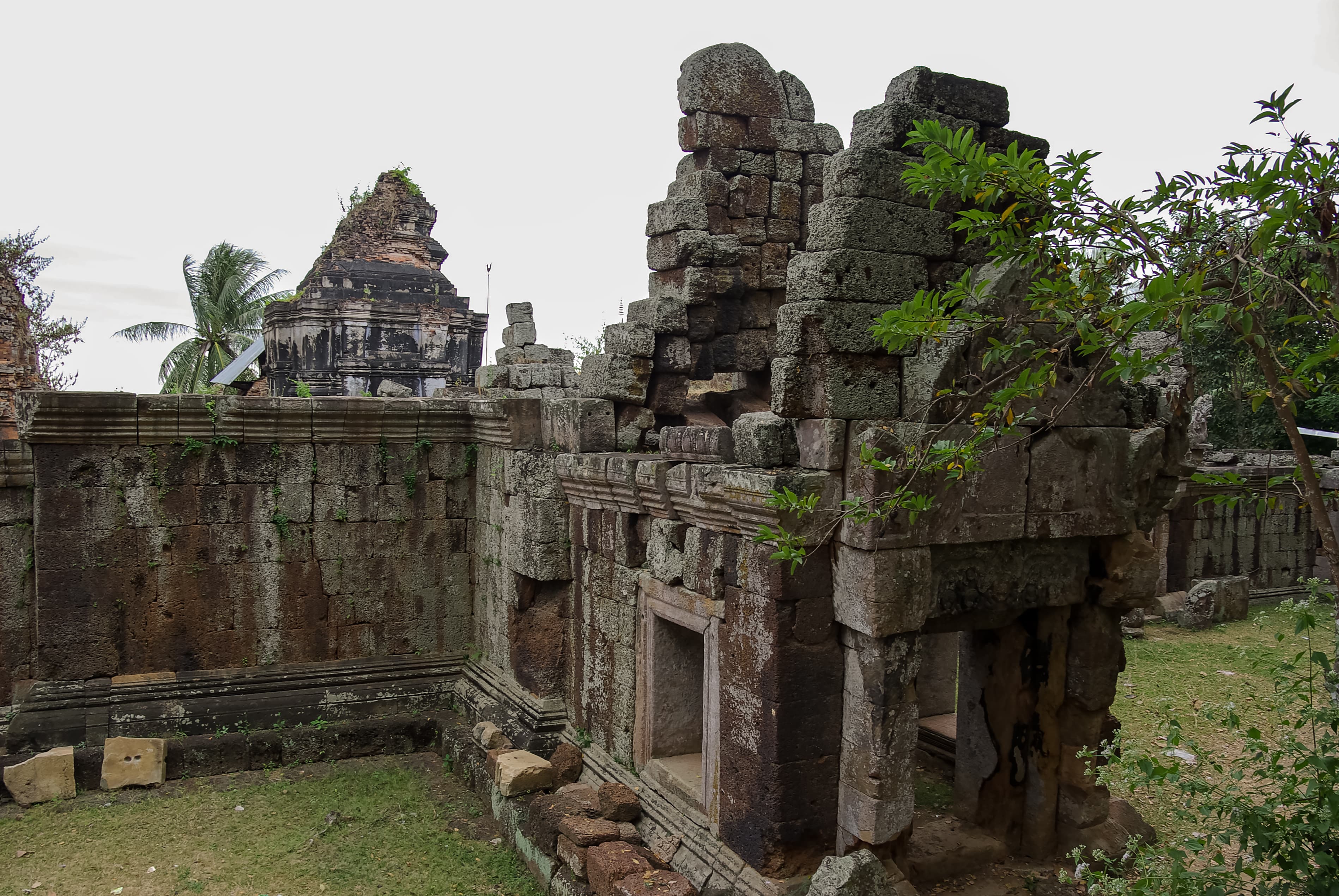
Image of Prasat Phnom Chisor. Image source · CC-BY-SA-3.0
Visit essentials
A quick read before you go
- Duration
- Two to three hours for the climb, temple exploration, and descent.
- Access
- Located in Takeo Province, approximately 55 km south of Phnom Penh.
Overview
Phnom Chisor was built to be climbed. The 610 steps from the base of the hill to the summit temple are not an obstacle to the experience but the experience itself. When Suryavarman I, one of the great builder-kings of the Khmer Empire, chose this hill for a sanctuary he named Suryaparvata, he chose a natural feature that required effort to reach. The effort was the point.
To climb was to enact a transition from the profane plain to the sacred summit, from the human world to the realm of the gods.
At the top, the remains of an eleventh-century Hindu temple complex open to the panoramic sky. Sandstone and laterite walls, carved lintels depicting scenes from Hindu mythology, and the spatial logic of Khmer sacred architecture create a built environment that frames the horizon in every direction. Four inscriptions, catalogued as K.31 through K.34, record the temple's dedication and the rituals that consecrated it, documents carved in stone by a civilization that understood writing as a sacred act.
The transformation from Hindu to Buddhist worship happened not through destruction but through incorporation. Buddhist statues and offerings now sit within the Hindu architecture. Cambodian pilgrims climb the same steps that royal processions once ascended, understanding the effort as merit-making and the summit as a place where prayers carry particular weight.
Below the hill, the sacred lake Tonle Om and the processional temples Sen Chhmos and Sen Phouvang complete a ritual landscape that once choreographed the journey from water to stone to sky.
Why this place is sacred
The thinness at Phnom Chisor is architectural before it is atmospheric. The temple was designed so that the sacred could not be reached casually. Six hundred and ten steps, exposed to the tropical sun, without shade or shortcut, impose a physical cost on anyone who wants to reach the summit. This cost is the design. Suryavarman I did not build on a hilltop to inconvenience worshippers but to ensure that every arrival carried the weight of intention.
At the top, the reward is double: the temple's own carved beauty and the panoramic view that explains why the hill was chosen. From the summit, the Takeo Province plain extends to the horizon, flat and agricultural, punctuated only by the trees and water features of the sacred landscape below. The sacred lake Tonle Om is visible, as are the processional temples Sen Chhmos and Sen Phouvang that once formed waypoints on the ritual approach.
The visitor sees the whole system at once: the water, the processional route, the ascent, the summit. The landscape was designed to be read from this position.
The coexistence of Hindu and Buddhist sacred objects within the same architectural framework adds a temporal dimension. The carved lintels show Hindu deities; the offerings before them are Buddhist. Neither tradition has displaced the other. The stones hold both, and visitors encounter a place where transformation happened through addition rather than erasure.
Suryavarman I built Phnom Chisor as a Hindu temple dedicated to Shiva and Vishnu, naming it Suryaparvata, Sun Mountain. The hilltop placement aligned the sanctuary with Hindu cosmological principles that identified elevated sites as meeting points between the human and divine realms. The processional landscape connecting the sacred lake Tonle Om through the temples Sen Chhmos and Sen Phouvang to the hilltop created a choreographed journey of purification and ascent.
The four inscriptions (K.31-K.34) suggest that the temple's consecration involved elaborate royal ceremonies establishing the site's sanctity.
Following the thirteenth-century transformation of Khmer religion from Hinduism to Theravada Buddhism, Phnom Chisor was gradually adapted for Buddhist worship. Buddhist statues were placed within the Hindu architecture, and the hilltop became a site of Buddhist merit-making pilgrimage. A Buddhist pagoda operates near the temple complex. The site remains actively visited by Cambodian Buddhists, especially during festivals, while also drawing tourists interested in Khmer architecture.
Experience and orientation
Phnom Chisor offers what the heavily visited temples of Angkor often cannot: the experience of a Khmer sacred site on its own terms, without the mediating presence of crowds and tour buses. The hill rises from the flat agricultural plain of Takeo Province, approximately 55 kilometers south of Phnom Penh. The base of the steps is unremarkable. The climb is not.
Six hundred and ten steps ascend the hillside in full sun. There is no shade, no handrail, no alternative route. In the dry season the heat is assertive. In the wet season the steps can be slippery. The climb takes twenty to thirty minutes for most visitors, and by the time the summit comes into view, the body has participated in the arrival in a way that no drive-up temple can replicate.
The summit opens into a temple complex of sandstone and laterite walls, carved lintels showing Hindu deities and mythological scenes, and doorways that frame the sky. The architectural quality is high. Close observation of the carved lintels reveals scenes from the Ramayana and other Hindu narratives rendered with the confidence of Khmer art at its maturity. Buddhist offerings are arranged before the carvings, creating the layered quality that defines Cambodian sacred spaces.
The panoramic view from the summit extends across the entire plain. On clear days the Mekong River is visible. Below, the sacred lake Tonle Om and the processional temples Sen Chhmos and Sen Phouvang can be identified, remnants of the ritual landscape that once connected the low ground to the high.
Phnom Chisor is located in Takeo Province, approximately 55 km south of Phnom Penh, Cambodia. The hill rises 133 meters above the surrounding plain. The 610 steps begin at the base of the hill where parking and basic food stalls are available. The sacred lake Tonle Om and processional temples are accessible at the base of the hill.
Context and lineage
King Suryavarman I, who reigned from 1002 to 1050 and expanded the Khmer Empire to its greatest territorial extent, chose this hill for a temple he named Suryaparvata, Sun Mountain. The name speaks to the fundamental impulse: to build at the highest point, closest to the sun, where the divine was most accessible. Suryavarman I was also responsible for beginning construction of the Western Baray at Angkor, the enormous reservoir that sustained the capital.
His building program across the empire connected provincial temples like Phnom Chisor to the cosmological center at Angkor through shared architectural vocabulary and shared theological purpose.
Phnom Chisor belongs to the tradition of Khmer hilltop temples that includes Phnom Bakheng and Phnom Da. These elevated sanctuaries represented terrestrial versions of Mount Meru, the cosmic mountain at the center of Hindu-Buddhist cosmology. The temple's architectural style, with its sandstone and laterite construction and carved lintels, places it within the mainstream of eleventh-century Khmer provincial temple design.
Suryavarman I
builder-king
King of the Khmer Empire from 1002 to 1050, who expanded the empire to its greatest extent and commissioned Phnom Chisor as one of several major temples outside the Angkor core area. His name means 'protected by the sun,' and the temple he named Suryaparvata ('Sun Mountain') reflects this solar association.
Traditions and practice
The original Hindu worship at Phnom Chisor centered on rituals to Shiva and Vishnu documented in four inscriptions carved into the temple walls. The processional landscape connecting the sacred lake Tonle Om through the temples Sen Chhmos and Sen Phouvang to the hilltop sanctuary choreographed a ritual journey of purification and spiritual ascent. Royal ceremonies consecrated the space and maintained the connection between the earthly kingdom and the divine order.
Cambodian Buddhists treat the climb as a form of merit-making, where physical effort earns spiritual benefit. At the summit, offerings of incense, candles, and flowers are made at the Buddhist shrine within the Hindu temple architecture. Festival gatherings during Khmer New Year (mid-April) and Pchum Ben (September-October, ancestor veneration) draw larger crowds. A Buddhist pagoda near the base of the hill serves the local community.
Climb steadily but without rushing. The 610 steps are the temple's first teaching: that what is sacred requires effort to reach. Pausing to catch your breath is not weakness but participation in the design. At the summit, before scanning the panorama, enter the temple complex and look closely at the carved lintels. The figures depicted in stone have been receiving Buddhist offerings for centuries without contradiction. Notice this coexistence.
After exploring the summit, descend and visit the sacred lake Tonle Om and the processional temples at the base. Standing at the lake and looking up at the hilltop sanctuary, you see the ritual landscape as its designers intended: a journey from water to earth to sky.
Theravada Buddhism
ActivePhnom Chisor has been incorporated into Cambodian Buddhist sacred geography, following the broader pattern of Hindu-to-Buddhist transformation across Cambodian temple culture. The 610-step climb is understood as merit-making, where physical effort earns spiritual benefit. Buddhist offerings have been integrated into the original Hindu architecture without displacing the earlier sacred objects.
Merit-making pilgrimage including the 610-step ascent. Offerings of incense, candles, and flowers at hilltop shrines. Prayer and meditation in the temple complex. Festival gatherings during Khmer New Year and Pchum Ben.
Hindu (Shaivism/Vaishnavism)
HistoricalPrasat Phnom Chisor was built as a Hindu temple dedicated to both Shiva and Vishnu, named Suryaparvata, Sun Mountain, by Suryavarman I. The processional landscape connecting the hilltop sanctuary to the sacred lake Tonle Om created a choreographed ritual journey. Four inscriptions document the temple's dedication and consecration.
Hindu worship of Shiva and Vishnu at the hilltop sanctuary. Processional rituals connecting the hilltop to the sacred lake and lower temples. Royal ceremonies documented in stone inscriptions.
Perspectives and open questions
Phnom Chisor can be understood as an eleventh-century Khmer temple, as an active Buddhist pilgrimage site, and as a physical demonstration of how sacred places outlast the specific traditions that build them.
Scholarly perspective
Archaeologists classify Phnom Chisor as a significant eleventh-century Khmer temple complex built by Suryavarman I. The four inscriptions (K.31-K.34) are important epigraphic sources for understanding Khmer royal religion. The ritual landscape connecting the hilltop to the sacred lake and processional temples is recognized as a characteristic feature of Khmer temple design. The temple's architectural style is typical of Khmer provincial temples of the period.
Living and traditional perspectives
For Cambodian Buddhists, Phnom Chisor is a sacred hill where merit can be earned through climbing and prayer at the summit. The temple is a place of accumulated spiritual power, enhanced by centuries of worship. Local communities maintain the Buddhist pagoda and participate in festival observances.
Open questions
The full content of the four inscriptions (K.31-K.34) has not been completely published in accessible English translation. Whether the hill held sacred significance before Suryavarman I's construction is unknown. The precise ritual choreography of the processional route from Tonle Om through the processional temples to the summit has not been reconstructed. The specific deities associated with each of the six brick temples within the complex remain unidentified.
Plan your visit
Access and arrival
Located in Takeo Province, approximately 55 km south of Phnom Penh. Accessible by car or motorbike, approximately 1.5 hours from the capital. Small entrance fee, approximately $3 USD for foreign visitors. Limited facilities at the site: bring water and snacks. Parking and basic food stalls at the base. Mobile phone signal is generally available. No specific emergency access information available; the nearest town with medical facilities is Takeo city.
No accommodation at the site. Phnom Penh offers the full range of options and is the standard base for day trips to Phnom Chisor.
Respectful visit
Modest clothing expected at Buddhist shrines. Shoulders and knees should be covered when entering shrine areas. Sturdy, comfortable shoes essential for the step climb. Lightweight, breathable clothing recommended.
Generally permitted throughout the complex. Be respectful when photographing Buddhist worship and offerings. Ask before photographing monks or local pilgrims.
Incense, candles, and flowers may be offered at the Buddhist shrine at the summit. Follow the example of Cambodian visitors for appropriate placement.
Remove shoes before entering shrine areas. Do not climb on or sit on the ancient temple structures. Do not touch or remove carved elements. Bring sufficient water for the climb.
The 610-step climb is strenuous, especially in tropical heat. Bring sufficient water as facilities at the summit are minimal. The steps have no shade. Avoid climbing during the hottest hours of the day (11:00 AM to 2:00 PM) in the hot season.
Current practical details
Address
Stairway of Chiso Mountain from, the E, Cambodia
Phone
Hours
Hours, fees, and access can change — verify on the official source before you travel. Practical details last checked Jun 2026.
Location
Map loads as you approach this section.
Pilgrim reflections
A portrait of encounter, not a score
Pilgrims describe what they felt, how present they could become, and whether the place would shape a journey. There are no stars and no ranking of traditions.
No reviewed reflections yet
The first pilgrims can help describe the character of being here.
Share a reflection
Available after an account-backed “Been there.” Every reflection is reviewed before publication.
Watch deeper
Films, episodes, and recorded talks for visitors who want more context before or after a visit. Speculative and alternative-history entries are labelled as perspectives, not as sources for established claims.
Nearby sacred places
Explore other sacred places in the region. Proximity does not establish access or travel time; check each place’s guidance.


Share a photo
Help visitors recognize Prasat Phnom Chisor. Every submission is reviewed before publication.