Aranmula Parthasarathy Temple
Where boats become offerings, rowing becomes remembrance, and a river carries devotion.
Understand sacred places, explore living traditions, and learn how to engage respectfully with Pilgrim Map.
Access has not been verified. Check current local guidance before planning a visit.
Aranmula, Kerala, India
Read the sources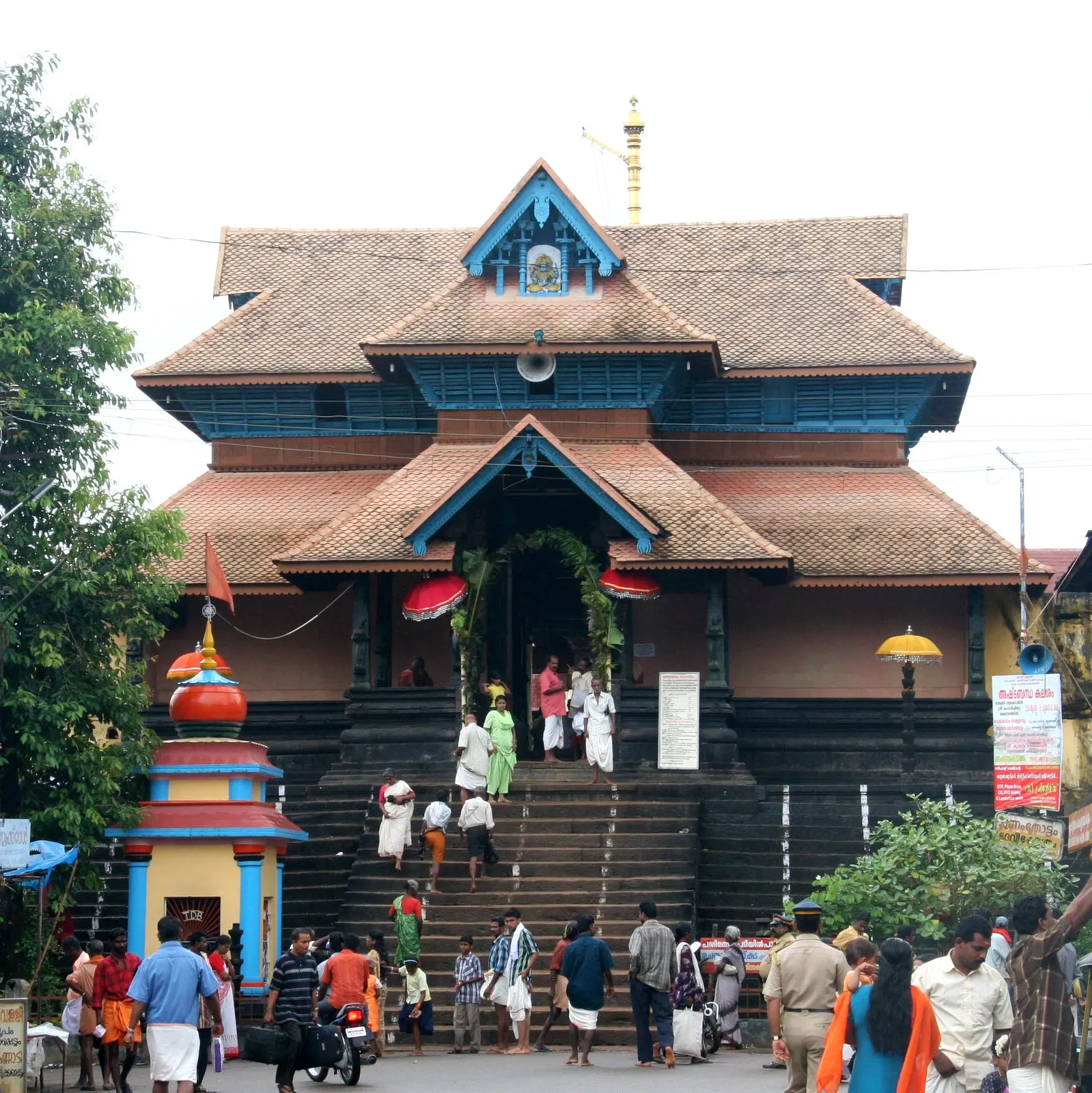
Visit essentials
A quick read before you go
- Duration
- Allow at least an unhurried hour, and substantially more for a major observance or controlled…
- Access
- Kerala Tourism’s 2026 festival calendar lists the Aranmula Boat Race on August 30 on the River…
Overview
The exact record is Aranmula Parthasarathy Temple on the Pamba River in Pathanamthitta district, Kerala, dedicated to Krishna as Parthasarathy, ‘charioteer of Partha’ or Arjuna. Do not merge it with other Parthasarathy temples, the boat-race course, or every Kerala racing boat: its palliyodams belong to a temple-linked ritual world. This guide distinguishes documented history, community-held belief, current practice, visitor guidance, and personal response without turning devotion into spectacle or faith into proof.
Why this place is sacred
The sense of a threshold here comes from practiced attention, inherited story, repeated worship, and care for an exact place. It is not evidence of a measurable energy field. Awe is strongest when it grows from details the visitor can actually encounter and from meanings the custodial community can recognize.
The temple’s original-purpose account is bounded to its importance in Krishna devotion and traditional Arjuna-linked image transfer or re-dedication; these are living sacred histories, not archaeological proof.
Aranmula Parthasarathy Temple has accumulated institutional, devotional, architectural, and visitor-facing layers. Those layers should be read in sequence rather than collapsed into one timeless story. Present worship and stewardship control the visit; historical change is not a loss of sacredness but part of how a living place continues.
Experience and orientation
Outside festival days, approach the temple as a living place of worship beside the Pamba. During Uthrattathi, decorated palliyodams gather, rowers move to distinctive vanjippattu, crowds line the banks, and the water procession recalls protection given to the Thiruvonathoni carrying provisions for a temple feast. The boats are participants in a sacred relationship, not merely equipment in a sport.
Use the mapped point for Aranmula Parthasarathy Temple to find the recognized entrance, then defer to signs, custodians, and active-worship boundaries. A map pin is orientation, not permission to enter residential, sanctuary, security, river, or conservation areas.
Context and lineage
Kerala Tourism identifies the temple as one of the important Krishna temples of Kerala and connects it to Aranmula’s ritual calendar. Traditional narratives link the image to Arjuna and to a transfer or re-dedication at Aranmula. These are living sacred histories, not archaeological proof. The responsible account preserves that distinction while recognizing that the community’s stories explain why the deity, the Pamba, the feast, and the palliyodams belong together.
The lineage of Aranmula Parthasarathy Temple includes the worshipping community, clergy or religious custodians, pilgrims, local workers, and the people who preserve its stories and physical fabric. This page gives institutional and community sources priority and does not invent founders, dates, or secret teachings where the record is silent.
Traditions and practice
Temple worship centers on Krishna as Parthasarathy. Kerala Tourism also documents Valla Sadya, the feast associated with the palliyodams, and the annual water festival on Uthrattathi in the Malayalam month of Chingam. Accounts describe a vow to bring a Thiruvonam feast, a journey on the Thiruvonathoni, communal protection by boats, and later commemoration through procession and race. Sources differ on the race’s age, so no single antiquity claim is presented as settled fact.
Contemporary use remains living rather than reenacted. Visitors should observe the forms actually authorized at Aranmula Parthasarathy Temple; a practice seen online or at another site should not be imported here. Current events can change crowd movement and access, but they do not turn worshippers into performers for an audience.
Begin with two minutes of undistracted observation at Aranmula Parthasarathy Temple. Identify one material detail, one repeated human practice, and one ethical demand the place makes. After leaving, put the takeaway into a small action appropriate to your own tradition or conscience. Do not stage prayer, offerings, touching, or ritual gestures for a photograph.
Hinduism
ActiveParthasarathy is Krishna as guide and charioteer in the Mahabharata and Bhagavad Gita, an image of divine counsel present within human action rather than removed from it. At Aranmula, that relationship is embodied collectively: teams coordinate their strokes, songs hold rhythm, boats carry honor rather than private ownership, and a feast is offered in fulfillment of devotion. The festival’s awe comes from cooperation disciplined into a single movement.
Temple worship centers on Krishna as Parthasarathy. Kerala Tourism also documents Valla Sadya, the feast associated with the palliyodams, and the annual water festival on Uthrattathi in the Malayalam month of Chingam. Accounts describe a vow to bring a Thiruvonam feast, a journey on the Thiruvonathoni, communal protection by boats, and later commemoration through procession and race. Sources differ on the race’s age, so no single antiquity claim is presented as settled fact.
Perspectives and open questions
For devotees, the festival is held within Krishna devotion and temple memory; blessings, vows, offerings, and divine presence are matters of living belief. Historical analysis can document institutions, boats, songs, calendars, and changing competition formats without ruling on those beliefs. Personal experiences of unity or spiritual energy should be described as responses, not measured properties of the river. The most accurate interpretation lets ritual, sport, heritage, and community coexist without flattening one into another.
Scholarly perspective
A source-critical view distinguishes the mapped place, current institution, documented event, and observable practice from claims held through faith. At Aranmula Parthasarathy Temple, that distinction protects both accuracy and devotion: belief is not dismissed, and historical evidence is not inflated.
Living and traditional perspectives
Parthasarathy is Krishna as guide and charioteer in the Mahabharata and Bhagavad Gita, an image of divine counsel present within human action rather than removed from it. At Aranmula, that relationship is embodied collectively: teams coordinate their strokes, songs hold rhythm, boats carry honor rather than private ownership, and a feast is offered in fulfillment of devotion. The festival’s awe comes from cooperation disciplined into a single movement.
Alternative interpretations
Some visitors may describe Aranmula Parthasarathy Temple through universal spirituality, energy, synchronicity, or esoteric symbolism. Such language remains a personal interpretation unless a cited custodial tradition uses it. It must not be presented as the site’s own teaching or as scientific measurement.
Open questions
Dynamic access and some historical details remain uncertain. The page does not turn those gaps into mystery. For Aranmula Parthasarathy Temple, uncertainty is named, attributed, and left open for better evidence.
Plan your visit
Access and arrival
Kerala Tourism’s 2026 festival calendar lists the Aranmula Boat Race on August 30 on the River Pamba. Event timing, crowd controls, weather, and river conditions can change, so confirm close to the date with Kerala Tourism or the Aranmula Palliyoda Seva Sangam. For an ordinary temple visit, use the recognized entrance and current local guidance. Monsoon conditions require particular care near the river.
No lodging at Aranmula Parthasarathy Temple is implied. Use established accommodation in Aranmula and do not assume that a convent, temple, or pilgrimage facility accepts overnight guests.
Respectful visit
Choose modest clothing suitable for an active temple in Aranmula. Follow any more specific instructions on head covering, shoulders, legs, footwear, or ritual purity without argument.
Follow temple rules for dress, footwear, photography, and entry; conditions may differ for non-Hindu visitors and should be confirmed directly rather than guessed. During the water festival, respect riverbank controls and local instructions. Do not board, touch, or stage photographs on a palliyodam without permission. Avoid calling every long Kerala boat a ‘snake boat’ when the community uses the temple-linked name palliyodam.
Permission is contextual and can be withdrawn; a reusable image license does not confer access to private people or spaces.
Use only offerings, donation points, or service opportunities explicitly authorized at Aranmula Parthasarathy Temple. Never leave objects, food, money, candles, or ritual materials in unapproved places.
Barriers, queues, sanctuary limits, residential rooms, security checks, river controls, and closed doors at Aranmula Parthasarathy Temple are binding. Do not search for alternate access or ask another visitor to bypass them.
Do not universalize Aranmula Parthasarathy Temple as proof of a generic mystical claim. Do not appropriate a community’s sacred vocabulary, intrude on worship, or use poverty, ritual intensity, or crowds as exotic scenery.
Location
Map loads as you approach this section.
Pilgrim reflections
A portrait of encounter, not a score
Pilgrims describe what they felt, how present they could become, and whether the place would shape a journey. There are no stars and no ranking of traditions.
No reviewed reflections yet
The first pilgrims can help describe the character of being here.
Share a reflection
Available after an account-backed “Been there.” Every reflection is reviewed before publication.
Nearby sacred places
Explore other sacred places in the region. Proximity does not establish access or travel time; check each place’s guidance.

Chengannur Mahadeva Temple, Chengannur, Kerala
Chengannur, Kerala, India
8.3 km away

Chettikulangara Bhagavathy Temple, Mavelikkara, Kerala
Chettikulangara, Kerala, India
21.8 km away
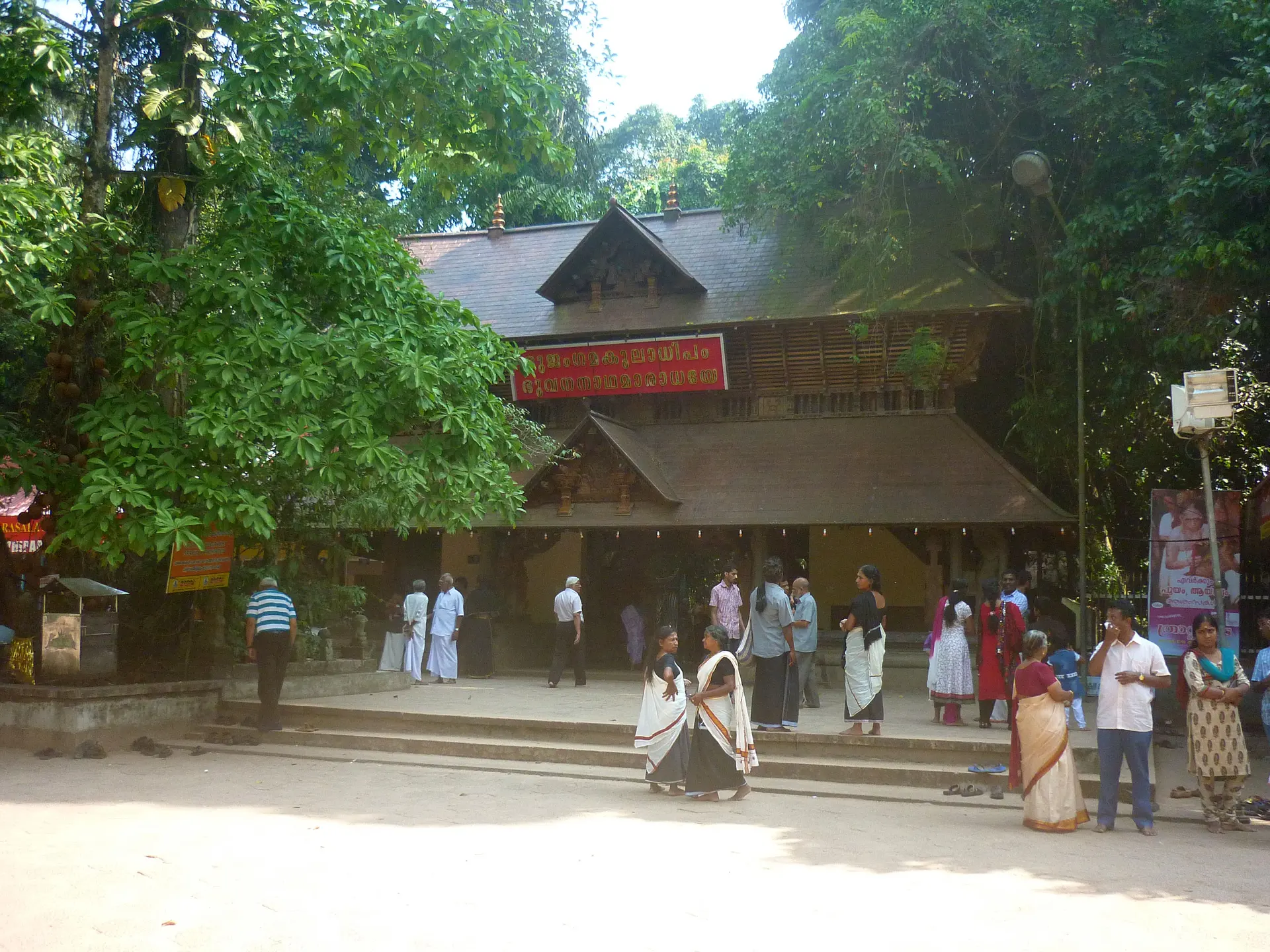
Mannarasala Sree Nagaraja Temple
Haripad, Kerala, India
26.9 km away

Ettumanoor Mahadeva Temple
Ettumanoor, Kerala, India
40.9 km away
References
Sources consulted for this page. Source categories describe the publication, not a guarantee that every claim is verified. Traditional accounts and outside interpretations may differ.
- 01Aranmula Parthasarathy Temple — Kerala TourismofficialExact temple identity, Krishna dedication, Pamba setting, Valla Sadya, and boat-race association.
- 02Aranmula Boat Race — Kerala TourismofficialUthrattathi timing, temple ritual relationship, palliyodams, songs, narratives, and uncertainty about age.
- 03Festival Calendar of Kerala 2026 — Kerala TourismofficialCurrent 2026 event date: August 30, River Pamba, Pathanamthitta.
- 04Aranmula Vallamkali — Aranmula Palliyoda Seva SangamSource contextCommunity organizer confirmation of the temple, Vallamkali, Vallasadya, and palliyodam tradition.
- 05Aranmula Temple — SudhirnSource contextExact temple photograph; CC BY 3.0; original work by Wikimedia contributor Sudhirn.
- 06People Riding on Big Boats on Water — Titoni ThomasSource contextExact Aranmula palliyodam photograph; Pexels License; photographer profile https://www.pexels.com/@titoni-thomas-70203067/.
Photo gallery
2 curated photos
Share a photo
Help visitors recognize Aranmula Parthasarathy Temple. Every submission is reviewed before publication.