Mayureshwar Temple, Morgaon
The temple where the Ashtavinayak circuit traditionally begins and returns
Understand sacred places, explore living traditions, and learn how to engage respectfully with Pilgrim Map.
Access has not been verified. Check current local guidance before planning a visit.
Morgaon, Maharashtra, India
Read the sources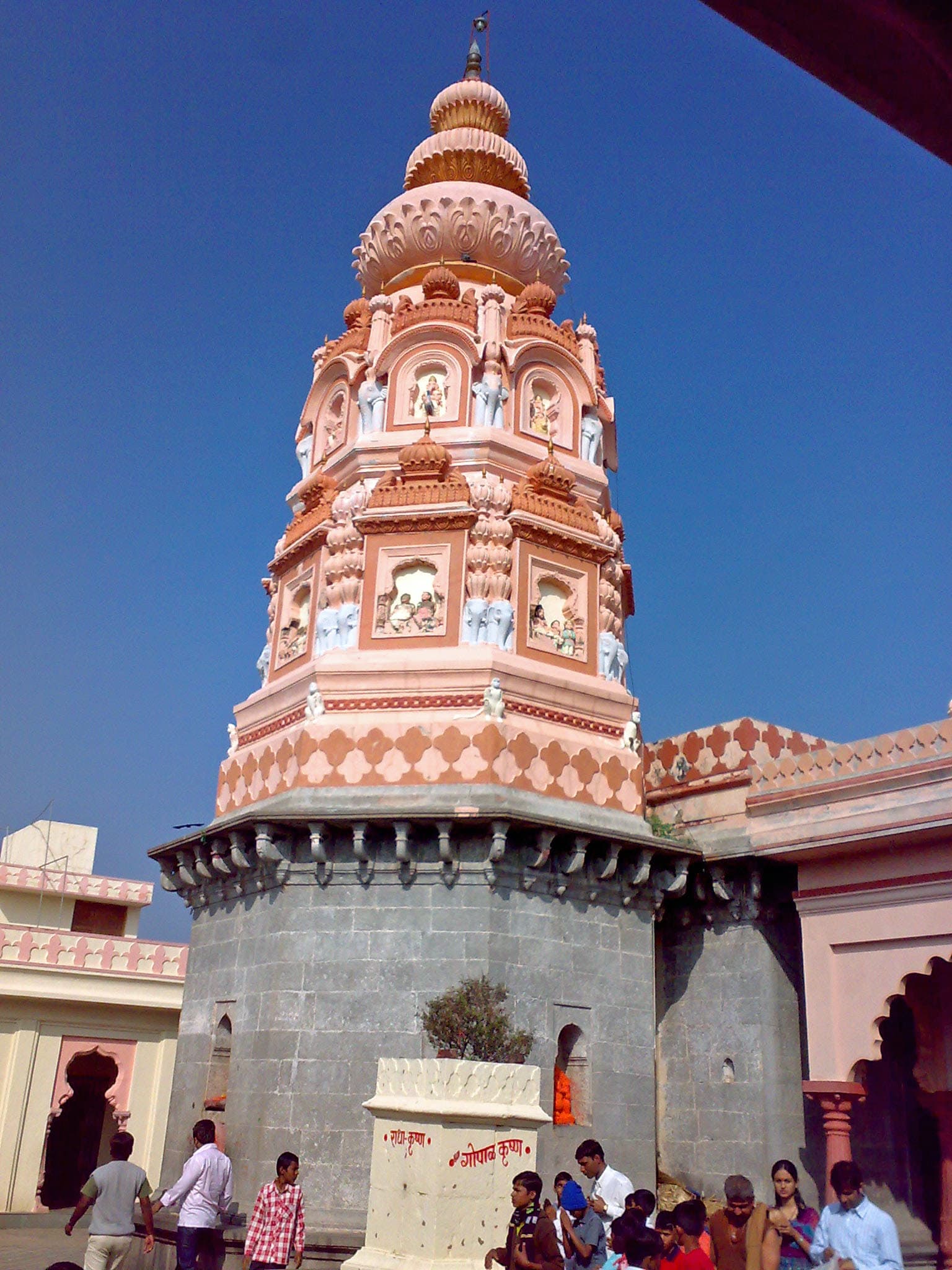
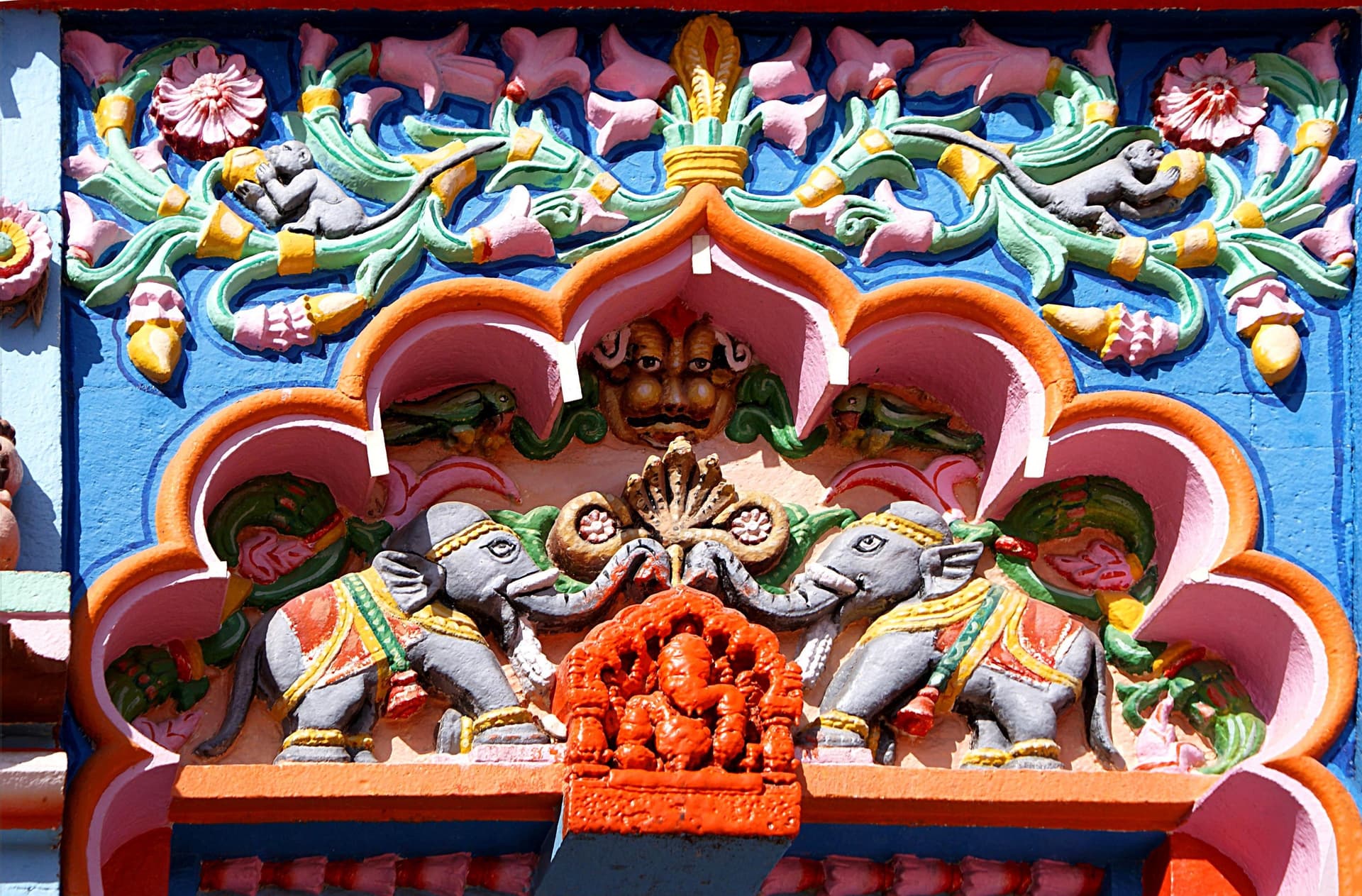
Mayureshwar Temple, Morgaon - rights-reviewed Wikimedia image. Image source · CC BY-SA 3.0
Station 1 of 8
Ashtavinayak YatraVisit essentials
A quick read before you go
- Duration
- Allow enough time for queues, darshan, and unhurried observation; demand varies.
- Access
- Whole-site coordinates: 18.27605556, 74.32138889.
Overview
The exact entity is the walled Mayureshwar or Moreshwar temple in Morgaon, not another Ganesha shrine carrying the Mayureshwar name. State tourism, the temple trust, the supplied encyclopedic record, and matching geographic coordinates identify the same whole-site complex. The temple belongs to a living pilgrimage rather than a closed historical landscape.
It is the customary first and final station; each shrine is encountered as a distinct form of Ganesha, and the circuit is completed through the relationship among all eight, not as interchangeable stops.
Why this place is sacred
A high enclosure and corner towers give the precinct a fortified profile. An unusual Nandi figure and the east-facing Ganesha image distinguish its visual order. Pilgrims depart from Morgaon and return after the other shrines to complete the yatra. From a Ganapatya perspective, Morgaon is a primary seat of devotion to Ganesha as supreme reality, not merely the first itinerary stop. Historical analysis documents patronage and growth; the Sindhu narrative is the community’s sacred account of this Ganesha form.
Practitioners locate sacred quality in worship, narrative, place, and repeated pilgrimage, not a promised sensation or measurable claim.
An active place of Ganesha worship whose present meaning is inseparable from the Ashtavinayak Yatra.
The temple’s precise foundation remains uncertain. Later patronage and institutional growth made Morgaon a durable centre for organized Ganesha devotion and pilgrimage.
Experience and orientation
On arrival, read posted directions before joining a queue or entering a hall. Darshan, offerings, prayer, and circumambulation are part of ordinary worship. For circuit pilgrims, formally beginning and concluding at Morgaon is itself the defining practice. Visitors should give priority to worshippers, follow queue directions, and confirm photography rules at the temple. Architectural and landscape details can be observed without interrupting darshan.
The Ashtavinayak setting matters even for a single-site visit: the form of Ganesha worshipped here has a name, story, and relationship to the other seven shrines that should not be flattened into generic temple language.
Operating arrangements can change with festivals and temple administration. Confirm current access locally and allow worshippers to set the pace near the sanctum.
Context and lineage
According to the temple's sacred narrative, Ganesha took the form of Mayureshwar, riding a peacock, and defeated the destructive figure Sindhu. This is a theological account maintained within the pilgrimage tradition, not a dated historical event.
Ganapatya Hindu devotion within the living Ashtavinayak pilgrimage tradition of Maharashtra.
Traditions and practice
Darshan, prayer, offerings, and respectful movement through the precinct are central forms of participation.
The shrine continues to receive local worshippers and Ashtavinayak pilgrims. Current ritual and queue arrangements are set onsite.
Pause before entering, observe how worshippers move through the space, and participate only in ways clearly open to visitors.
Ganapatya Hinduism and the Ashtavinayak Yatra
ActiveFrom a Ganapatya perspective, Morgaon is more than the first dot on a travel itinerary; it is a primary seat of devotion to Ganesha as supreme reality. Historical analysis can document patronage and the growth of the shrine, while the Sindhu narrative belongs to the community's sacred account of why this form of Ganesha is venerated here.
Perspectives and open questions
Historical, devotional, and visitor perspectives overlap here, but they do not use the same standard of evidence.
Scholarly perspective
The precise foundation date is not established in the consulted sources. Historical accounts associate the temple with the Ganapatya saint Morya Gosavi and describe later support from Peshwa rulers and Morya Gosavi's lineage. Its importance is therefore both architectural and institutional: Morgaon became a durable centre for organized Ganesha devotion as well as a pilgrimage station.
Living and traditional perspectives
Temple tradition identifies Mayureshwar as Ganesha’s peacock-riding form who defeated Sindhu, a theological account rather than a dated historical event.
Alternative interpretations
Claims about invisible energy or guaranteed transformation are not needed and are not supported by the research record.
Open questions
The following remains uncertain: the exact foundation date remains uncertain; current opening hours and ritual fees were intentionally not frozen into the entry.
Plan your visit
Access and arrival
Whole-site coordinates: 18.27605556, 74.32138889. Use the canonical name and locality when navigating.
No lodging recommendation is asserted. Choose current, independently verified options appropriate to the route and season.
Respectful visit
Modest clothing appropriate to an active Hindu temple; follow any additional onsite requirement.
Confirm onsite. Never photograph the sanctum or worshippers where permission is absent.
Follow local practice and use authorized counters or receptacles.
Sanctum access, footwear, devices, and ritual participation may be restricted onsite.
Do not infer permission to photograph, enter restricted areas, or bypass a queue. Avoid presenting the visit as a guaranteed spiritual outcome.
Location
Map loads as you approach this section.
Pilgrim reflections
A portrait of encounter, not a score
Pilgrims describe what they felt, how present they could become, and whether the place would shape a journey. There are no stars and no ranking of traditions.
No reviewed reflections yet
The first pilgrims can help describe the character of being here.
Share a reflection
Available after an account-backed “Been there.” Every reflection is reviewed before publication.
Nearby sacred places
Explore other sacred places in the region. Proximity does not establish access or travel time; check each place’s guidance.
References
Sources consulted for this page. Source categories describe the publication, not a guarantee that every claim is verified. Traditional accounts and outside interpretations may differ.
- 01Morgaon — Department of Tourism, Government of MaharashtraofficialExact shrine identity, Ashtavinayak membership, sacred narrative, architecture, and visitor context.
- 02A Divine Journey: Ashtavinayak Pilgrimage — Department of Tourism, Government of MaharashtraofficialGovernment route leaflet identifying the eight canonical shrines and route sequence.
- 03Shri Mayureshwar Mandir, Morgaon — Chinchwad Devasthan TrustofficialGovernment or custodian-level corroboration of locality, identity, history, and active religious significance.
- 04Wikimedia Commons image for Mayureshwar Temple, Morgaon — RedtigerxyzacademicExact-entity image and machine-resolved reuse terms: CC BY-SA 3.0.
- 05Ganesha Temple, Morgaon — Wikipedia contributorsacademicSupplied exact-entity reference used for names, geographic cross-checking, and source discovery.
- 06Q6912006 — Wikidata contributorsacademicStructured entity identifier and coordinate cross-check; rejected where contradicted by exact official locality evidence.
Share a photo
Help visitors recognize Mayureshwar Temple, Morgaon. Every submission is reviewed before publication.