Bhaja Caves
A prayer hall and monastic rooms above an old Deccan passage
Understand sacred places, explore living traditions, and learn how to engage respectfully with Pilgrim Map.
Access has not been verified. Check current local guidance before planning a visit.
Maharashtra, India
Read the sources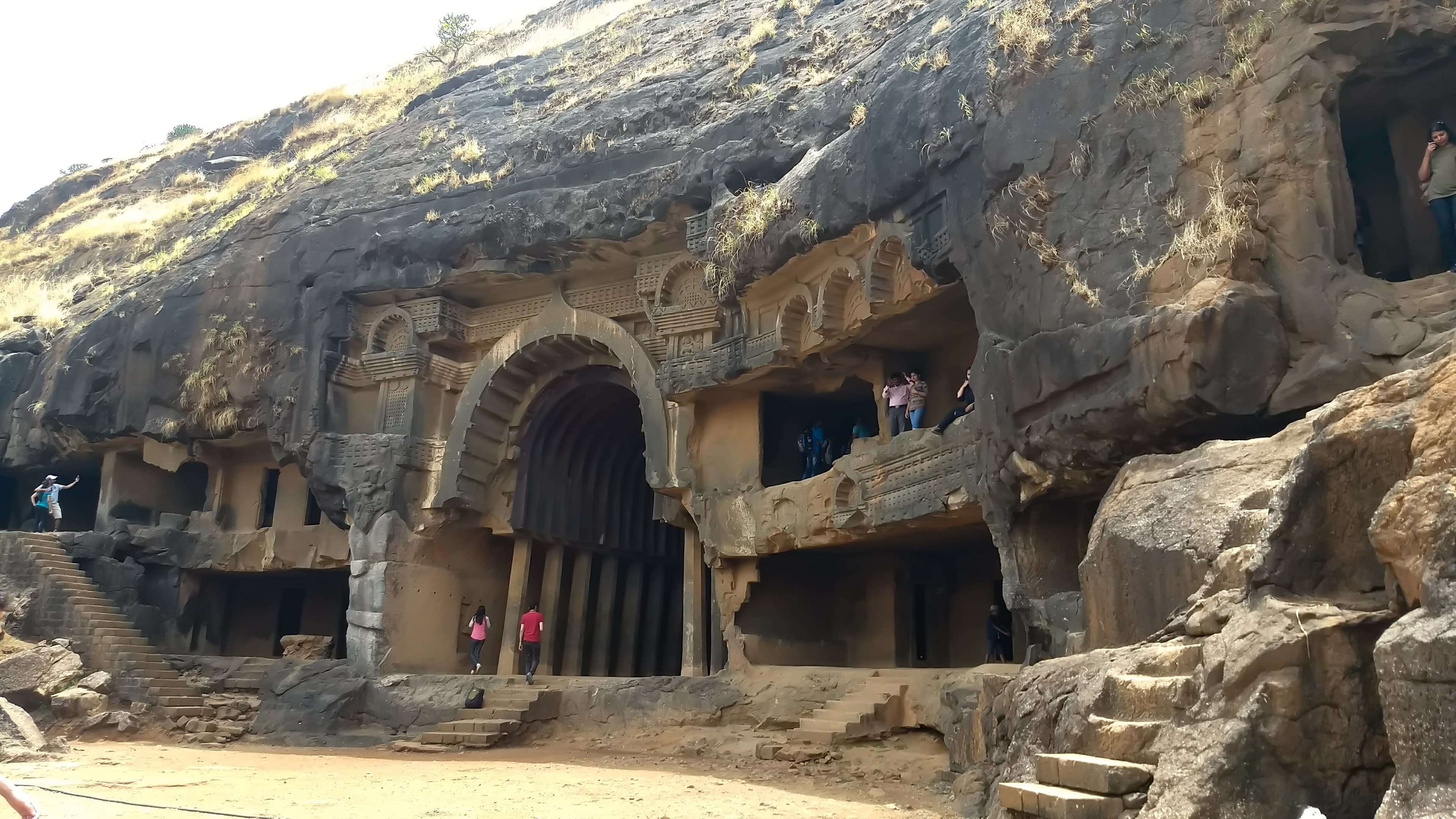
Rock-cut façades and entrances at Bhaja. Image source · CC BY-SA 4.0
Visit essentials
A quick read before you go
- Etiquette
- Keep to authorized paths and leave carvings untouched.
Overview
Above Bhaja village near Lonavala, a group of Buddhist caves brings a monastic settlement into view through its different kinds of space. A prayer hall, residential chambers and carved verandas served different purposes. Reading those differences gives the hillside a human scale: this was a place for a community as well as devotion.
Why this place is sacred
The distinction between chaitya, or prayer hall, and vihara, or monastic residence, is a useful starting point. A sacred building could support both shared observance and the less visible routines of learning and residence. The surviving architecture lets visitors consider those activities without pretending to reconstruct an entire ancient ceremony.
Context and lineage
Maharashtra Tourism dates Bhaja’s beginnings to around the second century BCE. Its account places Buddhist monks in these rock-cut rooms and identifies reliefs associated with religious and everyday life. The national tourism authority connects the settlement with the routes between the Arabian Sea and the Deccan. Together these accounts situate monastic retreat within a landscape traversed by travelers, rather than outside the world of exchange.
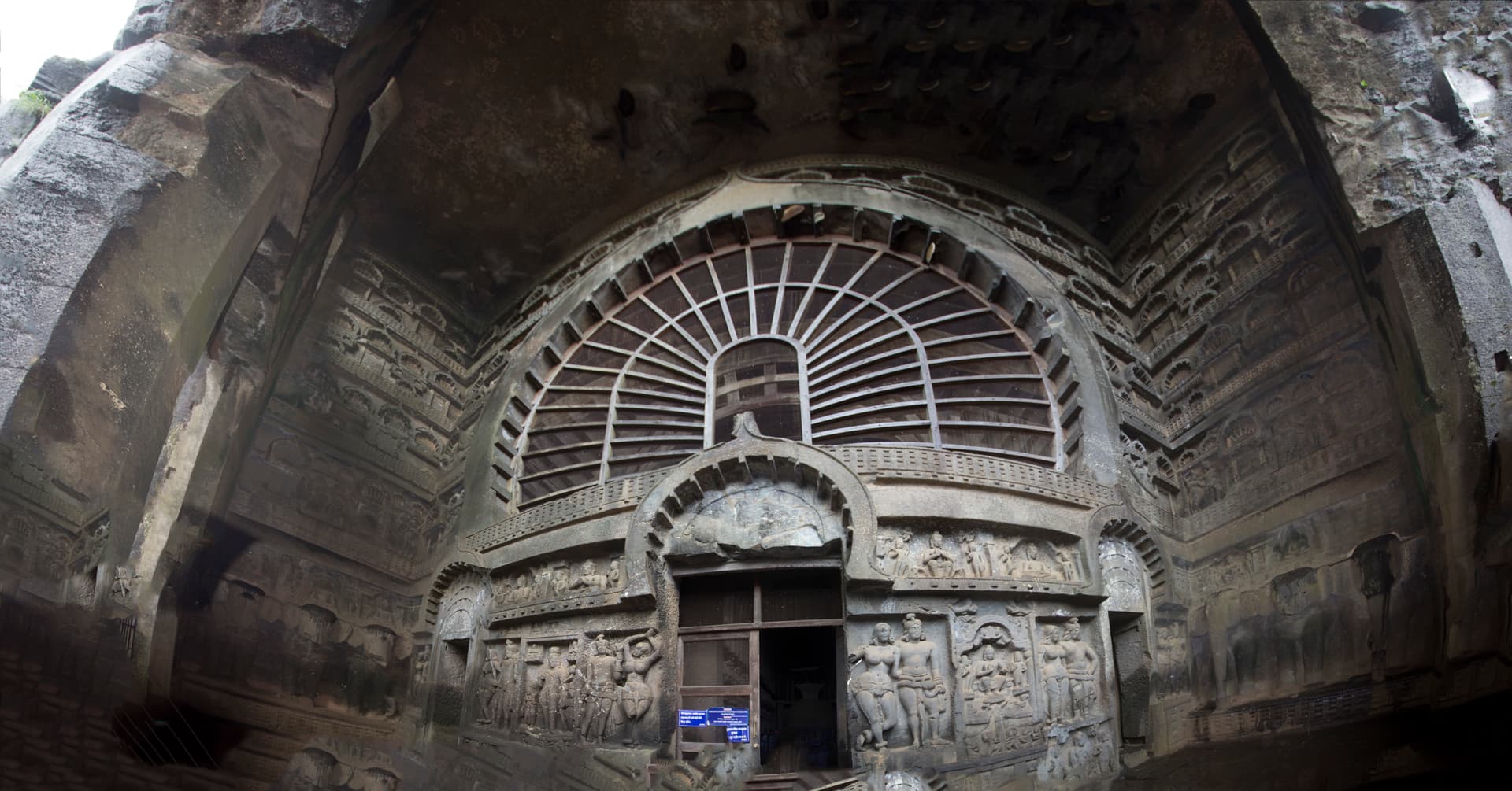
The national description identifies Surya and Indra among the veranda reliefs. Their presence is worth noticing within the Buddhist setting. No sufficiently supported local founding tale was found in the consulted sources, so a named founder or miraculous origin is not supplied here.
Traditions and practice
Look first at the layout, then at individual carvings. Compare the communal hall with smaller rooms and consider how architecture organizes attention differently in each. This is suggested contemplative viewing, not a reconstruction of ancient Buddhist ritual. Give other visitors room to look without gathering against fragile reliefs.
Buddhism
HistoricalSee the source-linked historical and devotional account above.
Plan your visit
The published approach is from the Lonavala area, with Malavli as a nearby rail connection and a hill ascent to the caves. Confirm admission and the condition of the approach with the monument staff or Maharashtra Tourism. Uneven or wet surfaces may affect a visit. Verified mobile coverage, step-free access and emergency arrangements were not found; ask locally before starting. Karla offers a related Buddhist cave setting nearby.
Respectful visit
Keep to authorized paths and leave carvings untouched. Ask site staff about photography restrictions before using specialist equipment; current guidance should be sought for a current photography permit policy.
Location
Map loads as you approach this section.
Pilgrim reflections
A portrait of encounter, not a score
Pilgrims describe what they felt, how present they could become, and whether the place would shape a journey. There are no stars and no ranking of traditions.
No reviewed reflections yet
The first pilgrims can help describe the character of being here.
Share a reflection
Available after an account-backed “Been there.” Every reflection is reviewed before publication.
Nearby sacred places
Explore other sacred places in the region. Proximity does not establish access or travel time; check each place’s guidance.

References
Sources consulted for this page. Source categories describe the publication, not a guarantee that every claim is verified. Traditional accounts and outside interpretations may differ.
- 01Maharashtra Tourism: BhajaofficialLocation, approximate BCE chronology, monastic function and approach. Avoid unsupported generalizations about sect continuity.
- 02Ministry of Tourism: Bhaja CavesofficialTrade route and Surya/Indra reliefs. Do not adopt its inconsistent century wording or tabla-origin claim.
- 03Maymand nomination dossier: comparative cave architectureofficialComparative section p.238 names Bhaja among early cave temples and discusses religious-commercial connections; not evidence of UNESCO inscription for Bhaja.
- 04Bhaja Caves — geographic identity reference — Wikipedia contributorsacademicSecondary geographic identity and representative coordinate only; religious and historical claims use primary sources above.
Share a photo
Help visitors recognize Bhaja Caves. Every submission is reviewed before publication.