Lake Fundudzi
Ancestral waters under Vhatavhatsindi custodianship
Understand sacred places, explore living traditions, and learn how to engage respectfully with Pilgrim Map.
Access has not been verified. Check current local guidance before planning a visit.
Thulamela Local Municipality, Limpopo, South Africa
Read the sources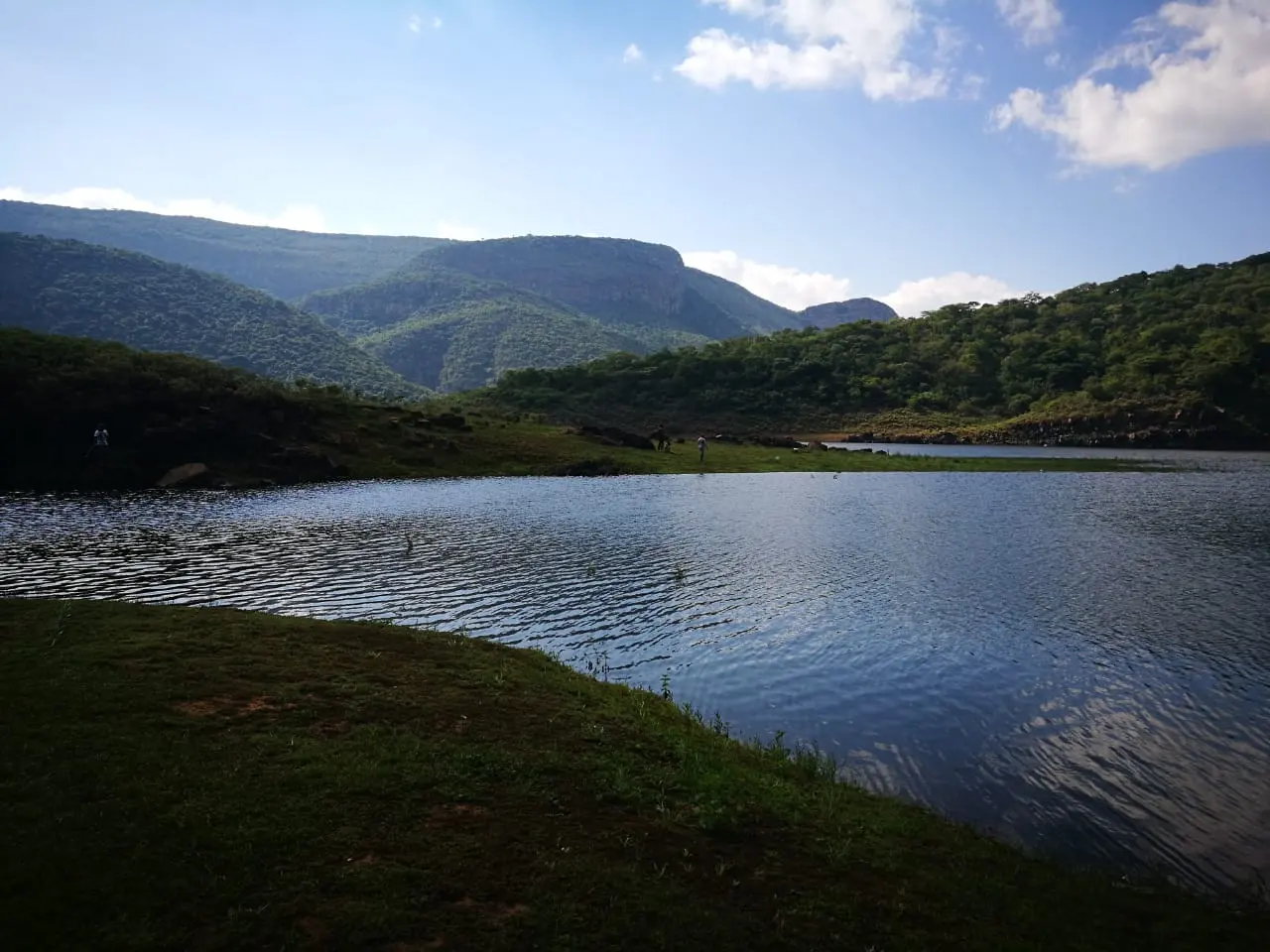
Lake Fundudzi in the Soutpansberg in the Limpopo Province of South Africa. Image source · CC BY-SA 4.0
Visit essentials
A quick read before you go
- Best time
- No public ceremony timetable or verified visitor season is supplied.
- Access
- Access and any permitted viewing must be confirmed with the lake’s custodians.
Overview
Lake Fundudzi is a living sacred place whose meaning is held through community relationships, ancestral memory, and custodianship. A description of the water alone cannot describe that landscape. Public heritage recognition acknowledges its cultural significance, but recognition does not transfer authority over the place to visitors.
The South African Heritage Resources Agency’s public account identifies ancestral presence and protective beings associated with the lake. These accounts belong to a religious understanding of place. They are not promises of what an outsider will see, and they do not imply that ceremonies are available to attend or reproduce.
The lake also appears in research on the relationship between Venda water knowledge and conservation. That perspective makes room for cultural responsibilities in the care of water. It does not reduce sacred relationships to an environmental technique. Readers can learn from publicly shared history and narrative while leaving the terms of access and the limits of disclosure with custodians. This guide therefore offers context rather than a route to the shore.
Why this place is sacred
For the Vhatavhatsindi, the lake’s waters belong to a relationship with ancestors that continues in the present. South Africa’s heritage declaration recognizes this living cultural landscape and its custodianship. Respect for the place therefore includes respect for the people who hold that relationship.
Experience and orientation
Begin with public heritage accounts. If you seek a visit, obtain permission through the appropriate local custodial channel before approaching sacred areas. A roadside description, tourism listing, or guide’s presence alone should not be taken as permission.
Context and lineage
In the public account discussed by Magoma and Pikirayi, a traveler is refused food and shelter by a village. The traveler curses the settlement, and water rises over it. The story continues in accounts of drums, cattle and human voices heard beneath the lake: the submerged village remains present in the landscape’s memory. This is one published Fundudzi narrative. Separately, SAHRA records the lake’s association with ancestors, a python deity and a White Crocodile that protects ancestral spirits.
Traditions and practice
The heritage declaration recognizes continuing ritual relationships with the lake. Details of performance and participation belong with the custodians. This guide does not supply ceremonial instructions.
Contemporary research treats Venda knowledge of water as relevant to conservation and governance. Respect for that knowledge includes recognizing the authority of its holders, not simply extracting useful practices from it.
Read the attributed account before planning a visit. Give worshippers space, follow the directions of custodians, and carry out anything you bring in.
Vhavenda traditions, particularly Vhatavhatsindi custodianship
ActiveThe lake is part of the living tradition described in this profile.
Publicly documented practice is described in the practices section.
Perspectives and open questions
Public traditional accounts, historical documentation, and present access requirements answer different questions.
Scholarly perspective
The 2025 study examines how sacred understandings of water relate to conservation. The 2014 heritage declaration documents formal recognition. These sources describe different aspects of the landscape and do not replace community authority.
Living and traditional perspectives
In the Vhavenda accounts publicly recorded by heritage and scholarly sources, the water is associated with ancestors and protective presence. Custodial boundaries belong within that understanding, rather than being obstacles to an otherwise public attraction.
Open questions
Current access conditions and site-specific visitor arrangements remain uncertain; confirm them before planning a visit.
Plan your visit
When to visit
No public ceremony timetable or verified visitor season is supplied. Permission comes before timing a visit.
Access and arrival
Access and any permitted viewing must be confirmed with the lake’s custodians. No current visitor authorization or authorized booking contact was verified for this guide. This listing does not establish permission to approach the shore or participate in ceremonies.
No current accommodation or booking details verified.
Respectful visit
No site-specific dress rule was verified. Follow any directions provided by custodians or organizers.
Ask custodians before any recording. Permission to view the landscape does not automatically include permission to photograph people, ceremonies, or sacred features.
Do not place substances or objects in the water. Ask custodians about appropriate support.
Follow closures and custodial directions; the access section explains the limits of this guide.
Descriptions of religious practice are not visitor instructions.
Location
Map loads as you approach this section.
Pilgrim reflections
A portrait of encounter, not a score
Pilgrims describe what they felt, how present they could become, and whether the place would shape a journey. There are no stars and no ranking of traditions.
No reviewed reflections yet
The first pilgrims can help describe the character of being here.
Share a reflection
Available after an account-backed “Been there.” Every reflection is reviewed before publication.
Nearby sacred places
Explore other sacred places in the region. Proximity does not establish access or travel time; check each place’s guidance.

References
Sources consulted for this page. Source categories describe the publication, not a guarantee that every claim is verified. Traditional accounts and outside interpretations may differ.
- 01Lake Fundudzi Cultural Landscape declaration — South African Heritage Resources Agency / Government Gazetteofficial2014 declaration identifies living heritage and Vhatavhatsindi custodianship. Coordinates and ceremony details are not reproduced.
- 02SAHRA Information Booklet — Lake Fundudzi — South African Heritage Resources AgencyofficialPublic heritage account of ancestral association, python and White Crocodile. The only-natural-inland-lake superlative is not adopted.
- 03Zwisima na zwipise ndi fhethu ha zwifho — Munyadziwa Magoma and Innocent Pikirayiacademic2025 study of Venda hydrological knowledge and conservation, including public Fundudzi narrative. Academic publication does not authorize ceremonial participation.
Photo gallery
2 curated photos
Share a photo
Help visitors recognize Lake Fundudzi. Every submission is reviewed before publication.