Kofuku-ji
Hossō teaching, reconstruction, and many halls within open Nara
Understand sacred places, explore living traditions, and learn how to engage respectfully with Pilgrim Map.
Access has not been verified. Check current local guidance before planning a visit.
Nara, Nara Prefecture, Japan
Read the sources
Image of Kofuku-ji. Image source
Visit essentials
A quick read before you go
- Duration
- Let Kofuku-ji's admitted route determine duration.
- Access
- Access begins in Nara, Nara Prefecture.
Overview
Kōfuku-ji opens directly into Nara: paths cross the former monastic enclosure, deer and commuters pass its edges, and pagodas rise without a single enclosing wall. This permeability can resemble a park, but its halls remain places of worship and its active Hossō institution extends beyond the famous silhouette.
Founded in the capital in 710 from an earlier Fujiwara family temple, Kōfuku-ji accumulated religious and political authority, lost buildings repeatedly to fire and conflict, and undertook long reconstruction. The rebuilt Central Golden Hall belongs to that cycle of loss and renewal—an institution repeatedly made whole, not a frozen medieval precinct. Nan’endō is specifically an octagonal hall and Saigoku pilgrimage station within Kōfuku-ji, not a substitute for the parent temple.
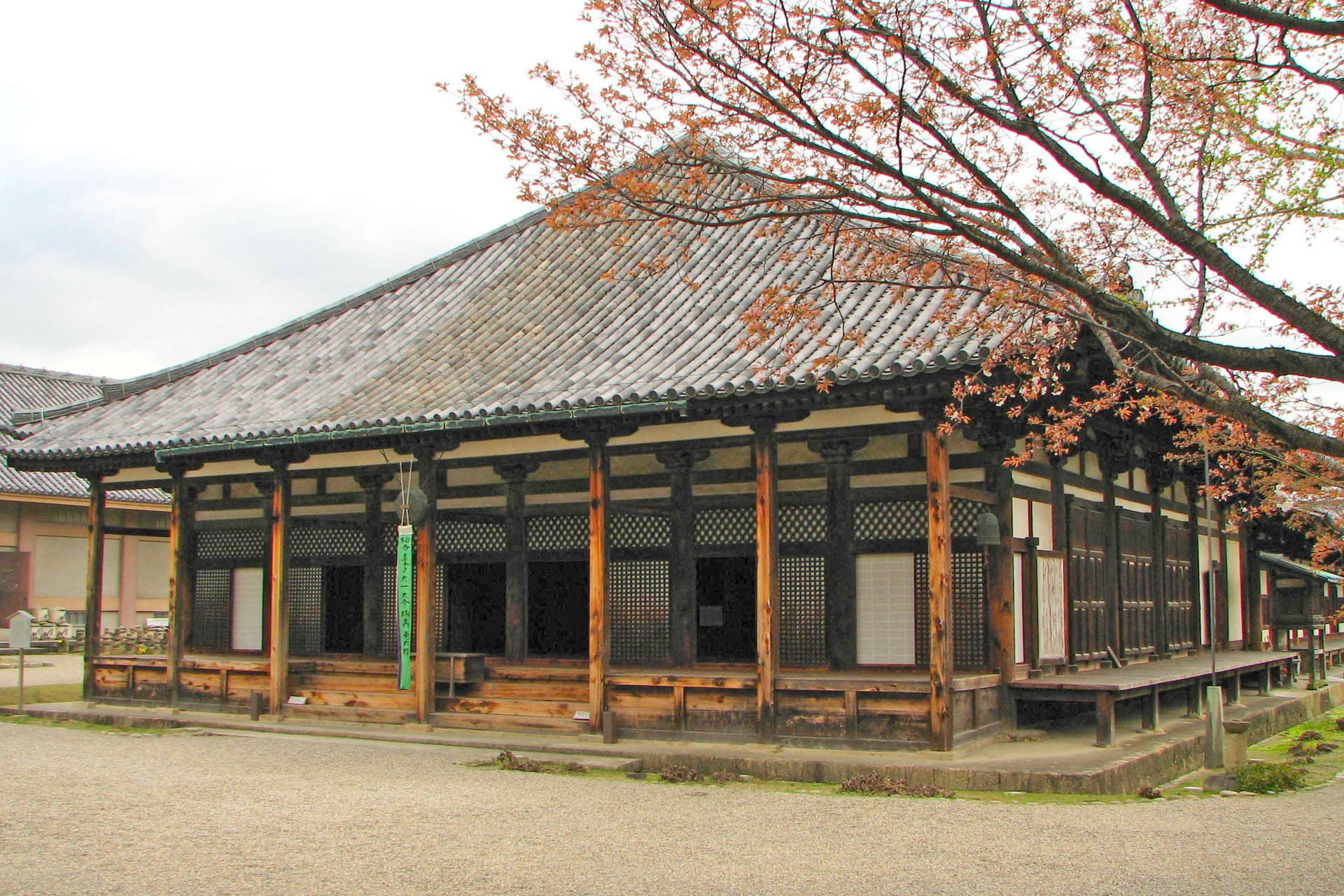
The Central and Eastern Golden Halls, five-storey pagoda, northern octagon, museum treasures, and Nan’endō hold several devotional centers within one monastery.
Material study centers on the pagoda and golden halls; religious interpretation returns to Shaka Nyorai, Yakushi Nyorai, Kannon, and Hossō. Prayer in the golden halls, Hossō services, and memorial observance continue through repair and custodial judgment. Participation follows instruction rather than imitation; photography yields to prayer and privacy, and conservation protects matter and meaning. Authorities distinguish heritage from doctrine, and visitors should not claim private or universal knowledge.
Places within this site
Why this place is sacred
Kōfuku-ji’s sacred register is plural. Hossō teaching, Fujiwara memorial identity, protected sculpture, and Kannon pilgrimage occupy different halls without collapsing into one generalized “Nara Buddhism.”
Devotion centered on Shaka Nyorai, Yakushi Nyorai, Kannon, and the Hossō teaching lineage.
Kofuku-ji includes repair and institutional change.
Experience and orientation
Map the complex before entering a hall. Remove photography expectations at doors displaying restrictions, keep pilgrimage queues clear at Nan’endō, and let reconstruction barriers define the route.
Kofuku-ji publishes the governing approach and route.
Context and lineage
Kofuku-ji keeps its origin story site-specific.
Hossō Buddhism
Traditions and practice
At Kofuku-ji, documented observance includes prayer in the golden halls, Hossō services, memorial observance, and pilgrimage to Nan'endō. The named sacred focus is Shaka Nyorai, Yakushi Nyorai, Kannon, and the Hossō teaching lineage.
Custodians at Kofuku-ji maintain the practices and boundaries appropriate to this temple.
Watch before acting at Kofuku-ji; attention is welcome, borrowed ritual is unnecessary.
Hossō Buddhism
ActiveKofuku-ji is sacred within Hossō Buddhism.
See the documented observances specific to Kofuku-ji.
Perspectives and open questions
Kofuku-ji requires historical, custodial, and tradition-led readings to remain distinct.
Scholarly perspective
Historical interpretation follows the reviewed source record for Kofuku-ji.
Living and traditional perspectives
Hossō Buddhism supplies Kofuku-ji's authoritative sacred frame.
Alternative interpretations
Kofuku-ji keeps its alternative site-specific.
Open questions
Changeable access and private ritual details remain outside this account.
Plan your visit
Access and arrival
Access begins in Nara, Nara Prefecture.
Use established lodging serving Nara.
Respectful visit
Choose clothing suitable for worship at Kofuku-ji.
Kofuku-ji sets camera access at each boundary.
Use only offering places authorized by Kofuku-ji.
Distinguish public grounds from hall interiors, do not photograph protected images, and keep nan'endō accessible to saigoku pilgrims.
Private, restricted, or closed practice at Kofuku-ji remains outside visitor access.
Location
Map loads as you approach this section.
Pilgrim reflections
A portrait of encounter, not a score
Pilgrims describe what they felt, how present they could become, and whether the place would shape a journey. There are no stars and no ranking of traditions.
No reviewed reflections yet
The first pilgrims can help describe the character of being here.
Share a reflection
Available after an account-backed “Been there.” Every reflection is reviewed before publication.
Nearby sacred places
Explore other sacred places in the region. Proximity does not establish access or travel time; check each place’s guidance.


References
Sources consulted for this page. Source categories describe the publication, not a guarantee that every claim is verified. Traditional accounts and outside interpretations may differ.
- 01Kofuku-ji official or custodial source — Kofuku-ji custodial institution or responsible authorityofficialPrimary or delegated source for identity, religious meaning, custodianship, and visitor boundaries.
- 02Google Maps exact-place record for Kofuku-ji — Google PlacesofficialExact-place identity, locality, coordinates, and operational identity; changeable details are not repeated as stable prose.
- 03Official visitor interpretation for Kofuku-ji — National or local destination authorityofficialPublic interpretation and access context from a governmental or destination authority.
- 04Historic Monuments of Ancient Nara — UNESCO World Heritage CentreofficialOfficial World Heritage property record, significance statement, and component context.
- 05Kōfuku-ji — Wikipedia contributorsSource contextGeneral identity and historical cross-check; substantive claims are bounded by higher-authority sources.
- 06Wikidata record associated with Kōfuku-ji — Wikidata contributorsacademicStructured identity and coordinate cross-check.
Pilgrim glossary
- Kannon
- The bodhisattva of compassion, central to many East Asian pilgrimage routes.
Share a photo
Help visitors recognize Kofuku-ji. Every submission is reviewed before publication.