Kanheri Caves
A Buddhist monastic landscape within Mumbai’s forested hills
Understand sacred places, explore living traditions, and learn how to engage respectfully with Pilgrim Map.
Access has not been verified. Check current local guidance before planning a visit.
Maharashtra, India
Read the sources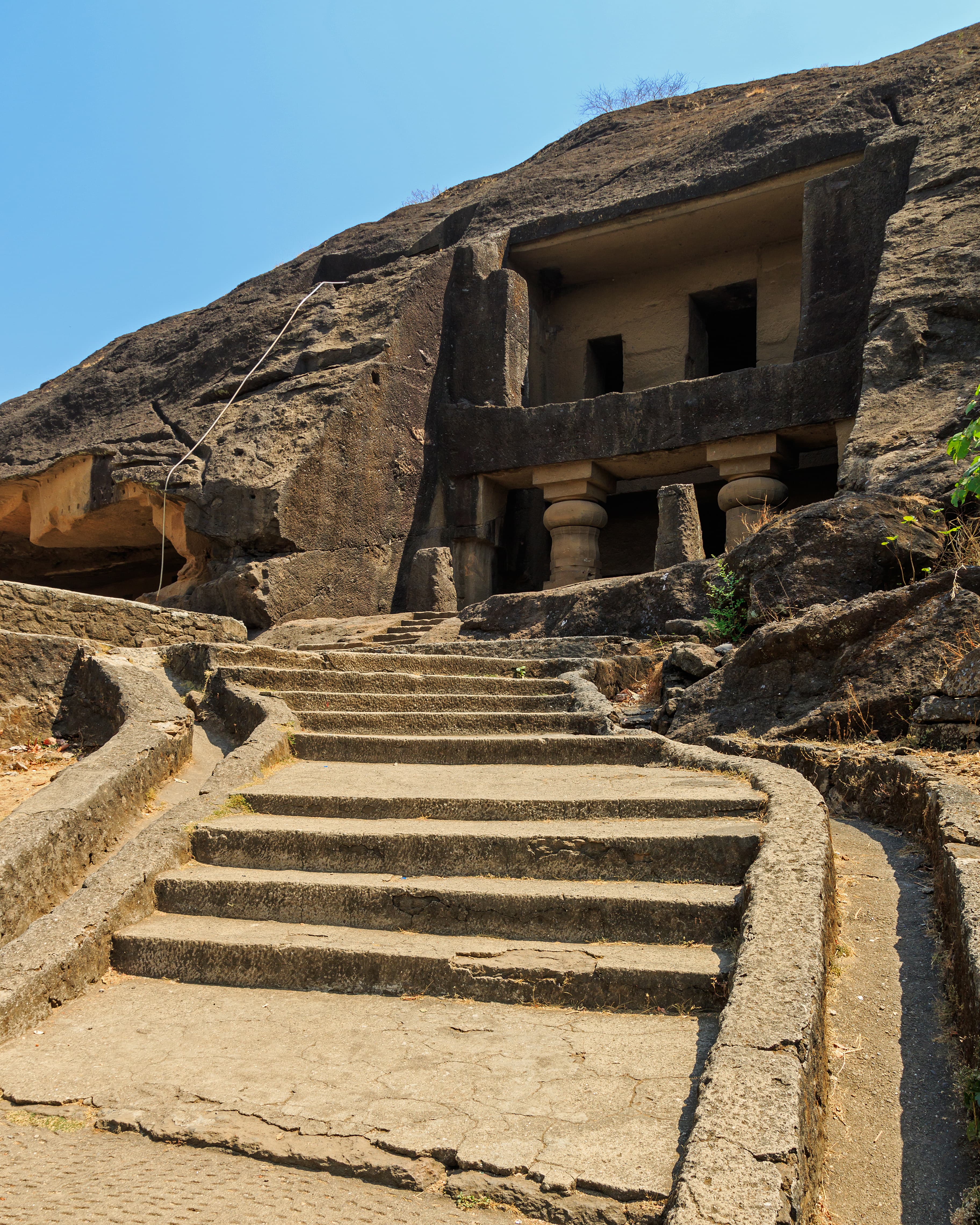
Steps leading toward a rock-cut façade at Kanheri. Image source · FAL
Visit essentials
A quick read before you go
- Etiquette
- Follow both monument and national-park instructions.
Overview
Kanheri sits within Sanjay Gandhi National Park in Mumbai, where a large group of excavated chambers preserves a Buddhist monastic landscape. Its significance emerges across the complex: halls of worship, residential spaces, inscriptions and religious images belong to a long history of learning and devotion in western India.
Why this place is sacred
A cave complex of this scale asks for more than a single view. Different spaces served different needs, and the surviving images and inscriptions offer evidence of communities working over time. The religious setting should remain central even when the surrounding park is the reason someone first arrives.
Context and lineage
The Ministry of Tourism describes Kanheri as a center of Buddhist study and meditation and traces its name to Krishnagiri, meaning black mountain. Its overview places the surviving artistic and inscribed record across much of the first millennium CE. Maharashtra’s Buddhist heritage leaflet places the origins earlier, in the first century BCE. These statements describe different spans of the complex’s history; neither should be turned into a single construction date.
No securely sourced founding miracle was found in this research. The story retained here is the development of a monastic settlement, expressed through spaces for worship and residence and through later artistic additions. Further epigraphic research could give individual donors a more precise place in that account.
Traditions and practice
Choose a small number of permitted chambers and compare their scale and arrangement before moving on. Notice where an image or stupa directs attention and where the layout instead serves residence. These are prompts for looking, not instructions to perform a ceremony or claims about what every visitor will feel.
Buddhism
HistoricalSee the source-linked historical and devotional account above.
Plan your visit
Plan the visit through Sanjay Gandhi National Park and verify both park access and cave admission with the relevant staff. Published opening arrangements may change. Confirm current internal transport, a step-free route, mobile coverage or emergency access. Ask specifically about these if they affect your visit; a general park description does not establish accessibility to every cave.
Respectful visit
Follow both monument and national-park instructions. Leave inscriptions and sculptures untouched, keep voices low around people praying, and confirm any restrictions on photography with staff.
Location
Map loads as you approach this section.
Pilgrim reflections
A portrait of encounter, not a score
Pilgrims describe what they felt, how present they could become, and whether the place would shape a journey. There are no stars and no ranking of traditions.
No reviewed reflections yet
The first pilgrims can help describe the character of being here.
Share a reflection
Available after an account-backed “Been there.” Every reflection is reviewed before publication.
Nearby sacred places
Explore other sacred places in the region. Proximity does not establish access or travel time; check each place’s guidance.

References
Sources consulted for this page. Source categories describe the publication, not a guarantee that every claim is verified. Traditional accounts and outside interpretations may differ.
- 01Ministry of Tourism: Kanheri CavesofficialPark setting, Krishnagiri etymology, monastic function and first-millennium artistic span.
- 02Maharashtra Tourism: Buddhist heritage circuitofficialEarly origins and Buddhist monastic setting; do not merge its cave count with another inventory.
- 03Government of India: Yojana, August 2020officialKanheri sculpture, inscriptions and first-to-tenth-century artistic span.
- 04Kanheri Caves — geographic identity reference — Wikipedia contributorsacademicSecondary geographic identity and representative coordinate only; religious and historical claims use primary sources above.
Pilgrim glossary
- Stupa
- A dome-shaped Buddhist monument that holds relics or marks a sacred place.
Share a photo
Help visitors recognize Kanheri Caves. Every submission is reviewed before publication.