Itsukushima Shrine
Tide, mountain, and the three Munakata goddesses held in one sanctuary
Understand sacred places, explore living traditions, and learn how to engage respectfully with Pilgrim Map.
Access has not been verified. Check current local guidance before planning a visit.
Hatsukaichi, Hiroshima Prefecture, Japan
Read the sources
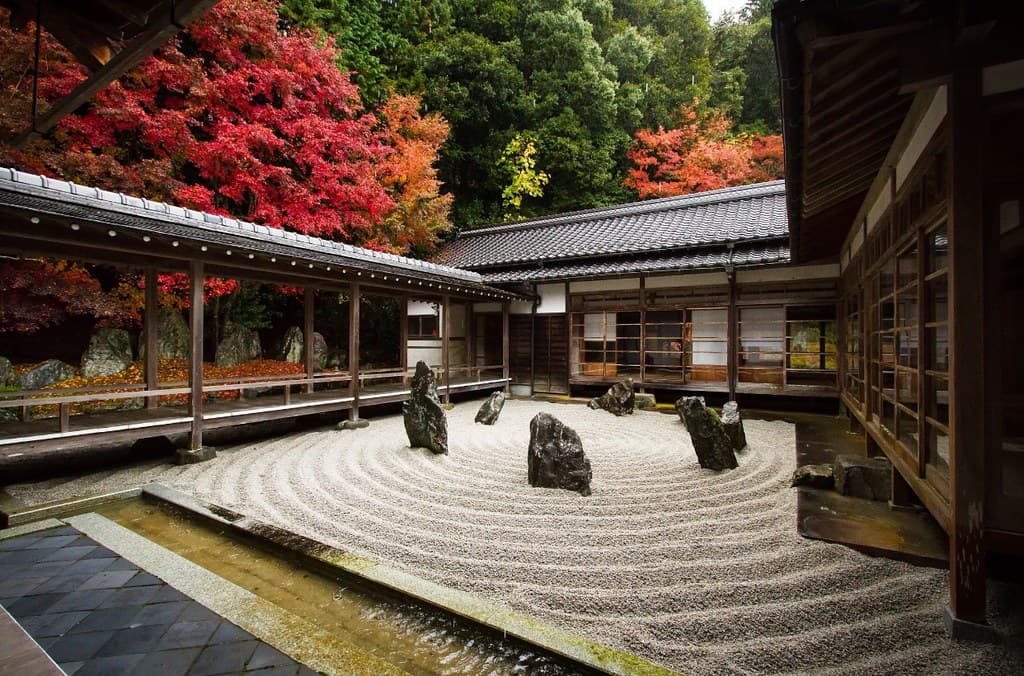
Image of Itsukushima Shrine. Image source
Visit essentials
A quick read before you go
- Duration
- Let Itsukushima Shrine's admitted route determine duration.
- Access
- Access begins in Hatsukaichi, Hiroshima Prefecture.
Overview
The tide enters the architecture at Itsukushima. Vermilion corridors stand over water that may expose sand or mirror the sanctuary within hours, while Mount Misen links the shrine to an island revered before its present buildings. The great torii is not decorative: Shinto understanding honors Ichikishimahime, Tagorihime, and Tagitsuhime, the three Munakata goddesses, through mountain, sea, and human construction.
Shrine tradition reaches to 593, while Taira no Kiyomori's twelfth-century patronage gave the complex much of its ceremonial form. UNESCO notes that later reconstructions preserved this inherited design, making faithful renewal as important to authenticity as old material. The fragile marine setting still requires continuous repair and custodial judgment.
Beyond the torii, tidal corridors, sea-facing prayer halls, the subsidiary sanctuary for guest deities, bridges, lanterns, and measured openings reveal the whole composition. At high tide water seems to carry the roofs; at low tide structural logic emerges. Both belong to the shrine. Living observance includes purification, prayer to the Munakata deities, and festivals.
Participation follows instruction rather than imitation; photography yields to prayer and privacy, conservation protects matter and meaning, and cited authorities keep heritage distinct from doctrine without inviting claims to private or universal knowledge.
Why this place is sacred
Sacredness at Itsukushima is spatial: the worshipped island and Mount Misen are not scenery added to a shrine. The sea-facing buildings allow prayer within a landscape understood as the deities’ domain.
Devotion centered on Ichikishimahime, Tagorihime, and Tagitsuhime.
Itsukushima Shrine includes repair and institutional change.
Experience and orientation
Walk the corridors at the pace of the tide and the worshippers. Pause where the route widens, keep thresholds clear, and do not photograph ceremonies at close range. If the tidal flat is open, remain alert to custodial restrictions around the torii.
Itsukushima Shrine publishes the governing approach and route.
Context and lineage
Itsukushima Shrine keeps its origin story site-specific.
Shinto
Traditions and practice
At Itsukushima Shrine, documented observance includes purification, prayer to the Munakata deities, shrine festivals, and reverent passage across the raised corridors. The named sacred focus is Ichikishimahime, Tagorihime, and Tagitsuhime.
Custodians at Itsukushima Shrine maintain the practices and boundaries appropriate to this shrine.
Watch before acting at Itsukushima Shrine; attention is welcome, borrowed ritual is unnecessary.
Shinto
ActiveItsukushima Shrine is sacred within Shinto.
See the documented observances specific to Itsukushima Shrine.
Perspectives and open questions
Itsukushima Shrine requires historical, custodial, and tradition-led readings to remain distinct.
Scholarly perspective
Historical interpretation follows the reviewed source record for Itsukushima Shrine.
Living and traditional perspectives
Shinto supplies Itsukushima Shrine's authoritative sacred frame.
Alternative interpretations
Itsukushima Shrine keeps its alternative site-specific.
Open questions
Changeable access and private ritual details remain outside this account.
Plan your visit
Access and arrival
Access begins in Hatsukaichi, Hiroshima Prefecture.
Use established lodging serving Hatsukaichi.
Respectful visit
Choose clothing suitable for worship at Itsukushima Shrine.
Itsukushima Shrine sets camera access at each boundary.
Use only offering places authorized by Itsukushima Shrine.
Keep to the visitor route, never treat the great torii as climbing furniture, and yield immediately to rites or wedding processions.
Private, restricted, or closed practice at Itsukushima Shrine remains outside visitor access.
Location
Map loads as you approach this section.
Pilgrim reflections
A portrait of encounter, not a score
Pilgrims describe what they felt, how present they could become, and whether the place would shape a journey. There are no stars and no ranking of traditions.
No reviewed reflections yet
The first pilgrims can help describe the character of being here.
Share a reflection
Available after an account-backed “Been there.” Every reflection is reviewed before publication.
Nearby sacred places
Explore other sacred places in the region. Proximity does not establish access or travel time; check each place’s guidance.


References
Sources consulted for this page. Source categories describe the publication, not a guarantee that every claim is verified. Traditional accounts and outside interpretations may differ.
- 01Itsukushima Shrine official or custodial source — Itsukushima Shrine custodial institution or responsible authorityofficialPrimary or delegated source for identity, religious meaning, custodianship, and visitor boundaries.
- 02Google Maps exact-place record for Itsukushima Shrine — Google PlacesofficialExact-place identity, locality, coordinates, and operational identity; changeable details are not repeated as stable prose.
- 03Official visitor interpretation for Itsukushima Shrine — National or local destination authorityofficialPublic interpretation and access context from a governmental or destination authority.
- 04Itsukushima Shinto Shrine — UNESCO World Heritage CentreofficialOfficial World Heritage property record, significance statement, and component context.
- 05Itsukushima Shrine — Wikipedia contributorsSource contextGeneral identity and historical cross-check; substantive claims are bounded by higher-authority sources.
- 06Wikidata record associated with Itsukushima Shrine — Wikidata contributorsacademicStructured identity and coordinate cross-check.
Pilgrim glossary
- Torii
- The traditional Japanese gate marking the entrance to a Shinto sacred area.
Share a photo
Help visitors recognize Itsukushima Shrine. Every submission is reviewed before publication.