Halesi–Maratika Caves
A cave landscape with distinct Hindu, Buddhist and Kirat meanings
Understand sacred places, explore living traditions, and learn how to engage respectfully with Pilgrim Map.
Access has not been verified. Check current local guidance before planning a visit.
Khotang, Nepal
Read the sources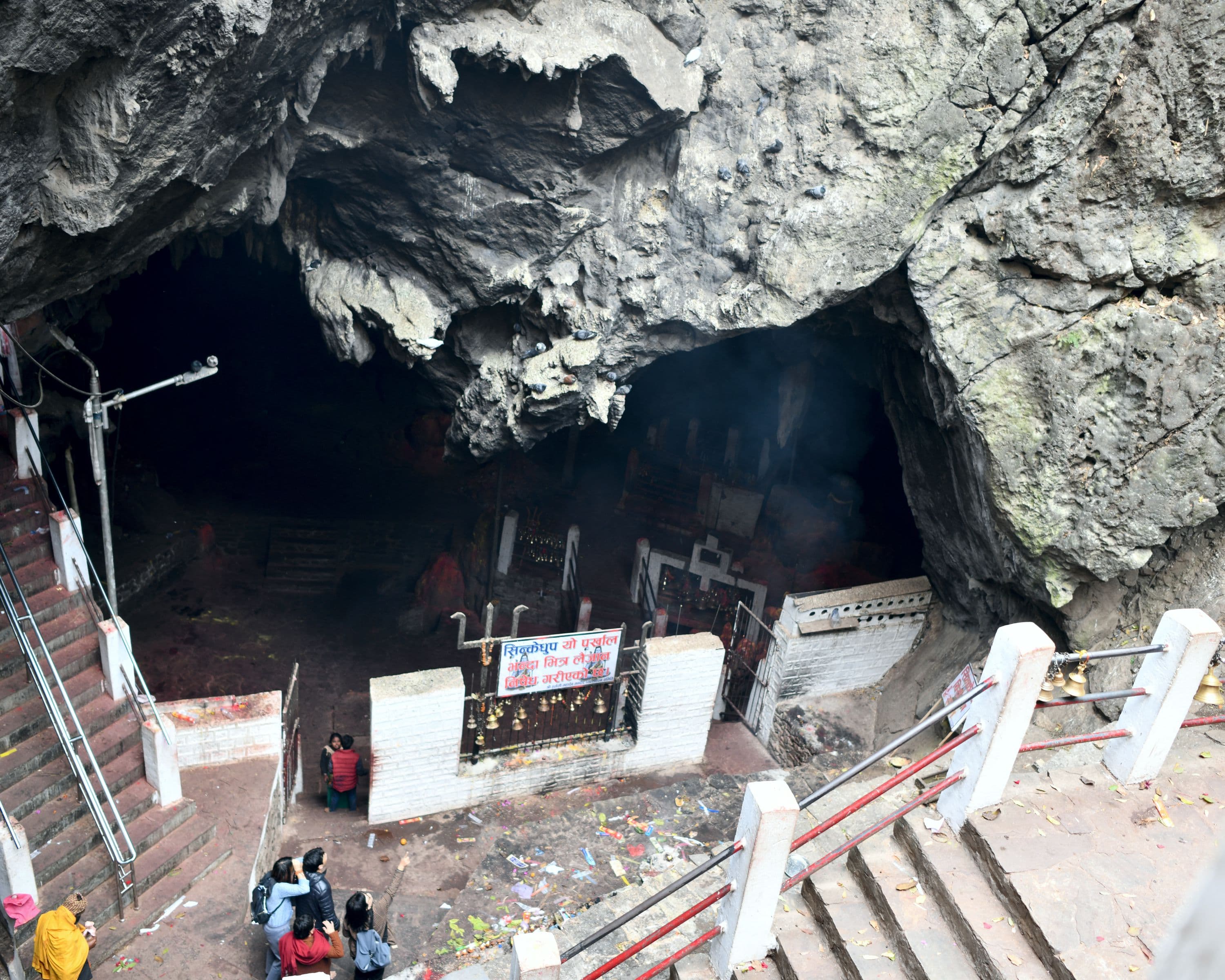
Stairs descending toward the upper Halesi-Maratika cave entrance. Image source · CC BY-SA 4.0
Visit essentials
A quick read before you go
- Etiquette
- Respect worship, sacred objects and the people responsible for this place.
Overview
Halesi–Maratika is a cave pilgrimage place in eastern Nepal with distinct Hindu and Tibetan Buddhist meanings. Nepal Tourism Board identifies Halesi Mahadev with Shiva; Maratika Monastery presents the site through its own Buddhist tradition. The shared landscape should be described without merging those traditions into a single account.
The place is known by names that carry different devotional histories. Halesi Mahadev expresses its association with Shiva; Maratika is the name used in Tibetan Buddhist accounts of Padmasambhava and Mandarava. Kirat relationships with the caves add another, locally rooted perspective. None of these should be treated as a translation of the others. Approaching the caves with that distinction in mind makes room for the people whose worship and inherited accounts give the shared landscape its meaning.
A respectful visitor can listen without assuming that a single explanation exhausts the place.
Why this place is sacred
For Hindu devotees, the cave belongs to a Shaiva pilgrimage landscape. Tibetan Buddhists connect it with long-life realization. A study of pilgrimage at Halesi also records Kirat accounts linking the cave with the ancestor Raechhakule. These traditions have distinct holders and deserve separate attribution.
Experience and orientation
Take time to observe the place through its own religious and historical context. Follow the authorized visitor route and the guidance of its custodians.
Context and lineage
In the account preserved by Maratika Monastery, Padmasambhava and Mandarava attained the realization of immortal life here. The monastery explains Maratika’s name as the ending of death, expressing the place’s meaning within Buddhist practice. This is an attributed religious account, not a claim that visiting the cave extends a person’s lifespan.
Traditions and practice
Ask local custodians which spaces are open and how visitors should behave during worship. Attendance does not make a visitor a participant in every ritual taking place.
Hinduism
ActiveAssociation with Shiva and the Hindu sacred objects or pilgrimage described above.
Tibetan Buddhism
ActiveThe attributed Maratika account of Padmasambhava and Mandarava.
Kirat traditions
ActiveAncestral association recorded in research on local pilgrimage.
Perspectives and open questions
The monastery is authoritative for the Buddhist account it publicly shares. The Nepal Tourism Board identifies the Shaiva pilgrimage. Research on local pilgrimage supplies another perspective on Kirat relationships; it should not replace the voices of current community custodians.
Plan your visit
Confirm cave-specific access and worship arrangements with local custodians. Do not infer permission to join a ritual from general visitor access.
Respectful visit
Follow the site’s current photography rules and ask before photographing worshippers.
Location
Map loads as you approach this section.
Pilgrim reflections
A portrait of encounter, not a score
Pilgrims describe what they felt, how present they could become, and whether the place would shape a journey. There are no stars and no ranking of traditions.
No reviewed reflections yet
The first pilgrims can help describe the character of being here.
Share a reflection
Available after an account-backed “Been there.” Every reflection is reviewed before publication.
Nearby sacred places
Explore other sacred places in the region. Proximity does not establish access or travel time; check each place’s guidance.


References
Sources consulted for this page. Source categories describe the publication, not a guarantee that every claim is verified. Traditional accounts and outside interpretations may differ.
- 01Maratika Monastery: historyofficialCustodial Buddhist narrative and names
- 02Nepal Tourism Board: pilgrimage sitesofficialHalesi Mahadev location and Shaiva identity
- 03Research on pilgrimage at HalesiacademicAcademic account of Kirat ancestor association; local custodial voice remains desirable
- 04Halesi-Maratika Caves — geographic reference — Wikipedia contributorsacademicSecondary identity and representative complex coordinates; religious claims rely on the primary sources above.
Share a photo
Help visitors recognize Halesi–Maratika Caves. Every submission is reviewed before publication.