Loch Ness
A deep Highland loch where Gaelic water-being traditions, Columba’s story, and modern Nessie lore converge
Understand sacred places, explore living traditions, and learn how to engage respectfully with Pilgrim Map.
Access has not been verified. Check current local guidance before planning a visit.
Scotland, United Kingdom
Read the sources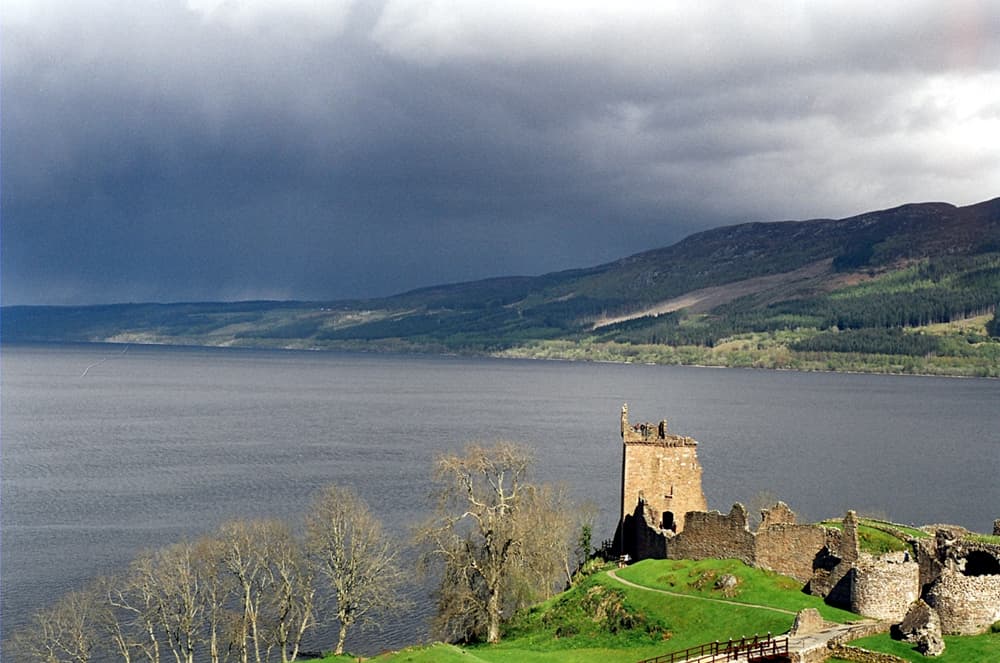
Image of Loch Ness. Image source
Visit essentials
A quick read before you go
- Duration
- Two to three days
- Access
- Use public transport, designated parking, managed viewpoints, licensed cruises, or established…
Overview
Loch Ness is long, deep, and dark with peat-stained water, transformed by rain, low cloud, and sudden light. Roads, paths, boats, villages, and castle ruins throughout the Great Glen repeatedly return travelers to the water.
The Loch Ness Monster is its best-known story, but this modern figure sits within older, more complex traditions. Adomnán’s *Life of Columba*, written about a century after its narrated events, places Columba's confrontation with a water beast in the River Ness. It is not an unambiguous medieval loch sighting; hagiographic wonders communicate sanctity rather than modern zoological evidence.
Gaelic and Scottish each-uisge and kelpie traditions place powerful beings in lochs and rivers. Scholarship warns against flattening them into one standardized creature or treating Nessie as their simple survival. Modern Nessie culture expanded dramatically in the twentieth century and now shapes tourism, art, skepticism, and local identity. The loch's spiritual depth lies in human negotiation with water, danger, imagination, and the unseen—not in treating folklore as laboratory proof.
Why this place is sacred
The loch often withholds scale. Opposite shores disappear into weather, wakes travel long after boats pass, and drifting logs or birds can become momentary shapes. These conditions help stories arise, but perception under uncertainty is not proof of a creature.
Gaelic each-uisge traditions give fresh water moral and cosmological force. Water may be boundary, route, danger, or entrance to another realm. Adomnán’s Columba episode brings a Christian saint into confrontation with a threatening water being, demonstrating spiritual authority in a Pictish setting.
Modern Nessie lore adds cameras, sonar, eyewitness claims, hoaxes, scientific searches, and global media. A responsible sacred-site profile can honor the imaginative life of the story while stating that no conclusive evidence establishes a large unknown animal in Loch Ness.
Experience and orientation
Drumnadrochit and Fort Augustus offer visitor services, while Dores, Foyers, Invermoriston, and other places reveal quieter edges. Urquhart Castle frames the loch through medieval ruins and the St Columba association. Cruises provide scale from the water, provided visitors use licensed operators and follow safety instructions.
The circular long-distance trail connects communities around the water, but it is a multi-day route with varied terrain rather than a simple lakeside promenade. Roadside stopping should be limited to designated places.
For contemplation, watch one section of water long enough to distinguish wind, wake, bird movement, and changing light. The point is not to force a sighting. It is to notice how expectation shapes what the eye makes from distance.
Choose a west-shore or east-shore day, or a managed cruise, rather than circling the entire loch by car without stopping. Check weather and trail conditions.
Context and lineage
Adomnán tells that Columba commanded a threatening water beast to withdraw while a companion crossed the River Ness. The account was composed later as saintly hagiography. It should not be relabeled as a confirmed Loch Ness Monster report.
Gaelic water-being traditions long predate modern Nessie tourism. Christian hagiography added the Columba narrative. Urquhart Castle and Great Glen travel brought further historical layers. Newspaper coverage and photography in the twentieth century globalized the monster story.
St Columba
saint
Missionary saint whose later biography includes the River Ness water-beast episode and a possible visit to the Urquhart area.
Traditions and practice
Each-uisge and kelpie traditions vary across Scotland and the Gaelic world. They are stories of powerful and often dangerous water beings, not a single uniform Nessie doctrine.
Monster watching, cruises, museums, storytelling, hiking, and cultural events keep the loch’s imaginative life active.
Observe the water without using a camera for several minutes. Then write down what you actually saw before assigning meaning to it.
Gaelic Water-Being Folklore
ActiveEach-uisge and related beings express long-standing cultural understandings of dangerous and liminal fresh water.
Storytelling, scholarship, artistic retelling, and place-based memory.
Columban Christian Heritage
ActiveAdomnán’s account and the Urquhart association connect the area with the cult and memory of St Columba.
Historical study, Christian remembrance, prayer, and heritage visitation.
Modern Nessie Culture
ActiveTwentieth-century reports and media transformed the loch into a global center of monster folklore and investigation.
Sightseeing, storytelling, museums, searches, skepticism, and popular art.
Perspectives and open questions
Loch Ness can be read through Gaelic folklore, Christian hagiography, history, natural science, and modern popular culture. Responsible interpretation preserves their different purposes.
Scholarly perspective
Folklore scholarship situates each-uisge and kelpie traditions within broader Scottish and Gaelic relationships with freshwater. Historical reading locates Adomnán’s episode in hagiography and the River Ness.
Living and traditional perspectives
Traditionally, Gaelic water beings can express the danger, agency, and liminality of lochs and rivers. Accounts vary by place and teller.
Alternative interpretations
In an alternative contemporary interpretation, Matías De Stefano’s Gaia episode includes Loch Ness in a spiritual journey. It is not evidence for a monster, an energy grid, or ancient ritual continuity.
Open questions
Individual reports may remain unexplained, but unexplained does not mean a large unknown animal has been demonstrated.
Plan your visit
Access and arrival
Use public transport, designated parking, managed viewpoints, licensed cruises, or established sections of the Loch Ness 360° Trail. | Difficulty: Viewpoints range from easy access to strenuous multi-day trail sections.
Respectful visit
Waterproof layers, warm clothing, and grip footwear in every season.
permitted: Yes | Use designated viewpoints; respect private land, heritage-site rules, people, wildlife, and drone restrictions.
Leave no objects, food, candles, coins, or biodegradable offerings in or beside the water.
Do not enter dangerous water for a ritual or sighting, launch unauthorized drones, trespass, disturb wildlife, or present hoaxes and speculation as fact.
Location
Map loads as you approach this section.
Pilgrim reflections
A portrait of encounter, not a score
Pilgrims describe what they felt, how present they could become, and whether the place would shape a journey. There are no stars and no ranking of traditions.
No reviewed reflections yet
The first pilgrims can help describe the character of being here.
Share a reflection
Available after an account-backed “Been there.” Every reflection is reviewed before publication.
Nearby sacred places
Explore other sacred places in the region. Proximity does not establish access or travel time; check each place’s guidance.

References
Sources consulted for this page. Source categories describe the publication, not a guarantee that every claim is verified. Traditional accounts and outside interpretations may differ.
- 01Urquhart Castle: History and Stories — Historic Environment ScotlandofficialColumba association, hagiographic story, and castle context.
- 02Ecosystem Services and Gaelic: A Scoping Exercise — NatureScotacademicGaelic context and River Ness account.
- 03An t-Each-Uisge — Scottish Studies, University of EdinburghacademicWater-horse scholarship and Pictish/Gaelic interpretation.
- 04Clootie Wells and Water-Kelpies — University of EdinburghacademicFreshwater liminality and water-horse traditions.
- 05Loch Ness — VisitScotlandofficialVisitor gateways and activities.
- 06Know the Risks in and Beside the Water — RNLIofficialCold-water shock and inland water safety.
- 07The Journey of Remembering S2:E7 — Activating 8D Frequencies — GaiaSource contextContemporary spiritual perspective only.
Share a photo
Help visitors recognize Loch Ness. Every submission is reviewed before publication.