Kesgarh Sahib Gurdwara, Anandpur Sahib, Punjab
The Anandpur Sahib Takht associated with the founding of the Khalsa
Understand sacred places, explore living traditions, and learn how to engage respectfully with Pilgrim Map.
Access has not been verified. Check current local guidance before planning a visit.
Anandpur Sahib, Punjab, India
Read the sources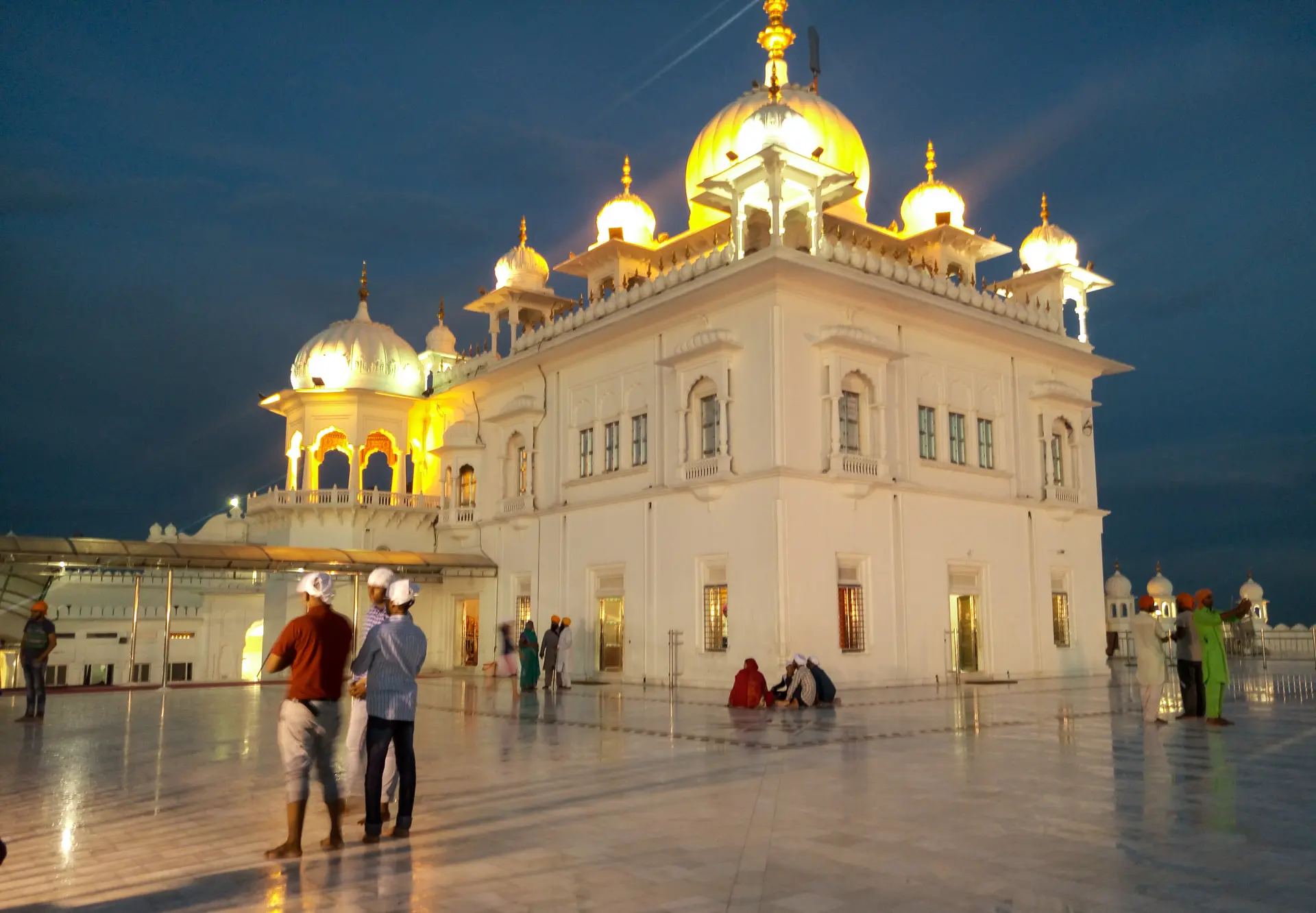
Takht Sri Kesgarh Sahib at Anandpur Sahib. Image source · CC BY-SA 4.0
Station 3 of 5
Five Takhts of SikhismVisit essentials
A quick read before you go
- Duration
- Allow time for current access procedures and for worshippers to have priority; no fixed duration…
- Access
- Remove shoes, cover the head, wash hands where directed, and enter without tobacco, alcohol, or…
Overview
Takht Sri Kesgarh Sahib at Anandpur Sahib is one of the five Takhts, the principal seats of authority in Sikh tradition. Its identity belongs to the living gurdwara and Takht institution, not to the nearby Khalsa Heritage Memorial shown in the previous image record. This page is bounded to the exact sacred place and its cited traditions. It does not convert inherited belief into scientific fact, and it does not treat a living community as scenery for a route checklist.
Why this place is sacred
Kesgarh Sahib is closely associated with Guru Gobind Singh and the formation of the Khalsa at Anandpur Sahib. The SGPC includes it in the finite five-Takht set. This profile avoids turning a foundational Sikh event into spectacle and directs detailed doctrinal and ceremonial questions to Sikh custodians and published Sikh sources. Pilgrim Map separates documented history, tradition-held meaning, and current visitor information so that uncertainty remains visible.
Kesgarh Sahib is closely associated with Guru Gobind Singh and the formation of the Khalsa at Anandpur Sahib. The SGPC includes it in the finite five-Takht set. This profile avoids turning a foundational Sikh event into spectacle and directs detailed doctrinal and ceremonial questions to Sikh custodians and published Sikh sources.
The place has continued through changing political, environmental, institutional, and visitor conditions. Present practice is governed by its own community and responsible authorities.
Experience and orientation
Visitors come for darshan, prayer, listening to Gurbani and kirtan, participation in sangat, and service. Amrit Sanchar and festival schedules are governed by the Takht. A Five Takhts page is a collection across widely separated institutions, not a prescribed five-stop tourist itinerary. A respectful visit is attentive, unhurried, and willing to remain at a public threshold when a space or action is not clearly open.
The map pin identifies Kesgarh Sahib Gurdwara, Anandpur Sahib, Punjab. It is not a live navigation instruction, a ritual script, or permission to enter every nearby space.
Context and lineage
Kesgarh Sahib is closely associated with Guru Gobind Singh and the formation of the Khalsa at Anandpur Sahib. The SGPC includes it in the finite five-Takht set. This profile avoids turning a foundational Sikh event into spectacle and directs detailed doctrinal and ceremonial questions to Sikh custodians and published Sikh sources.
Sikhism
Traditions and practice
Visitors come for darshan, prayer, listening to Gurbani and kirtan, participation in sangat, and service. Amrit Sanchar and festival schedules are governed by the Takht. A Five Takhts page is a collection across widely separated institutions, not a prescribed five-stop tourist itinerary.
Living practice and current custodial guidance take priority over descriptions written for visitors.
Listen, follow the community's pace, keep passageways clear, and participate only where the invitation and manner are clear.
Sikhism
ActiveTakht Sri Kesgarh Sahib at Anandpur Sahib is one of the five Takhts, the principal seats of authority in Sikh tradition. Its identity belongs to the living gurdwara and Takht institution, not to the nearby Khalsa Heritage Memorial shown in the previous image record.
Visitors come for darshan, prayer, listening to Gurbani and kirtan, participation in sangat, and service. Amrit Sanchar and festival schedules are governed by the Takht. A Five Takhts page is a collection across widely separated institutions, not a prescribed five-stop tourist itinerary.
Perspectives and open questions
The profile distinguishes community-held meaning, documented history, heritage description, and a visitor's personal response.
Scholarly perspective
The cited institutional sources establish the page's identity and bounded claims. They do not settle every historical or theological question.
Living and traditional perspectives
Visitors come for darshan, prayer, listening to Gurbani and kirtan, participation in sangat, and service. Amrit Sanchar and festival schedules are governed by the Takht. A Five Takhts page is a collection across widely separated institutions, not a prescribed five-stop tourist itinerary.
Alternative interpretations
Personal experiences can be meaningful, but claims of measurable energy, healing, portals, or guaranteed transformation are not presented as facts.
Open questions
Current access, ceremonies, and local conditions can change and require direct confirmation.
Plan your visit
Access and arrival
Remove shoes, cover the head, wash hands where directed, and enter without tobacco, alcohol, or intoxicants. Current security, bag, photography, accommodation, and ceremony arrangements must be confirmed with the gurdwara. Langar is shared service and hospitality, not a commercial amenity.
Use current local and custodial information; no lodging availability is promised here.
Respectful visit
Choose modest, practical clothing and follow any head-covering, footwear, or gendered-space guidance given locally.
Ask first; no photograph is owed. Avoid worship, children, close ritual activity, restricted interiors, and anyone who has not consented.
Give or receive only in the manner shown by the responsible community; do not leave improvised objects or create waste.
Obey closures, barriers, protected-area rules, security screening, and community direction.
Do not imitate ritual roles, improvise offerings, interrupt prayer, or make supernatural, medical, or safety promises about the place.
Location
Map loads as you approach this section.
Pilgrim reflections
A portrait of encounter, not a score
Pilgrims describe what they felt, how present they could become, and whether the place would shape a journey. There are no stars and no ranking of traditions.
No reviewed reflections yet
The first pilgrims can help describe the character of being here.
Share a reflection
Available after an account-backed “Been there.” Every reflection is reviewed before publication.
Nearby sacred places
Explore other sacred places in the region. Proximity does not establish access or travel time; check each place’s guidance.

Baba Balak Nath Temple, Deotsidh, Himachal Pradesh
Dhatwal, Himachal Pradesh, India
24.7 km away

Baijnath Shiva Temple, Himachal Pradesh
Baijnath, Himachal Pradesh, India
91.8 km away
Gurdwara Dukh Niwaran Sahib, Patiala
Patiala, Punjab, India
99.2 km away

Bhagsunag Sacred Spring Kund
Bhagsu, Himachal Pradesh, India
113.3 km away
References
Sources consulted for this page. Source categories describe the publication, not a guarantee that every claim is verified. Traditional accounts and outside interpretations may differ.
- 01Holy Takhats — Shiromani Gurdwara Parbandhak CommitteeSource contextSupports the finite set and individual identities of the five Takhts.
- 02Gurdwara and the Five Takhts — Shiromani Gurdwara Parbandhak CommitteeSource contextSupports the five-Takht list and baseline gurdwara access and conduct guidance.
- 03SGPC contacts — five Takht Sahibans — Shiromani Gurdwara Parbandhak CommitteeSource contextCurrent SGPC directory confirming the five Takht institutions and their locations.
Share a photo
Help visitors recognize Kesgarh Sahib Gurdwara, Anandpur Sahib, Punjab. Every submission is reviewed before publication.