Hill of Tara
The sacred center of ancient Ireland, where kings were crowned and worlds met
Understand sacred places, explore living traditions, and learn how to engage respectfully with Pilgrim Map.
Access has not been verified. Check current local guidance before planning a visit.
County Meath, Meath, Ireland
Read the sources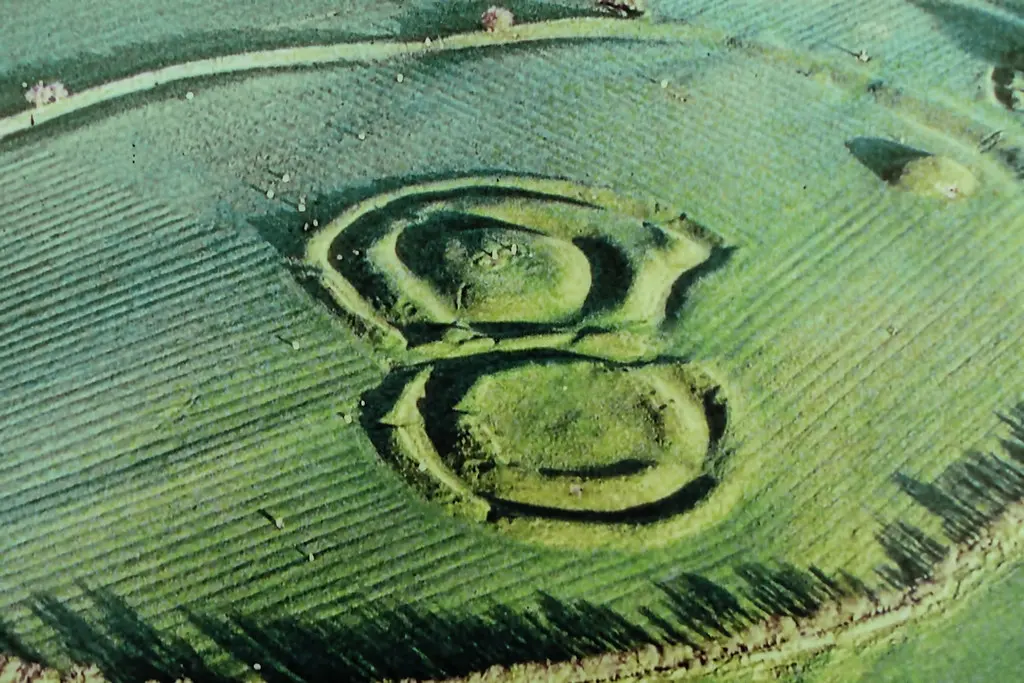
Image of Hill of Tara. Image source
Visit essentials
A quick read before you go
- Duration
- Plan 1.5-3 hours to explore the main monuments, visit the visitor center, and absorb the…
- Etiquette
- Tara is an open heritage site without formal religious requirements.
Overview
The Hill of Tara is a gentle rise in County Meath whose summit opens across counties and distant mountains. It is remembered as Ireland's spiritual rather than geographic center, the navel of a civilization five millennia old.
Its monuments layer time: the Mound of the Hostages, a Neolithic passage tomb predating the pyramids, has an entrance aligned with sunrise at Samhain and Imbolc, festivals that marked the Celtic year; Bronze Age cremations added later dead to ancestral dead; and Iron Age Celts understood the hill as a place where worlds touched. Coronation here gave Ireland's High Kings ultimate legitimacy.
The Lia Fail, Stone of Destiny, was said to cry beneath the rightful king, while feasts, proclaimed laws, and ritual marriages to the goddess of sovereignty joined human power to cosmic order. The last High King abandoned Tara in 1022 and its ceremonies passed into legend. Pilgrims, historians, and travelers still report a shift or sense of standing at a center that holds, amid vast views, constant wind, and the stone where kings once stood.
Places within this site
Why this place is sacred
The Hill of Tara functions as what the Celts called a 'thin place,' a location where the membrane between worlds grows permeable. But its thinness predates Celtic understanding by millennia. When Neolithic builders constructed the Mound of the Hostages around 3000 BCE, they already recognized something about this ridge above the Boyne Valley.
The passage tomb's alignment with the Samhain and Imbolc sunrise reveals sophisticated astronomical knowledge. At these liminal moments when seasons turned, sunlight penetrated the tomb's inner chamber, illuminating the bones of ancestors, perhaps calling them briefly back into relationship with the living. The alignment suggests that these festivals, later central to Celtic culture, originated in even deeper time.
The Celts who arrived around 600 BCE built upon this foundation. For them, Tara was the dwelling place of the Tuatha De Danann, the divine race who preceded humanity and retreated into the hollow hills. The site marked an entrance to the Otherworld, the realm of gods and ancestors that existed alongside the everyday world. At certain times, particularly Samhain, the boundaries dissolved entirely.
The unusual design of Rath na Riogh, the great enclosure that defines the hilltop, speaks to this understanding. Unlike defensive earthworks, it has its ditch inside its bank, separating the sacred interior from the profane exterior. This is not a fortress but a threshold, architecture designed to contain the numinous rather than repel enemies.
The panoramic views from Tara reinforce the sense of standing at a center. From this modest height, you can see across the Irish midlands in all directions, the landscape radiating outward from your feet. The medieval writers who described Tara as the center of Ireland were recording an experience as much as making a geographical claim. Here, you feel at the axis around which everything else turns.
Geophysical surveys continue to reveal monuments hidden beneath the grass, structures that have never been excavated. The known surface barely hints at what lies below. Five thousand years of continuous sacred use have layered meaning upon meaning until the hill itself seems saturated with intention.
The earliest known purpose was burial and ancestor veneration. The Mound of the Hostages served as a collective tomb for over 500 cremated individuals, connecting communities to their dead through the cycles of sun and season. By the Iron Age, the hill had become the ceremonial seat of the High Kings, the place where political and religious authority merged in the figure of the sacral king who maintained cosmic order through proper ritual.
From Neolithic ossuary to Celtic ceremonial center to Christian battleground to modern heritage site, Tara has transformed while maintaining its core identity as sacred ground. Saint Patrick's 5th-century confrontation with the druids marked a turning point, though Christianity absorbed as much as it replaced. The 1798 rebellion added nationalist significance, and Daniel O'Connell's 1843 rally drew perhaps a million people to this same soil.
Today, modern druids and neo-pagans conduct seasonal ceremonies, while tourists and scholars come seeking different forms of encounter.
Experience and orientation
The first thing that strikes most visitors is the wind. Tara is exposed, a hilltop open to sky in every direction. The wind seems constant, carrying the smell of grass and sometimes rain, pressing against you as if testing your intention. There is something cleansing about it, a stripping away of whatever mental clutter you arrived with.
Then the views take hold. From the summit, the Irish midlands spread in all directions. On clear days, counties are visible, the land itself demonstrating why Tara felt central, why kings who ruled from here felt they ruled the whole island. The visual claim precedes the political one.
Approaching the Lia Fail produces its own response. This standing stone, whether or not it is the original Stone of Destiny, carries the weight of association. Here kings were crowned. Here the land itself was said to recognize rightful rule. Touching the stone, for those who do so gently and respectfully, often produces unexpected emotion, a sense of connection to something vast and old.
The Mound of the Hostages, though you cannot enter it, exerts its own pull. Knowing that five hundred ancestors lie within, that the passage aligns with festival sunrises, that hands shaped these stones five thousand years ago, can produce a form of vertigo. The time involved is difficult to hold in mind. When it briefly becomes real, something shifts.
Those who visit at dawn or dusk, when the light slants across the mounds and the tourist buses have not yet arrived or have already departed, often report the deepest experiences. The site seems to open in the quiet. What seemed like grass-covered hillocks reveal themselves as monuments. What seemed like a pleasant view becomes a window into scales of time that dwarf human concerns.
For those of Irish descent, the experience can feel like homecoming. Not recognition of a specific place, but recognition of belonging to something continuous. The genes in your body have been shaped by this landscape. Standing here, that shaping becomes tangible.
Tara rewards those who slow down. A rushed visit, checking off the monuments and returning to the car, captures little of what the site offers. Consider arriving early or late, when the quality of light and the absence of crowds allow something subtler to emerge.
Walk the perimeter of Rath na Riogh, the great enclosure. Feel how the ditch and bank create an interior, a contained space that is somehow different from the surrounding countryside. Sit with the Lia Fail without immediately reaching for your camera. Let the site set the pace rather than imposing your schedule upon it.
If possible, return more than once. First visits are overwhelmed by information and sensation. Second visits, with the novelty subsided, allow relationship to form.
Context and lineage
The mythological origins of Tara center on the Tuatha De Danann, the divine race who ruled Ireland before humans arrived. When they withdrew into the hollow hills, they left behind four treasures, including the Lia Fail, the Stone of Destiny that would recognize the rightful king by crying out beneath his foot.
According to one folk tradition, the name Teamhair derives from 'Tea Mur,' the burial place of Tea, a legendary queen whose death sanctified the hill. Other etymologies suggest 'place of great prospect' or 'elevated place.' The uncertainty is fitting; Tara's origins disappear into the mist where history becomes myth.
The legendary hero Cuchulainn struck the Lia Fail with his sword when it failed to cry out for his protege, and the stone fell silent for centuries. It roared again, tradition claims, for Conn of the Hundred Battles and for Brian Boru in 1002, the last great High King of Ireland.
The continuity of Tara's use is extraordinary. Neolithic farmers began the sacred construction around 3000 BCE. Bronze Age peoples continued, adding burials to the passage tomb. Iron Age Celts recognized and amplified what earlier peoples had established. The High Kings ruled from here, symbolically if not always practically, until 1022 CE. Christianity, arriving in the 5th century, contested but also absorbed the site's power.
After the abandonment of Tara as a royal seat, the hill remained significant in Irish consciousness. The 1798 rebellion chose Tara for its final stand. Daniel O'Connell's 1843 'monster meeting' drew the largest crowd in Irish history to that point. Modern neo-pagans have revived seasonal celebrations, connecting contemporary practice to ancient calendar.
The controversy over the M3 motorway, which now passes through the Tara-Skryne Valley despite protests from archaeologists, heritage groups, and cultural figures, demonstrated how much the site still matters to Irish identity.
The Tuatha De Danann
divine race
The god-like race who ruled Ireland before the arrival of humans and brought the four treasures including the Lia Fail. They withdrew into the hills but remained accessible through thin places like Tara.
Cormac Mac Airt
legendary king
The most famous of Tara's High Kings, whose 3rd-century reign represented the golden age of Irish kingship. His wisdom and just rule became the standard by which later kings were measured.
Saint Patrick
missionary
The apostle of Ireland who, according to tradition, challenged the druids at Tara in 433 CE by lighting the Paschal fire in defiance of the king's decree, symbolically claiming Ireland for Christ.
Niall of the Nine Hostages
historical king
The 5th-century king who seized Tara and established the Ui Neill dynasty. The Mound of the Hostages may be named for the hostages he held from subject kingdoms.
Traditions and practice
The historical practices at Tara centered on the sacral kingship. The coronation ceremony involved the king standing or placing his foot upon the Lia Fail, which would roar to confirm legitimacy. The king was understood to marry the goddess of sovereignty, Medb, in a symbolic union that bound him to the land. During the Feast of Tara, held every seventh Samhain, nobles and ollams gathered to proclaim new laws and settle disputes.
Sacred fires marked the major festivals. The right to kindle the first flame was closely controlled, which is why Patrick's Paschal fire on the Hill of Slane was such a direct challenge. From the great fire at Tlachtga on Samhain eve, all the fires of Ireland were supposedly relit.
The four festivals structured the year: Samhain (beginning of winter), Imbolc (first stirring of spring), Bealtaine (beginning of summer), and Lughnasa (harvest). Each carried its own rituals, though the details are reconstructed from later sources and comparative evidence.
Modern groups have revived seasonal celebrations at Tara. The Tara Celebrations organization coordinates gatherings at solstices, equinoxes, and the Celtic fire festivals, creating a calendar of ritual that draws practitioners from various traditions.
The Samhain fire procession represents the most direct connection to ancient practice. Each Halloween night, fire is kindled at Tlachtga (the Hill of Ward) and carried to Tara, maintaining the traditional relationship between the two sites. Participants gather to witness the transfer and celebrate the Celtic new year.
Druid groups conduct ceremonies throughout the year, including the Ceremony of the Air at the Royal Seat and various fire celebrations. These groups generally welcome observers and newcomers, though the depth of participation depends on the specific gathering.
Beyond organized ceremony, many visitors come to Tara for personal spiritual practice, meditation and quiet contemplation, connection with ancestors and land, or simply to sit with the ancient stones and let whatever arises arise.
For meaningful engagement with Tara, consider these approaches:
Visit at a significant time. Samhain (late October), Bealtaine (early May), and the solstices offer opportunities to experience the site as part of a living calendar rather than a static monument.
Walk the full circuit of Rath na Riogh. Feel the transition as you cross from exterior to interior, ordinary space to sacred enclosure.
Sit with the Lia Fail. Do not rush to photograph it. Let association do its work. However skeptical your mind, something often stirs.
Arrive with a question. Not necessarily a question you expect answered, but something genuinely unresolved in your life. The site seems to respond to genuine inquiry.
Pre-Celtic Neolithic Religion
HistoricalThe Mound of the Hostages, dating to approximately 3000 BCE, represents a sophisticated tradition centered on ancestor veneration, the afterlife, and astronomical cycles. The passage's alignment with the Samhain and Imbolc sunrise indicates that these seasonal festivals predate Celtic culture by millennia.
Collective burial in passage tombs. Cremation rituals. Offerings of pottery, stone beads, and bone pins. Observance of solar alignments at calendrically significant dates.
Celtic/Gaelic Polytheism
HistoricalFrom approximately 600 BCE to the 5th century CE, Tara functioned as the supreme ceremonial center of Ireland, the dwelling place of gods and the entrance to the Otherworld. The Lia Fail was believed to recognize the rightful High King through supernatural means.
Royal inauguration upon the Lia Fail. Symbolic marriage of the king to the sovereignty goddess Medb. The four Gaelic festivals: Samhain, Imbolc, Bealtaine, Lughnasa. The Feast of Tara held every seventh Samhain. Druidic rituals and sacred fires.
Modern Druidry and Neo-Paganism
ActiveSince the late 20th century, Tara has become an important site for modern practitioners seeking to revive and reimagine Celtic spiritual traditions. The site is used for seasonal celebrations, meditation, and ceremonies honoring the land and ancestors.
Seasonal celebrations at Samhain, Imbolc, Bealtaine, and Lughnasa. Ceremonies at the Royal Seat and other monuments. The Samhain fire procession from Tlachtga. Personal pilgrimage and meditation.
Perspectives and open questions
Tara invites multiple interpretations that do not always agree but need not exclude each other. Archaeological evidence, Irish tradition, and contemporary spiritual experience each illuminate different dimensions of the site's significance. The most honest approach holds these perspectives in relationship rather than forcing premature resolution.
Scholarly perspective
Archaeological evidence confirms Tara as one of Europe's most significant ceremonial complexes, demonstrating continuous ritual use from the Neolithic through the medieval period. The Mound of the Hostages, dated to approximately 3000 BCE, proves the site's sacred character predates Celtic culture by millennia.
Scholars debate the political power of the High Kings, some suggesting their authority was more symbolic than practical before the 9th century. What is not debated is Tara's cultural and religious importance. Recent geophysical surveys have revealed numerous monuments beneath the surface, confirming that the visible structures represent only a fraction of the site's complexity.
The question of the Lia Fail's authenticity remains open. The current stone was reportedly moved to its present location in 1824 to commemorate those who died in the 1798 rebellion. Medieval sources place the original coronation stone near the Mound of the Hostages, not atop the Forrad. Whether the current stone is the original, a replacement, or an entirely different monument is uncertain.
Living and traditional perspectives
Irish tradition understands Tara as the sacred center, the axis connecting earth and sky, mortals and the Otherworld. The Hill is the dwelling place of the Tuatha De Danann, the entrance to the realm of gods and ancestors. The king crowned on the Lia Fail was married to the land goddess, bound to ensure fertility and prosperity through proper relationship with powers beyond the human.
This understanding has not disappeared. Modern Irish cultural tradition maintains Tara as a symbol of national identity and continuity with a past that extends beyond historical record into mythological time. The protests against the M3 motorway demonstrated how deeply the site resonates in contemporary Irish consciousness.
Alternative interpretations
New Age and esoteric interpretations describe Tara as a major earth energy center, a power spot where ley lines converge. The site is sometimes identified as one of the 'chakras' of the earth, a node on planetary energy grids. Some connect Tara to theories about lost civilizations, ancient astronauts, or global energy networks.
These interpretations lack mainstream scholarly support. However, they often emerge from genuine experiences visitors have at the site. The language of 'energy' and 'vortex' may be attempts to articulate something real that resists conventional vocabulary.
Open questions
Genuine mysteries remain. The full extent of monuments beneath the surface continues to be revealed by geophysical surveys. The precise nature of rituals conducted at Tara during the Neolithic and Iron Age cannot be directly known. Whether the current Lia Fail is the original coronation stone remains uncertain. The relationship between Tara and other major Irish sacred sites in an integrated cosmology is incompletely understood.
Why Tara was chosen as the supreme sacred site from such an early date remains a matter of speculation.
Plan your visit
Access and arrival
Navan offers the nearest range of accommodation. Dublin is easily accessible for day trips. The Boyne Valley area has numerous B&Bs, country houses, and hotels that make an excellent base for exploring Ireland's ancient heritage.
Respectful visit
No formal dress code applies. Practical outdoor clothing is essential. The hilltop is exposed, often windy, and rain can arrive quickly. Sturdy footwear handles the uneven terrain and potential mud.
Personal photography is welcomed. Commercial photography and drone use require permits, as does any filming. Be considerate of others, particularly those engaged in personal practice who may not wish to be photographed.
Traditional offerings are not expected or encouraged at Tara. Modern practitioners sometimes leave small biodegradable items, but this is not officially sanctioned. The most appropriate offerings are intangible: attention, respect, time.
No climbing on monuments. No digging or metal detecting. Dogs on leash. No overnight camping. Do not remove any stones, soil, or artifacts.
Modern Tara is a public heritage site without formal religious restrictions. However, respect for the site's significance to many people is appropriate. Do not leave offerings that will become litter. Do not damage monuments or dig, which would violate both heritage law and the integrity of the site.
Be aware that sheep graze the site, dogs must be kept on leash, and the terrain can be muddy and slippery in wet weather. The hilltop offers no shelter from wind or rain.
Current practical details
Address
Castletown Tara, Co. Meath, Ireland
Phone
Hours
Hours, fees, and access can change — verify on the official source before you travel. Practical details last checked Jun 2026.
Location
Map loads as you approach this section.
Pilgrim reflections
A portrait of encounter, not a score
Pilgrims describe what they felt, how present they could become, and whether the place would shape a journey. There are no stars and no ranking of traditions.
No reviewed reflections yet
The first pilgrims can help describe the character of being here.
Share a reflection
Available after an account-backed “Been there.” Every reflection is reviewed before publication.
Nearby sacred places
Explore other sacred places in the region. Proximity does not establish access or travel time; check each place’s guidance.


References
Sources consulted for this page. Source categories describe the publication, not a guarantee that every claim is verified. Traditional accounts and outside interpretations may differ.
- 01Hill of Tara | Heritage Ireland — Office of Public Works, IrelandofficialOfficial government heritage site information
- 02Hill of Tara, seat of the High Kings of Celtic Ireland — Knowth.comacademicDetailed archaeological and historical information from recognized authority
- 03The Mound of the Hostages - Duma na nGiall, Tara — Knowth.comacademicDetailed archaeological information on the passage tomb
- 04Rites of Passage at Tara | National Museum of Ireland — National Museum of IrelandofficialOfficial museum exhibition information
- 05Hill of Tara | Meath.ie — Meath County CouncilofficialOfficial county heritage information
- 06The M3 motorway: driving a stake through the heart of Tara — History IrelandacademicAcademic perspective on the M3 controversy
- 07Tara | Ancient Seat, Pagan Rituals & Mythology — BritannicaacademicAuthoritative encyclopedia entry
- 08Hill of Tara - Wikipedia — Wikipedia contributorsacademicGeneral overview with archaeological and historical details
- 09Lia Fail - Wikipedia — Wikipedia contributorsacademicComprehensive information on the Stone of Destiny
- 10The Lia Fail - Mystery Screeching Stone of Tara — Mythical IrelandspiritualMythology and legends surrounding the Stone of Destiny
- 11Mound of the Hostages - Wikipedia — Wikipedia contributorsacademicArchaeological details on the Neolithic passage tomb
- 12Hill Of Tara - Republic of Ireland - Sacred Land — Sacred Land Film ProjectspiritualSpiritual significance and modern practices
- 13The Hill of Tara: Tracing the Footsteps of the High Kings of Ireland — Ancient OriginsspiritualHistorical and archaeological overview
- 14Tara Celebrations — Tara CelebrationsspiritualInformation on modern seasonal celebrations at Tara
- 15The Hill of Tara - Pagan Places — Pagan PlacesspiritualNeo-pagan perspective on the site
- 16Saint Patrick at the Hill of Tara — Emerald IslespiritualLegend of Saint Patrick's confrontation at Tara
Photo gallery
3 curated photos
Share a photo
Help visitors recognize Hill of Tara. Every submission is reviewed before publication.