He Sapa / Black Hills
He Sapa / Black Hills: Indigenous traditions of culturally affiliated Nations in South Dakota
Understand sacred places, explore living traditions, and learn how to engage respectfully with Pilgrim Map.
Access has not been verified. Check current local guidance before planning a visit.
South Dakota, United States
Read the sources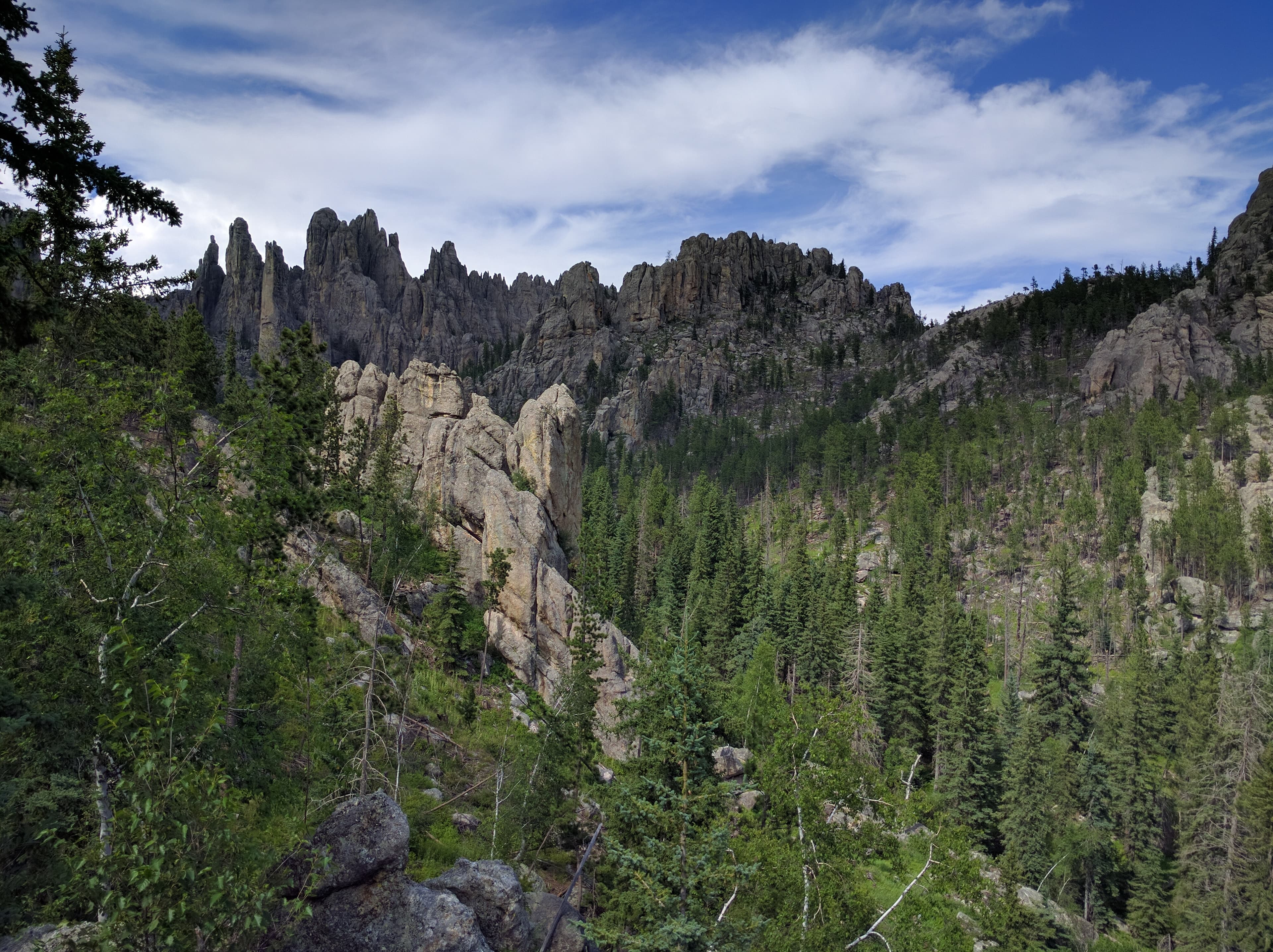
Image of He Sapa / Black Hills. Image source · CC BY-SA 4.0
Visit essentials
A quick read before you go
- Duration
- Let the public route and current activity at He Sapa / Black Hills determine duration; leave…
- Access
- Google Places identifies 330 Knollwood Dr, Rapid City, SD 57701 for He Sapa / Black Hills.
Overview
At He Sapa / Black Hills, arrival is already an ethical act. He Sapa / Black Hills is publicly identified as a indigenous sacred landscape in South Dakota. Within He Sapa / Black Hills, sacred life belongs to Indigenous traditions of culturally affiliated Nations. Guidance from He Sapa / Black Hills's custodian outranks tourism convention. At He Sapa / Black Hills, architecture and landscape support sacred life without exhausting it.
Beauty at He Sapa / Black Hills grants no private teaching or ceremonial standing. A responsible encounter with He Sapa / Black Hills leaves practitioners uninterrupted. Physical and ceremonial boundaries at He Sapa / Black Hills remain unchanged after a visit.
Why this place is sacred
The central sacred claim at He Sapa / Black Hills is specific: A living sacred geography for Lakota and other Plains nations rather than a single isolated monument. Meaning at He Sapa / Black Hills comes from communities and histories, not promotion. The setting at He Sapa / Black Hills gives memory and practice a physical orientation. No visible feature at He Sapa / Black Hills represents the entire tradition.
Thinness at He Sapa / Black Hills means disciplined attention rather than spectacle. A guest at He Sapa / Black Hills may notice silence, movement, prayer, or terrain. Observation at He Sapa / Black Hills confers no authority over its tradition. He Sapa / Black Hills may withhold explanation and owes outsiders no revelation.
The sacred purpose documented for He Sapa / Black Hills centers on the living land, ancestors, and reciprocal relationships named by affiliated peoples.
Public sources trace He Sapa / Black Hills through the stewardship and history named in the references.
Experience and orientation
At He Sapa / Black Hills, read current notices before taking photographs. At He Sapa / Black Hills, notice whether prayer, ceremony, memorial practice, or community life is underway. At He Sapa / Black Hills, scheduled activity takes priority over a preferred itinerary. Guests at He Sapa / Black Hills need not imitate unfamiliar Indigenous traditions of culturally affiliated Nations observance. Inside He Sapa / Black Hills, quiet presence and careful listening are sufficient.
A closed boundary at He Sapa / Black Hills must be accepted immediately. Access at He Sapa / Black Hills can change with weather, conservation, services, or community needs. Leave He Sapa / Black Hills without collecting material or photographing another person's devotion.
He Sapa / Black Hills is associated with South Dakota, South Dakota. At He Sapa / Black Hills, confirm the exact public entrance with its custodian.
Context and lineage
Public reference records describe He Sapa / Black Hills as The Black Hills are an outlying subrange of the greater Rocky Mountain system rising from the Great Plains of North America in. The linked record locates He Sapa / Black Hills in South Dakota, South Dakota. Public chronology at He Sapa / Black Hills and sacred authority at He Sapa / Black Hills are not interchangeable.
The custodian of He Sapa / Black Hills supplies the current institutional or community frame. Reference sources for He Sapa / Black Hills support identity and broad historical orientation. Where He Sapa / Black Hills carries colonial encounter or displacement, the page preserves the dispute at He Sapa / Black Hills. Affected communities retain authority over unresolved histories connected with He Sapa / Black Hills.
Where the history of He Sapa / Black Hills includes received tradition, this guide marks it as tradition. Readers seeking dates or architectural detail for He Sapa / Black Hills should use the linked references.
At He Sapa / Black Hills, indigenous traditions of culturally affiliated Nations
Traditions and practice
Within Indigenous traditions of culturally affiliated Nations, He Sapa / Black Hills sustains ceremony and cultural care determined by affiliated Indigenous communities at He Sapa / Black Hills. The devotional focus at He Sapa / Black Hills is the living land, ancestors, and reciprocal relationships named by affiliated peoples.
Current practice at He Sapa / Black Hills remains under its responsible religious, community, Tribal, or public custodian.
At He Sapa / Black Hills, guests must not reproduce ceremony or seek restricted knowledge. He Sapa / Black Hills permits only the public route and publicly offered interpretation. Affiliated peoples, not visitors, define ceremonial authority at He Sapa / Black Hills.
Indigenous traditions of culturally affiliated Nations
ActiveAccording to its cited custodian, He Sapa / Black Hills remains significant within Indigenous traditions of culturally affiliated Nations.
ceremony and cultural care determined by affiliated Indigenous communities at He Sapa / Black Hills
Perspectives and open questions
Tradition, public history, and personal response illuminate different aspects of He Sapa / Black Hills.
Scholarly perspective
Historical description of He Sapa / Black Hills stays within chronology and identity supported by cited records.
Living and traditional perspectives
According to the cited custodial account, affiliated Indigenous communities understand He Sapa / Black Hills through living relationships that remain theirs to interpret.
Alternative interpretations
No universal-energy or New Age claim is attributed to He Sapa / Black Hills without a named source and explicit framing.
Open questions
Private knowledge, unresolved chronology, and changeable access at He Sapa / Black Hills remain outside this guide.
Plan your visit
Access and arrival
Google Places identifies 330 Knollwood Dr, Rapid City, SD 57701 for He Sapa / Black Hills. For He Sapa / Black Hills, verify parking, mobility, terrain, permits, and emergencies through the official source.
Use established lodging near South Dakota; never assume that the custodians of He Sapa / Black Hills host visitors.
Respectful visit
At He Sapa / Black Hills, dress for terrain and weather without ceremonial imitation. Leave-no-trace preparation is part of respect at He Sapa / Black Hills.
Do not photograph prayer or ceremony at He Sapa / Black Hills without explicit consent. Obey every object, interior, memorial, and restricted-area rule at He Sapa / Black Hills.
Do not leave cloth, stones, food, or improvised offerings at He Sapa / Black Hills. Never touch prayer bundles or ceremonial materials at He Sapa / Black Hills.
At He Sapa / Black Hills, gates and signs define the public boundary; spoken instructions at He Sapa / Black Hills are binding.
At He Sapa / Black Hills, private prayer, closed ritual, sacred materials, and restricted knowledge are not visitor content.
Current practical details
Address
Black Hills
Hours, fees, and access can change — verify on the official source before you travel. Practical details last checked Jul 2026.
Location
Map loads as you approach this section.
Pilgrim reflections
A portrait of encounter, not a score
Pilgrims describe what they felt, how present they could become, and whether the place would shape a journey. There are no stars and no ranking of traditions.
No reviewed reflections yet
The first pilgrims can help describe the character of being here.
Share a reflection
Available after an account-backed “Been there.” Every reflection is reviewed before publication.
Nearby sacred places
Explore other sacred places in the region. Proximity does not establish access or travel time; check each place’s guidance.


References
Sources consulted for this page. Source categories describe the publication, not a guarantee that every claim is verified. Traditional accounts and outside interpretations may differ.
- 01He Sapa / Black Hills official custodial source — Site custodian or responsible public authorityofficialPrimary source for current identity, sacred purpose, stewardship, and visitor boundaries.
- 02Google Maps exact-place record for He Sapa / Black Hills — Google PlacesSource contextExact-place identity, Place ID, coordinates, address, and operational cross-check.
- 03Black Hills — Wikipedia contributorsacademicGeneral historical and architectural cross-check; claims remain bounded by official sources.
- 04Wikidata identity for Black Hills — Wikidata contributorsacademicStructured identity, location, and entity reconciliation.
Share a photo
Help visitors recognize He Sapa / Black Hills. Every submission is reviewed before publication.