Bear Butte, South Dakota
Where the Great Spirit spoke and seekers still come to listen
Sturgis, South Dakota, United States
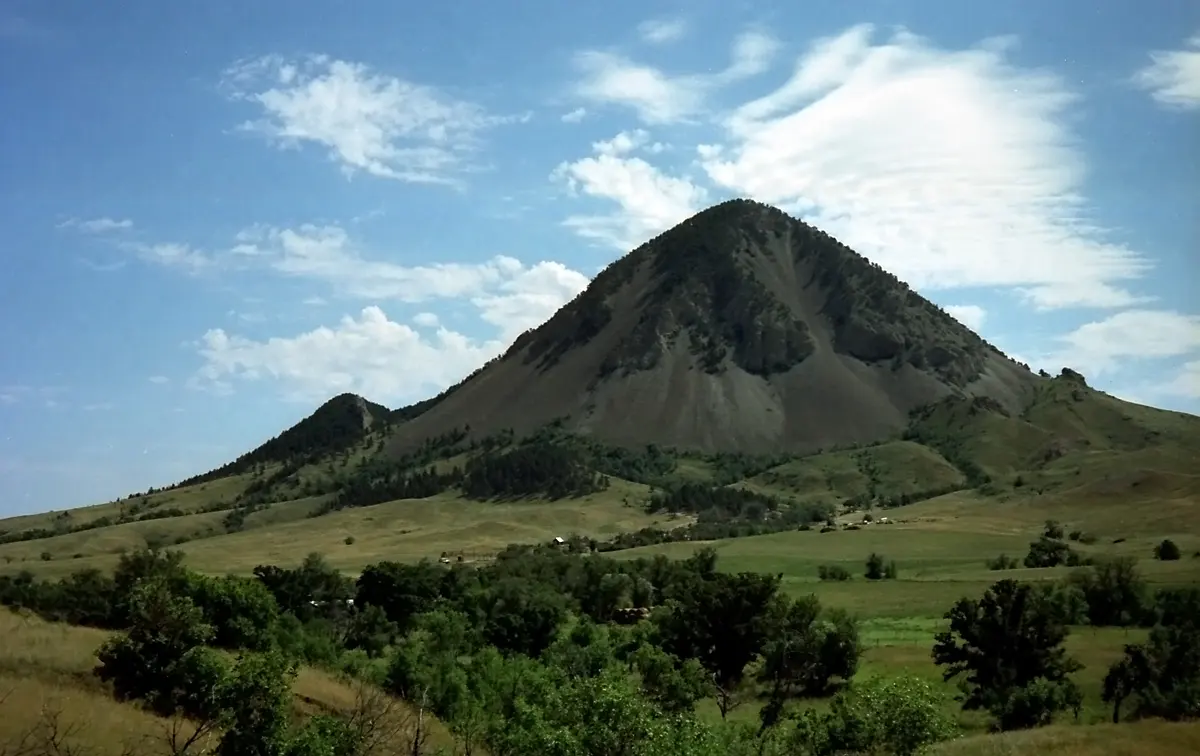
Image of Bear Butte, South Dakota. Image source · CC-BY-SA-3.0
Visit essentials
Before you go
- Access
- Bear Butte State Park is located at 20250 Highway 79, six miles northeast of Sturgis, South…
- Address
- 20250 SD-79, Sturgis, SD 57785, USA
- Duration
- The summit hike takes two to three hours at a contemplative pace.
- Etiquette
- Bear Butte is an active sacred site where ceremonies occur daily.
Overview
Bear Butte rises 1,253 feet above the surrounding grasslands. The Lakota call it Mato Paha and the Cheyenne Noahvose, the Giving Hill. For at least ten thousand years it has drawn vision seekers; today, members of over sixty tribes still fast, pray, and conduct ceremony here. This is not a site that was sacred: it is sacred now, and visitors must understand what they are entering.
Why this place is sacred
Something about Bear Butte resists ordinary categories. Geologically, it is a laccolith, formed when magma intruded into existing rock and domed upward without erupting. Aesthetically, it stands in dramatic isolation, the northeastern sentinel of the Black Hills, rising alone from the plains like an altar set on an empty stage.
But geology and aesthetics do not account for ten thousand years of human pilgrimage. The earliest archaeological artifacts here date to a time when the ancestors of today's Plains peoples were still adapting to post-Ice Age conditions. Whatever drew them here, it preceded the traditions that would later name it sacred.
In Lakota cosmology, Bear Butte encompasses all seven sacred elements: land, air, water, rocks, animals, plants, and fire. This completeness makes it what they call their most sacred altar, a place where the fullness of creation is gathered and accessible. The vision quest practiced here, hanbleceyapi, involves climbing to a sacred spot and remaining alone for four days and nights without food or water, seeking communication with Wakan Tanka, the Great Mystery.
Those who emerge often describe visions that reorient their lives.
For the Cheyenne, this is the Giving Hill, where the prophet Sweet Medicine received not just spiritual guidance but the founding principles of their entire society. He entered the mountain and met Maheo, who gave him the four Sacred Arrows. When he emerged, he carried knowledge that would shape Cheyenne religion, politics, and social organization for generations.
Contemporary visitors, even those who arrive without knowledge of these traditions, consistently describe something difficult to articulate: a quality of listening in the silence, a sense that the mountain is aware. Whether this reflects accumulated centuries of human intention, something inherent in the geology, or forces that resist explanation, the reports are remarkably consistent.
Bear Butte appears to have served as a place of vision seeking and divine encounter from the earliest human presence in the region. For the Cheyenne, it is specifically the location where Sweet Medicine received the Sacred Arrows and the foundational knowledge of their civilization from Maheo. For the Lakota, it is the site where the Seven Sacred Rites were transmitted.
The mountain functions as what might be called an axis mundi, a place where earth and sky meet and communication with the sacred becomes possible.
The meaning of Bear Butte has remained remarkably consistent across millennia, even as the peoples who visit it have changed. Archaeological evidence suggests continuous sacred use for at least ten thousand years. The Cheyenne and Lakota traditions, documented for several centuries, understand the site within cosmologies that may have roots far deeper.
Modern history has brought challenges. The region was ceded in the 1868 Fort Laramie Treaty, then effectively seized after gold was discovered in the Black Hills. Bear Butte became a state park in 1961 and a National Historic Landmark in 1981. The American Indian Religious Freedom Act of 1978 led to a significant increase in ceremonial use as tribes reclaimed their right to practice.
In recent decades, threats from nearby development, including shooting ranges and bars catering to the Sturgis Motorcycle Rally, have led tribes to purchase surrounding land for protection. The site remains contested space, where indigenous religious freedom and commercial interests collide. Through it all, the ceremonies continue.
Experience and orientation
The first thing most visitors notice is the silence. Not absence of sound, but a quality of quiet that feels almost physical, as though the air itself is listening.
The 1.85-mile Summit Trail climbs through grassland, then ponderosa pine, gaining 1,000 feet to the top. The exertion is real but manageable. What is less manageable is the encounter with evidence of ongoing practice. Prayer cloths in the traditional colors, tobacco ties in small bundles, hang from trees along the trail. Some are fresh; others have weathered through seasons. They mark this as different from other hiking destinations.
Many visitors describe a sense of walking in footsteps. The trail has been worn by generations of seekers, including Crazy Horse, Sitting Bull, and Red Cloud, who made pilgrimages here. That history is palpable. So is the present: you may encounter people in active prayer or ceremony, and the appropriate response is to give them space and silence.
The summit offers panoramic views of the Black Hills to the southwest and endless plains in every other direction. Those who sit quietly here often report a shift in perspective that outlasts the visit. Questions about career, relationships, and life direction sometimes clarify unexpectedly. This is not promised, but it is commonly reported.
The most profound experiences tend to come to those who approach the mountain with genuine questions rather than tourist checklists. Bear Butte has hosted vision seekers for millennia. It seems to recognize the difference between those who come seeking and those who come consuming.
Bear Butte asks something of visitors before it gives anything. The something is respect, and it begins before you arrive.
Consider why you are coming. If it is only for exercise or scenery, there are trails without the weight of ongoing sacred practice. If something more draws you, name it honestly to yourself. What are you seeking? What question do you carry?
Arrive early, before the heat and before the crowds. The trail opens at 8 am. Begin in silence. Let the silence deepen as you climb. When you encounter prayer cloths and tobacco ties, do not photograph them, do not touch them, do not let your attention treat them as decoration. They are communications with the sacred, and you are witnessing something intimate.
If you encounter people in prayer or ceremony, pass quietly and give them wide berth. Your presence should not intrude on their practice.
At the summit, sit. Let the view settle into you rather than capturing it immediately for others. If you carried a question, hold it in the silence. You may not receive an answer in any form you recognize. But the mountain has been hosting such questions for ten thousand years. It knows what to do with them.
Context and lineage
The Cheyenne story of Bear Butte centers on Sweet Medicine, a man who was banished from his village after killing another man over a buffalo. During his wandering, he came to Noahvose and entered the mountain. Inside, he encountered Maheo, the Great Spirit, who gave him four Sacred Arrows and knowledge about how to organize the tribe and live together with respect.
When Sweet Medicine emerged, he returned to his people with the gifts that would become the foundation of Cheyenne civilization.
The Lakota understand Bear Butte as the site where the Seven Sacred Rites were received, making it the origin point of their religious practice. It is connected also to White Buffalo Calf Woman, who gave the Lakota the seven virtues, one of which, seeking wisdom through vision quest, is practiced at this mountain.
These are not competing stories but complementary ones. Different peoples encountered the same mountain and found in it a doorway to the sacred. The mountain held room for both, and for the many other tribes who also consider it holy.
Bear Butte has been a place of ceremony continuously for at least ten thousand years. The Cheyenne and Lakota traditions are the most documented, but many other Plains peoples also hold the site sacred. After the upheavals of the 19th century, when tribes were forced onto reservations and traditional practices suppressed, ceremonial use of Bear Butte declined but never ceased.
The 20th century brought revival. Frank Fools Crow and other traditional leaders worked to restore active practice. The American Indian Religious Freedom Act of 1978 provided legal protection that enabled ceremonies to increase. Today, members of over sixty tribes make pilgrimages here.
The lineage is unbroken. The seekers who climb Bear Butte today walk a trail worn by their ancestors across millennia. The mountain has watched generations come and go, empires rise and fall. It remains what it has always been: a place where humans come to listen and, sometimes, to hear.
Sweet Medicine
prophet
The Cheyenne prophet who, according to tradition, entered Bear Butte and received the four Sacred Arrows and foundational spiritual knowledge from Maheo, the Great Spirit. His teachings shaped Cheyenne religion, politics, and social organization.
White Buffalo Calf Woman
sacred figure
A sacred woman who brought the seven sacred rites and virtues to the Lakota people. One of these virtues, seeking wisdom through vision quest, is practiced at Bear Butte.
Frank Fools Crow
spiritual leader
A Lakota ceremonial chief (d. 1989) who led the revival of Bear Butte practices in the 20th century and brought the Fools Crow v. Gullet lawsuit to protect religious freedom at the site.
Crazy Horse
historical figure
The renowned Lakota war leader who made pilgrimages to Bear Butte for vision and guidance.
Sitting Bull
historical figure
Lakota holy man and leader who made pilgrimages to Bear Butte. His name evokes the spiritual depth of those who have sought visions here.
Red Cloud
historical figure
Lakota leader who made pilgrimages to Bear Butte and, in 1857, participated in a great council of Indian nations held at the mountain to discuss the growing presence of white settlers.
Traditions and practice
The central practice at Bear Butte is the vision quest, known in Lakota as hanbleceyapi, which translates roughly as 'crying for a vision.' The traditional practice involves purification through inipi (sweat lodge ceremony), then climbing to a sacred spot on the mountain and remaining alone for four days and nights without food or water. The seeker prays continuously, opening themselves to communication with Wakan Tanka, the Great Mystery. Visions received are later interpreted with the help of an elder.
Prayer offerings are another common practice. Visitors undertaking religious activity leave prayer cloths in traditional colors and tobacco ties on trees along the mountain's slopes. These offerings represent prayers and intentions, communications with the sacred that deserve the same respect you would give a letter not addressed to you.
Tribal ceremonies, conducted by members of the Lakota, Cheyenne, and other Plains nations, take place throughout the year but especially from May through August. These are not public events; they are sacred practices for practitioners.
Contemporary ceremonial practice at Bear Butte continues the traditional forms with remarkable consistency. Vision quests still occur. Prayer cloths still adorn the trees. Tribal members still make pilgrimages to seek guidance in times of transition or difficulty.
The practice has adapted to contemporary realities: the state park system, entrance fees waived for religious activity, and the presence of tourists alongside practitioners. But the essential form remains what it has been for generations. This is not a reconstructed tradition or a revival movement. It is living practice that persisted through suppression and now continues openly.
General visitors do not participate in the ceremonies of Bear Butte. What visitors can do is approach the mountain with the respect it deserves and allow the experience to work at its own pace.
Hike in silence, or as close to silence as you can manage. Let the quiet of the mountain enter you. When you reach the summit, sit. Rather than immediately photographing the view, let it settle into you first. If you carried a question, hold it in the silence without forcing an answer.
Some visitors find it meaningful to offer internal prayers or intentions, even without the physical offerings reserved for practitioners. The form matters less than the sincerity. If you are moved to gratitude, express it silently. If reflection arises, let it unfold without rushing.
The mountain has hosted seekers for ten thousand years. It does not need you to perform anything. It only asks that you be present.
Lakota (Sioux)
ActiveBear Butte, known as Mato Paha in Lakota, is described as the most sacred altar of the Lakota people. The mountain encompasses all seven sacred elements: land, air, water, rocks, animals, plants, and fire. It is the site where the Seven Sacred Rites were received and where seekers practice hanbleceyapi, the vision quest, to seek wisdom from Wakan Tanka.
The central practice is the vision quest, which involves purification through inipi (sweat lodge), then climbing to a sacred spot and remaining alone for four days and nights without food or water, praying continuously for vision and guidance. Prayer offerings of tobacco and cloth are made. Visions received are interpreted with the help of elders. Contemporary Lakota continue these practices at Bear Butte today.
Cheyenne (Tsistsistas)
ActiveBear Butte, known as Noahvose or the Giving Hill in Cheyenne, is where the prophet Sweet Medicine received the four Sacred Arrows and foundational spiritual knowledge from Maheo, the Great Spirit. This transmission shaped Cheyenne religion, politics, social organization, and identity. The mountain is where the Cheyenne were taught how to be Cheyenne.
Cheyenne practitioners make pilgrimage to Bear Butte for prayer, worship, and seeking guidance, both individually and in groups. The Sacred Arrow tradition connects directly to the mountain. Contemporary Cheyenne, including the Northern Cheyenne who have purchased land near the site for protection, continue to use Bear Butte for religious practice.
Other Plains Tribes
ActiveBeyond the Lakota and Cheyenne, Bear Butte is recognized as sacred by over sixty Native American tribes, including the Arapaho and other Plains peoples. Each may understand the site within their own cosmology, but the recognition of its sacredness crosses tribal boundaries.
Practices vary by tribe but generally include prayer, offerings, and vision seeking. The site functions as a pan-tribal sacred place where distinct traditions converge in recognition of shared sacred geography.
Perspectives and open questions
Bear Butte holds meaning across multiple frameworks, from the geological to the profoundly sacred. Academic archaeology documents ten millennia of human presence. Traditional indigenous knowledge names it as a place of divine encounter and ongoing practice. Some alternative spiritual seekers describe it as an energy center. Each perspective offers insight; none captures the whole.
Scholarly perspective
Archaeological research confirms human interest in Bear Butte dating back at least ten thousand years, making it one of the longest-continuously-sacred sites in North America. The geological formation, a laccolith created during the Eocene Epoch, is distinct in the region and may have attracted attention simply by its dramatic isolation.
Scholars document the central role Bear Butte plays in both Lakota and Cheyenne spirituality, and the site's inclusion as a National Historic Landmark recognizes this cultural significance. Research has also tracked the legal and political struggles over religious freedom at the site, from the Fools Crow v. Gullet case to contemporary conflicts with nearby commercial development.
What academic methods cannot access is the experiential dimension that practitioners describe. Scholarship can document that visions are sought here; it cannot evaluate what, if anything, is encountered.
Living and traditional perspectives
For the Lakota, Bear Butte is their most sacred altar, containing all seven sacred elements and serving as the site where the Seven Sacred Rites were received. The mountain is not merely a place where sacred things happened; it is itself sacred, a living participant in Lakota cosmology. The vision quest practiced here is not metaphor but genuine encounter with Wakan Tanka.
For the Cheyenne, Noahvose is the Giving Hill where Sweet Medicine received from Maheo everything that makes them Cheyenne. The four Sacred Arrows remain central to Cheyenne religion. The mountain gave them not just guidance but identity.
Both traditions understand Bear Butte as a place where communication with the sacred remains possible in the present tense. The prayers offered here are received. The visions granted are real. To treat the mountain as merely historical or symbolic would be to fundamentally misunderstand what it is.
Alternative interpretations
Some contemporary spiritual seekers, particularly from New Age and earth-spirituality traditions, describe Bear Butte as an energy vortex or power spot on planetary energy lines. The dramatic geological formation and reported visitor experiences are sometimes interpreted through frameworks involving earth chakras or ley lines.
These interpretations exist alongside, not within, the indigenous traditions that hold the site sacred. They are not endorsed by traditional practitioners. However, they often emerge from genuine experiences that visitors have difficulty explaining in other terms. The consistency of reports, across people with no knowledge of either indigenous or New Age frameworks, suggests that something is happening here, even if we lack vocabulary for it.
Open questions
Genuine mysteries remain about Bear Butte. Why this particular formation, among many in the region, became sacred across multiple distinct cultures over millennia is not fully explained by geology or sight lines alone. The specific nature of what the Lakota call the Seven Sacred Rites, and how they were transmitted here, remains largely internal to the tradition.
The question of what actually happens during a vision quest, what practitioners encounter when they report visions, lies beyond the reach of outside investigation. Those who have undergone the practice describe transformative experiences. What exactly is doing the transforming remains, from an outside perspective, open.
Plan your visit
Access and arrival
Bear Butte State Park is located at 20250 Highway 79, six miles northeast of Sturgis, South Dakota. From Sturgis, take SD Highway 79 north. The park entrance and parking lot are on the east side of the highway. South Dakota State Park entrance license is required; fees are waived for those undertaking religious activities. The summit trail is 1.85 miles with approximately 1,000 feet of elevation gain, rated as moderate difficulty. The trail is not wheelchair accessible.
Sturgis, six miles away, offers various lodging options. The park itself has 15 non-electric campsites and 4 horse campsites for those wanting closer connection. For those seeking spiritual context for their visit, consider the timing carefully: the area's tourism infrastructure is built around motorcycles and Western heritage, not pilgrimage support.
Respectful visit
No specific dress code applies to visitors, but dress modestly and practically. Comfortable hiking shoes with good grip are essential for the rocky, sometimes steep trail. Layers accommodate the weather changes between base and summit. Avoid clothing with offensive imagery or messaging.
Photography of scenery and landscapes is permitted. Photography of prayer cloths, tobacco ties, and any religious offerings is prohibited. Photography of people engaged in prayer or ceremony is prohibited. Use your camera for the views, not for documenting sacred practice.
Leaving physical offerings, including prayer cloths and tobacco ties, is reserved for those undertaking recognized religious practice within Native American traditions. General visitors should not leave physical offerings. If you wish to offer something, make it internal: a silent prayer, a moment of gratitude, an intention held in the heart. The form matters less than the sincerity.
Pets are not allowed on the Summit Trail. Alcohol is prohibited in the park east of Highway 79. Do not approach the buffalo herd at the base of the butte. Do not touch or disturb any structures, artifacts, or offerings. Do not climb off-trail. Do not remove anything from the site. State park entrance fees apply, but these are waived for those undertaking religious activities.
Do not attempt to participate in or imitate Native American ceremonies unless you are a member of a tradition that practices at Bear Butte and are undertaking recognized religious activity. Do not leave physical offerings; this is reserved for practitioners. Do not photograph prayer cloths, tobacco ties, or people engaged in ceremony.
Be cautious of anyone offering to lead you in 'ceremonies' at Bear Butte, particularly non-Native individuals or commercial operators. Legitimate traditional practice at this site occurs within the tribes who hold it sacred, not through paid experiences for tourists.
The Summer, particularly during the Sturgis Motorcycle Rally in early August, brings noise and crowds that conflict with the site's sacred nature. If contemplative experience is your goal, consider visiting in spring or fall, or on weekday mornings.
Current practical details
Address
20250 SD-79, Sturgis, SD 57785, USA
Phone
Hours
Hours, fees, and access can change — verify on the official source before you travel. Practical details last checked Jun 2026.
Location
Map loads as you approach this section.
Pilgrim reflections
A portrait of encounter, not a score
Pilgrims describe what they felt, how present they could become, and whether the place would shape a journey. There are no stars and no ranking of traditions.
No reviewed reflections yet
The first pilgrims can help describe the character of being here.
Share a reflection
Available after an account-backed “Been there.” Every reflection is reviewed before publication.
Nearby sacred places
Explore other sacred places in the region. Proximity does not establish access or travel time; check each place’s guidance.

References
Sources consulted for this page. Source categories describe the publication, not a guarantee that every claim is verified. Traditional accounts and outside interpretations may differ.
- 01Sacred Native American Sites: Bear Butte and Wind Cave — National Trust for Historic PreservationofficialOfficial preservation organization documentation
- 02Bear Butte State Park — South Dakota Game, Fish, and ParksofficialOfficial state park information
- 03Bear Butte - Sacred Mountain of the Plains — University of Rostock - American Antiquities ProjectacademicAcademic research project documentation
- 04Plains Tribes Fight Development of Sacred Bear Butte — Cultural SurvivalspiritualIndigenous rights organization documentation
- 05Fools Crow v. Gullet - 706 F.2d 856 — JustiaSource contextFederal court case documentation
- 06Bear Butte State Park Coordinates — LatLong.netSource contextGeographic coordinate reference
- 07Bear Butte - Wikipedia — Wikipedia contributorsencyclopediaComprehensive overview with citations to academic and government sources
- 08Bear Butte, Sacred to Cheyennes and Lakotas, Looms Near the Black Hills — HistoryNetSource contextPopular history publication with detailed historical narrative
- 09The American West: Bear Butte, The Cheyenne And Lakota Sacred Place — Cowboy State DailynewsRecent regional news coverage
- 10The Rugged Spirituality of Bear Butte — South Dakota MagazineSource contextRegional magazine with local perspective
- 11Bear Butte and the Struggle for Religious Freedom — Native American NetrootsSource contextIndigenous community perspective on religious freedom issues
- 12Save Bear Butte: Mecca of the Lakota — CounterPunchnewsInvestigative journalism on preservation issues
Photo gallery
2 curated photos
Share a photo
Help visitors recognize Bear Butte, South Dakota. Every submission is reviewed before publication.