Druids' Temple
A Romantic-era stone folly that imagined a Druid sanctuary rather than preserving one
Understand sacred places, explore living traditions, and learn how to engage respectfully with Pilgrim Map.
Access has not been verified. Check current local guidance before planning a visit.
Ilton-cum-Pott, England, United Kingdom
Read the sources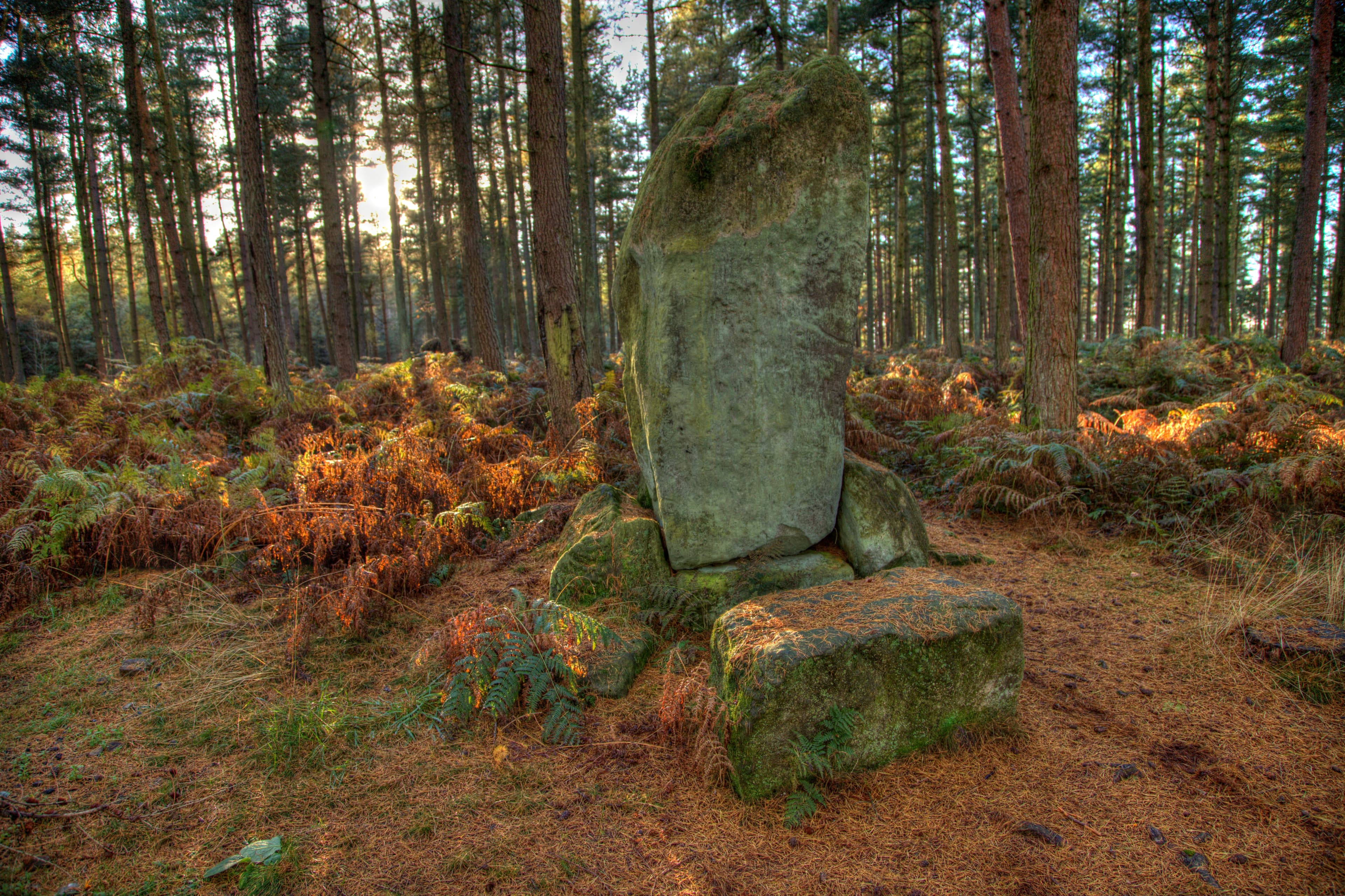
Image of Druids' Temple. Image source
Visit essentials
A quick read before you go
- Duration
- Ninety minutes
- Access
- Road access is via the Masham and Ilton area, followed by a woodland walk from designated…
Overview
Rough sandstone blocks in woodland above the Swinton Estate form circles, trilithons, chambers, and a passage into shadow, deliberately evoking an imagined ancient sanctuary. Historic England identifies Druids’ Temple as a folly built around 1800 for William Danby of Swinton Castle, within a designed landscape shaped by fascination with antiquity, the picturesque, and Druids.
It is not an archaeological Druid site or prehistoric structure. Its value lies in what it reveals about later Britain: landowners and antiquarians used stone, ruins, and staged mystery to create emotionally charged landscapes, with the name itself part of that design.
A frequently repeated tale says a resident hermit was recruited to live at the monument, but public evidence does not securely establish all its details. Visitors can appreciate the theatrical passage from open circle to enclosed chamber while distinguishing documented history from romantic embellishment and contemporary spiritual response.
Why this place is sacred
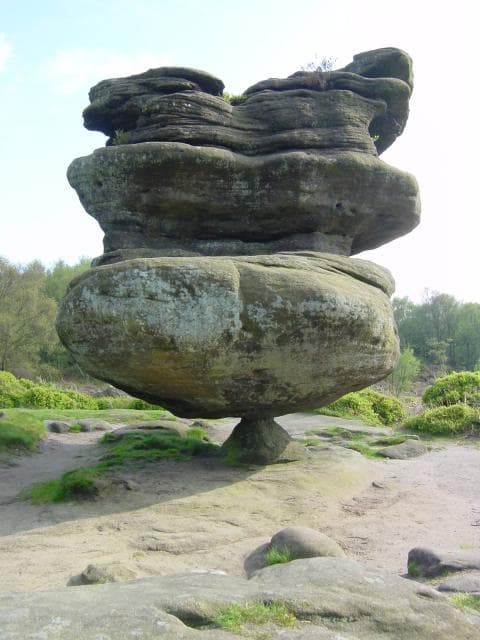
Unlike Brimham Rocks, whose forms are geological, Druids’ Temple was designed to produce an encounter with imagined antiquity. The visitor moves from ordinary forestry track into a composition of monoliths and trilithons, then toward darker, enclosed space. The structure manipulates scale, sequence, and concealment.
That design belongs to Romantic antiquarian culture. The monument’s power comes partly from knowing that it is an interpretation made in stone: a Georgian-era vision of what Druid sacred architecture might have been. Contemporary visitors may use it for reflection or symbolic practice, but such use should be named as contemporary rather than claimed as continuous ancient tradition.
Experience and orientation
Approach slowly enough to notice how the temple appears through trees. Walk the outer forms before entering the chamber sequence. The contrast between open circles and enclosed stone is the central spatial experience.
Surfaces are uneven and may be wet or mossy. Do not climb walls or trilithons, and avoid entering crowded chambers when doing so would force contact with the stone. Woodland operations, fire risk, and estate access can change, so current local guidance controls.
Quiet contemplation is appropriate when it does not exclude others. The site is small; large ceremonies, amplified sound, smoke, or installed decorations would overwhelm both heritage and shared access.
Treat the visit as a short heritage walk rather than an expedition. Confirm parking and access locally before travel.
Context and lineage
Historic England describes a sandstone reproduction of a Druid temple with circles, monoliths, trilithons, chambers, a tomb, and a nearby stone column interpreted through zodiac symbolism. These are design elements of a circa-1800 folly, not excavated prehistoric features.
The folly emerged from Georgian and Romantic interest in ancient Britain. Heritage listing later protected it as architecture and landscape history. Hermit lore and contemporary spiritual visits continue to reshape its reception.
William Danby
patron
The Swinton Castle owner for whom the folly was constructed around 1800.
Traditions and practice
The relevant historical tradition is Romantic antiquarianism: an elite landscape practice that materialized an imagined ancient religion.
Some visitors treat the folly as symbolically or spiritually meaningful. That use is contemporary and does not establish lineage from ancient Druids.
Move through the monument once in silence, noticing where the designer shifts you from open sky to enclosure.
Romantic Druidic Antiquarianism
HistoricalThe folly materializes circa-1800 ideas about ancient British religion within a designed estate landscape.
Landscape design, antiquarian interpretation, and staged contemplation.
Contemporary Contemplative Use
ActiveVisitors continue to find symbolic meaning in the structure’s woodland setting and passage-like form.
Personal reflection and small, leave-no-trace observance.
Perspectives and open questions
Druids’ Temple is best understood as protected Romantic architecture, later folklore, and a setting for contemporary response—not as prehistoric archaeology.
Scholarly perspective
Historic England dates the Grade II folly to around 1800 and records its deliberate reproduction of an imagined Druid temple.
Living and traditional perspectives
Hermit stories and the Druid name form the monument’s later folklore, though several popular details remain poorly documented.
Alternative interpretations
Matías De Stefano’s Gaia episode uses the temple in a contemporary spiritual itinerary. That interpretation is not evidence of ancient Druid construction or continuous practice.
Open questions
The exact design process, all symbolic intentions, and the factual core of the hermit story remain incompletely documented in accessible sources.
Plan your visit
Access and arrival
Road access is via the Masham and Ilton area, followed by a woodland walk from designated parking. | Difficulty: Short walk on uneven woodland paths.
Respectful visit
Waterproof footwear and woodland layers; paths and stones may be muddy or slick.
permitted: Yes | Personal photography is generally compatible with a visit; obtain permission for commercial work, drones, or organized shoots.
No material offerings, flames, wax, smoke, or attachments.
Do not light flames, burn incense, climb, chalk symbols, leave offerings, move stones, or advertise ceremonies as historically Druid.
Location
Map loads as you approach this section.
Pilgrim reflections
A portrait of encounter, not a score
Pilgrims describe what they felt, how present they could become, and whether the place would shape a journey. There are no stars and no ranking of traditions.
No reviewed reflections yet
The first pilgrims can help describe the character of being here.
Share a reflection
Available after an account-backed “Been there.” Every reflection is reviewed before publication.
Nearby sacred places
Explore other sacred places in the region. Proximity does not establish access or travel time; check each place’s guidance.
References
Sources consulted for this page. Source categories describe the publication, not a guarantee that every claim is verified. Traditional accounts and outside interpretations may differ.
- 01Druids' Temple, List Entry 1132035 — Historic EnglandofficialOfficial circa-1800 date, patron, materials, form, and Grade II status.
- 02Swinton Castle Registered Landscape — Historic EnglandofficialDesigned landscape and Danby context.
- 03Yorkshire Archaeological Society Briefing 15 — Yorkshire Archaeological SocietyacademicEvidence limits and later mythology.
- 04Swinton Castle Landscape Response — Yorkshire Gardens TrustacademicLandscape-history context.
- 05Druids' Temple — Britain ExpressSource contextIndependent visitor overview.
- 06The Journey of Remembering S2:E5 — Reconnecting to Your True Nature — GaiaSource contextContemporary spiritual perspective only.
Share a photo
Help visitors recognize Druids' Temple. Every submission is reviewed before publication.