Debre Libanos
A living Ethiopian Orthodox monastery of prayer, pilgrimage, learning, and difficult memory
Understand sacred places, explore living traditions, and learn how to engage respectfully with Pilgrim Map.
Access has not been verified. Check current local guidance before planning a visit.
Debre Libanos, Oromia, Ethiopia
Read the sources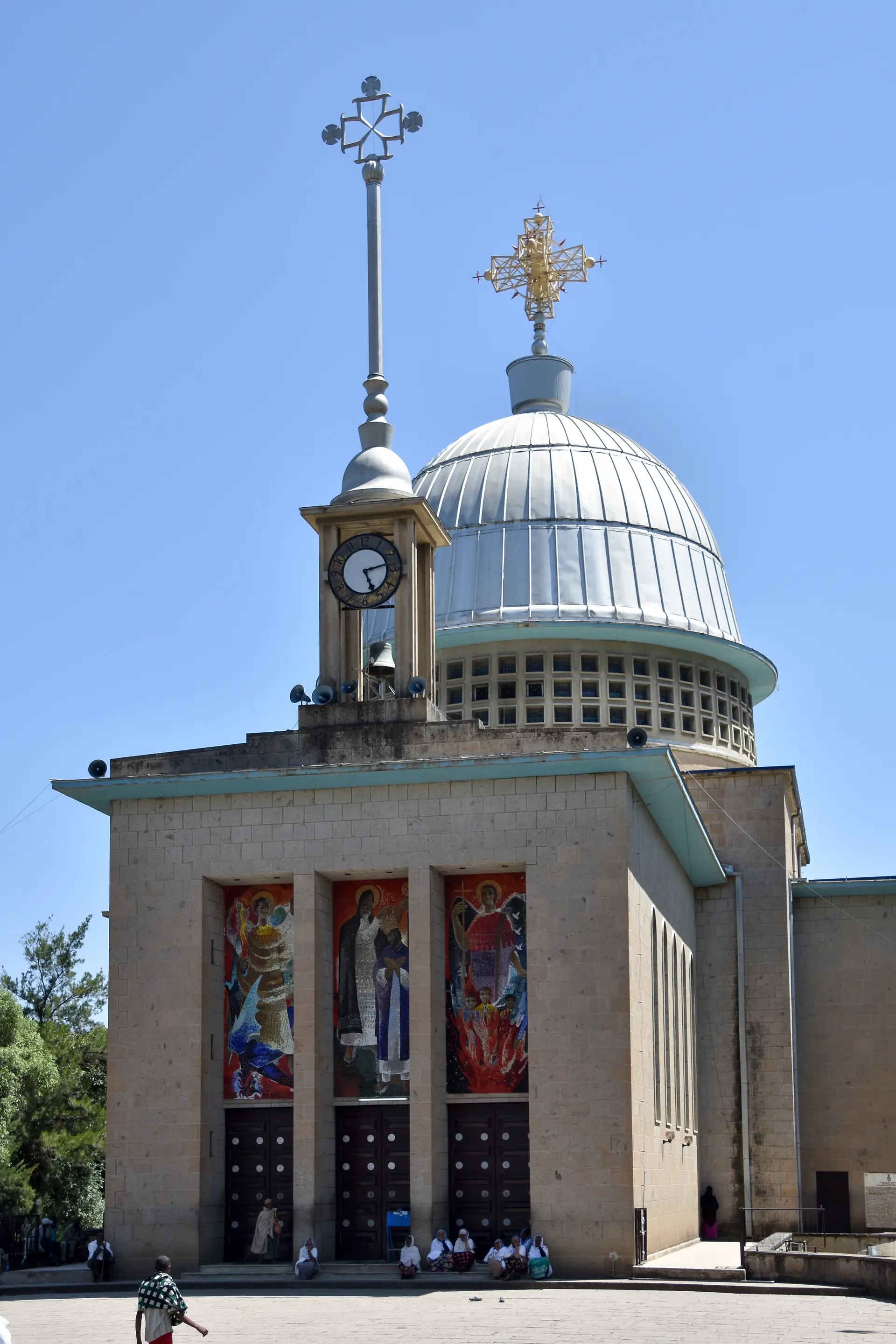
Debre Libanos Monastery church in North Shewa, Oromia, Ethiopia. Image source · CC BY-SA 4.0
Featured in this guide
98 Sacred Springs and Holy Wells Around the World
Sacred water, community stories and spring sanctuaries worldwide
Featured in this guide
100 Sacred Sites of Healing and Pilgrimage
100 places of healing devotion, sacred water, and ancient sanctuary traditions
Visit essentials
A quick read before you go
- Duration
- Treat it as a substantial visit rather than a quick roadside stop.
- Access
- Approach from the Addis Ababa–Bahir Dar road using current official directions and locally…
Overview
Debre Libanos belongs to the living religious geography of the Ethiopian Orthodox Tewahedo Church. The Church's own historical account traces the foundation to Abba Tekle Haymanot, a formative monastic teacher who returned to Shewa after years of study and established a community that became one of Ethiopia's most important Christian centers. Prayer, learning, commemoration, and pilgrimage continue to define the place.
The monastery seen today is not an untouched medieval complex. Official Ethiopian tourism information describes a modern domed church completed under Emperor Haile Selassie in 1961, with stained glass, while the surrounding cliffs and cave tradition connect the present sanctuary to the saint's remembered ascetic life. The physical setting and religious meaning should be kept together without turning the cave or landscape into a promise of supernatural experience.
Debre Libanos is also a place of mourning. Italian colonial forces killed clergy, monastics, and lay worshippers connected with the monastery in 1937. Published estimates differ, so this page does not turn one contested number into certainty. It names the atrocity and respects its victims.
Why this place is sacred
The Ethiopian Orthodox history reviewed for this page places Debre Libanos within a larger medieval renewal of monastic education. Tekle Haymanot studied in established northern centers before returning to Shewa. The community associated with him became a major religious center and part of a monastic house with lasting influence in Ethiopian Christianity.
Pilgrimage here is directed within Christian worship. The saint is commemorated, but he is not substituted for God. Visitors should avoid language that collapses Orthodox veneration into idol worship or treats sacred water, cave traditions, liturgy, and monastic discipline as exotic spectacle. The site is maintained by a living church whose own categories take precedence.
The 1937 massacre is inseparable from the modern sacred landscape. Remembrance of colonial violence belongs beside accounts of rebuilding and pilgrimage. The modern church demonstrates continuity after destruction, but continuity should not be narrated as if loss were repaired without remainder.
Healing traditions
Ethiopian Orthodox holy-water tradition
Debre Libanos's healing pilgrimage is tied to Saint Tekle Haymanot and the holy water associated with his cave. Research with Ethiopian Orthodox pilgrimage traditions describes people coming for prayer, holy water, and help in illness. The tradition understands this through the saint's intercession and God's mercy. The sources reviewed here document that practice without providing a named recovery that can be retold in detail.
Ways to participate
Ask the monastery's clergy which places and practices are open to you, and begin with quiet prayer. Holy-water observances belong to the community's religious life and should be guided by its custodians. Do not enter restricted spaces, photograph people receiving care without consent, or stop prescribed treatment to follow a pilgrimage routine.
These accounts describe religious traditions and reported experiences. They do not promise a cure or replace medical care.
Experience and orientation
Enter with the expectation that services, clergy, pilgrims, and monastery rules will determine where a visitor may go. The church interior is a devotional space. Stand aside for processions and prayer, avoid crossing in front of worshippers, and ask before photographing people, icons, manuscripts, liturgical objects, or clergy.
The nearby landscape can invite hiking, but a sacred cave or spring should not be treated as an adventure prop. Use authorized paths and local guidance. Weather, steep ground, road conditions, and religious observances may change access. Official Ethiopian tourism information recommends local guidance for historical context and navigation; that advice is especially sensible where religious and environmental boundaries overlap.
Allow the place's difficult history to remain present. Memorial attention need not be dramatic: it can mean reading carefully, speaking quietly, and resisting the urge to turn suffering into a photograph.
Context and lineage
The Ethiopian Orthodox Church's historical account describes Tekle Haymanot as a student of Iyasus-Mo'a at Lake Hayq who later pursued further monastic training in northern Ethiopia. On returning to Shewa, he established Debre Libanos. The institution became influential in religious education and church leadership.
Centuries of change mean that foundation, landscape, institution, and present building must be distinguished. Official tourism information dates the modern church to 1961. Its stained glass and dome belong to that twentieth-century rebuilding, while the monastery's lineage is much older.
In 1937, during Fascist Italy's occupation of Ethiopia, colonial forces carried out mass killing involving the monastery's clergy, monastics, and worshippers. Sources differ on the number and scope of victims. This page states the documented atrocity without presenting a disputed count as settled.
An active monastery of the Ethiopian Orthodox Tewahedo Church and a major center in the monastic lineage of Saint Tekle Haymanot.
Saint Tekle Haymanot
Monastic teacher and saint whom Ethiopian Orthodox history identifies with the foundation of Debre Libanos.
Iyasus-Mo'a
Monastic teacher associated with Tekle Haymanot's formation before his return to Shewa.
Traditions and practice
The reviewed sources support the monastery's roles in worship, pilgrimage, learning, and the commemoration of Saint Tekle Haymanot. Details of feast-day observance and sacramental practice should come from the Church and local clergy.
Observe services quietly and participate only in ways invited by custodians. Give pilgrims priority and respect spaces reserved for clergy or the monastic community.
Spend time with the church's visual language and the relationship between sanctuary, cliff, and pilgrimage path while allowing worship to remain central.
Ethiopian Orthodox Tewahedo Christianity
ActiveDebre Libanos is an active monastery and pilgrimage center rooted in the monastic lineage of Saint Tekle Haymanot.
Perspectives and open questions
Debre Libanos is a monastery, a pilgrimage center, a landscape of saintly memory, an educational institution, and a site marked by colonial atrocity and rebuilding.
Scholarly perspective
Historical and religious-tourism scholarship supports its importance in Ethiopian monastic networks and present pilgrimage. Geographic evidence firmly places it in North Shewa, Oromia, not Lalibela.
Living and traditional perspectives
Within Ethiopian Orthodox tradition, Saint Tekle Haymanot's life, discipline, and spiritual lineage give the monastery particular significance. The Church remains the authority for theological interpretation.
Alternative interpretations
Unverified miracle claims and generic mystical descriptions are not presented as fact. Sacred meaning is conveyed through the community's documented tradition.
Open questions
Same-day access, detailed feast schedules, cave restrictions, and the full historical accounting of victims in 1937 require custodial or specialist confirmation.
Plan your visit
Access and arrival
Approach from the Addis Ababa–Bahir Dar road using current official directions and locally confirmed transport. | The monastery and nearby cave landscape include uneven and potentially steep ground. | Not applicable.
Nearby lodging is limited according to official tourism information; verify current options independently.
Respectful visit
Modest clothing and a patient pace are appropriate. Local custodians may set different boundaries for church interiors, sacred objects, gendered spaces, fasting periods, or feast days. Ask rather than infer. A visitor fee or guide arrangement does not create unrestricted access.
Photography deserves special restraint. Do not photograph worshippers, clergy, funerary or memorial observance, icons, manuscripts, or the interior during services without explicit consent. Flash and equipment can disrupt worship and threaten fragile objects.
Discuss the 1937 atrocity accurately and without spectacle. Avoid disputed numerical certainty unless citing a specific study, and do not use the massacre as dramatic background for travel content. The victims and community memory are not an attraction.
Do not invent healing promises, enter a restricted cave or monastic area, handle sacred objects, or conduct an outside ceremony on the grounds.
Location
Map loads as you approach this section.
Pilgrim reflections
A portrait of encounter, not a score
Pilgrims describe what they felt, how present they could become, and whether the place would shape a journey. There are no stars and no ranking of traditions.
No reviewed reflections yet
The first pilgrims can help describe the character of being here.
Share a reflection
Available after an account-backed “Been there.” Every reflection is reviewed before publication.
Nearby sacred places
Explore other sacred places in the region. Proximity does not establish access or travel time; check each place’s guidance.



References
Sources consulted for this page. Source categories describe the publication, not a guarantee that every claim is verified. Traditional accounts and outside interpretations may differ.
- 01Revival of the Church: Monasticism and the Expansion of the Church — The Ethiopian Orthodox Tewahedo ChurchofficialChurch history connecting Abba Tekle Haymanot's education and return to Shewa with the foundation of Debre Libanos and its later importance in Ethiopian Christianity.
- 02Debre Libanos — Visit EthiopiaofficialOfficial destination account for North Shewa identity, active monastery and pilgrimage importance, modern church, 1937 atrocity, access from Addis Ababa, and nearby landscape.
- 03Religious tourism and the sustainable management of sacred sites in Ethiopia — Peer-reviewed authors indexed by PubMed CentralacademicPeer-reviewed discussion of Debre Libanos as a North Shewa monastery and religious-pilgrimage destination, used for living significance and stewardship context.
- 04Debre Libanos Monastery Ethiopia Oct19 D72 12186 — Timothy A. GonsalvesacademicExact-site photograph with object coordinates 9.712054, 38.847560, released under CC BY-SA 4.0.
- 05Research on the Debre Libanos monastery landscape — Journal of Natural Sciences ResearchacademicAcademic location corroboration placing Debre Libanos in North Shewa, Oromia, near 9 degrees 43 minutes north and 38 degrees 51 minutes east.
- 06Domestic religious pilgrimage in Ethiopia — Heliyon researchacademicSupports the attributed account or visitor practice in the healing section; not evidence of clinical efficacy.
- 07Debre Libanos holy-water pilgrimage — St-Takla church resourcespiritualSupports the attributed account or visitor practice in the healing section; not evidence of clinical efficacy.
Photo gallery
3 curated photos
Share a photo
Help visitors recognize Debre Libanos. Every submission is reviewed before publication.