Shrine of Lal Shahbaz Qalandar
Sindhi Sufi devotion, remembrance, and the rhythms of dhamal
Understand sacred places, explore living traditions, and learn how to engage respectfully with Pilgrim Map.
Access has not been verified. Check current local guidance before planning a visit.
Sehwan, Sindh, Pakistan
Read the sources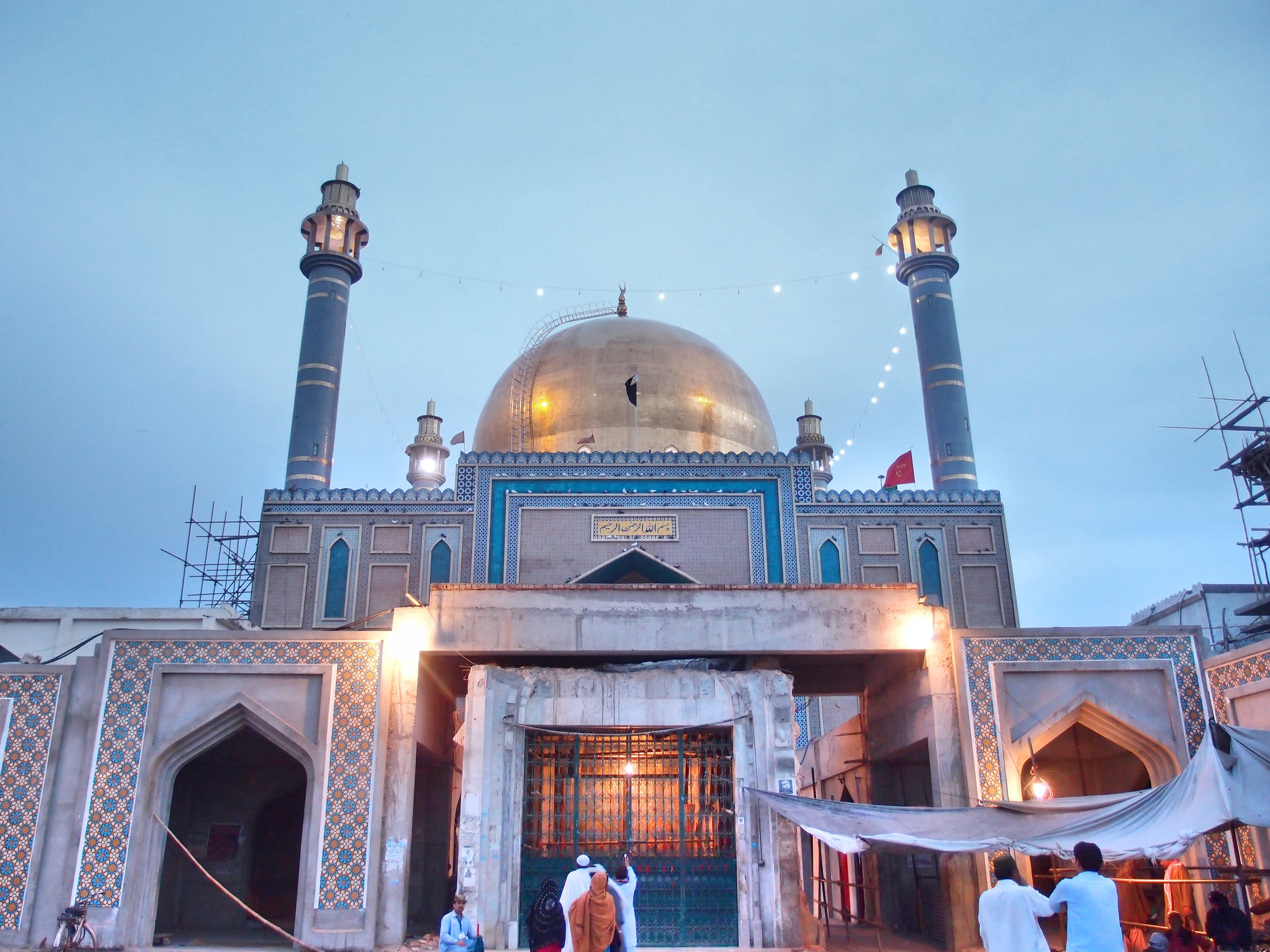
Shrine of Lal Shahbaz Qalandar. Image source · CC BY-SA 3.0
Visit essentials
A quick read before you go
- Etiquette
- Dress modestly, observe footwear and head-covering guidance, and respect security checks.
Overview
The shrine of Lal Shahbaz Qalandar at Sehwan Sharif is a major centre of Sufi devotion in Sindh. Pilgrims come to honor the saint, seek blessings, and bring concerns that can include illness or distress. The mausoleum and its surrounding devotional life belong to a community whose music, movement, and traditions should be approached with attention rather than treated as a spectacle.
Why this place is sacred
The shrine's association with healing is part of a wider search for blessing, belonging, and relief. Dhamal, the devotional movement accompanied by drumming, is one visible expression of that religious life. Different participants may understand it differently. It would be misleading to diagnose someone from their movements or to describe every emotional response as possession or a cure.
Healing traditions
Sufi ritual and community healing experience
Research at Lal Shahbaz Qalandar's shrine describes devotees seeking relief through prayer, Qur'an recitation, and dhamal, the rhythmic devotional dance. Participants understand these practices within the saint's blessing and the social life of the shrine. The studies document people's experiences and interpretations; they do not establish trance as a medical cure or require a visitor to enter an altered state.
Ways to participate
Listen respectfully, pray where welcomed, or observe dhamal from a place that leaves performers and worshippers room. Join only if participation is appropriate and freely chosen, and step away if the sound or crowd becomes overwhelming. Do not photograph vulnerable people or interrupt ongoing care.
These accounts describe religious traditions and reported experiences. They do not promise a cure or replace medical care.
Context and lineage
Lal Shahbaz Qalandar is remembered as the thirteenth-century Sufi saint associated with Sehwan. His burial place developed into a pilgrimage centre whose importance extends across religious and social boundaries. The continuing devotion includes stories of protection and extraordinary aid. Such accounts explain the saint's place in popular religious memory; they should not be compressed into an unqualified claim that the shrine cures particular conditions.
Traditions and practice
Pilgrims offer prayers and take part in the shrine's public observances, especially around the annual urs. If watching dhamal, stay where attendants direct and give participants room. Joining is a personal decision, not a requirement for a meaningful visit. A visitor should never provoke, interrupt, or imitate someone's distress for a photograph.
Sufism
ActiveThe shrine honours Lal Shahbaz Qalandar within this tradition.
Plan your visit
Plan for Sehwan Sharif in Sindh and check current local travel, shrine access, and security arrangements close to departure. The urs can bring substantial crowds and altered movement around the complex. Confirm a suitable route, water and rest arrangements, and transport if heat or prolonged standing are concerns. Published historical descriptions are not current access notices.
Respectful visit
Dress modestly, observe footwear and head-covering guidance, and respect security checks. Ask before photographing worshippers and avoid close recording of private petitions. Keep donations voluntary. The shrine's broad appeal does not remove its Islamic religious context or the custodians' authority over its spaces.
Location
Map loads as you approach this section.
Pilgrim reflections
A portrait of encounter, not a score
Pilgrims describe what they felt, how present they could become, and whether the place would shape a journey. There are no stars and no ranking of traditions.
No reviewed reflections yet
The first pilgrims can help describe the character of being here.
Share a reflection
Available after an account-backed “Been there.” Every reflection is reviewed before publication.
Nearby sacred places
Explore other sacred places in the region. Proximity does not establish access or travel time; check each place’s guidance.
References
Sources consulted for this page. Source categories describe the publication, not a guarantee that every claim is verified. Traditional accounts and outside interpretations may differ.
- 01Shrine of Lal Shahbaz Qalandar — doam.gov.pkofficialSupports site identity, history, or publicly described devotion; healing narratives are attributed beliefs, not clinical evidence.
- 02SACRED SPACES AND EXPRESSIVE BODIES: AT THE URS OF — scholarsbank.uoregon.eduacademicSupports site identity, history, or publicly described devotion; healing narratives are attributed beliefs, not clinical evidence.
- 03Shrine of Lal Shahbaz Qalandar – Stdc — stdc.gos.pkSource contextSupports site identity, history, or publicly described devotion; healing narratives are attributed beliefs, not clinical evidence.
- 04Coordinate reference for Shrine of Lal Shahbaz Qalandar — www.wikidata.orgSource contextIdentity and geographic positioning only; not used to approve religious claims or access policy.
- 05People's perceptions of ritual healing at Lal Shahbaz Qalandar — research studyacademicSupports the attributed account or visitor practice in the healing section; not evidence of clinical efficacy.
- 06Dhamal and spiritual healing in Sindh — University of Sindh researchacademicSupports the attributed account or visitor practice in the healing section; not evidence of clinical efficacy.
Photo gallery
4 curated photos
Share a photo
Help visitors recognize Shrine of Lal Shahbaz Qalandar. Every submission is reviewed before publication.