Barabar–Nagarjuni Caves
Ancient excavated sanctuaries across two Bihar hills
Understand sacred places, explore living traditions, and learn how to engage respectfully with Pilgrim Map.
Access has not been verified. Check current local guidance before planning a visit.
Bihar, India
Read the sources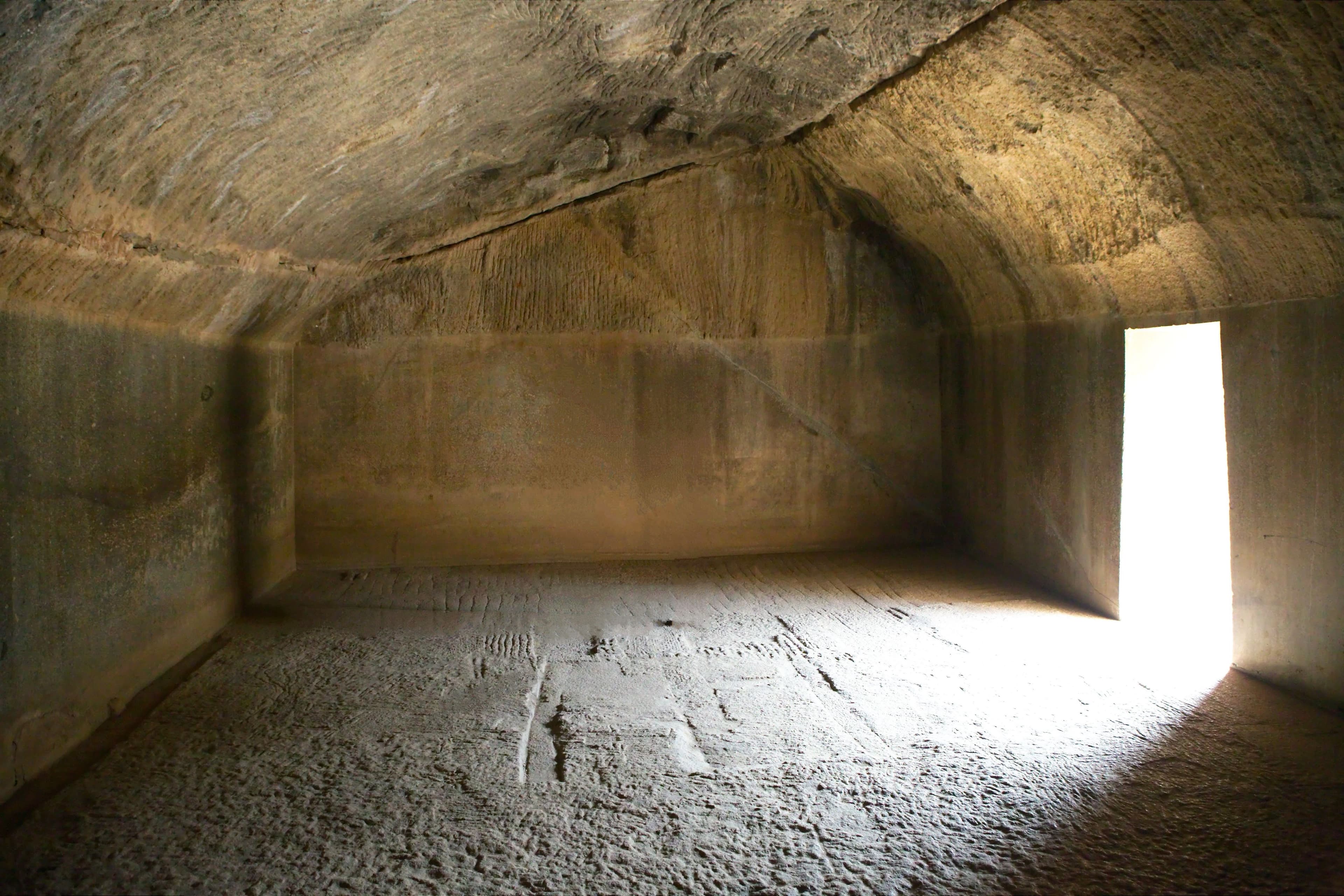
The excavated interior of Lomas Rishi Cave at Barabar. Image source · CC BY-SA 2.0
Visit essentials
A quick read before you go
- Etiquette
- Treat the caves as protected monuments.
Overview
The caves of Barabar and Nagarjuni form a group of early excavated monuments in Bihar. Their names are often gathered into a single destination, but they occupy distinct hills and chambers. Keeping those distinctions matters: an account of one doorway or dedication should not quietly become a claim about the entire group.
Why this place is sacred
These caves preserve a religious history that cannot be reduced to a generic Buddhist label. Bihar Tourism connects dedications here with the Ajivikas. That association deserves to remain visible even when a modern itinerary places the caves within a wider Buddhist circuit. Present-day devotional places in the surrounding hills add another layer, with their own histories.
Context and lineage
The National Monuments Authority dates the Barabar and Nagarjuni caves to the third century BCE. Its heritage account identifies inscriptions recording patronage by Ashoka and his grandson Dasharatha for Ajivika ascetics. At Gopi Cave, the dedication belongs to Dasharatha. These named patrons and recipients give the excavated spaces a religious identity more precise than a generic Buddhist-cave label.
The same authority describes later inscriptions and Hindu images associated with Anantavarman at Nagarjuni. The group therefore preserves successive religious histories. Individual chambers should be identified by name when describing their inscriptions; an account belonging to Gopi Cave does not automatically apply to Lomas Rishi or every neighboring excavation.
Traditions and practice
At whichever chambers are open, look at how the entrance leads into the excavated interior. Keep the particular cave’s name in mind when reading a sign or guide’s explanation. This modest discipline makes it easier to distinguish what is present from a story borrowed from a neighboring monument.
Ajivika
HistoricalSee the source-linked historical and devotional account above.
Plan your visit
Jehanabad district places the caves near Makhdumpur and describes access from the regional road network. Confirm the route to each hill, current opening arrangements and local transport before setting out. Reliable signal, emergency arrangements and step-free access were not established in the consulted material. The nearby Siddhnath temple is a separate devotional destination and should not be used as a substitute location for the cave group. The map marks the Barabar group; Nagarjuni requires a separate approach.
Respectful visit
Treat the caves as protected monuments. Do not touch or mark inscriptions, leave offerings on ancient surfaces, or create loud sounds to demonstrate acoustics around other visitors. Follow the custodian’s directions for access.
Location
Map loads as you approach this section.
Pilgrim reflections
A portrait of encounter, not a score
Pilgrims describe what they felt, how present they could become, and whether the place would shape a journey. There are no stars and no ranking of traditions.
No reviewed reflections yet
The first pilgrims can help describe the character of being here.
Share a reflection
Available after an account-backed “Been there.” Every reflection is reviewed before publication.
Nearby sacred places
Explore other sacred places in the region. Proximity does not establish access or travel time; check each place’s guidance.


References
Sources consulted for this page. Source categories describe the publication, not a guarantee that every claim is verified. Traditional accounts and outside interpretations may differ.
- 01Bihar Tourism: Buddha circuit bookletofficialMauryan patrons and Gopi dedication. Inconsistent Dasharatha genealogy and generic Buddhist/Jain labels not adopted.
- 02ASI: Centrally protected monuments inventoryofficialSeparate named caves within Barabar and Nagarjuni, Jehanabad.
- 03Jehanabad district: Barabar CavesofficialLocality and separate Siddhnath temple only. Third-century AD date and sect-origin statement excluded as conflicting.
- 04National Monuments Authority: Gopi Cave heritage bye-laws — National Monuments Authority, Ministry of Culture, IndiaofficialEnglish sections 3.3–3.4, printed pp.25–26: third century BCE, Ashoka and grandson Dasharatha, Ajivika dedications, Gopi and later Hindu associations. Resolves conflicting district-tourism summary.
- 05Barabar Caves — geographic identity reference — Wikipedia contributorsacademicSecondary geographic identity and representative coordinate only; religious and historical claims use primary sources above.
Share a photo
Help visitors recognize Barabar–Nagarjuni Caves. Every submission is reviewed before publication.