Dargaah Makhdoom Husain Balkhi, Maner Sharif, Patna, India
Two Sufi dargahs near Patna where a medieval seat of learning meets Mughal funerary art
Understand sacred places, explore living traditions, and learn how to engage respectfully with Pilgrim Map.
Access has not been verified. Check current local guidance before planning a visit.
Bihar Sharif, Bihar, India
Read the sources
Visit essentials
A quick read before you go
- Duration
- About 2 hours for both dargahs and the mosque; longer during the Urs.
- Access
- Maner Sharif town, about 24–29 km west of Patna on NH-922, Patna district, Bihar; easily reached…
Overview
Maner Sharif, a town some twenty-four to twenty-nine kilometres west of Patna in Bihar, is one of the state's foremost Sufi pilgrimage centres. It holds two dargahs. The Bari Dargah honours Makhdoom Yahya Maneri (died 1323), a Suhrawardiyya Sufi who studied at the Nizamiyya of Baghdad and made Maner a principal seat of Islamic learning; his saintly lineage was founded by the migrant Shaikh Imaduddin Israil, who is said to have settled here around 1180.
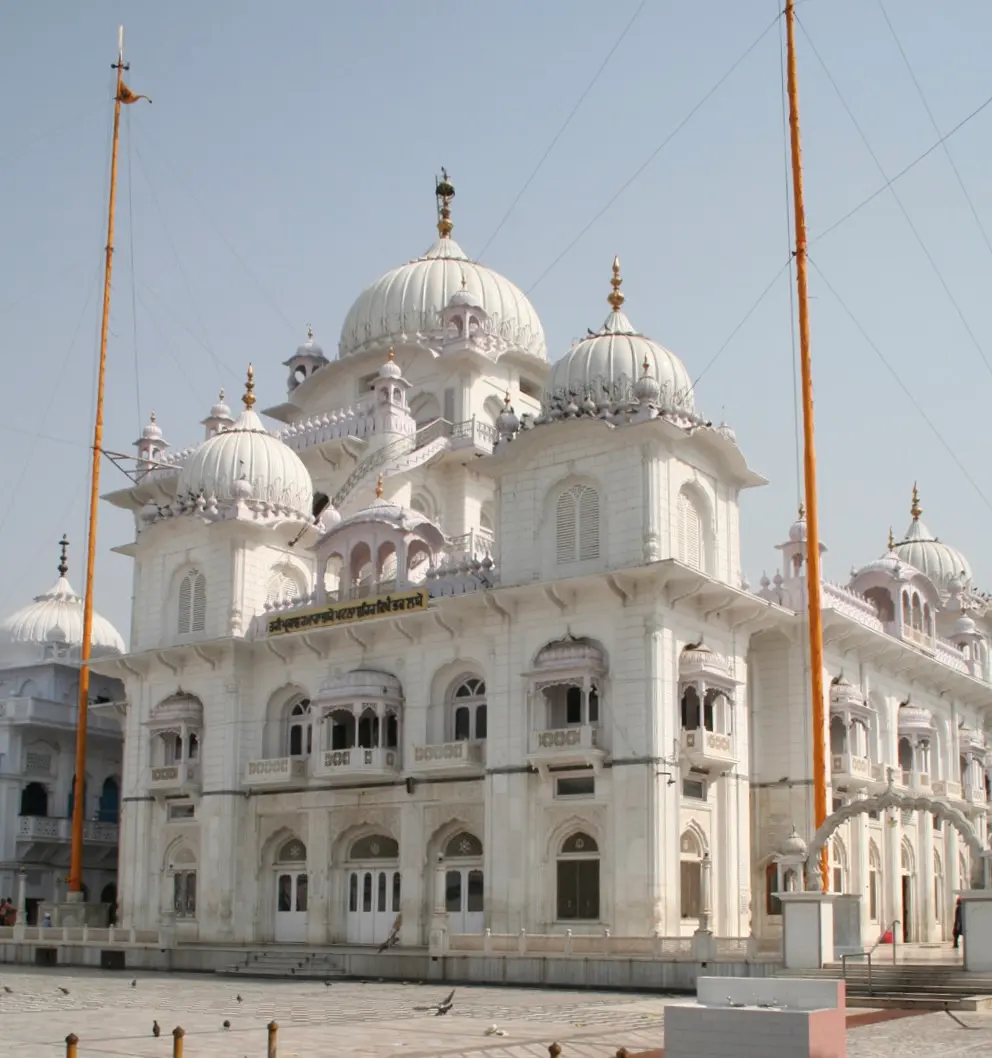
The Choti Dargah is the tomb of his descendant Makhdoom Shah Daulat (died 1608), a mausoleum and mosque built by Ibrahim Khan, Mughal governor of Bihar, between roughly 1608 and the 1610s under the emperor Jahangir — a refined specimen of early-seventeenth-century Mughal funerary architecture in Chunar sandstone, rich with Quranic calligraphy.
This Maner Sharif honours Yahya Maneri and Shah Daulat; it should not be conflated with the separate shrine of the more famous later namesake, Sharfuddin Yahya Maneri, the Firdausi saint buried at Bihar Sharif. The wider Maneri lineage is closely tied to the Firdausi Sufi tradition that flourished in medieval Bihar.
Why this place is sacred
The thinness of Maner Sharif rests on the Sufi conviction that the tomb of a wali, a friend of God, is a locus where the saint's spiritual influence remains active. Pilgrims come seeking proximity to divine grace, barakah, at the tombs of Yahya Maneri and Shah Daulat.
Centuries of continuous pilgrimage by Hindus and Muslims alike have made the place an emblem of shared devotion, and the beauty of the Choti Dargah's Mughal architecture and Quranic calligraphy gives the visit an aesthetic as well as a devotional charge. Visitors describe calm, spiritual solace, and a sense of connection to centuries of saintly presence.
Burial shrines of revered Suhrawardiyya/Firdausi Sufi saints and, in medieval times, a leading seat of Islamic learning at Maner.
It has remained a living Sufi dargah complex with continuous pilgrimage and an annual Urs, the Choti Dargah added in the early seventeenth century as Mughal funerary architecture.
Experience and orientation
Pilgrims describe a peaceful, devotional atmosphere at the tombs, the beauty of the Mughal architecture and Quranic calligraphy of the Choti Dargah, and a strong sense of shared, cross-community devotion. Many come seeking blessings, healing of difficulties, or the fulfilment of vows. The Urs, the annual death-anniversary observance, is vivid with qawwali and crowds; outside it the complex is quieter and more reflective.
Visit both dargahs and the mosque, allowing time to take in the calligraphy and architecture of the Choti Dargah. Offer flowers or a chadar at the tombs if you wish, and observe Islamic shrine decorum. To experience the qawwali, time your visit to the Urs, but expect larger crowds.
Context and lineage
Shaikh Imaduddin Israil migrated to India — traditionally from the wider West Asian region — around 1180, and his family settled at Maner, which became known as Maner Sharif. His son Makhdoom Yahya Maneri, trained at Baghdad, was buried here in the Bari Dargah. After Makhdoom Shah Daulat's death in 1608, the Mughal governor Ibrahim Khan built the Choti Dargah mausoleum and mosque in his honour, completed in the 1610s; sources give the completion variously as 1616 and 1619.
Suhrawardiyya Sufism, closely tied to the Firdausi tradition that flourished in medieval Bihar.
Makhdoom Yahya Maneri
Suhrawardi saint (d. 1323)
Makhdoom Shah Daulat
Saint (d. 1608)
Shaikh Imaduddin Israil
Migrant founder of the lineage
Ibrahim Khan
Mughal governor of Bihar
Traditions and practice
Ziyarat (visitation) at the tombs, offering of chadar (ceremonial cloth) and flowers, lighting of incense, recitation and prayer, and tying threads or making vows for intercession.
An annual Urs commemorating the saints with qawwali performances and a Sufi Mahotsav; daily visitation and prayer; offerings, and pilgrims often buy the local laddus.
Sit a while at the tombs in quiet, and let the calligraphy and proportions of the Choti Dargah draw the attention upward. If the Urs is on, stay for the qawwali, which carries the devotion of the place in sound.
Islam (Sufism — Suhrawardiyya / Firdausi tradition)
ActiveManer Sharif honours Makhdoom Yahya Maneri (d. 1323), a Suhrawardiyya Sufi who studied at the Nizamiyya of Baghdad and made Maner a principal centre of Islamic learning, and his descendant Makhdoom Shah Daulat (d. 1608). The wider Maneri lineage is closely tied to the Firdausi Sufi tradition that flourished in medieval Bihar.
Ziyarat at the tombs, offering of chadar and flowers, prayers and intercession, and an annual Urs with qawwali.
Perspectives and open questions
Maner Sharif is read as a node of medieval Indo-Islamic learning, a living seat of saintly barakah, and a refined work of Mughal funerary art, with the early biographies partly obscured.
Scholarly perspective
Historians regard Maner Sharif as a key node of medieval Indo-Islamic learning and Suhrawardiyya/Firdausi Sufism in Bihar, and the Choti Dargah as an important specimen of early-seventeenth-century Mughal funerary architecture in Chunar sandstone.
Living and traditional perspectives
Devotees revere the enshrined saints as living spiritual presences whose barakah brings blessing, protection, and the fulfilment of prayers; the shrine embodies Bihar's tradition of shared Hindu-Muslim devotion.
Alternative interpretations
In Sufi understanding the tomb of a wali is a locus where the saint's spiritual influence remains active; ziyarat is a means of seeking proximity to divine grace.
Open questions
The exact biography and lineage details of the early Maneri saints, and the relationships between the various 'Maneri' figures and naming variants, remain partly obscured by overlapping medieval traditions.
Plan your visit
Access and arrival
Maner Sharif town, about 24–29 km west of Patna on NH-922, Patna district, Bihar; easily reached by road from Patna, the nearest major transport hub.
Respectful visit
Dress modestly with shoulders and legs covered; head covering advisable, especially for women, at the tomb chamber; remove footwear before entering.
Generally permitted (mobile and camera allowed per tourism sources); be respectful and avoid photographing worshippers without consent, especially during prayer.
Chadar, flowers, and incense; donations accepted; local sweets (laddus) are a customary purchase.
Maintain silence and decorum; follow any gender-specific access conventions at the inner tomb; do not disturb prayer.
This is an active Islamic shrine; observe shrine decorum, remove footwear, and follow any gender-specific access conventions at the inner tomb chamber, confirming them locally.
Current practical details
Address
Bari Dargah, Bihar Sharif, Bihar 803101, India
Hours
Hours, fees, and access can change — verify on the official source before you travel. Practical details last checked Jun 2026.
Location
Map loads as you approach this section.
Pilgrim reflections
A portrait of encounter, not a score
Pilgrims describe what they felt, how present they could become, and whether the place would shape a journey. There are no stars and no ranking of traditions.
No reviewed reflections yet
The first pilgrims can help describe the character of being here.
Share a reflection
Available after an account-backed “Been there.” Every reflection is reviewed before publication.
Nearby sacred places
Explore other sacred places in the region. Proximity does not establish access or travel time; check each place’s guidance.



References
Sources consulted for this page. Source categories describe the publication, not a guarantee that every claim is verified. Traditional accounts and outside interpretations may differ.
- 01Makhdoom Yahya Maneri — Wikipedia — Wikipedia contributorsacademicConfirms Yahya Maneri (d.1323), Suhrawardiyya lineage, Bari Dargah at Maner Sharif, the migrant founder Imaduddin Israil, and Choti Dargah of Shah Daulat.
- 02Maner, Bihar — Wikipedia — Wikipedia contributorsacademicTown history, coordinates (25.65N 84.88E), the two dargahs, and the Ibrahim Khan mosque/Choti Dargah construction.
- 03Maner Sharif Dargah — Patna — Incredible India — Ministry of Tourism, Government of IndiaofficialGovernment tourism portal; Mughal architecture, Sufi pilgrimage significance.
- 04Sufi Circuit — Bihar (Bihar Bhawan / BSTDC) — Government of Bihar / BSTDCofficialOfficial Bihar tourism Sufi circuit document covering Maner Sharif.
- 05Maner Sharif — Bihar Tourism — Department of Tourism, Government of BiharofficialOfficial destination page; visitor information and dargah overview.
- 06Sharfuddin Yahya Maneri — Wikipedia — Wikipedia contributorsacademicClarifies the distinct, more famous Firdausi saint (d.1381) buried at Bihar Sharif — important for disambiguation.
- 07Maner Sharif: The Majestic Shrine of Shah Daulat and Its Untold Mughal History — New Age Islam — Syed Amjad HussainacademicDetailed history of Shah Daulat, Choti Dargah's Mughal construction under Ibrahim Khan, Chunar sandstone, calligraphy.
- 08Sufi Heritage of Bihar — Maner Sharif, Bihar Sharif, and the Dargahs You Should Know — rahul.bizSource contextPractical visitor guidance, etiquette, Urs and qawwali, syncretic Bihari Sufism.
Share a photo
Help visitors recognize Dargaah Makhdoom Husain Balkhi, Maner Sharif, Patna, India. Every submission is reviewed before publication.