Aosta Cathedral (Cattedrale di Santa Maria Assunta e San Giovanni Battista)
Layers of cathedral history at an Alpine pilgrimage crossing
Understand sacred places, explore living traditions, and learn how to engage respectfully with Pilgrim Map.
Access has not been verified. Check current local guidance before planning a visit.
Aosta, Aosta Valley, Italy
Read the sources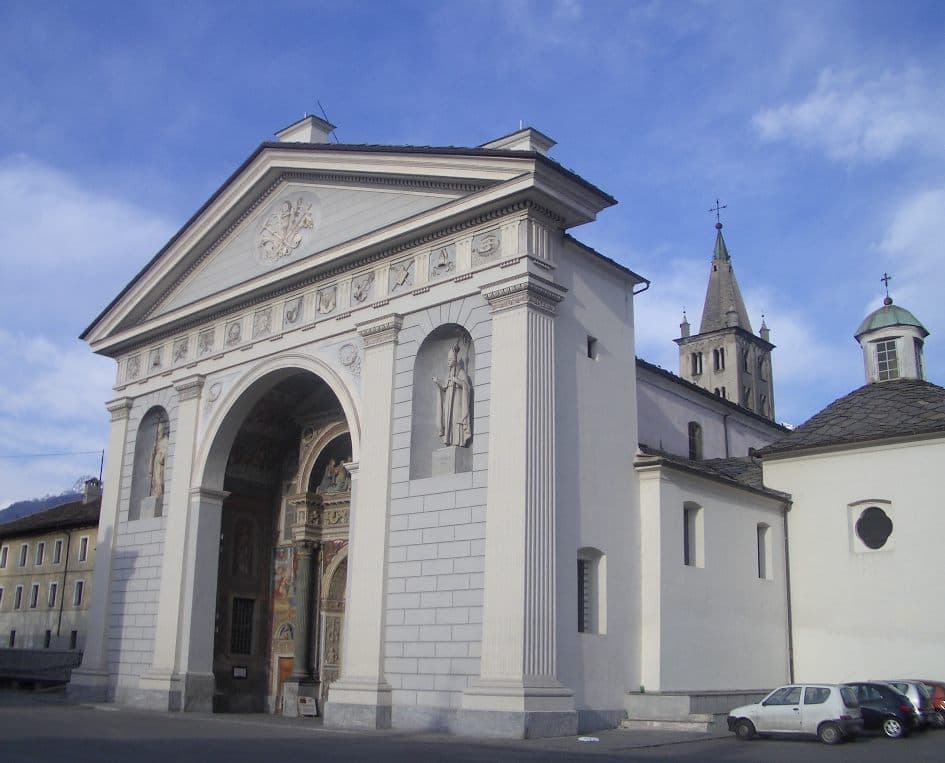
Aosta Cathedral (Cattedrale di Santa Maria Assunta e San Giovanni Battista) - rights-reviewed Wikimedia image. Image source · CC BY-SA 3.0
Station 1 of 12
Via Francigena — Italian SectionVisit essentials
A quick read before you go
- Duration
- Give Aosta Cathedral (Cattedrale di Santa Maria Assunta e San Giovanni Battista) enough time for…
- Access
- Use the cathedral site for current hours and ask staff about services.
Overview
The cathedral stands within Aosta's dense Roman, medieval, and modern urban fabric. It is dedicated to the Assumption of Mary and Saint John the Baptist, and it remains an active diocesan church rather than a historical shell. The supplied sources describe a fourth-century Christian foundation and a substantial replacement in the eleventh century, with later interventions contributing to the building seen today. Via Francigena walkers encounter those layers near a route that crosses the Alps and continues toward Rome.
A pilgrim visit should therefore hold continuity and change together: the community has inherited the site by rebuilding, adapting, worshipping, and conserving it. Current liturgy, restricted areas, and local parish needs take priority over a checklist of artistic details.
Why this place is sacred
Aosta's cathedral can function as a place of reorientation between mountain travel and city movement. Its sacred character lies in recurring worship and episcopal continuity, not in architectural age alone. Sitting quietly, if permitted, allows the route's physical demands to meet a longer institutional memory without claiming that every visitor will feel the same thing.
The exact encyclopedia and Wikidata records resolve the cathedral's identity and coordinates. They document the early Christian foundation, eleventh-century rebuilding, dedication, and diocesan role. The cathedral website governs current access; the European Via Francigena association supplies route context.
Worship carries continuity; repair, institutional change, and community stewardship also shape the cathedral.
Experience and orientation
Begin with current cathedral instructions. Mass, personal prayer, diocesan rites, pilgrim pauses, conservation, and Via Francigena movement may share the site. Confirm hours, keep processional routes clear, and do not enter chapels or choir areas reserved for worshippers or clergy.
Use the cathedral map and instructions to distinguish public space from worship, residential, conservation, and administrative areas.
Context and lineage
The exact encyclopedia and Wikidata records resolve the cathedral's identity and coordinates. They document the early Christian foundation, eleventh-century rebuilding, dedication, and diocesan role. The cathedral website governs current access; the European Via Francigena association supplies route context.
Aosta Cathedral (Cattedrale di Santa Maria Assunta e San Giovanni Battista) belongs to Roman Catholic Christianity here. Route evidence places Aosta Cathedral (Cattedrale di Santa Maria Assunta e San Giovanni Battista) on Via Francigena (Italian Section); this exact Aosta Cathedral (Cattedrale di Santa Maria Assunta e San Giovanni Battista) relationship is distinct.
Traditions and practice
Mass, personal prayer, diocesan rites, and pilgrim pauses may share the cathedral. Confirm hours on the cathedral's own site, keep processional routes clear, and avoid entering chapels or choir areas marked for worshippers or clergy.
Describe current practice only through direct cathedral and Roman Catholic guidance, not visitor inference.
Notice who worships, who cares for the cathedral, and what the community invites.
Roman Catholic Christianity
ActiveAosta Cathedral is the seat of the Diocese of Aosta and a long-lived Christian landmark on the Italian Via Francigena. Its history reaches back to a fourth-century church and includes major eleventh-century rebuilding. That layered fabric asks visitors to distinguish documented change from an imagined, untouched medieval monument.
Mass, personal prayer, diocesan rites, and pilgrim pauses may share the cathedral. Confirm hours on the cathedral's own site, keep processional routes clear, and avoid entering chapels or choir areas marked for worshippers or clergy.
Perspectives and open questions
Read the cathedral through living Roman Catholic practice; its Via Francigena relationship complements its architecture, community history, and conservation.
Scholarly perspective
Institutional sources bound the cathedral history; exact-entity evidence leaves unresolved Roman Catholic matters explicit.
Living and traditional perspectives
The Roman Catholic community's language is the cathedral's primary interpretive frame.
Open questions
Aosta Cathedral (Cattedrale di Santa Maria Assunta e San Giovanni Battista) carries no claimed paranormal, therapeutic, or guaranteed transformative effect.
Plan your visit
Access and arrival
Use the cathedral site for current hours and ask staff about services. Check Via Francigena closures separately. The matched map record lists Piazza Papa Giovanni XXIII, 11100 Aosta AO, Italy.
No lodging claim is verified; consult current Via Francigena sources for the Aosta stop.
Respectful visit
Dress modestly for Aosta Cathedral (Cattedrale di Santa Maria Assunta e San Giovanni Battista); follow its rules on covering, footwear, and sacred thresholds.
Follow cathedral rules; ask before photographing people, rites, interiors, devotional objects, or protected surfaces.
Use only offerings and donation channels authorized by Aosta Cathedral at Aosta Cathedral (Cattedrale di Santa Maria Assunta e San Giovanni Battista).
At Aosta Cathedral (Cattedrale di Santa Maria Assunta e San Giovanni Battista), respect barriers, private rooms, protected fabric, and uninterrupted prayer.
Promise no outcome, improvise no rite, and never stage worshippers for cathedral or Via Francigena accounts.
Location
Map loads as you approach this section.
Pilgrim reflections
A portrait of encounter, not a score
Pilgrims describe what they felt, how present they could become, and whether the place would shape a journey. There are no stars and no ranking of traditions.
No reviewed reflections yet
The first pilgrims can help describe the character of being here.
Share a reflection
Available after an account-backed “Been there.” Every reflection is reviewed before publication.
Nearby sacred places
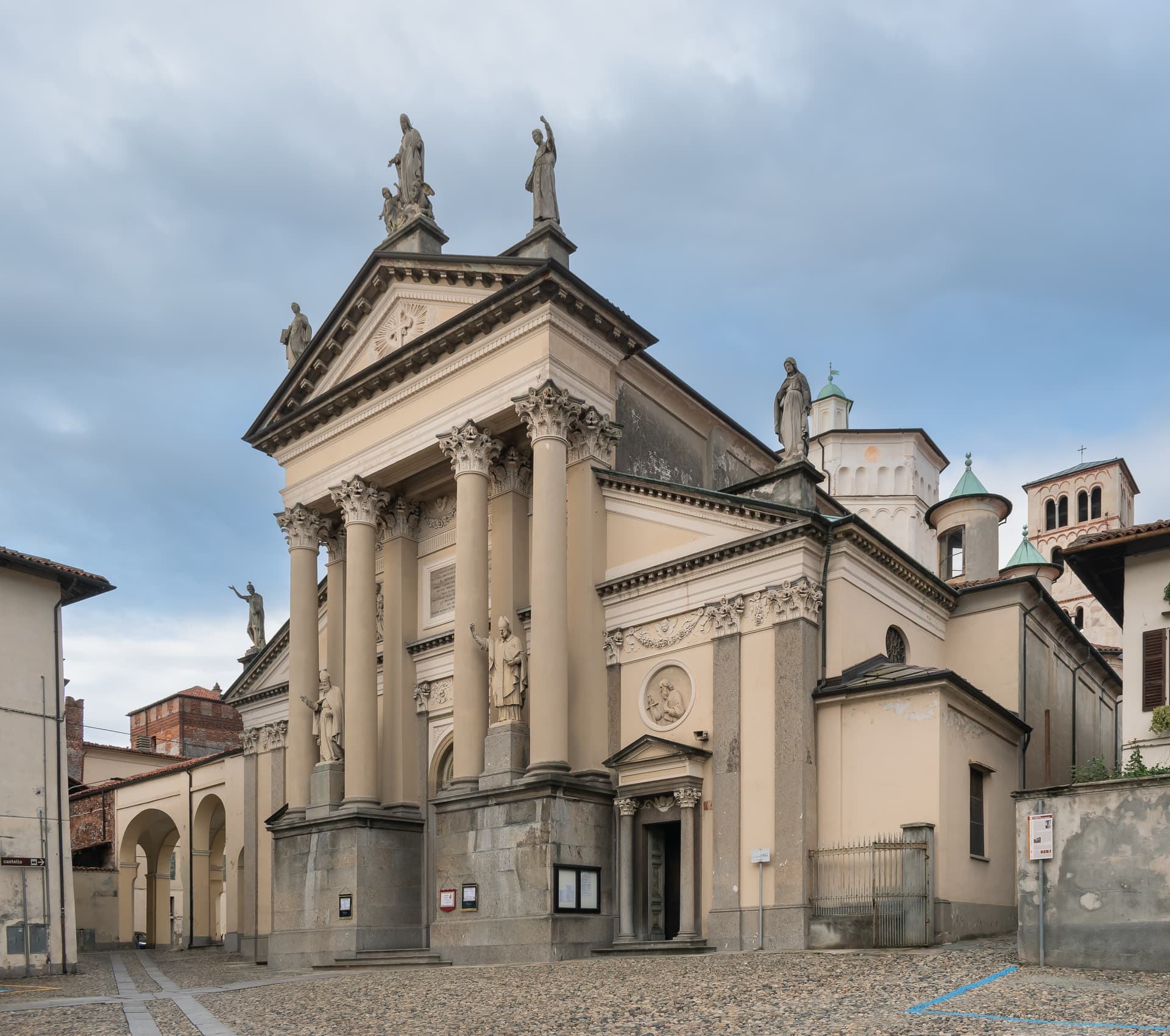
Explore other sacred places in the region. Proximity does not establish access or travel time; check each place’s guidance.


References
Sources consulted for this page. Source categories describe the publication, not a guarantee that every claim is verified. Traditional accounts and outside interpretations may differ.
- 01Aosta Cathedral — Aosta CathedralofficialInstitutional or custodian source used for current identity and visitor guidance; time-sensitive details require rechecking.
- 02Preparing for the journey on foot — European Association of the Via Francigena WaysofficialRoute authority guidance for the Via Francigena; current conditions must be checked before travel.
- 03Aosta Cathedral — Wikipedia contributorsSource contextExact supplied entity page used for identity and bounded historical orientation; claims are corroborated where an institutional source is available.
- 04Wikidata entity Q978797 — Wikidata contributorsSource contextStructured identity and coordinate cross-check for the exact supplied entity.
- 05Aosta Cathedral (Cattedrale di Santa Maria Assunta e San Giovanni Battista) - Google Maps place record — GoogleSource contextStrong exact-entity match used only for coordinates, address, phone, and operational status.
Share a photo
Help visitors recognize Aosta Cathedral (Cattedrale di Santa Maria Assunta e San Giovanni Battista). Every submission is reviewed before publication.