Our Lady and St. Annes Church
A Gothic Revival church reclaiming medieval dedications in suburban Reading
Understand sacred places, explore living traditions, and learn how to engage respectfully with Pilgrim Map.
Access has not been verified. Check current local guidance before planning a visit.
Reading, England, United Kingdom
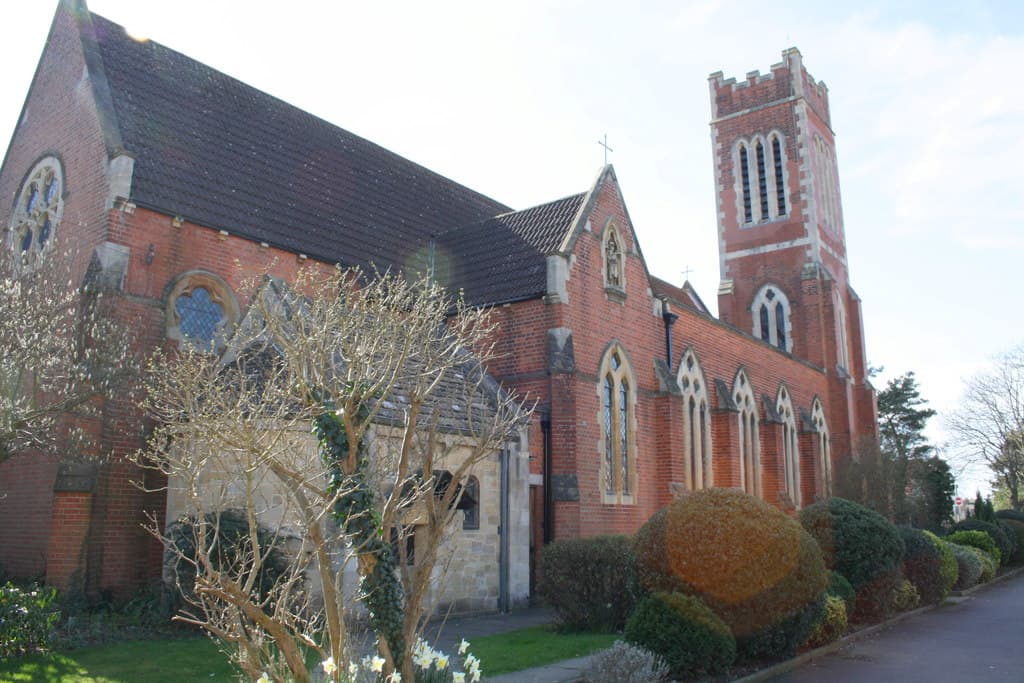
Image of Our Lady and St. Annes Church. Image source · CC-BY-SA-2.0
Visit essentials
A quick read before you go
- Duration
- 30-45 minutes to appreciate both architectural styles and spend time in prayer
- Etiquette
- Active Catholic parish welcoming visitors.
Overview
Caversham's Catholic church on South View Avenue embodies recovery. Royal orders destroyed Our Lady of Caversham's shrine and burned its statue in 1538; its site was lost, as was St Anne's bridge chapel. After over 350 years without a Catholic church in this Thames valley area, Bishop Edward Ilsley founded a parish in 1896 named for both shrines; 13 attended its first Mass. Six years later construction began on Canon A.J.C. Scoles's Gothic Revival church.
Its single aisle opened in 1903, south aisle and tower followed in 1907, north aisle in 1921, and Archbishop Thomas Williams consecrated it in 1933. A contrasting Romanesque shrine chapel was added during the 1954 Marian Year using stone from a medieval bridge chapel. Its possibly medieval oak statue was crowned in 1996 with a crown blessed by Pope John Paul II. The thriving parish welcomes Thames-route pilgrims to Reading Abbey; 13 people became hundreds.
Sites inside
Why this place is sacred
What makes the Church of Our Lady and St Anne more than a suburban parish church? Perhaps the layering of intentions visible in its fabric. The Gothic Revival architecture declares Catholic identity in a style that links Victorian England to medieval Christendom. The dedication recalls two specific shrines that the Reformation destroyed, asserting continuity across the historical rupture.
The shrine chapel, added in the 1950s in a different architectural idiom, creates a space specifically for Marian devotion, housing a statue that may predate the very destruction the parish was founded to recover. Each layer represents a generation's contribution to recovery. The first parishioners gathered in a borrowed house. Their successors built a church in stages over 30 years, each addition expressing growing confidence. The mid-20th century added the shrine chapel, making the parish a pilgrimage destination.
The 21st century extended the narthex and added community facilities. The story continues. For visitors, the church offers encounter with English Catholic experience: the long exclusion from public worship, the gradual return, the buildings that expressed renewed presence, and the shrines that reclaimed what had been lost. The 13 people at that first Mass in 1896 might not recognize the thriving parish their faith seeded.
But they would recognize the dedication: Our Lady and St Anne, the Virgin and her mother, watching over the Thames valley as they did before Henry VIII sent his commissioners.
Parish church for the Catholic community of Caversham, deliberately named to recall medieval shrines destroyed at the Reformation.
Parish founded 1896 (13 people at first Mass). First building (school/chapel) 1899. Church foundation stone 1902, opened 1903. South aisle and tower 1907. North aisle 1921. Consecrated 1933. Shrine chapel 1954-1958. Narthex extension and Cenacle 2003.
Experience and orientation
You approach through Caversham's residential streets, the church tower visible as you near South View Avenue. The Gothic Revival exterior announces Catholic identity in a style that Victorian and Edwardian builders favored for its connection to medieval Christianity. Inside, the three-aisle nave stretches toward the sanctuary, its proportions refined over the 30 years of staged construction. The south aisle and tower came first in 1907, the north aisle completing the plan in 1921.
The architectural unity shows careful planning even as circumstances allowed only gradual execution. A change of mood marks the transition to the shrine chapel. Where the main church is Gothic—pointed arches, vertical emphasis—the shrine space is Romanesque, rounded arches creating a different atmosphere. This chapel was added in the 1950s specifically to house the revived devotion to Our Lady of Caversham. Stone from a medieval bridge chapel was incorporated, creating physical continuity with the pre-Reformation past.
The oak statue stands within, dark with age, crowned with the papal-blessed crown from 1996. Candles flicker. The atmosphere invites prayer. The Cenacle, added in 2003, provides modern community space: an octagonal room for meetings and gatherings. The church continues to evolve, each generation adding what serves their needs while honoring what their predecessors built. Whether you come as a pilgrim, a heritage visitor, or someone seeking quiet prayer, the building offers multiple encounters.
The church is on South View Avenue, Caversham. The main church is Gothic Revival; the shrine chapel (Romanesque) is accessed from within. The Cenacle is on the south side. Parking is available.
Context and lineage
In 1895, Mrs Florence Crawshay of Caversham Park invited French Sisters of Mercy to live at The Firs in Caversham. This small community created a presence around which a parish could form. The following year, Bishop Edward Ilsley of Birmingham formally established the parish, appointing Father Cornelius Klomp as the first priest.
He chose the dedication deliberately: Our Lady and St Anne, recalling the medieval shrine of Our Lady of Caversham and the chapel of St Anne on the old bridge—both destroyed at the Reformation. Fr Klomp celebrated the first parish Mass on Low Sunday 1896. Thirteen people attended. But growth was rapid. By the following year, 81 Catholics were attending Mass. Dr Cockran purchased land for a permanent church. A school/chapel opened in 1899.
In 1902, Bishop Ilsley laid the foundation stone for the present church, designed by Canon A.J.C. Scoles. It opened in February 1903—a single aisle with sanctuary and presbytery. Extensions followed: south aisle and tower in 1907, north aisle in 1921. Archbishop Thomas Williams consecrated the completed church on July 26, 1933. The shrine chapel came later, built during the Marian Year of 1954 and blessed in 1958, completing the parish's recovery of medieval devotion.
The church belongs to the tradition of English Catholic parish building following Catholic Emancipation (1829). The Gothic Revival architecture links it to the broader movement led by Pugin and his successors. The Marian shrine connects it to the national tradition of Marian pilgrimage.
Canon A.J.C. Scoles
Bishop Edward Ilsley
Fr Cornelius Klomp
Traditions and practice
Not applicable—the parish was founded in 1896.
Regular masses and sacraments. Parish community activities. Shrine devotions to Our Lady of Caversham. The church welcomes pilgrim groups walking the Thames route to Reading Abbey. Community facilities in the Cenacle support parish life.
Visit during opening hours to see both the main church and the shrine chapel. Note the contrast between Gothic Revival and Romanesque idioms. The shrine offers space for prayer and reflection. If walking the Thames pilgrimage, the church provides both spiritual refreshment and historical connection.
Roman Catholic Christianity
ActiveThe parish was established in 1896 as part of Catholic restoration in England. Named to recall medieval shrines destroyed at the Reformation, it represents both recovery and growth.
Regular masses and sacraments. Parish community activities. Shrine devotions. Pilgrimage hospitality.
Gothic Revival architecture
HistoricalThe church's Gothic Revival style links Victorian Catholicism to medieval Christianity, asserting continuity across the Reformation rupture.
Not applicable as spiritual practice, but the architecture shapes the worship environment—pointed arches drawing the eye upward, the medieval vocabulary expressing Catholic identity.
Perspectives and open questions
The Church of Our Lady and St Anne embodies English Catholic recovery: medieval dedications reclaimed, a building raised in stages over 30 years, and a shrine revived within living memory.
Scholarly perspective
The Taking Stock survey documents the church as a Gothic Revival suburban parish church by Canon A.J.C. Scoles, completed in stages 1902-1921 with contrasting Romanesque shrine chapel added 1954-1958. The incorporation of medieval bridge chapel stone creates physical continuity with the pre-Reformation past.
Living and traditional perspectives
For the Catholic community, the church represents both recovery and growth. The dedication recalls what the Reformation destroyed; the buildings express what has been rebuilt. The shrine continues devotion that dates to before the Norman Conquest.
Alternative interpretations
The church's connection to medieval sacred geography—particularly through the shrine and the incorporated medieval stone—links it to older traditions of pilgrimage and Marian devotion. Some see continuity with pre-Christian sacred springs through the St Anne's Well connection.
Open questions
The full history of the medieval bridge chapel stone is unclear. Whether any other medieval materials survive in the church or shrine is uncertain. The origins of the oak statue—medieval or later?—remain debated.
Plan your visit
Access and arrival
Reading offers extensive hotel and B&B accommodation. Well-connected by rail (mainline from London) and road (M4).
Respectful visit
Modest attire appropriate for a Catholic church.
Usually permitted outside of services; be respectful at the shrine.
Donations welcome. Votive candles available at the shrine.
Standard church etiquette. Respect any services in progress.
This is an active parish church. Respect any services in progress. Pilgrim groups should contact the parish in advance.
Current practical details
Address
2 S View Ave, Caversham, Reading RG4 5AB, UK
Phone
Hours
Hours, fees, and access can change — verify on the official source before you travel. Practical details last checked Jun 2026.
Location
Map loads as you approach this section.
Pilgrim reflections
A portrait of encounter, not a score
Pilgrims describe what they felt, how present they could become, and whether the place would shape a journey. There are no stars and no ranking of traditions.
No reviewed reflections yet
The first pilgrims can help describe the character of being here.
Share a reflection
Available after an account-backed “Been there.” Every reflection is reviewed before publication.
Nearby sacred places
Explore other sacred places in the region. Proximity does not establish access or travel time; check each place’s guidance.


Share a photo
Help visitors recognize Our Lady and St. Annes Church. Every submission is reviewed before publication.