Ninna-ji
Imperial memory and Shingon practice among Omuro’s late cherries
Understand sacred places, explore living traditions, and learn how to engage respectfully with Pilgrim Map.
Access has not been verified. Check current local guidance before planning a visit.
Kyoto, Kyoto Prefecture, Japan
Read the sources
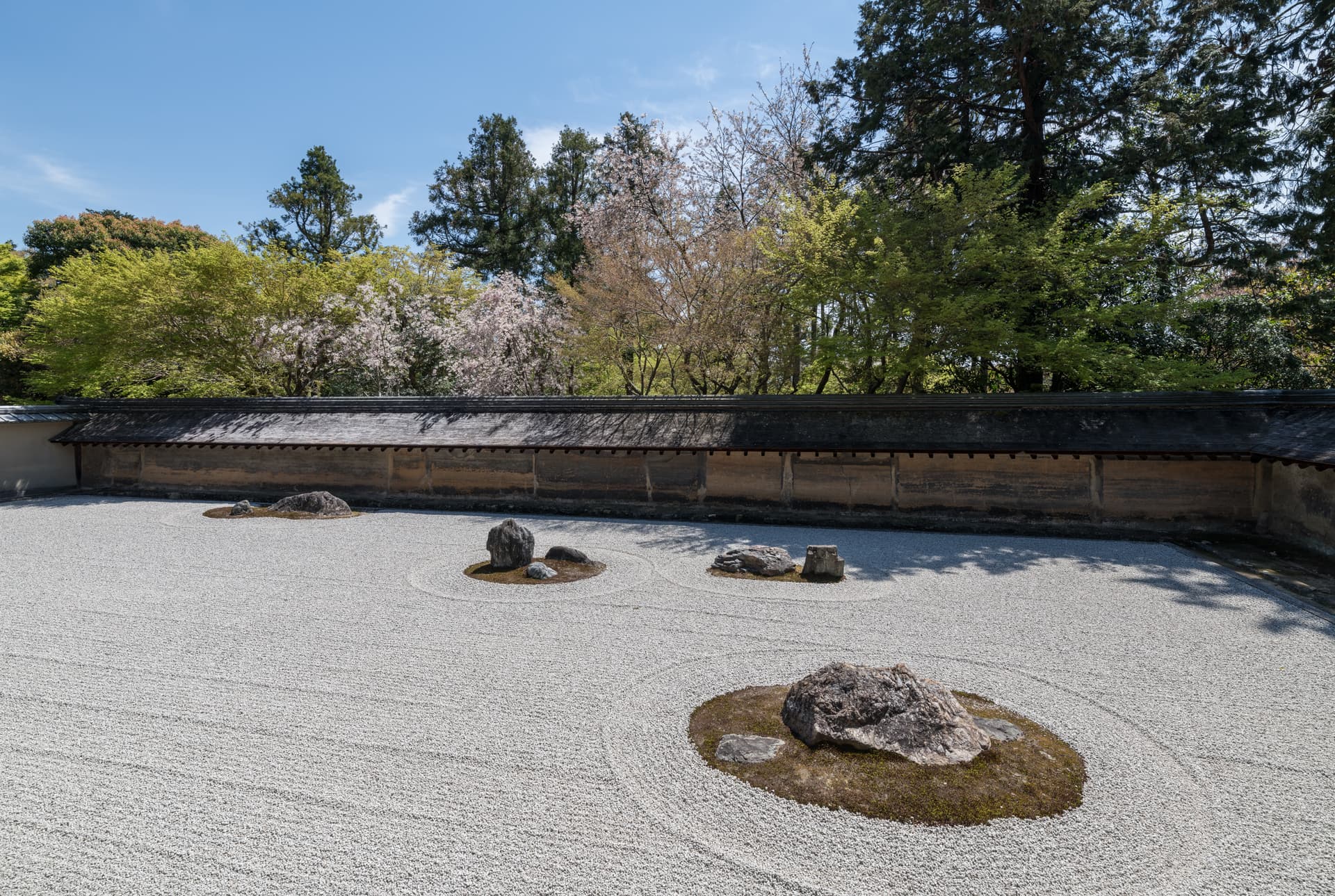
Image of Ninna-ji. Image source
Visit essentials
A quick read before you go
- Duration
- Let Ninna-ji's available route determine the duration.
- Access
- Check transport, admission, booking, and mobility with Ninna-ji.
Overview
Ninna-ji does not separate its palace inheritance from its religious purpose. The Goten rooms and gardens recall centuries of imperial abbots, while the Kondō and five-storey pagoda keep the precinct legible as the head temple of the Omuro school of Shingon Buddhism. That double identity explains why an elegant corridor or painted room should not be treated as courtly scenery detached from worship.
The low Omuro cherry trees alter the temple again in spring. Their late bloom has become famous, but the grove remains within consecrated grounds rather than functioning as a public picnic park. Beyond blossom season, the same route reveals stronger relationships among rooflines, gravel courts, the pagoda, and the hills west of central Kyoto.
Amida Nyorai is the principal devotional focus recorded in the research packet. Ninna-ji also maintains the miniature Omuro Eighty-eight Temple Pilgrimage, allowing pilgrims to encounter a compressed sacred circuit without leaving the temple landscape. Together, temple halls, monzeki memory, and pilgrimage practice make Ninna-ji more than a collection of important buildings.
Why this place is sacred
The precinct’s sacred character comes from the meeting of Shingon observance and monzeki history. Palace-scale rooms show how imperial residence shaped Ninna-ji, yet the devotional center remains Amida Nyorai and the temple community that sustains services. Omuro’s hillside circuit extends that life into the surrounding slope, where a sequence of small stations turns walking into intentional practice.
Ninna-ji centers religious attention on Amida Nyorai.
Ninna-ji endures through custodianship, repair, and continuing observance.
Experience and orientation
Enter through the formal precinct before deciding how much time to give the Goten and hillside route. In the palace rooms, move at the pace set by the corridors and protect thresholds, painted surfaces, and garden views. Near the Kondō, allow worshippers an unobstructed approach. If the Omuro circuit is open, treat its stations as places of prayer rather than collectibles on a checklist.
Use Ninna-ji's current directions and posted route.
Context and lineage
Emperor Uda completed the foundation and later lived here as a monk; the precinct became the Omuro school head temple. Later fabric at Ninna-ji reflects renewal, not one construction moment.
Shingon Buddhism, Omuro school
Traditions and practice
At Ninna-ji, established observance includes sutra recitation, prayer before the principal image, temple services, and the miniature Omuro pilgrimage circuit.
Ninna-ji's custodians continue services and religious care.
At Ninna-ji, watch first; unfamiliar rites need not be copied.
Shingon Buddhism, Omuro school
ActiveNinna-ji remains a living Shingon Buddhism, Omuro school institution.
See Ninna-ji's documented practices above.
Perspectives and open questions
Ninna-ji holds religious, historical, and material registers.
Scholarly perspective
Historical interpretation at Ninna-ji follows its cited record.
Living and traditional perspectives
Shingon Buddhism, Omuro school supplies Ninna-ji's authoritative devotional frame.
Alternative interpretations
No esoteric overlay is asserted for Ninna-ji.
Open questions
Ninna-ji's changing schedule remains outside this account.
Plan your visit
Access and arrival
Check transport, admission, booking, and mobility with Ninna-ji.
No visitor lodging at Ninna-ji is established here.
Respectful visit
Wear practical clothing; follow Ninna-ji's shoe instructions.
Photograph only where Ninna-ji explicitly permits it.
Use only offering places provided by Ninna-ji.
Remove shoes where directed, do not photograph restricted interiors, and treat the late cherries as temple grounds rather than a picnic park.
Never interrupt worship or private observance at Ninna-ji.
Location
Map loads as you approach this section.
Pilgrim reflections
A portrait of encounter, not a score
Pilgrims describe what they felt, how present they could become, and whether the place would shape a journey. There are no stars and no ranking of traditions.
No reviewed reflections yet
The first pilgrims can help describe the character of being here.
Share a reflection
Available after an account-backed “Been there.” Every reflection is reviewed before publication.
Nearby sacred places
Explore other sacred places in the region. Proximity does not establish access or travel time; check each place’s guidance.


References
Sources consulted for this page. Source categories describe the publication, not a guarantee that every claim is verified. Traditional accounts and outside interpretations may differ.
- 01Ninna-ji official site — Ninna-ji custodial institutionofficialPrimary institutional source for identity, religious life, and visitor rules.
- 02Google Maps place record for Ninna-ji — Google PlacesofficialExact-place identity, coordinates, operational status, and official website candidate.
- 03Historic Monuments of Ancient Kyoto — UNESCO World Heritage CentreofficialOfficial World Heritage property record and component context.
- 04Ninna-ji — Wikipedia contributorsSource contextGeneral reference cross-checked against the institutional source.
- 05Wikidata record for Ninna-ji — Wikidata contributorsacademicStructured identity and coordinate cross-check.
- 06Kyoto City Official Travel Guide — Kyoto City Tourism AssociationSource contextOfficial destination context; current details require checking the site page.
Pilgrim glossary
- Sutra
- A canonical Buddhist scripture, often chanted as part of practice.
- Shingon
- An esoteric Japanese Buddhist school emphasizing ritual, mantra, and mandala practice.
Share a photo
Help visitors recognize Ninna-ji. Every submission is reviewed before publication.