Nakaenoshima
A martyr island kept sacred through distance and protected water
Understand sacred places, explore living traditions, and learn how to engage respectfully with Pilgrim Map.
Hirado, Nagasaki Prefecture, Japan
Read the sources
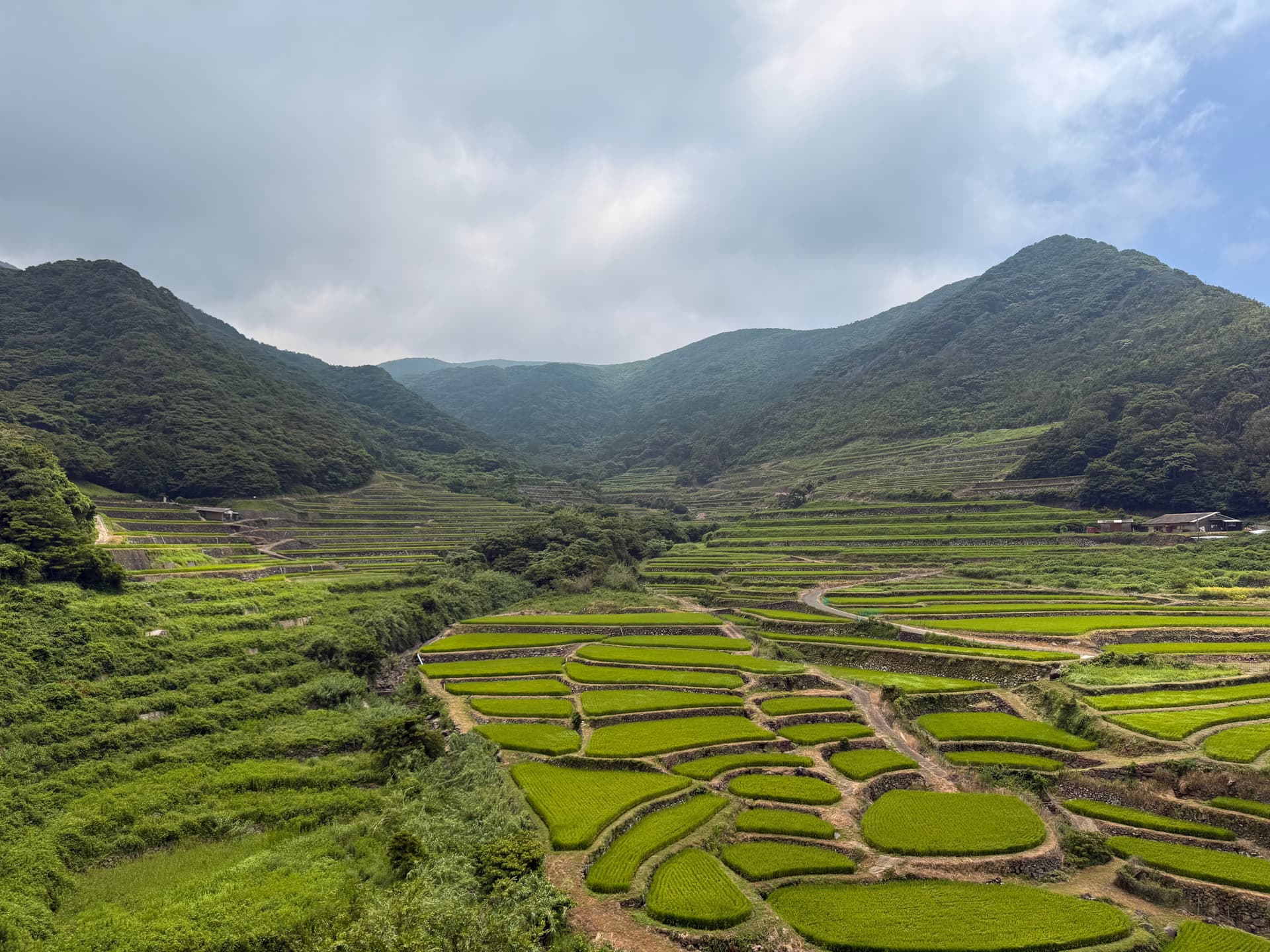
Image of Nakaenoshima. Image source
Access guidance and source
Respectful access notice
Do not visitNakaenoshima is a living sacred and martyrdom site. Visitors must not attempt to land on the island; view it only from permitted public vantage points and follow local guidance.
- Community-restricted
- Living sacred tradition
- Burial or martyrdom site
Verified Aug 3, 2026 from 平戸の聖地と集落(中江ノ島).
Overview
Nakaenoshima must be encountered without landing. The small uninhabited island off Hirado is closed to ordinary visitors, and that distance protects its rocky landing places and memory of Christians executed during the seventeenth-century prohibition. Martyrdom made it sacred for nearby Hidden Christian communities. Water from an island spring entered baptisms and other practices carried for generations without clergy.
UNESCO includes Nakaenoshima in the Kasuga Village and Sacred Places in Hirado component, recognizing relationships among island, village, Mount Yasumandake, fields, and concealed religious life. Publication has its own ethical boundary: public, community-authorized sources can explain significance, but private ritual details should not be extracted for novelty. No landing instructions belong in a visitor guide; a distant view, museum interpretation, and the cultural landscape's testimony are sufficient.
Repair and custodial judgment sustain this sacred place and its water traditions. Present observance includes distant reverence and prayer. Participation follows instruction rather than imitation; photography yields to prayer and privacy, while conservation protects matter and meaning. Cited authorities separate heritage from doctrine, and visitors should not claim private or universal knowledge.
Why this place is sacred
Nakaenoshima is thin through protected absence. Martyrdom, sea distance, and sacred water remain powerful because the island is not converted into a publicly consumable shrine.
Devotion centered on Christian martyrs and the sacred water used by Hidden Christian communities.
Nakaenoshima includes repair and institutional change.
Context and lineage
Nakaenoshima keeps its origin story site-specific.
Hidden Christian tradition
Traditions and practice
At Nakaenoshima, documented observance includes distant reverence, preservation of sacred water traditions, prayer, and community memory. The named sacred focus is Christian martyrs and the sacred water used by Hidden Christian communities.
Custodians at Nakaenoshima maintain the practices and boundaries appropriate to this restricted sacred island.
Watch before acting at Nakaenoshima; attention is welcome, borrowed ritual is unnecessary.
Hidden Christian tradition
ActiveNakaenoshima is sacred within Hidden Christian tradition.
See the documented observances specific to Nakaenoshima.
Perspectives and open questions
Nakaenoshima requires historical, custodial, and tradition-led readings to remain distinct.
Read the publicly shared cultural perspectiveScholarly perspective
Historical interpretation follows the reviewed source record for Nakaenoshima.
Living and traditional perspectives
Hidden Christian tradition supplies Nakaenoshima's authoritative sacred frame.
Alternative interpretations
Nakaenoshima keeps its alternative site-specific.
Open questions
Changeable access and private ritual details remain outside this account.
Nearby sacred places
Explore other sacred places in the region. Proximity does not establish access or travel time; check each place’s guidance.


References
Sources consulted for this page. Source categories describe the publication, not a guarantee that every claim is verified. Traditional accounts and outside interpretations may differ.
- 01Nakaenoshima official or custodial source — Nakaenoshima custodial institution or responsible authorityofficialPrimary or delegated source for identity, religious meaning, custodianship, and visitor boundaries.
- 02Google Maps exact-place record for Nakaenoshima — Google PlacesofficialExact-place identity, locality, coordinates, and operational identity; changeable details are not repeated as stable prose.
- 03Official visitor interpretation for Nakaenoshima — National or local destination authorityofficialPublic interpretation and access context from a governmental or destination authority.
- 04Hidden Christian Sites in the Nagasaki Region — UNESCO World Heritage CentreofficialOfficial World Heritage property record, significance statement, and component context.
- 05Nakaenoshima — Wikipedia contributorsSource contextGeneral identity and historical cross-check; substantive claims are bounded by higher-authority sources.
- 06Wikidata record associated with Nakaenoshima — Wikidata contributorsacademicStructured identity and coordinate cross-check.