Mount Diablo, California
Where the world began—the Ohlone and Miwok creation mountain rising above the San Francisco Bay
Understand sacred places, explore living traditions, and learn how to engage respectfully with Pilgrim Map.
Access has not been verified. Check current local guidance before planning a visit.
Contra Costa County, California, United States
Read the sources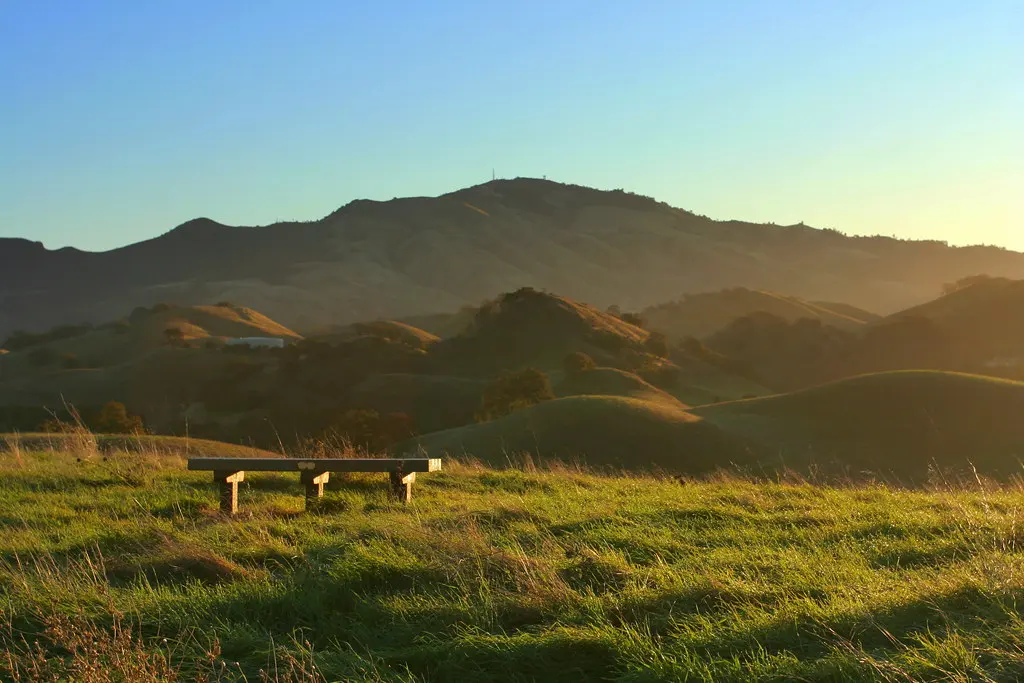
Visit essentials
A quick read before you go
- Duration
- A half-day permits a longer hike and unhurried time at the summit.
- Etiquette
- Mount Diablo is a state park with standard regulations.
Overview
Thirty miles east of San Francisco, Mount Diablo is Tuyshtak—'at the dawn of time'—to the Ohlone and Oo'-yum-bel'-l, the place of creation, to the Bay Miwok. Monte del Diablo reflects colonial misunderstanding, not Indigenous belief. Distinct Ohlone and Bay Miwok creation traditions center the mountain after a primordial flood. For generations, tribes across central California made annual summit pilgrimages for autumn festivals lasting a week or more; medicine people held ceremonies, and the upper slopes were reserved for sacred purposes.
Today the state park protects over 20,000 acres, and clear-day views extend nearly 200 miles to the Sierra Nevada, Farallon Islands, and Central Valley. Contemporary Indigenous peoples, including the Muwekma Ohlone, maintain that the mountain remains sacred. As herb doctor Jim Cooper states: 'The entire mountain is sacred. It is the Medicine Mountain.'
Why this place is sacred
Tuyshtak, 'at the dawn of time,' is literal cosmological positioning, not a poetic label. The Bay Miwok account likewise holds that 'this world began at Mount Diablo, following a great flood.' In the distinct Ohlone account, Mount Diablo and Mount Tamalpais, thirty miles west, remained as twin peaks above the floodwaters; both traditions center creation here. They are cosmological accounts held by peoples in relationship with this mountain for thousands of years, not legends in a dismissive sense.
At 3,849 feet, Mount Diablo rises higher than any peak for miles in every direction; on clear days, its summit offers one of the most extensive views in North America—over 100 miles in every direction across San Francisco Bay, the Sierra Nevada, and Central Valley. That visual center mirrors the mountain's place in Indigenous cosmology as the origin from which everything radiates.
Mount Diablo served as the cosmological center where humanity and the world emerged and as an inter-tribal pilgrimage center. Anthropologist Edward Gifford documented annual summit treks by men, women, and children from bands across the region for autumn festivals lasting a week or more. The upper slopes were reserved for sacred purposes; medicine people held ceremonies, and Wintun religious leaders went up to pray 'for good health, food, and to talk to the spirits.'
Colonial disruption fundamentally altered the mountain's ceremonial function. The Volvon, the Bay Miwok tribe who held the peak area, were forcibly removed to Spanish missions by 1806. The inter-tribal autumn festivals ceased. Yet the mountain's sacred significance persisted in tribal memory and practice. In the 1870s, Indigenous people participating in a religious revival regarded Mount Diablo as 'a home of spirits.'
In 1920s testimony, an East Bay Ohlone woman stated that spirits still danced and whistled at cemetery sites on the mountain's lower slopes.
Mount Diablo State Park was established in 1931, preserving over 20,000 acres. Contemporary Indigenous organizations including the Muwekma Ohlone Tribe maintain spiritual connection to the mountain. Laime Hayem, a Wintun elder, expressed in 1985: 'Mt. Diablo was our (sacred) mountain at one time and still is in my heart.' The mountain's cosmological significance—as the point of creation—cannot be abolished by colonial renaming or recreational use. It remains Tuyshtak.
Experience and orientation
The experience of Mount Diablo begins with approach. From the East Bay cities below, the mountain dominates the eastern horizon—a presence impossible to ignore. Its double summit creates a distinctive profile visible from San Francisco, from the Central Valley, from hills and highways throughout the region. This visual prominence mirrors the mountain's cosmological role: the center around which everything else arranges itself.
Two roads wind up the mountain, each offering a journey from suburban flatlands through oak woodlands and chaparral to the exposed summit. The climb reveals the mountain's ecological diversity: blue oaks giving way to gray pines, grasslands blooming with wildflowers in spring, the distinctive sandstone formations of Rock City emerging like natural architecture.
For those who hike rather than drive, the Mitchell Canyon route provides a seven-mile pilgrimage that mirrors what tribal peoples undertook for generations—the physical effort of ascending from the profane to the sacred.
At the summit, the view commands attention. On clear days, you can see the Farallon Islands in one direction and the Sierra Nevada in another. San Francisco's skyline appears distant and small. The Central Valley spreads south and east. Mount Tamalpais rises to the west—the other peak above the primordial flood, the twin island of creation.
The interpretive plaques identify landmarks up to 200 miles away, but what strikes most visitors is not the geography but the sensation: standing above everything, seeing in all directions, occupying a vantage point that feels significant in ways that exceed its altitude.
The Summit Visitor Center occupies a historic stone building constructed in the 1930s from fossiliferous sandstone quarried on the mountain itself. Inside, the museum interprets the mountain's natural and human history. Outside, the observation deck provides the panoramic experience. The Mary Bowerman Trail circles the summit in an accessible 0.7-mile loop, offering 360-degree views for those who cannot hike the steeper routes.
Sunset transforms the experience. The mountain's red sandstone formations catch the light, glowing with colors that Spanish colonizers found eerie enough to inspire the name 'Diablo.' But there is nothing evil here—only the physics of light on stone, and the accumulated significance of a place held sacred for thousands of years.
Approach Mount Diablo with awareness that you're visiting the place Indigenous peoples understood as the point of creation. The Spanish name 'Diablo' reflects colonial misunderstanding, not Indigenous belief—the mountain was sacred, not feared. Acknowledge that you're walking on unceded ancestral lands of the Bay Miwok, Ohlone, and other peoples.
If possible, hike rather than drive. The physical effort of ascent creates a different experience than arriving by car. The Mitchell Canyon route from the north provides a classic approach. Bring water and sun protection; the upper slopes are exposed. Allow more time than you expect—the views invite lingering.
If you find artifacts—mortars, pestles, arrowheads, obsidian flakes—leave them where they are. These objects mark thousands of years of human presence. Taking them severs connection between artifact and place.
Context and lineage
Multiple creation stories center on Mount Diablo. The Ohlone account describes a primordial flood that destroyed a previous world, covering everything except Mount Diablo and Mount Tamalpais. On these twin peaks stood Coyote, Hummingbird, and Eagle. From these islands in the flood, Coyote and Eagle-man created the Native American people and the world.
The Bay Miwok tradition holds that 'this world began at Mount Diablo, following a great flood.' At the summit, three deities planned creation: Molluk (Condor), Wekwek (Falcon), and Olette (Coyote). In a related story, Molluk lived on Mount Diablo, where his grandson Wekwek was born. Wekwek flew east to obtain elderberry from the Star Women, then returned to plant elderberry trees with Coyote—providing music, food, and medicine for the people they would create.
They traveled to places where they wanted villages, stuck feathers in the ground, and the feathers came to life as people. Coyote then transformed into a coyote, and Wekwek into a falcon.
The Spanish name 'Diablo' derives from an 1806 encounter in which Indigenous people escaped Spanish soldiers in circumstances the soldiers attributed to the Devil. The name originally applied to a thicket near the mountain, then was transferred to the peak itself through Anglo settlers' misunderstanding of the Spanish word 'monte' (which can mean 'thicket' as well as 'mountain'). No Indigenous name for the mountain translates as evil spirit or devil.
About 25 independent tribal groups lived around Mount Diablo at European contact, speaking Ohlone, Bay Miwok, and Northern Valley Yokuts languages. The Volvon (also spelled Wolwon, Bolbon, Bolgon), a Bay Miwok-speaking tribe, held most of the mountain including its peak. As early as 1811, Spanish colonists called the mountain Cerro Alto de los Bolbones—'High Hill of the Volvon.'
Spanish missionaries arrived in the late 18th century. By 1806, the Volvon and neighboring peoples had been forcibly removed to the mission system. The inter-tribal autumn festivals ceased. Yet tribal memory persisted. Indigenous people participating in an 1870s religious revival regarded the mountain as 'a home of spirits.' Elders in the 20th century continued to describe its sacred significance.
Mount Diablo State Park was established in 1931. The Summit Visitor Center building was constructed by the Civilian Conservation Corps in the late 1930s. Today, contemporary Indigenous organizations including the Muwekma Ohlone Tribe and Sogorea Te' Land Trust maintain spiritual connection to the mountain as ancestral land.
Mabel McKay
Laime Hayem
Jim Cooper
Edward Gifford
Traditions and practice
For generations, inter-tribal autumn festivals brought men, women, and children from throughout the region to the summit of Mount Diablo. Edward Gifford documented that these gatherings 'lasted for a week or longer.' The specific purposes of these festivals are not fully recorded, but they clearly served ceremonial and social functions that drew multiple tribal groups together.
Medicine people held ceremonies on the mountain. Mabel McKay, a Pomo elder and healer, related that 'medicine people would go up and hold ceremonies there.' Wintun religious leaders would 'go up Mount Diablo and pray for good health, food, and to talk to the spirits.' The upper part of the mountain was reserved for these sacred purposes—not for everyday use.
The Central Miwok, though living miles away in the Sierra foothills, featured Mount Diablo in 'one of their most elaborate and highly spiritual dances, a re-creation of the beginning of the world—of Sacred Time.' This suggests the mountain's ceremonial significance extended far beyond the peoples who lived immediately around it.
Indigenous people who participated in a religious revival during the 1870s regarded Mount Diablo as 'a home of spirits.' In the 1920s, an East Bay Ohlone woman stated that spirits still danced and whistled at cemetery sites on its lower slopes.
Large-scale inter-tribal ceremonies no longer occur at the summit. The forced removal of Indigenous peoples to missions in the early 19th century disrupted ceremonial practice, and the transformation of the mountain into a state park created a context different from traditional use.
Yet connection persists. The Muwekma Ohlone Preservation Foundation works to reconnect tribal members with 'their culture, language, ceremonies and each other on their ancestral lands.' Traditional túupentak (round house) ceremonies have been revived in the Bay Area, though not specifically documented at Mount Diablo. Save Mount Diablo formally acknowledges the mountain as 'unceded ancestral lands' sacred 'since time immemorial.'
Many visitors treat the ascent as contemplative practice, whether hiking or driving to the summit. The physical journey of elevation, the expansive views, and the knowledge of the mountain's cosmological significance create opportunities for reflection that don't require adopting any specific tradition.
Hike one of the longer routes to the summit if your physical condition allows. The Mitchell Canyon trail (7 miles round trip) provides a classic pilgrimage approach. The physical effort of ascent creates a different experience than arriving by car. Bring water; there is no food service in the park.
At the summit, take time before the views. Let the panorama settle rather than rushing to photograph it. If you know the creation stories, hold them in mind as you look at Mount Tamalpais to the west—the other island above the flood, the twin peak of creation.
Watch sunset if you can time your visit appropriately. The red sandstone formations glow in ways that reveal why the mountain has always seemed numinous. Be sure to leave before the gates close.
Ohlone/Miwok creation traditions
ActiveMount Diablo is the point of creation in both Ohlone and Miwok cosmology. The Ohlone call it Tuyshtak—'at the dawn of time.' The Bay Miwok say this is where 'this world began, following a great flood.' Multiple creation stories place the origin of humanity and the world at this mountain. After the primordial flood, Mount Diablo and Mount Tamalpais were the only peaks above water; from these islands, Coyote and Eagle-man created the people.
The creation stories are held as cosmological fact by contemporary Indigenous peoples. The Muwekma Ohlone and other tribal organizations maintain connection to these traditions. The mountain's status as a creation site is foundational—not a legend but the account of how the world came to be.
Inter-tribal ceremonial gatherings
HistoricalFor generations, Mount Diablo served as a major pilgrimage center. Tribes from throughout the region made annual treks to the summit for autumn festivals lasting a week or more. Medicine people held ceremonies. Wintun religious leaders prayed 'for good health, food, and to talk to the spirits.' The Central Miwok, living miles away in the Sierra foothills, featured the mountain in their most elaborate spiritual dances—'a re-creation of the beginning of the world, of Sacred Time.'
The inter-tribal gatherings included ceremonial activities, social gathering, and likely trade. The upper slopes were reserved for sacred purposes. These practices continued for generations until colonial disruption in the early 19th century.
Contemporary Indigenous connection
ActiveThe Muwekma Ohlone Tribe, Muwekma Ohlone Preservation Foundation, and Sogorea Te' Land Trust maintain spiritual connection to Mount Diablo as ancestral land. Save Mount Diablo formally acknowledges the mountain as 'unceded ancestral lands' sacred 'since time immemorial.' Individual tribal members and elders continue to affirm the mountain's sacred status.
The Muwekma Ohlone Preservation Foundation works to reconnect tribal members with 'their culture, language, ceremonies and each other on their ancestral lands.' Traditional túupentak ceremonies have been revived in the Bay Area. Land acknowledgments recognize Indigenous connection. Educational efforts ensure that the mountain's significance is not forgotten.
Perspectives and open questions
Mount Diablo holds different meanings for different observers. For the Muwekma Ohlone and other Indigenous peoples, it is Tuyshtak—'at the dawn of time'—the literal point of creation. For scholars, it represents documented evidence of extensive Indigenous ceremonial activity. For visitors, it may be a hiking destination, a viewpoint, or a place where California's deep history becomes palpable.
Scholarly perspective
Anthropological research confirms Mount Diablo's significance as a sacred mountain for multiple Indigenous peoples. Edward Gifford's documentation of inter-tribal autumn festivals in the 1930s preserves knowledge of ceremonies that had ceased generations earlier. The mountain's role in creation stories is documented across multiple tribal traditions. The etymology of 'Diablo' has been traced to an 1806 colonial encounter having nothing to do with Indigenous belief—the mountain was sacred, not feared.
Archaeological evidence including mortars, pestles, and other artifacts confirms extensive human presence over thousands of years.
Living and traditional perspectives
For the Muwekma Ohlone, Bay Miwok descendants, and other Indigenous peoples, Mount Diablo is Tuyshtak—'at the dawn of time'—the place where creation occurred. This is not metaphor but cosmological reality. The creation stories describe the origin of humanity at this specific location. The mountain was and remains sacred. Contemporary tribal organizations work to maintain connection to ancestral lands. Laime Hayem's statement captures the ongoing relationship: 'Mt. Diablo was our (sacred) mountain at one time and still is in my heart.'
Jim Cooper's insistence that 'the entire mountain is sacred' and 'as long as the mountain stands it will be a sacred mountain' reflects continuing Indigenous understanding.
Alternative interpretations
Some contemporary spiritual seekers visit Mount Diablo drawn by its Indigenous creation stories and its prominent position in the landscape. The mountain's distinctive presence—visible from throughout the region, commanding views in all directions—contributes to its numinous quality. It is less well-known in esoteric circles than Mount Shasta but offers similar opportunities for those seeking connection with California's spiritual landscape. The sunset glow on red sandstone formations creates visual effects that humans have found significant for thousands of years.
Open questions
Much about Mount Diablo's ceremonial history remains unclear. The specific purposes and practices of the week-long inter-tribal autumn festivals are not fully recorded. The role of the Kuksu religious tradition at the mountain—and the appearance of a 'kuksuyu' figure in the 1806 encounter that led to the 'Diablo' name—is only partially understood. Whether contemporary Indigenous ceremonies occur privately at the mountain is not publicly documented.
The relationship between Mount Diablo and Mount Tamalpais in broader sacred geography—as twin creation islands—invites further exploration.
Plan your visit
Access and arrival
Hotels available in Walnut Creek, Concord, and Danville. Camping within Mount Diablo State Park at Juniper, Live Oak, and Junction campgrounds (reservations required through ReserveCalifornia). San Francisco and Oakland provide full accommodation options approximately 30 miles west.
Respectful visit
Dress for variable mountain weather. The summit can be significantly cooler and windier than the base—layers are essential. Sun protection matters on exposed trails and at the summit. Sturdy shoes suffice for the Mary Bowerman Trail; hiking boots recommended for longer routes.
Photography is welcomed throughout the park. The summit views and Rock City formations are particularly photogenic. Sunrise and sunset offer exceptional light. Respect other visitors' experience and avoid blocking trails for extended shoots.
Leaving objects at the site is not a traditional practice for visitors and is not appropriate in a state park context. The appropriate offering is attention and respect—observing what the mountain presents without adding to or taking from it.
Dogs allowed in developed areas only, not on trails. Bikes permitted on fire roads only. No collecting of rocks, plants, fossils, or artifacts. No fires except in designated campground areas. Park hours 8am to sunset; gates close at sunset.
Do not disturb or remove artifacts. Mortars, pestles, arrowheads, and obsidian flakes found in the park represent thousands of years of human presence. Removing them severs the connection between object and place and is illegal.
Respect the mountain's ongoing significance to Indigenous peoples. This is not merely historical interest—contemporary tribal organizations maintain spiritual connection to Mount Diablo as ancestral land. The Spanish name 'Diablo' reflects colonial misunderstanding, not Indigenous belief.
Do not attempt to replicate Indigenous ceremonies. The specific practices belonged to particular peoples within particular cultural contexts. What visitors can do is approach the mountain with awareness and respect, acknowledging its significance without appropriating practices that are not theirs.
Current practical details
Address
Mt Diablo, California 94598, USA
Hours, fees, and access can change — verify on the official source before you travel. Practical details last checked Jun 2026.
Location
Map loads as you approach this section.
Pilgrim reflections
A portrait of encounter, not a score
Pilgrims describe what they felt, how present they could become, and whether the place would shape a journey. There are no stars and no ranking of traditions.
No reviewed reflections yet
The first pilgrims can help describe the character of being here.
Share a reflection
Available after an account-backed “Been there.” Every reflection is reviewed before publication.
Nearby sacred places
Explore other sacred places in the region. Proximity does not establish access or travel time; check each place’s guidance.
Mission San José
Fremont, Fremont, California, United States
38.7 km away
Mission San Francisco de Asís (Mission Dolores)
San Francisco, San Francisco, California, United States
46.9 km away
Mission San Rafael Arcángel
San Rafael, San Rafael, California, United States
54.8 km away
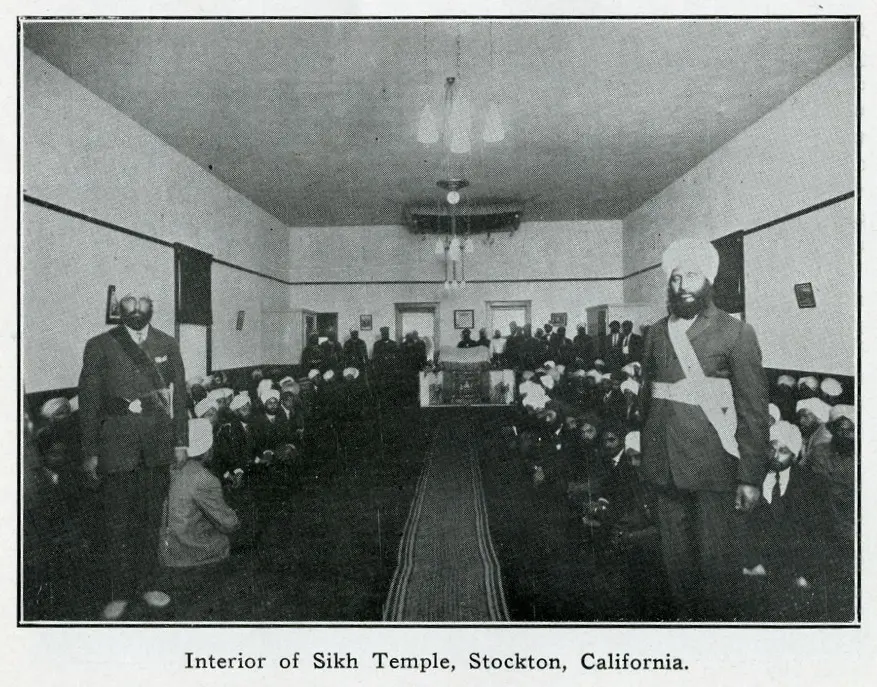
Sikh Gurdwara of Stockton
Stockton, California, United States
56.4 km away
References
Sources consulted for this page. Source categories describe the publication, not a guarantee that every claim is verified. Traditional accounts and outside interpretations may differ.
- 01Mount Diablo State Park — California State ParksofficialOfficial state park authority
- 02Mount Diablo: A Sacred Mountain — Museum of the San Ramon ValleyofficialDetailed information from local museum including Indigenous perspectives
- 03A Brief History of Native Peoples around Mount Diablo — Save Mount DiabloSource contextConservation organization with Indigenous consultation, includes land acknowledgment
- 04Muwekma Ohlone Preservation Foundation — Muwekma Ohlone TribeSource contextOfficial tribal organization
- 05History of Mount Diablo — Mount Diablo Interpretive AssociationSource contextPark interpretive association
- 06Mount Diablo — WikipediaencyclopediaWell-sourced overview with etymology and Indigenous history
- 07Sacred Mountain — East Bay Hill PeopleSource contextLocal historical perspectives
Share a photo
Help visitors recognize Mount Diablo, California. Every submission is reviewed before publication.