Great Salt Lake
A vast terminal lake where ancestral homelands, migrating birds, salt, and ecological responsibility meet
Understand sacred places, explore living traditions, and learn how to engage respectfully with Pilgrim Map.
Access has not been verified. Check current local guidance before planning a visit.
Utah, United States
Read the sources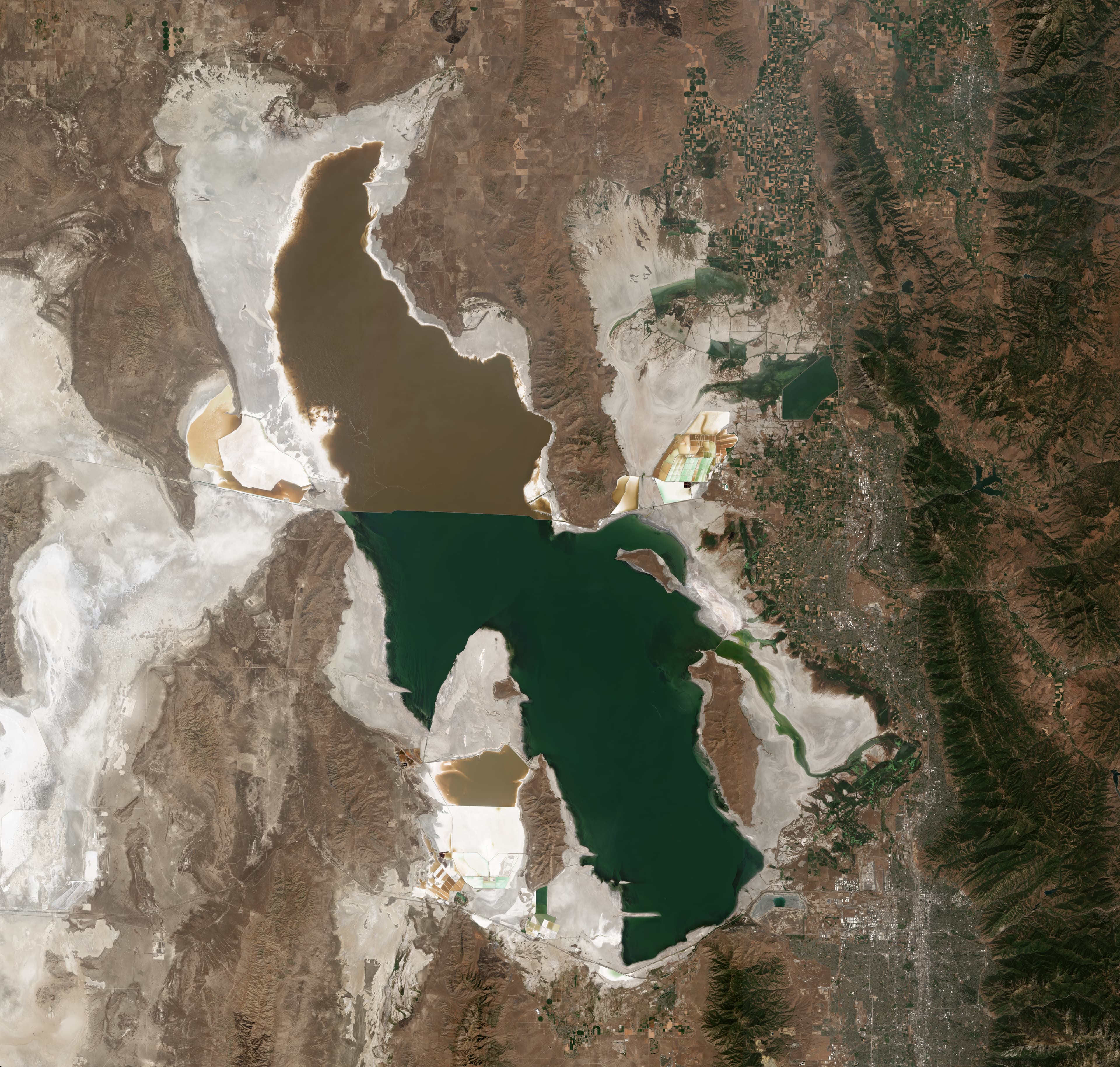
Image of Great Salt Lake. Image source
Visit essentials
A quick read before you go
- Duration
- Half day
- Access
- Great Salt Lake State Park lies west of Salt Lake City; Antelope Island is reached by causeway…
Overview
Across northern Utah, Great Salt Lake is water, salt, mudflat, wetland, island, and sky. As a terminal lake, rivers enter but water leaves mainly through evaporation, creating a seemingly limitless landscape highly sensitive to water use, climate, and changing levels. Before settler mapping, Indigenous peoples lived across the Great Basin: Northwestern Shoshone bands used northern-shore lands, and Goshute homelands extend through the western Great Basin.
These specific relationships cannot become a generalized Native sacred story; consulted sources do not establish a shared tribal designation of the whole lake as sacred. Its contemporary moral force is ecological. Utah identifies its wetlands as a major stopover for millions of migrating birds. Low water threatens habitat, access, salinity balance, and air quality through exposed lakebed dust.
Contemplation therefore entails learning the lake’s needs, staying within managed access, protecting birds and wetlands, and resisting mystical scenery made from environmental crisis.
Why this place is sacred
At a managed shoreline, scale becomes difficult to judge. The water may be close to a marina or far beyond an expanse of exposed lakebed, depending on level and location. Mirages and reflected light can dissolve the horizon, while flocks turn the open air into a moving field.
These perceptions are meaningful without proving supernatural claims. The lake’s strongest documented layers are geological, ecological, and cultural. It is the surviving center of a much larger ancient lake system, a critical migratory-bird habitat, and part of homelands known in detail by Indigenous peoples. Its current vulnerability makes attention itself an ethical act. To stand at the lake is also to confront upstream water use and the consequences of treating a living basin as expendable.
Contemporary spiritual media may interpret salt, geometry, or landscape energy in other ways. Those interpretations should never be attributed to Shoshone, Goshute, Ute, Paiute, or Diné traditions without direct tribal authority.
Experience and orientation
Great Salt Lake State Park offers a visitor center, observation areas, beach access, marina context, and a direct view of changing water levels. Antelope Island adds trails, wildlife, and broad views from within the lake. Wetland education areas are often better for bird observation.
Conditions vary sharply. Heat, wind, insects, fire restrictions, algae advisories, and low-water access can all change the experience. Walking onto exposed lakebed can damage habitat or lead into unstable mud. Use marked paths and current agency guidance.
Quiet observation is a suitable contemplative practice here. Watch the waterline, listen for birds, and notice the distance between visible water and built infrastructure. Let the lake’s condition be part of the encounter rather than cropping it out.
Choose one managed gateway and check live conditions before departure. Bring binoculars, water, sun protection, and layers. Give wildlife substantial space.
Context and lineage
Geologically, the lake occupies the lowest part of a closed basin left by the retreat of Lake Bonneville. Indigenous histories belong to distinct nations and communities; this profile does not substitute a pan-Indigenous creation account for their own teachings.
Northwestern Shoshone, Goshute, Ute, Paiute, and other Great Basin peoples hold distinct relationships with the broader region. Settler development transformed rivers and shorelines. Modern state agencies, tribes, scientists, conservation groups, industries, and residents now contest and negotiate the lake’s future.
Traditions and practice
Indigenous relationships to the Great Basin are specific to nations, bands, families, and places. Visitors should seek public teachings directly from tribal sources rather than inventing lake ceremonies.
Birding, citizen science, conservation advocacy, and water stewardship are active ways people build relationship with the lake.
Spend ten quiet minutes observing the actual waterline and birds. Read the current lake-level explanation before leaving, then identify one water-conservation or habitat action you can support.
Great Basin Indigenous Cultural Landscape
ActiveThe lake basin intersects ancestral lands and histories of distinct Indigenous nations and bands.
Living cultural relationships are nation- and place-specific and should be learned from tribal sources.
Ecological Stewardship
ActiveThe lake’s survival has become a focus of scientific, civic, and ethical responsibility.
Habitat protection, bird monitoring, water conservation, research, and public advocacy.
Perspectives and open questions
The lake can be approached through geology, ecology, Indigenous history, environmental ethics, and contemporary spiritual interpretation. Claims must stay within the authority of their sources.
Scholarly perspective
State and scientific sources describe a terminal saline ecosystem whose level and salinity respond to inflow, evaporation, water diversion, and climate.
Living and traditional perspectives
According to the tribal and historical sources consulted, Indigenous connections belong to specific nations, bands, and places across the wider Great Basin and shore regions. Those sources do not support a single generalized sacred meaning for the whole lake.
Alternative interpretations
In an alternative contemporary interpretation, Matías De Stefano’s Gaia episode places Great Salt Lake within his spiritual narrative. That framework is not evidence of archaeology and must not be presented as tribal teaching.
Open questions
The full cultural histories of particular shore areas require place-specific tribal and archaeological consultation beyond a lake-wide profile.
Plan your visit
Access and arrival
Great Salt Lake State Park lies west of Salt Lake City; Antelope Island is reached by causeway from Davis County. | Difficulty: Shore viewpoints can be easy; island trails range from short walks to strenuous exposed routes.
Respectful visit
Sun protection, closed footwear, weather layers, and insect protection appropriate to season.
permitted: Yes | Use long lenses for wildlife and respect seasonal closures, private land, and tribal restrictions.
Leave no objects, food, candles, salt arrangements, or stone stacks.
Do not imitate Indigenous ceremony, leave crystals or offerings, drive onto lakebed, approach nesting birds, or enter closed wetlands.
Location
Map loads as you approach this section.
Pilgrim reflections
A portrait of encounter, not a score
Pilgrims describe what they felt, how present they could become, and whether the place would shape a journey. There are no stars and no ranking of traditions.
No reviewed reflections yet
The first pilgrims can help describe the character of being here.
Share a reflection
Available after an account-backed “Been there.” Every reflection is reviewed before publication.
Nearby sacred places
Explore other sacred places in the region. Proximity does not establish access or travel time; check each place’s guidance.


References
Sources consulted for this page. Source categories describe the publication, not a guarantee that every claim is verified. Traditional accounts and outside interpretations may differ.
- 01About Great Salt Lake — Utah Department of Natural ResourcesofficialGeology, ecology, public trust, and lake decline.
- 02Current Conditions — Utah Department of Natural ResourcesofficialLive lake-level and salinity context.
- 03Great Salt Lake State Park — Utah State ParksofficialAccess, conditions, hours, facilities, and visitor rules.
- 04Northwestern Band of the Shoshone Nation — Northwestern Band of the Shoshone NationSource contextTribal authority and contemporary cultural context.
- 05Historic Tribes of the Great Basin — National Park ServiceofficialGreat Basin peoples and environmental knowledge.
- 06Get to Know Utah's Tribes — Utah Office of TourismofficialNorthwestern Shoshone presence along the northern shore and Utah tribal context.
- 07The Journey of Remembering S1:E8 — Part 8: The Egg of the Dragon — GaiaSource contextContemporary spiritual perspective only.
Share a photo
Help visitors recognize Great Salt Lake. Every submission is reviewed before publication.