Fidenza Cathedral
Saint Domninus, sculpted pilgrim narratives, and the road toward Rome meet at Fidenza
Understand sacred places, explore living traditions, and learn how to engage respectfully with Pilgrim Map.
Access has not been verified. Check current local guidance before planning a visit.
Fidenza, Parma, Italy
Read the sources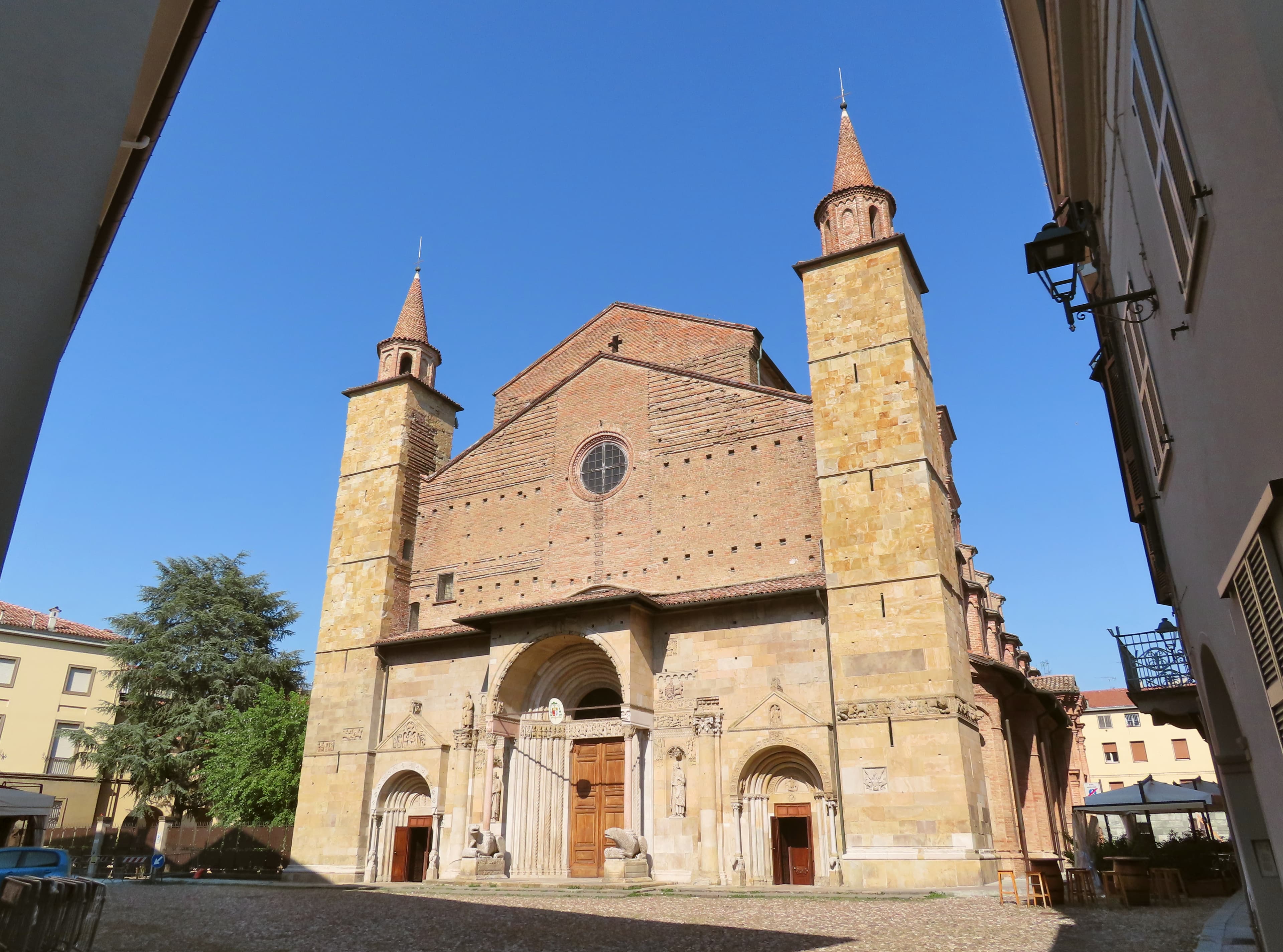
Fidenza Cathedral - rights-reviewed Wikimedia image. Image source · CC BY-SA 4.0
Visit essentials
A quick read before you go
- Duration
- Allow time for quiet worship and observation; crypt, museum, tower, or chapel access may require…
- Access
- Navigate using the canonical name and whole-site record for Fidenza; confirm step-free entrances…
Overview
The record is Fidenza Cathedral, historically Borgo San Donnino, not another Saint Domninus church. The Piazza Duomo address, cathedral status, saint's cult, route position, exact place result, and matched image settle the identity. The church is a distinct sacred institution within a longer road network, not a substitute for the city or stage around it.
Why this place is sacred
Saint Domninus, venerated as a martyr, is the cathedral's central patron, and his relic tradition links the crypt and church to the town's older name. Active cathedral worship and the reception of modern walkers keep pilgrimage from being only an art-historical theme. The encounter can support prayer or reflection, yet the entry does not promise that every walker or visitor will experience the church in the same way.
Sacred authority comes from continuing worship and community memory, while historical claims remain tied to documentary and material evidence.
A Catholic place of worship whose institutional form, dedication, and route relationship developed through local history.
The present cathedral developed through Romanesque building campaigns in the twelfth and thirteenth centuries around an older cult of Saint Domninus. Its façade and portals are associated with Benedetto Antelami and his artistic milieu. The church survived the violent destruction that affected the town in 1268 and continued as a focus of local and pilgrim devotion.
Experience and orientation
The unfinished-looking stone façade is densely organized by portals, columns, animals, prophets, biblical scenes, and episodes tied to Saint Domninus. A figure of Saint Peter directs attention toward Rome, making movement itself part of the sculptural program encountered by route pilgrims. Fidenza is a documented Via Francigena stage and a current pilgrim-service point. The cathedral functions as both sacred destination and route marker before walkers turn toward Fornovo and the Cisa Pass.
Visitors enter an active church and no particular emotional or spiritual response is promised. Read signs before approaching chapels, relics, crypts, museums, or stairs, and let worshippers and clergy set the pace around liturgical space.
Locate the church within the walking stage, but confirm current opening and service information through its custodian before relying on a route-day schedule.
Context and lineage
Although some early phases remain uncertain, the site's later development belongs to documented civic and ecclesiastical history; devotional traditions are stated in their own terms where relevant.
Latin Catholic worship within the contemporary Via Francigena pilgrimage toward Rome.
Traditions and practice
Catholic liturgy and personal prayer are primary. Pilgrimage adds movement, intention, and route continuity without changing the church into a service point only.
Worshippers, route pilgrims, residents, and heritage visitors share the building under rules set by the church or custodian.
Pause at the threshold, identify any service in progress, choose a place that does not obstruct worship, and approach relics or chapels only where access is clearly open.
Latin Catholic worship and Via Francigena pilgrimage
ActiveSaint Domninus, venerated as a martyr, is the cathedral's central patron, and his relic tradition links the crypt and church to the town's older name. Active cathedral worship and the reception of modern walkers keep pilgrimage from being only an art-historical theme.
Perspectives and open questions
Liturgical, pilgrim, art-historical, and civic perspectives overlap here but answer different questions.
Scholarly perspective
The façade's sculpture teaches through figures, inscriptions, and directional gesture. Inside, the crypt and liturgical arrangement return the narrative to relic veneration and worship. Attribution should remain careful: Benedetto Antelami's role and influence do not mean every carved block is securely by one hand.
Living and traditional perspectives
Within the living Catholic tradition, this active church's dedication, liturgy, and locally recognized devotions define its sacred identity.
Alternative interpretations
Claims of guaranteed miracles, measurable energy, or automatic transformation are not supported.
Open questions
Workshop attribution across the full sculptural program is not uniform; current credential-stamp arrangements should be confirmed locally.
Plan your visit
Access and arrival
Navigate using the canonical name and whole-site record for Fidenza; confirm step-free entrances and interior limitations directly.
No lodging claim is included; verify current pilgrim and commercial options through route and local channels.
Respectful visit
Modest clothing appropriate to an active Catholic church; additional rules may apply to specific spaces.
Confirm onsite. Service, conservation, and museum rules may differ within one complex.
Use church-authorized candles, boxes, desks, or donation channels.
Sanctuaries, sacristies, clergy areas, some crypts, and conservation zones may be closed.
Do not treat a credential, ticket, or route membership as permission to photograph, enter sanctuaries, or interrupt services.
Location
Map loads as you approach this section.
Pilgrim reflections
A portrait of encounter, not a score
Pilgrims describe what they felt, how present they could become, and whether the place would shape a journey. There are no stars and no ranking of traditions.
No reviewed reflections yet
The first pilgrims can help describe the character of being here.
Share a reflection
Available after an account-backed “Been there.” Every reflection is reviewed before publication.
Nearby sacred places
Explore other sacred places in the region. Proximity does not establish access or travel time; check each place’s guidance.

References
Sources consulted for this page. Source categories describe the publication, not a guarantee that every claim is verified. Traditional accounts and outside interpretations may differ.
- 01Via Francigena — European Association of the Via Francigena WaysofficialOfficial cultural-route authority and current pilgrimage framework.
- 02Via Francigena — Municipality of FidenzaofficialOfficial local route evidence for the city, church, or Italian Via Francigena sequence.
- 03La Cattedrale nella storia — Diocese of FidenzaofficialChurch, diocesan, custodian, or municipal evidence for exact identity, living use, history, dedication, and art.
- 04Wikimedia Commons image for Fidenza Cathedral — Parma1983academicExact-site image with resolved reuse terms: CC BY-SA 4.0.
- 05Fidenza Cathedral — Wikipedia contributorsacademicSupplied exact-entity reference used for disambiguation, coordinate cross-checking, and source discovery.
- 06Q1287865 — Wikidata contributorsacademicStructured entity and coordinate evidence.
Share a photo
Help visitors recognize Fidenza Cathedral. Every submission is reviewed before publication.