Engaku-ji
Memorial prayer after invasion within a secluded Zen valley
Understand sacred places, explore living traditions, and learn how to engage respectfully with Pilgrim Map.
Access has not been verified. Check current local guidance before planning a visit.
Kamakura, Kanagawa Prefecture, Japan
Read the sources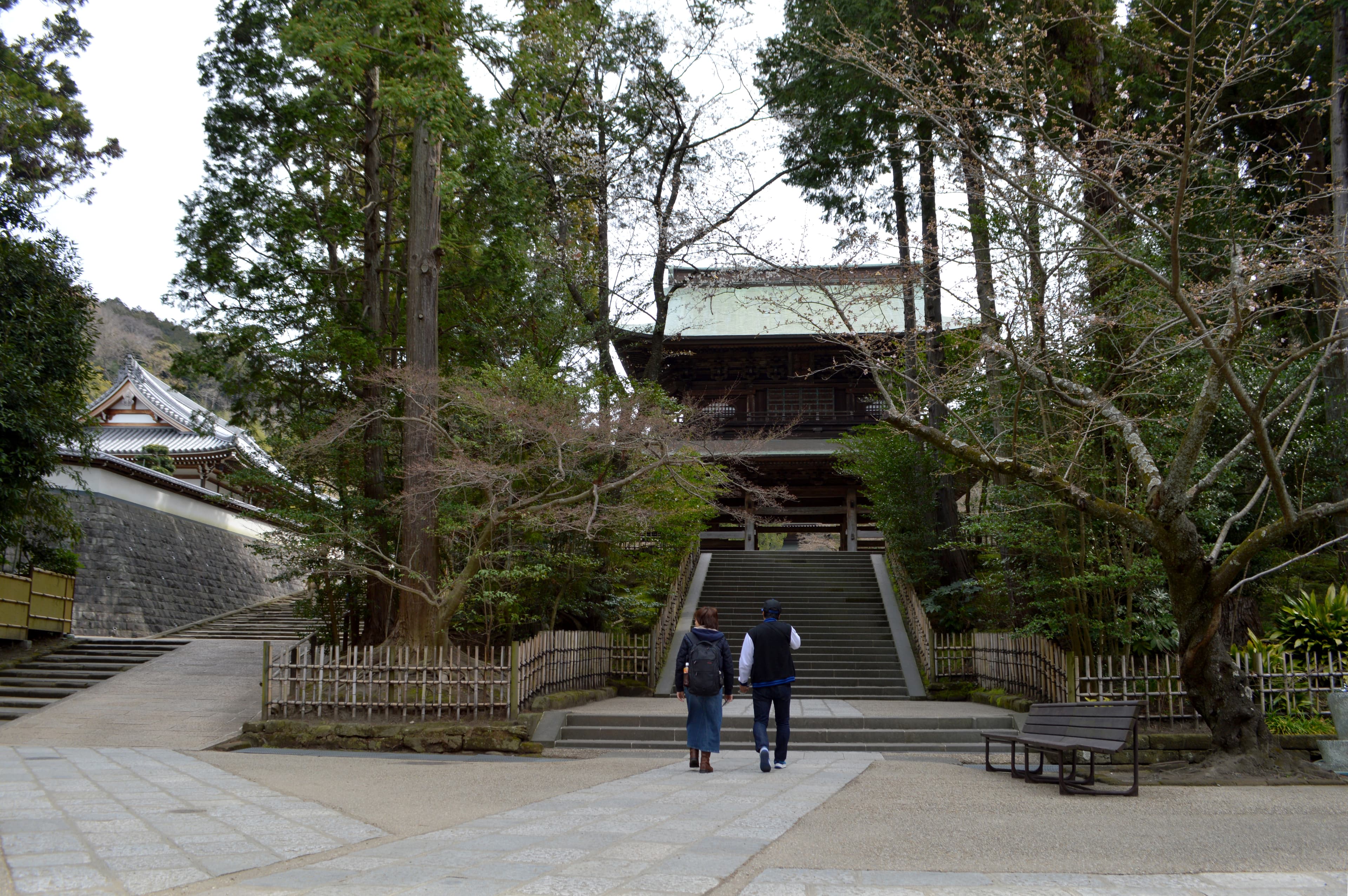
Image of Engaku-ji. Image source
Visit essentials
A quick read before you go
- Duration
- Let Engaku-ji's admitted route determine duration.
- Access
- Access begins in Kamakura, Kanagawa Prefecture.
Overview
A railway crossing almost touches Engaku-ji's gate, sharpening the passage from Kita-Kamakura into cedar, stone, the great Sanmon, and an inward-rising valley. Hōjō Tokimune founded the temple in 1282 after the Mongol invasions and invited the Chinese master Mugaku Sogen; memorial prayer included the dead of both sides rather than presenting a simple warrior victory. Engaku-ji became second among Kamakura's Five Great Zen Temples and remains head of its Rinzai branch, centered on Shaka Nyorai and Mugaku's lineage.
Visitors may encounter the Sanmon, Buddha Hall, bell, valley, zazen, sutra chanting, memorial services, and Zen teaching, while the Shariden—associated with a Buddha relic—and training areas are normally restricted. Following instruction, accepting privacy, and yielding photography to prayer are part of entering an active monastery.
Why this place is sacred
Engaku-ji joins remembrance after conflict to the discipline of Zen. Restricted precincts keep monastic privacy visible, while the valley path lets ordinary visitors approach without pretending to possess the institution.
Devotion centered on Shaka Nyorai and the Rinzai lineage of Mugaku Sogen.
Engaku-ji includes repair and institutional change.
Experience and orientation
Cross from the station carefully, then let the ascent set the pace. Observe all gates around the Shariden and training quarters. Public zazen is participation under instruction, not a drop-in photo opportunity.
Engaku-ji publishes the governing approach and route.
Context and lineage
Engaku-ji keeps its origin story site-specific.
Rinzai Zen Buddhism, Engaku-ji school
Traditions and practice
At Engaku-ji, documented observance includes zazen, sutra chanting, memorial services, Zen teaching, and quiet ascent through the valley. The named sacred focus is Shaka Nyorai and the Rinzai lineage of Mugaku Sogen.
Custodians at Engaku-ji maintain the practices and boundaries appropriate to this temple.
Watch before acting at Engaku-ji; attention is welcome, borrowed ritual is unnecessary.
Rinzai Zen Buddhism, Engaku-ji school
ActiveEngaku-ji is sacred within Rinzai Zen Buddhism, Engaku-ji school.
See the documented observances specific to Engaku-ji.
Perspectives and open questions
Engaku-ji requires historical, custodial, and tradition-led readings to remain distinct.
Scholarly perspective
Historical interpretation follows the reviewed source record for Engaku-ji.
Living and traditional perspectives
Rinzai Zen Buddhism, Engaku-ji school supplies Engaku-ji's authoritative sacred frame.
Alternative interpretations
Engaku-ji keeps its alternative site-specific.
Open questions
Changeable access and private ritual details remain outside this account.
Plan your visit
Access and arrival
Access begins in Kamakura, Kanagawa Prefecture.
Use established lodging serving Kamakura.
Respectful visit
Choose clothing suitable for worship at Engaku-ji.
Engaku-ji sets camera access at each boundary.
Use only offering places authorized by Engaku-ji.
Respect closures around the shariden and training quarters, avoid photographing clergy without consent, and keep the rail-side threshold calm.
Private, restricted, or closed practice at Engaku-ji remains outside visitor access.
Location
Map loads as you approach this section.
Pilgrim reflections
A portrait of encounter, not a score
Pilgrims describe what they felt, how present they could become, and whether the place would shape a journey. There are no stars and no ranking of traditions.
No reviewed reflections yet
The first pilgrims can help describe the character of being here.
Share a reflection
Available after an account-backed “Been there.” Every reflection is reviewed before publication.
Nearby sacred places
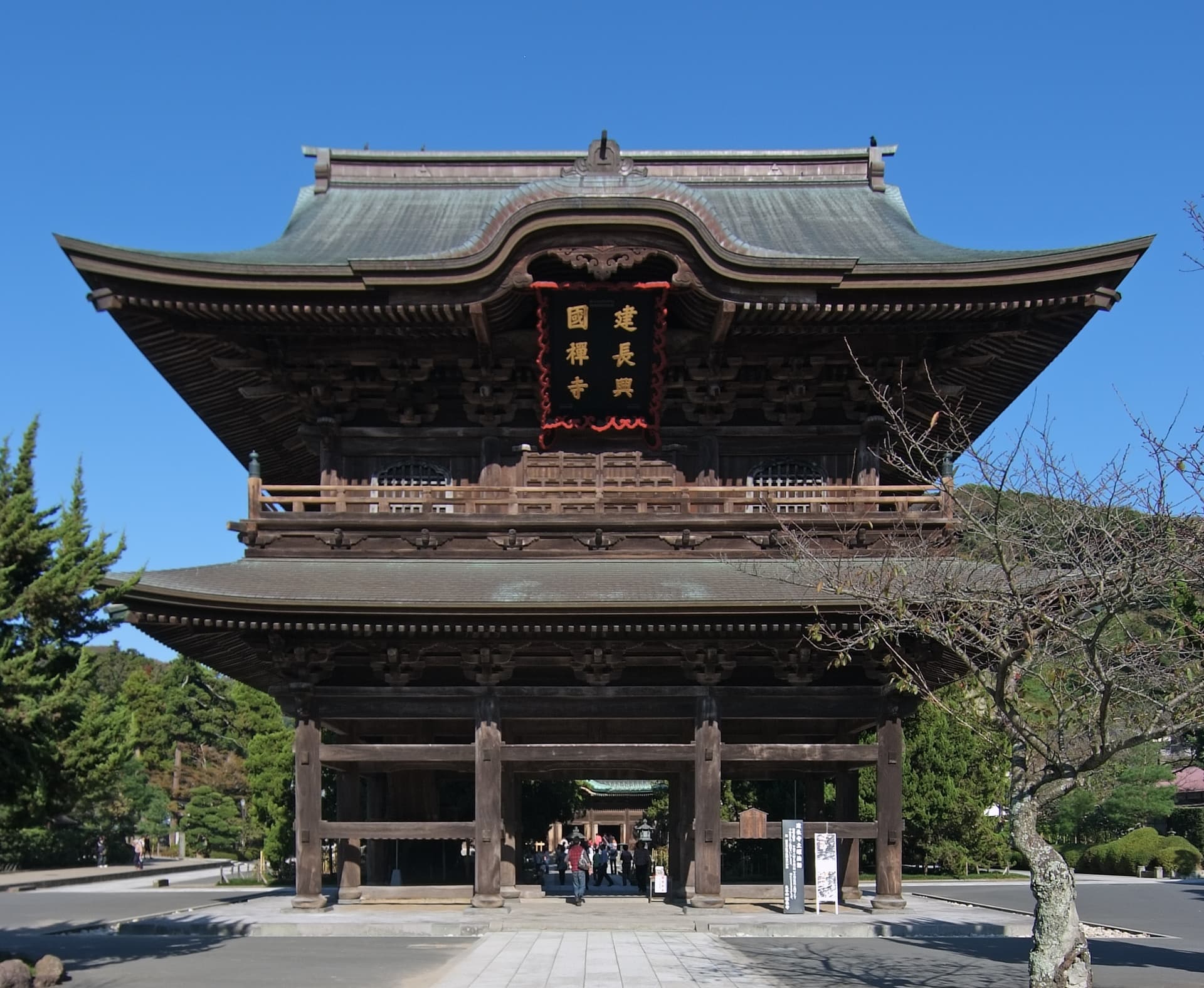
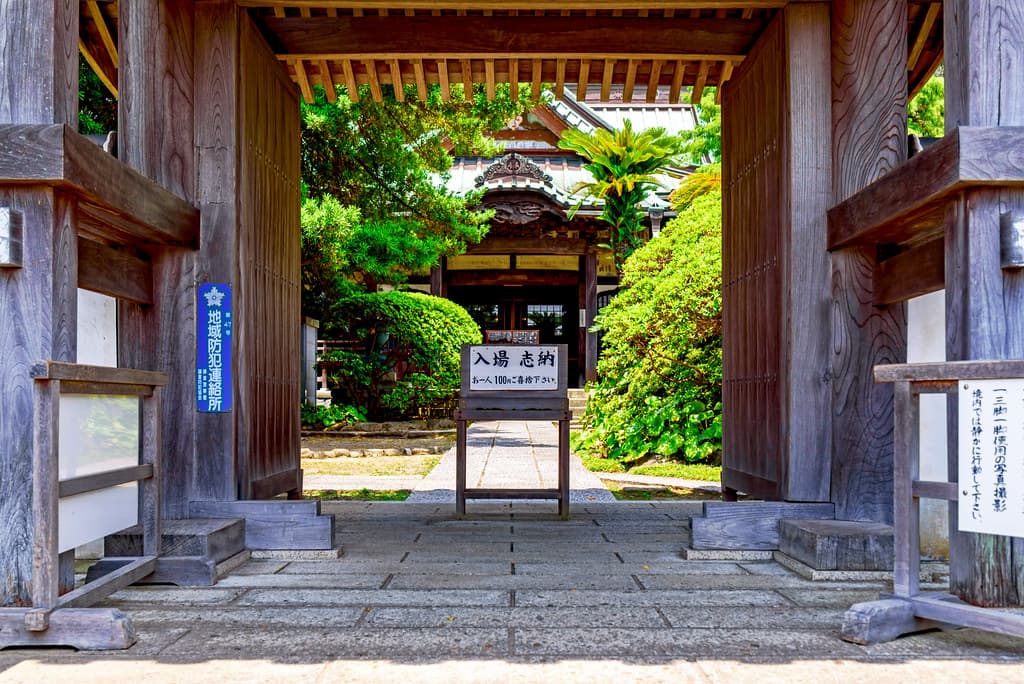
Explore other sacred places in the region. Proximity does not establish access or travel time; check each place’s guidance.


References
Sources consulted for this page. Source categories describe the publication, not a guarantee that every claim is verified. Traditional accounts and outside interpretations may differ.
- 01Engaku-ji official or custodial source — Engaku-ji custodial institution or responsible authorityofficialPrimary or delegated source for identity, religious meaning, custodianship, and visitor boundaries.
- 02Google Maps exact-place record for Engaku-ji — Google PlacesofficialExact-place identity, locality, coordinates, and operational identity; changeable details are not repeated as stable prose.
- 03Official visitor interpretation for Engaku-ji — National or local destination authorityofficialPublic interpretation and access context from a governmental or destination authority.
- 04Japan National Tourism Organization context for Engaku-ji — Japan National Tourism OrganizationofficialOfficial national destination context; current conditions still require direct site confirmation.
- 05Engaku-ji — Wikipedia contributorsSource contextGeneral identity and historical cross-check; substantive claims are bounded by higher-authority sources.
- 06Wikidata record associated with Engaku-ji — Wikidata contributorsacademicStructured identity and coordinate cross-check.
Pilgrim glossary
- Sutra
- A canonical Buddhist scripture, often chanted as part of practice.
- Zen
- A Japanese Buddhist school emphasizing seated meditation and direct insight.
Share a photo
Help visitors recognize Engaku-ji. Every submission is reviewed before publication.