Bamiyan Buddhist Caves
Buddhist cave sanctuaries in the Bamiyan cliffs
Understand sacred places, explore living traditions, and learn how to engage respectfully with Pilgrim Map.
Access has not been verified. Check current local guidance before planning a visit.
Bamiyan, Afghanistan
Read the sources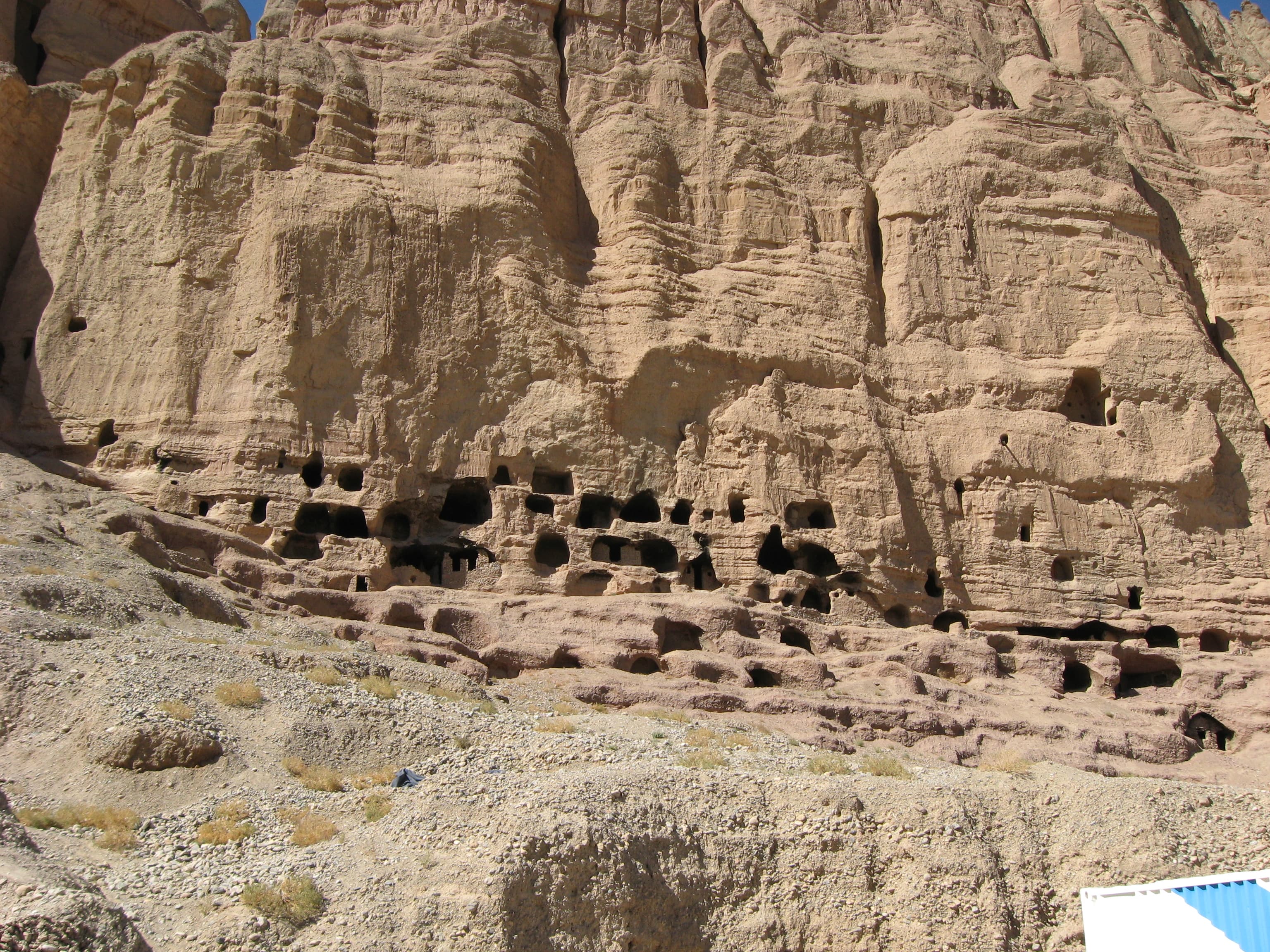
Rock-cut cave openings along the Bamiyan cliff. Image source · CC BY 2.0
Visit essentials
A quick read before you go
- Etiquette
- Respect worship, sacred objects and the people responsible for this place.
Overview
The cliffs of Bamiyan preserve Buddhist caves, chapels and monastic spaces within a larger cultural landscape. Some retain wall painting and sculptural remains. The empty niches of the monumental Buddhas, destroyed in 2001, are part of this history of artistic achievement and loss.
The cave spaces are part of the Buddhist history of the Bamiyan cliffs, not a single enclosed sanctuary. UNESCO describes monastic cells, chapels and sanctuaries with surviving painted and sculptural traces. Their setting beside the monumental Buddha niches makes the relationship between intimate religious spaces and large public images visible in the landscape. Understanding the caves requires attention to both what survives and what has been lost.
The site should be approached through its documented history and current conservation arrangements, rather than as an unchanged functioning monastery.
Why this place is sacred
The excavated sanctuaries preserve evidence of Buddhist religious life along routes of exchange. Wall paintings and surviving figures help place the caves within that history even where large monuments have been destroyed.
Experience and orientation
Take time to observe the place through its own religious and historical context. Follow the authorized visitor route and the guidance of its custodians.
Context and lineage
The surviving setting and its religious accounts offer different kinds of evidence about the place.
Traditions and practice
Use authorized interpretation and access arrangements. Do not enter a chamber simply because an opening is visible in the cliff, and do not treat damaged painting as an unprotected surface.
Buddhist heritage
HistoricalThe excavated sanctuaries preserve evidence of Buddhist religious life along routes of exchange.
Perspectives and open questions
The destruction of the giant Buddhas in 2001 is a documented event. The broader religious and artistic history of the caves extends far beyond that moment, and deserves attention in its own right.
Plan your visit
Confirm current conservation restrictions and local access arrangements before planning a visit. The map identifies the Bamiyan cliff complex, not a cave entrance or an authorized route.
Respectful visit
Follow the site’s current photography rules and ask before photographing worshippers.
Location
Map loads as you approach this section.
Pilgrim reflections
A portrait of encounter, not a score
Pilgrims describe what they felt, how present they could become, and whether the place would shape a journey. There are no stars and no ranking of traditions.
No reviewed reflections yet
The first pilgrims can help describe the character of being here.
Share a reflection
Available after an account-backed “Been there.” Every reflection is reviewed before publication.
Nearby sacred places
Explore other sacred places in the region. Proximity does not establish access or travel time; check each place’s guidance.

Sultan Saodat Memorial Complex
Termez, Surxondaryo Region, Uzbekistan
274.3 km away

Chiluchor Chashma Sacred Springs
Nosiri Khusrav / Shahritus, Khatlon Region, Tajikistan
274.4 km away

Zurmala Stupa
Termez, Surxondaryo Region, Uzbekistan
274.7 km away

Fayaz Tepe Buddhist Monastery
Termez, Surxondaryo Region, Uzbekistan
278.9 km away
References
Sources consulted for this page. Source categories describe the publication, not a guarantee that every claim is verified. Traditional accounts and outside interpretations may differ.
- 01UNESCO: Bamiyan ValleyofficialBuddhist cave complex, paintings, niches and 2001 destruction
- 02UNESCO nomination dossierofficialProperty scope and archaeological context
- 03Buddhas of Bamiyan — geographic reference — Wikipedia contributorsacademicSecondary identity and representative complex coordinates; religious claims rely on the primary sources above.
Share a photo
Help visitors recognize Bamiyan Buddhist Caves. Every submission is reviewed before publication.