Backies Broch
A hilltop broch above Golspie commanding panoramic views of the Moray Firth, standing quietly where few visitors venture
Understand sacred places, explore living traditions, and learn how to engage respectfully with Pilgrim Map.
Access has not been verified. Check current local guidance before planning a visit.
Golspie, Scotland, United Kingdom
Read the sources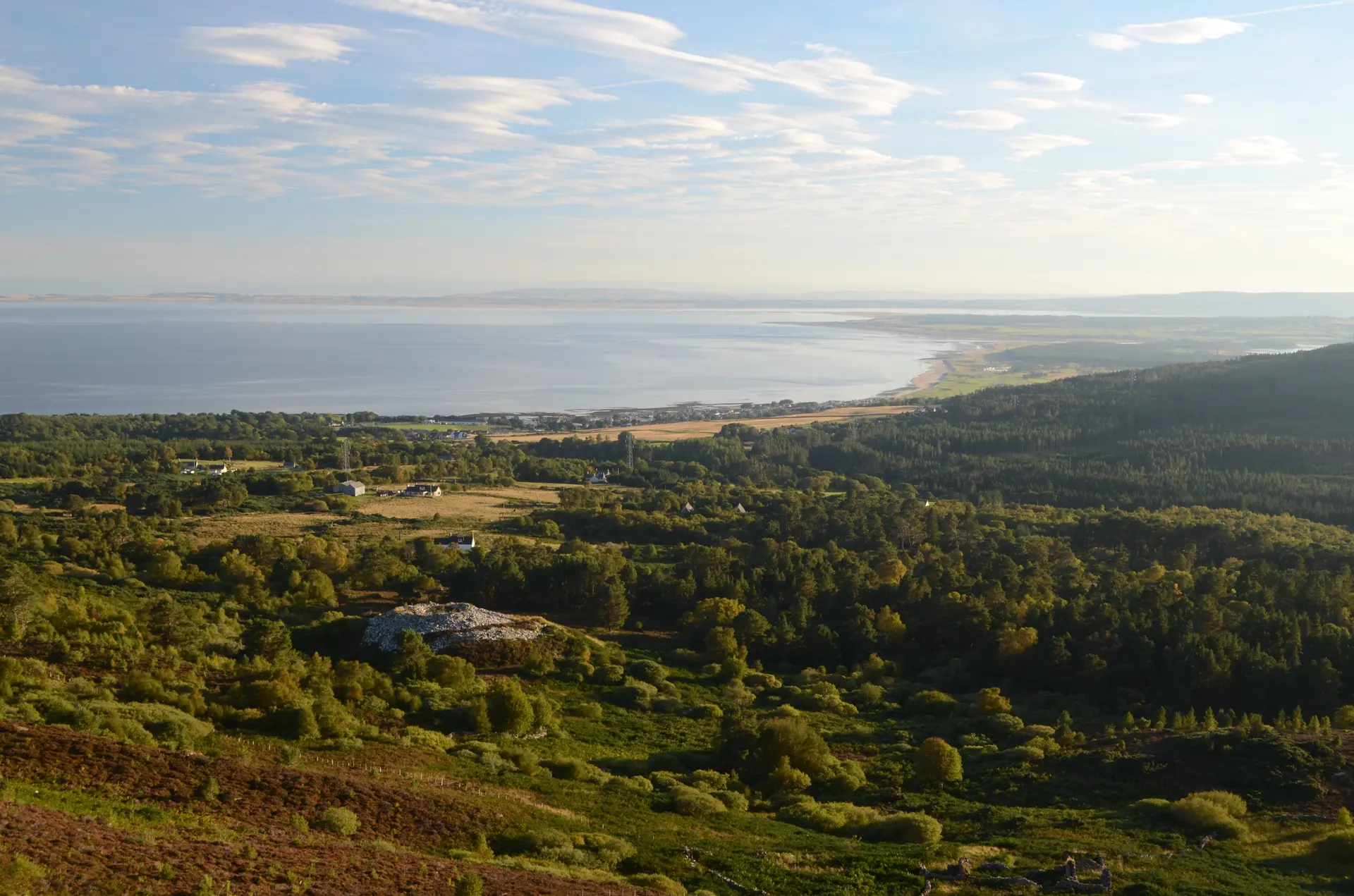
Image of Backies Broch. Image source · CC-BY-SA-2.0
Visit essentials
A quick read before you go
- Duration
- Ninety minutes to explore thoroughly and enjoy the views.
- Access
- From the A9, follow the minor road signed to Backies approximately one kilometre north of…
Overview
Past a water treatment works and farmland north of Golspie, Backies Broch first merges with its rocky hilltop as a mound of stone. Its form becomes clear only from above and within.
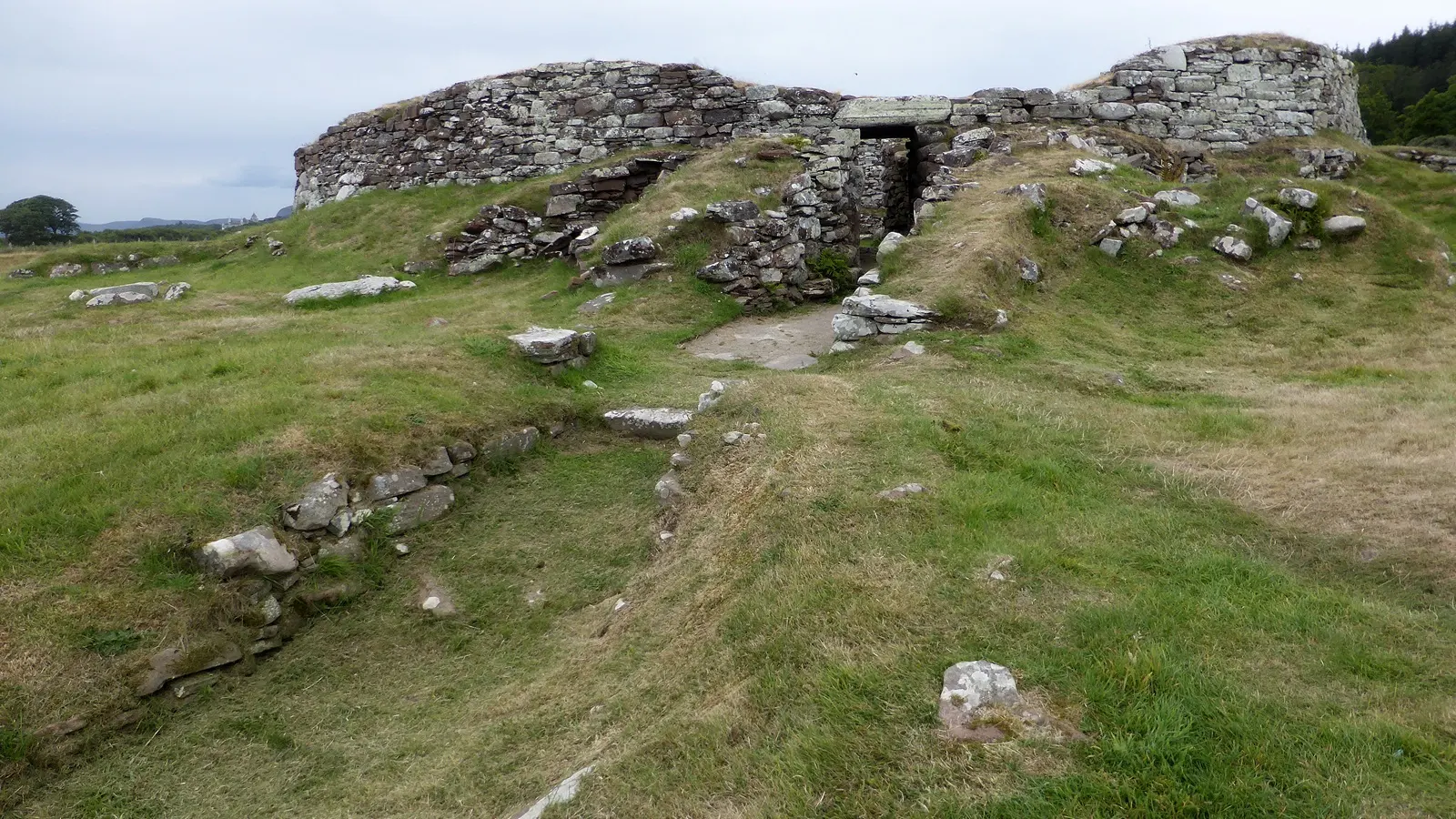
Fine flat slabs of metamorphosed sandstone lie in regular, brick-like courses, their skill striking two thousand years later. On the southeast, original lintels still roof a low, dark entrance passage into the protected interior. A mural chamber opens from it, while a stair gallery shows that the tower once rose much higher.
The Duke of Sutherland's factor excavated the broch in 1846. That year pioneering Danish archaeologist J. J. Worsaae sketched exposed features since lost, including three lintelled voids above the doorway. Dunrobin Castle Museum holds the finds: pottery sherds, shale rings and ornaments, a jet armlet fragment, and a shale bead—evidence of domestic life and adornment rather than overt ritual.
Its survival, obscurity, and hilltop views across the Moray Firth, along the Sutherland coast, and inland to the mountains reward the search. Between earth, sea, and sky, the position may have held cosmological meaning for its builders and certainly carries atmospheric resonance now.
Why this place is sacred
The climb from farmland and roads reaches an older, exposed defensive hillock chosen for elevation, open sky, and command of the landscape.
Inside, close stones and the still-roofed entrance create an intimate enclosure; from the rampart the Moray Firth, north–south Sutherland coast, and inland mountains open to the horizon. That contrast gives the site its threshold quality.
This is an unreconstructed ruin. Since the 1846 excavation, features recorded by Worsaae have continued to disappear, making impermanence visible within endurance and inviting reflection on building and decay, intention and entropy.
With no information boards, car park, or formal path, finding Backies requires local knowledge or careful map reading. Visits are usually solitary, creating contemplative conditions that infrastructure cannot manufacture.
Backies Broch functioned as a fortified dwelling for an Iron Age farming community. The thick walls, single narrow entrance, and commanding hilltop position provided defensive capability. The scarcement ledge and wall galleries indicate a multi-storey structure. Secondary buildings between the broch and an outer encircling wall suggest a small settlement complex.
The broch was constructed during the later Iron Age. Secondary structures were added within an outer wall, creating a defended settlement. At some unknown point, the broch was abandoned. The site lay undisturbed until the 1846 excavation, which cleared the interior but dumped spoil over the exterior walls. The broch was re-scheduled as a protected monument by Historic Environment Scotland in 2016, recognising its ongoing significance.
Experience and orientation
From the A9, a sign to Backies directs you onto a minor road north of Golspie. Follow this road for approximately two and a half kilometres until a sign for the Scottish Water Treatment Works appears. Park on the verge. Walk up the road eighty metres, then take a well-constructed track heading east. The track ends at a ruined croft, from which the broch is visible on its hilltop.
The final approach is across rough ground, heather and grass, climbing the hillock to reach the broch. When you arrive, the walls are immediately impressive: regular courses of flat sandstone slabs rising around you, the interior space open to the sky, the entrance passage dark and intact on the southeast side.
Walk through the entrance passage if you are willing to stoop. The lintel stones overhead have held their position for two millennia. Inside, the passage opens into the broch's circular interior. The scarcement ledge, a projecting course of stone that once supported an upper floor, is clearly visible. A mural chamber, accessed from the passage, opens into the wall thickness. The remains of a stair gallery indicate the tower's original height.
From the rampart formed by the banked excavation spoil, the views are extraordinary. The Moray Firth lies to the east, its waters reflecting the sky. The coast stretches north toward Brora and south toward Dornoch. On clear days, the mountains of the interior Highlands are visible to the west. Golspie lies below, its rooftops and streets visible from this vantage point, a reminder of the two thousand years that separate the broch from the present settlement.
You are almost certainly alone here. The silence is particular: wind, birds, the distant sound of the sea. This is a place that rewards stillness.
Approach from the A9 via the minor road signed to Backies, approximately one kilometre north of Golspie. Park near the Scottish Water Treatment Works sign. Follow the track east to the ruined croft, then cross open ground to the broch on the hilltop. Allow approximately ninety minutes for the round trip including time at the broch. Combine with Carn Liath Broch, three kilometres south along the A9.
Context and lineage
No origin narrative survives. The name Backies derives from the nearby township. Like many brochs, the site was historically associated with the Picts, though modern archaeology places its construction several centuries before the historical Pictish period.
No continuous practice connects the present to the broch's Iron Age community. The structure was excavated in 1846, and its finds were deposited in Dunrobin Castle Museum. The broch was re-scheduled as a protected monument in 2016.
J. J. Worsaae
Traditions and practice
Evidence from comparable broch sites across Scotland suggests that Iron Age communities may have practised foundation deposits and structured decommissioning rituals. Finds at Backies, including pottery and personal ornaments, suggest everyday domestic life rather than overtly ritual activity.
No organised practices take place. The site is visited independently by those exploring Sutherland's archaeological heritage.
The walk to the broch rewards unhurried attention. At the site, explore the entrance passage and interior. From the rampart, take time with the panoramic views. Consider the choice of this hilltop by Iron Age builders, the strategic and symbolic significance of commanding such a view. The site invites silence and presence rather than activity.
Iron Age Broch-Building Tradition
HistoricalBackies Broch belongs to the uniquely Scottish tradition of broch construction during the later Iron Age. These massive circular drystone towers were built across northern and western Scotland between approximately 200 BCE and 200 CE. They represent the wealth and organisational capacity of farming communities and served as both dwellings and statements of status. Backies demonstrates the sophistication of the tradition through its fine sandstone masonry, intact entrance passage, and architectural features including scarcement ledge, mural chamber, and stair gallery.
The broch community practiced mixed agriculture and craft production. The thick walls, single entrance, and hilltop position provided defensive capability. The interior would have housed at least two storeys. Finds of pottery, personal ornaments, and vitrified stone indicate domestic occupation and possibly small-scale industrial activity.
Perspectives and open questions
Backies Broch contributes to our understanding of Iron Age settlement in Sutherland while raising questions that its limited excavation cannot answer. The site's value lies as much in its atmospheric setting and relative obscurity as in its archaeological record.
Scholarly perspective
Backies is recognised as a significant hollow-walled broch in the Sutherland concentration. The 1846 excavation, documented by Worsaae's sketches, provides evidence of features now lost to deterioration. The site's re-scheduling in 2016 reflects its continued archaeological importance. Finds including pottery, shale ornaments, a jet armlet fragment, and vitrified stone are consistent with domestic occupation. The broch's relationship to the secondary structures within its outer wall is poorly understood.
Living and traditional perspectives
No oral traditions survive for this broch. In Highland folklore, brochs were attributed to the Picts or to mythical builders. The Gaelic term dun was commonly applied.
Alternative interpretations
Some researchers have proposed that broch design incorporated cosmological and geometric principles, suggesting mathematical knowledge inherited from the Neolithic stone circle tradition. This remains a minority view and has not been specifically demonstrated at Backies.
Open questions
The circumstances of the broch's abandonment are unknown. The deterioration since 1846 means features documented by Worsaae are being lost. The relationship between the broch and its outer settlement structures is poorly understood. The true original height of the tower cannot be determined.
Plan your visit
Access and arrival
From the A9, follow the minor road signed to Backies approximately one kilometre north of Golspie. Continue for 2.5 km to the Scottish Water Treatment Works sign. Park on the verge. Walk 80 metres up the road, take the track east to a ruined croft. Cross open ground to the broch on the hilltop. Grid reference: NC 8327 0205. No public transport to the site. Not accessible to wheelchairs.
Golspie offers hotels and guest houses. More options in Brora and Dornoch along the A9.
Respectful visit
No specific requirements beyond practical outdoor clothing. Sturdy footwear essential for the rough approach. Wind-resistant layers advisable.
Photography is unrestricted. The entrance passage, interior scarcement ledge, and panoramic views are particularly rewarding.
Do not leave offerings at the site.
Do not damage, disturb, or remove any material. Do not climb on walls. Do not light fires. Close gates. Keep dogs under control.
The terrain is rough and can be uneven. The broch walls, while substantial, include sections that are deteriorating. Do not climb on walls or disturb stonework. The site has no facilities.
Current practical details
Address
Golspie KW10 6SE, UK
Hours, fees, and access can change — verify on the official source before you travel. Practical details last checked Jun 2026.
Location
Map loads as you approach this section.
Pilgrim reflections
A portrait of encounter, not a score
Pilgrims describe what they felt, how present they could become, and whether the place would shape a journey. There are no stars and no ranking of traditions.
No reviewed reflections yet
The first pilgrims can help describe the character of being here.
Share a reflection
Available after an account-backed “Been there.” Every reflection is reviewed before publication.
Nearby sacred places
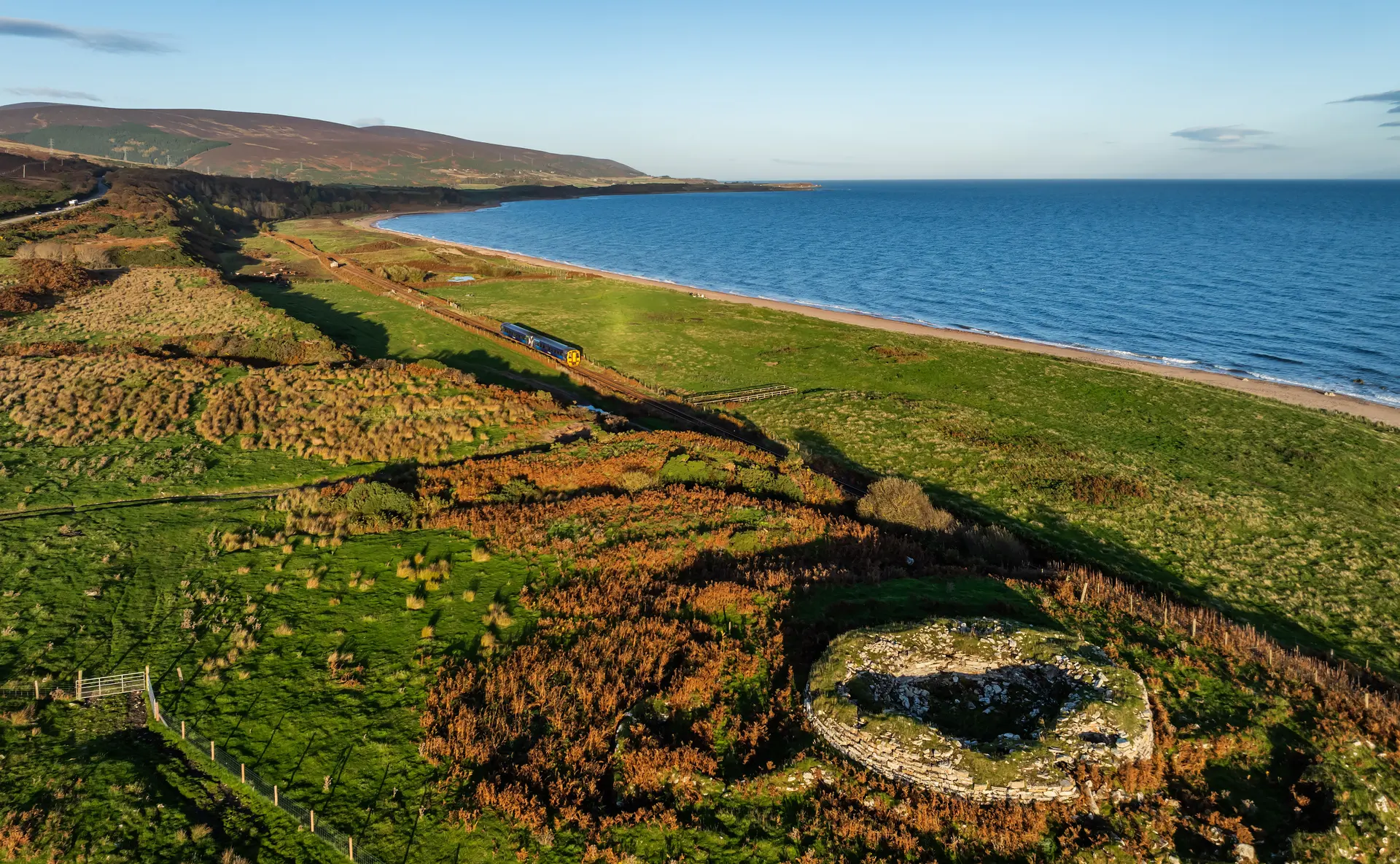
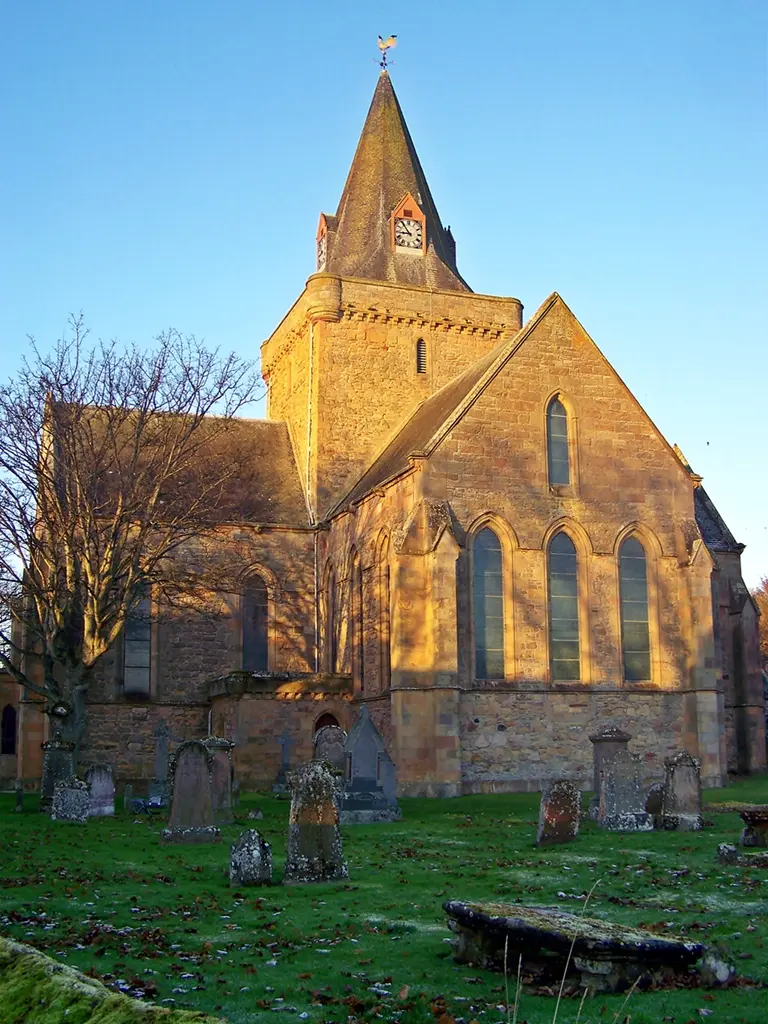
Explore other sacred places in the region. Proximity does not establish access or travel time; check each place’s guidance.

References
Sources consulted for this page. Source categories describe the publication, not a guarantee that every claim is verified. Traditional accounts and outside interpretations may differ.
- 01Backies - Canmore National Record of the Historic Environment — Historic Environment Scotland / RCAHMSacademicOfficial national record with detailed archaeological survey data, dimensions, and excavation history
- 02MHG10886 - Broch - Backies - Highland Historic Environment Record — Highland Council Historic Environment RecordacademicOfficial Highland Council heritage record with detailed descriptions and 2016 re-scheduling information
- 03Backies, broch 300m north of Whitestone Croft - Ancient Monuments — Ancient MonumentsSource contextScheduled monument listing with designation details
- 04Backies Broch - Highland Brochs — Highland BrochsSource contextEnthusiast-run site with detailed visiting information, dimensions, photographs, and measurements taken on-site
- 05Backies (Broch) - The Modern Antiquarian — The Modern AntiquarianSource contextCommunity-contributed descriptions and visitor accounts with archaeological context
- 06Broch, Backies near Golspie - Am Baile / High Life Highland — High Life HighlandSource contextHighland cultural heritage resource with photographic records
Share a photo
Help visitors recognize Backies Broch. Every submission is reviewed before publication.