Camster Cairns - The Long Cairn
Part ofCamster Cairns
A Neolithic long cairn on the Caithness moors where two ancient tombs were joined into one monumental passage to the dead
Understand sacred places, explore living traditions, and learn how to engage respectfully with Pilgrim Map.
Access has not been verified. Check current local guidance before planning a visit.
Lybster, Scotland, United Kingdom
Read the sources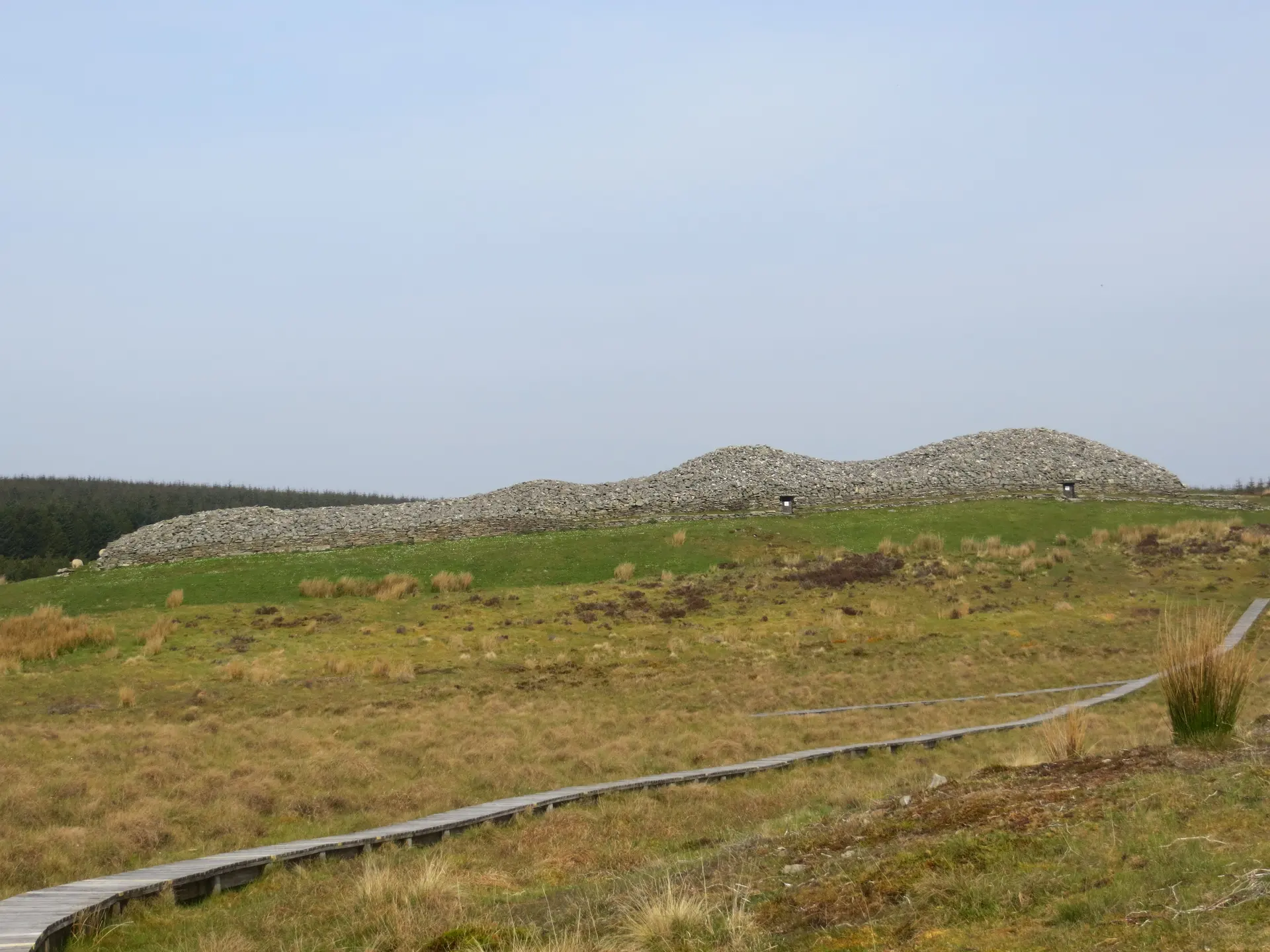
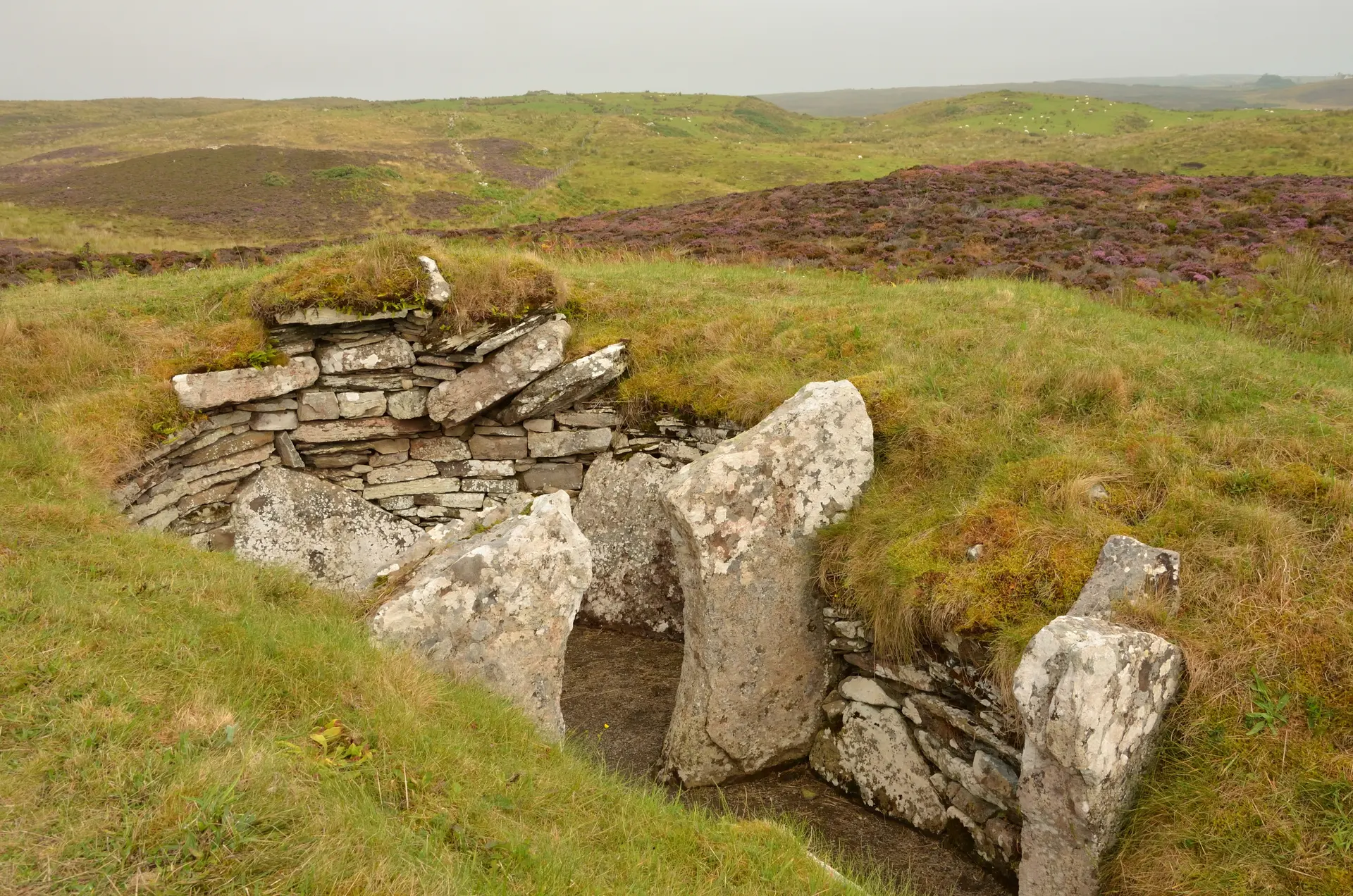
Image of Camster Cairns - The Long Cairn. Image source · CC-BY-SA-2.0
Visit essentials
A quick read before you go
- Duration
- 45-90 minutes for the Long Cairn alone, including entry into both chambers.
- Etiquette
- Treat the cairn with respect as a burial monument and scheduled ancient monument.
Overview
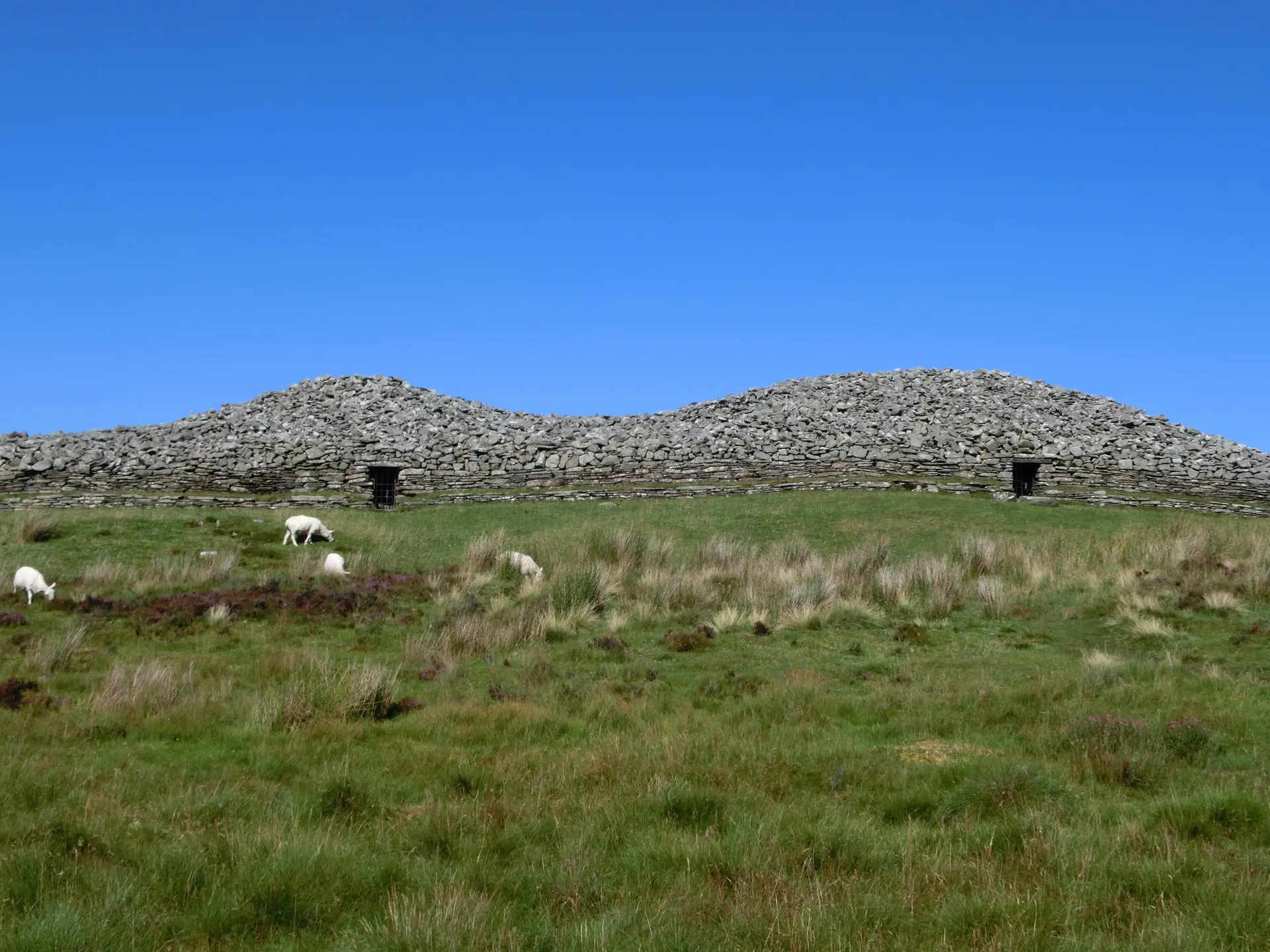
On the peatlands south of Watten, where the Flow Country's blanket bog reaches toward the North Sea, Camster Long lies as a sixty-metre grey-stone mound aligned northeast to southwest, tapering from broad horned forecourts to narrower ones. It has endured for five thousand years; nothing else built by human hands in this landscape has lasted so long.
Two burial chambers open through low passages in its flanks. Each originally stood complete within its own round cairn; for unrecoverable reasons, the community later encased them in one long structure, adding the horned forecourts and turning two places of the dead into a single monument.
In 1866 Joseph Anderson and Robert Shearer opened the chambers. Human bones mingled with horse, ox, pig, and deer remains above black earth, ash, and burnt bone; two skeletons sat upright in the central chamber. From 1967 to 1980, Ritchie, Corcoran, and Lionel Masters completed further excavation and restored visitor access.
Camster Long stands beside Camster Round on moorland showing human activity millennia older than both. The scarcely changed peatland and immense sky give the cairn an authority grounded in endurance rather than spectacle.
Why this place is sacred
There are places where the past remains available not as idea but as sensation. Camster Long is one of them. The passage into the north chamber has a ceiling height that drops to eighty centimetres. There is no way to enter except on hands and knees. The stone presses close. Light diminishes.
Then the passage opens into a chamber tall enough to stand in, and the visitor finds themselves inside a space shaped by people who have been dead for five thousand years.
This physical compression and release is not incidental to the monument's meaning. It was designed. The Neolithic builders who constructed these passages knew what the body would experience in moving through them. Whether they intended the transition as a symbolic death and rebirth, a separation of the living world from the world of the dead, or something entirely beyond modern categories of understanding, the effect remains. The body knows it has crossed a boundary.
The isolation of the site amplifies everything. Camster Long does not compete with other structures, other sounds, other claims on attention. It sits on open moorland under an open sky, and between these two expanses, the interior of the chambers exists as a third space, enclosed, dark, intimate. The contrast between the vast landscape outside and the contained chambers within creates a sense of passage between different orders of reality.
The incorporation of two separate round cairns into a single long structure adds another dimension. Someone, at some point, decided that two monuments were not enough, that the dead required a grander home, or that the community required a grander statement. The long cairn is not just a tomb but an argument about the importance of the dead to the living, an argument made in stone and still standing.
Constructed during the Neolithic period, approximately 3500-2500 BC, as a communal burial monument. The two chambers originally belonged to separate round cairns that were later incorporated into the long cairn form. Used for the burial of multiple individuals, accompanied by animal remains, pottery, and stone tools.
First excavated by Joseph Anderson and Robert Shearer in 1866. Further investigation by Ritchie (1967-68), Corcoran (1971-73), and Lionel Masters (1976-80), whose work established the multi-phase construction sequence and led to the cairn's restoration for public access. Now managed as a scheduled ancient monument (SM90056) by Historic Environment Scotland. The surrounding Flow Country peatland has been part of a successful UNESCO World Heritage bid.
Experience and orientation
The approach to Camster Long is part of the experience. From the A99 near Lybster, a minor road climbs into the moorland and the world simplifies. Trees fall away. The horizon widens. After five miles, a small car park appears, and beyond it, across the peatland, the long grey form of the cairn.
Raised duckboard walkways carry you across the bog to the monument. The boards are practical, but they also ritualise the approach, creating a defined path through trackless ground, a processional route to the dead that echoes, however faintly, whatever paths the original builders followed.
At the cairn, take time before entering. Walk its length. Notice how it narrows from northeast to southwest, how the horned forecourts at each end create concave gathering spaces. These may have been where the living assembled before the passages were opened for burial. The double-faced wall that bounds the cairn still stands in places to nearly two metres, testament to the skill of builders who worked without mortar.
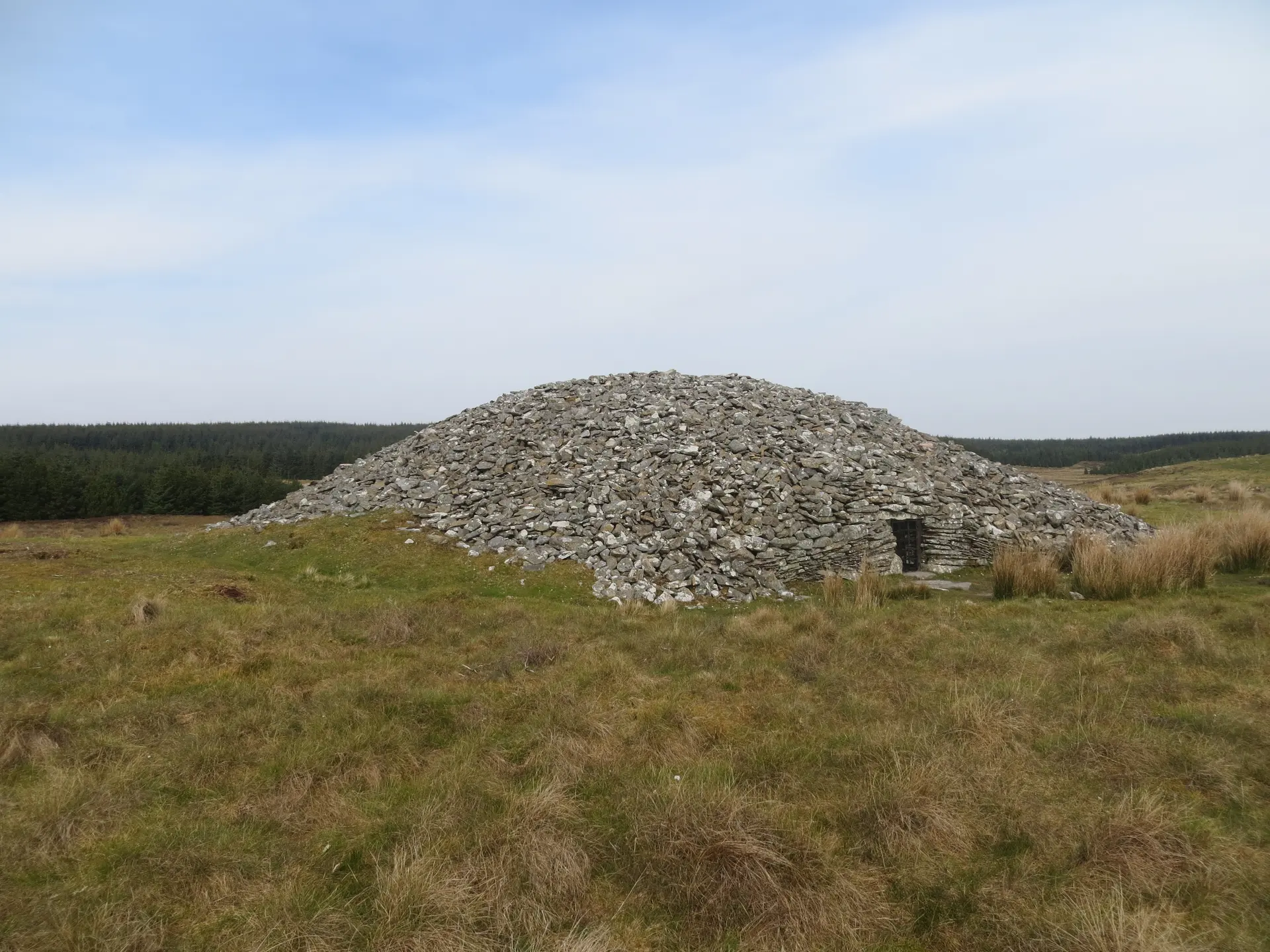
Then choose a passage. The entrances are on the cairn's long sides, marked by low openings in the stone. The ceiling drops. You go to your hands and knees. The stone is close above and on both sides. The passage may be only five or six metres long, but the transition it creates is total. Daylight recedes. Temperature drops. Sound changes.
The chambers themselves are tall enough to stand in. The north chamber is polygonal, roofed now by a fibreglass dome that admits grey light. The south chamber is subdivided by transverse slabs set into the walls, creating compartments. In both, the stone is dry and cold and has been exactly this cold for five thousand years.
Stand in the chamber. Let your torch go out, if you dare. The darkness is complete. This is the darkness that the dead inhabited. Whatever meaning the builders assigned to this space, the darkness was part of it.
Afterward, walk across to Camster Round, a hundred metres or so to the southeast. It is smaller, a near-perfect circle eighteen metres across, with its own single chamber divided into three compartments. Together, the two cairns form a landscape of the dead, compact and self-contained on the open moor.
The cairns are located approximately 5 miles north of Lybster and 8.5 miles south of Watten, signposted off the A99. A minor road leads directly to the small car park. Duckboard walkways cross the moorland to the cairns. The Long Cairn lies to the northwest, the Round Cairn to the southeast.
Context and lineage
The story of Camster Long begins not with the long cairn but with two smaller, independent monuments. At some point during the Neolithic, communities built two round cairns on the Caithness moorland, each containing a burial chamber, each encircled by its own stone wall. These round cairns were complete in themselves, functional tombs where the dead were placed alongside the bones of animals and the products of fire.
Then something changed. The community decided to enclose both round cairns within a single elongated structure, extending the monument to sixty metres and adding horned forecourts at each end. The reasons for this transformation cannot be known, but the scale of the undertaking argues for its importance. This was not maintenance or repair. It was a reimagining of the monument's purpose, a decision that two separate houses for the dead should become one.
The resulting long cairn, with its tapering form, its double-faced outer wall, and its two chambers set fifteen metres apart within the body of the monument, is one of the most architecturally accomplished Neolithic structures in northern Scotland. It shares typological features with cairns in Orkney, suggesting cultural connections across the sea.
No continuous tradition survives from the Neolithic communities who built and used the cairn. The site's significance is now understood through archaeological investigation and heritage management by Historic Environment Scotland.
Joseph Anderson and Robert Shearer
First excavators (1866)
Lionel Masters
Principal excavator and restorer (1976-1980)
Traditions and practice
The Neolithic communities who built Camster Long practised communal burial in chambered cairns. The dead were placed within stone-built chambers alongside the bones of horses, oxen, pigs, and deer. Fire was used, as evidenced by layers of ash and burnt bone. Pottery and stone tools accompanied the dead. At least two individuals were placed in seated positions, suggesting specific beliefs about the posture of the dead.
The transformation of two round cairns into a single long cairn indicates evolving ritual practices and a growing ambition in monumental construction.
Visitors enter the chambers through the restored passages, an experience that requires crawling through passages with ceiling heights as low as eighty centimetres. This physical engagement with the monument is itself a form of practice, a bodily encounter with space designed five thousand years ago. Walking the moorland between the Long and Round Cairns allows reflection on the Neolithic landscape as a whole.
Bring a torch. Enter slowly. Allow your eyes to adjust to the darkness inside the chambers. Spend time in silence. Notice the temperature of the stone, the quality of the air, the change in sound between the open moor and the enclosed chamber. Walk the full length of the cairn before entering, and walk between the Long and Round Cairns to appreciate the relationship between the two monuments.
Neolithic Funerary and Communal Burial Tradition
HistoricalCamster Long was built and used across multiple phases of the Neolithic as a communal burial monument. The incorporation of two separate round cairns into a single long structure demonstrates evolving funerary practice and suggests that the relationship between the living and the dead was subject to reinterpretation over centuries. The presence of animal bones from multiple species, evidence of fire, and the seated positioning of at least two burials indicate complex ritual surrounding death.
Communal burial within chambered cairns; positioning of the dead in seated postures; deposition of animal bones alongside human remains; use of fire within or near the chambers; pottery and stone tool offerings; multi-phase monument construction and architectural transformation.
Perspectives and open questions
Camster Long can be understood as an archaeological monument revealing Neolithic building practices and funerary rites, as a place where beliefs about death and ancestry were given architectural form, as a landscape experience inseparable from the vast peatland moor on which it stands, or as an invitation to consider what the dead meant to the communities that built for them on this scale.
Scholarly perspective
Archaeologists classify Camster Long as an Orkney-Cromarty type long horned cairn, part of a Neolithic tradition of chambered tomb construction found across northern Scotland and the Northern Isles. The key finding from successive excavation campaigns is the multi-phase construction: two independent round cairns, each with its own chamber and encircling wall, were incorporated into a single long cairn with horned forecourts.
The assemblage of human bones, animal bones from multiple species, pottery sherds, flaked stone implements, and coarse stone tools is consistent with communal burial practices known from comparable sites. The cairn's typological connections to Orkney suggest cultural links across the Pentland Firth during the Neolithic.
Living and traditional perspectives
No continuous oral tradition survives from the communities who built and used the cairn. The Caithness landscape retains place-names of Norse origin, reflecting later settlement, but these do not preserve Neolithic memory. The cairn's meaning must be read from the stones and the earth rather than from words.
Alternative interpretations
The physical experience of entering the cairn's passages has drawn comparison to symbolic death and rebirth, a motif found in many spiritual traditions that interpret megalithic tombs as liminal spaces between worlds. The cairn's orientation and the surrounding moorland landscape have attracted interest from those exploring ideas of sacred geography, earth energies, and the spiritual qualities of remote and ancient places.
Open questions
The reasons for incorporating two round cairns into a single long cairn remain the central mystery of the site. Whether this represented a change in religious belief, a social reorganisation, a response to new cultural influences from Orkney, or something entirely other cannot be determined. The identities of the buried, the full ritual sequence of interment, the significance of the animal remains, and the meaning of the seated burial position are all open questions that the stones cannot answer.
Plan your visit
Access and arrival
No facilities at the site. The nearest accommodation, dining, and services are in Lybster or Wick. Lybster has a small selection of B&Bs and the Portland Arms Hotel. Wick offers a fuller range of accommodation and services.
Respectful visit
Outdoor clothing suitable for exposed Highland moorland. Waterproof jacket and trousers recommended. Sturdy footwear essential for the boggy terrain. Clothing that can accommodate crawling through the passages without damage or discomfort. Gloves useful for passage entry.
Permitted throughout. A torch or headlamp is essential for interior photography. The exteriors photograph well in all weather conditions.
Do not leave offerings, coins, crystals, or any objects within the chambers or on the cairn. It is a scheduled monument and any disturbance is a legal offence.
The cairn is a scheduled ancient monument under Scottish law. Disturbance, excavation, or metal detecting without authorisation from Historic Environment Scotland is prohibited. The Scottish Outdoor Access Code applies.
The passages require crawling and are not suitable for those with claustrophobia or limited mobility. The site is remote with no facilities or mobile phone signal. Weather on the Caithness moorland can change rapidly. The cairn is a scheduled ancient monument; do not remove stones, disturb the structure, or use metal detectors.
Current practical details
Address
Lybster KW3 6BD, UK
Hours, fees, and access can change — verify on the official source before you travel. Practical details last checked Jun 2026.
Location
Map loads as you approach this section.
Pilgrim reflections
A portrait of encounter, not a score
Pilgrims describe what they felt, how present they could become, and whether the place would shape a journey. There are no stars and no ranking of traditions.
No reviewed reflections yet
The first pilgrims can help describe the character of being here.
Share a reflection
Available after an account-backed “Been there.” Every reflection is reviewed before publication.
Nearby sacred places
Explore other sacred places in the region. Proximity does not establish access or travel time; check each place’s guidance.
References
Sources consulted for this page. Source categories describe the publication, not a guarantee that every claim is verified. Traditional accounts and outside interpretations may differ.
- 01Grey Cairns of Camster - Historic Environment Scotland — Historic Environment ScotlandofficialOfficial heritage body with visitor and history information
- 02Grey Cairns of Camster: History - Historic Environment Scotland — Historic Environment ScotlandofficialDetailed archaeological history from official custodian
- 03Camster, Long - Canmore (National Record of the Historic Environment) — Historic Environment Scotland / CanmoreSource contextNational historic environment record with grid reference, excavation archive details, and bibliography
- 04MHG1809 - Camster Long Chambered Cairn - Highland Historic Environment Record — Highland Historic Environment RecordSource contextRegional historic environment record with detailed monument description
- 05The excavation and restoration of the Camster Long chambered cairn, Caithness, Highland, 1967-80 — Lionel Masters / Proceedings of the Society of Antiquaries of ScotlandacademicPrimary academic publication of the main excavation and restoration campaign
- 06Prehistoric Society Signpost: Camster — The Prehistoric SocietyacademicAcademic society guide to the site
- 07Grey Cairns of Camster - Wikipedia — Wikipedia contributorsencyclopediaComprehensive overview with dimensions, excavation history, and architectural description
- 08Grey Cairns of Camster - The Megalithic Portal — The Megalithic PortalacademicSpecialist megalithic site database
- 09The Grey Cairns of Camster and the Flow Country — Spirit Stories / Discover Highlands and IslandsSource contextContextual information linking cairns to the Flow Country landscape
- 10Grey Cairns of Camster - Caithness Broch Project — Caithness Broch ProjectacademicArchaeological project with Caithness context
- 11Camster Cairns - 5,000 year old Neolithic tombs in Caithness — Caithness and SutherlandguideRegional visitor guide with practical access information
- 12Grey Cairns of Camster - Britain Express — Britain ExpressguideVisitor-oriented guide with historical context
Share a photo
Help visitors recognize Camster Cairns - The Long Cairn. Every submission is reviewed before publication.