Baluachraig Cup and Ring Marks
Five-thousand-year-old rock carvings in Scotland's most sacred prehistoric valley
Understand sacred places, explore living traditions, and learn how to engage respectfully with Pilgrim Map.
Access has not been verified. Check current local guidance before planning a visit.
Kilmartin, Scotland, United Kingdom
Read the sources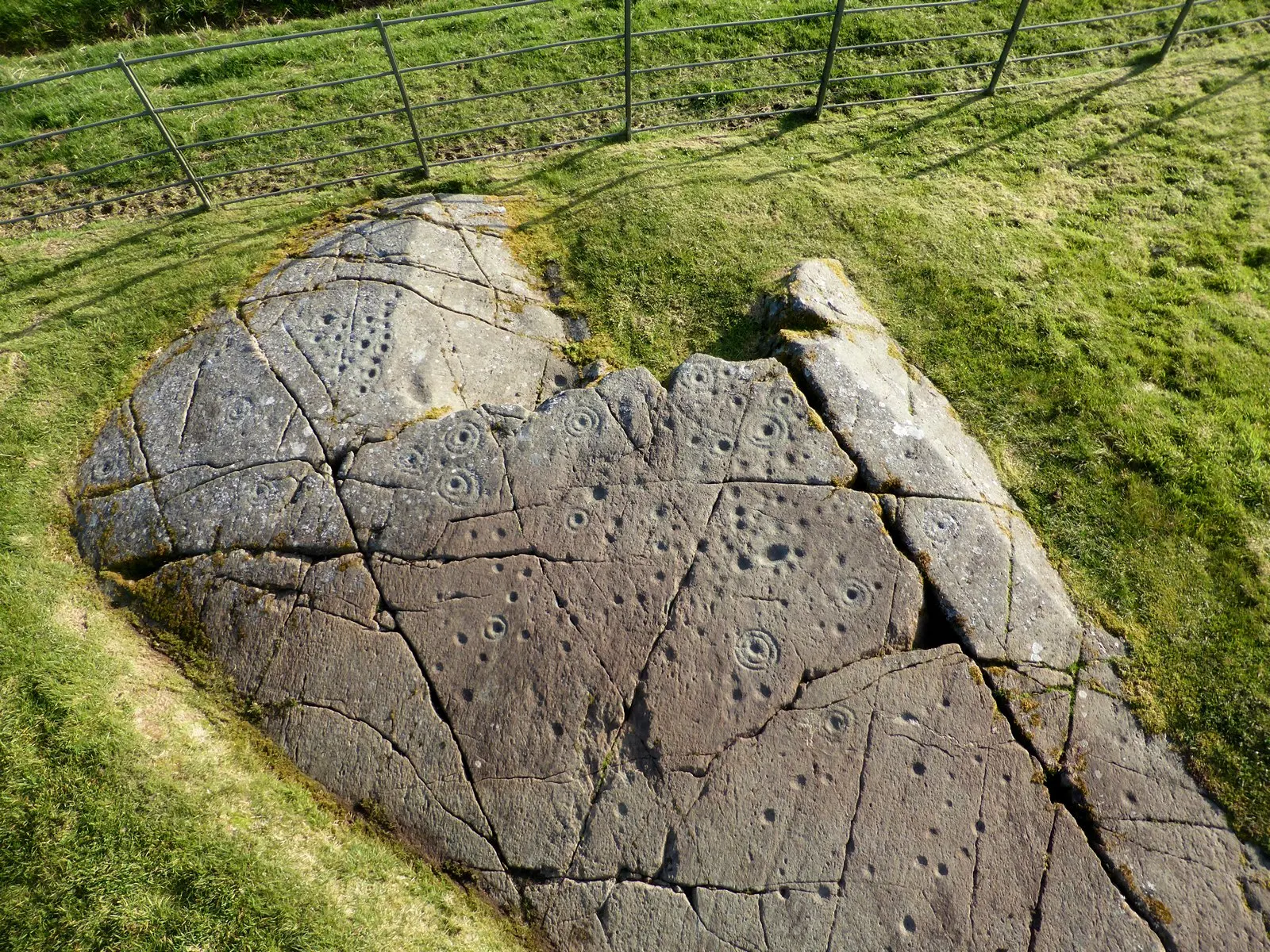
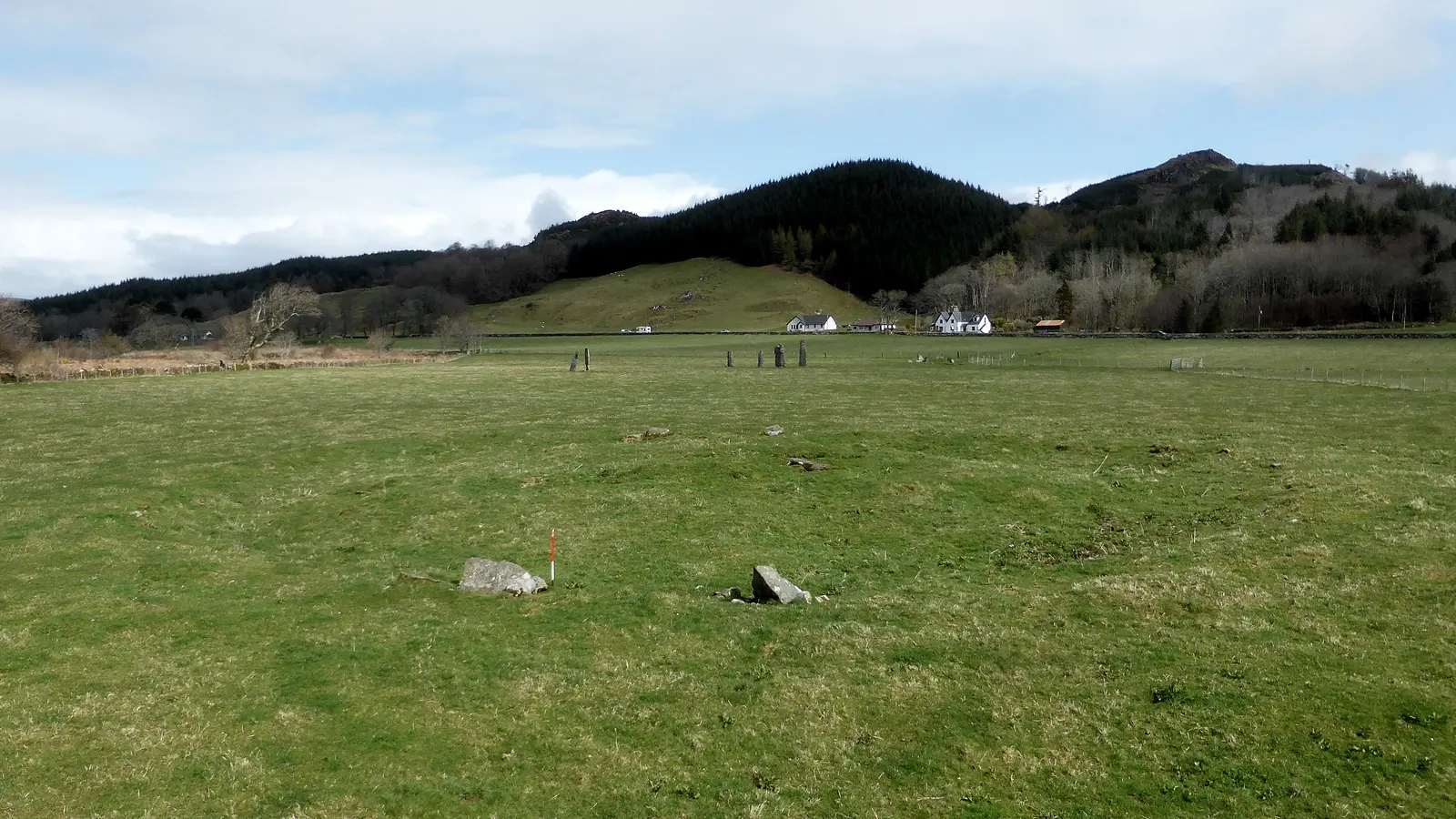
Image of Baluachraig Cup and Ring Marks. Image source · CC-BY-SA-2.0
Visit essentials
A quick read before you go
- Duration
- Twenty to thirty minutes for a focused visit to the carved outcrops.
- Access
- Free open access at all times.
Overview
Baluachraig lies within Kilmartin Glen, a valley in Argyll that holds over eight hundred ancient monuments within a six-mile radius. The glen's concentration of Neolithic and Bronze Age sites is unmatched on the Scottish mainland. Burial cairns, standing stones, stone circles, and carved rock surfaces cluster here with a density that suggests this was not merely inhabited land but consecrated ground, a place where the boundary between the mundane and the sacred was understood differently than we understand it now.
The rock art at Baluachraig consists of hollows pecked into natural outcrops of exposed rock, some surrounded by one or more concentric rings grooved into the stone surface. No metal tools shaped these marks. They were created by the persistent striking of stone against stone, each cup the result of sustained, deliberate labor. The main rock surface measures roughly ten feet square, and within a twelve-yard radius, two or three additional patches of carved rock continue the pattern.
Surface A alone bears approximately eighty cups and twenty cup-and-ring marks.
These carvings belong to a tradition that extends across Atlantic Europe, from the coast of Galicia through Ireland to the Scottish Highlands. Wherever the tradition appears, the forms are consistent: cups, rings, grooves, occasionally gutters radiating outward. The consistency suggests shared understanding. The complete absence of any key to that understanding makes these among the most genuinely mysterious objects in European archaeology. More than a hundred theories have been proposed for their meaning. None has achieved consensus.
The marks endure, and the silence around them is absolute.
Why this place is sacred
What makes a place thin is not always what we expect. At Baluachraig, the thinness lies not in any recoverable sacred tradition or documented miraculous event but in the sheer impenetrability of what remains. The cup marks are physically present: depressions in rock, rough-edged from the pecking of stone tools, weathered by five millennia of Scottish rain and wind. They are utterly real. And they are utterly opaque.
The carvings were made at a time when ritual monuments, rather than settlements, served as fixed points in the landscape. People moved through the glen seasonally, following pastures and hunting grounds, but the monuments stayed. The rock art at Baluachraig may have marked a route, a boundary, a gathering place, a threshold between territories or states of being. It may have recorded astronomical observations, mapped water sources, or documented experiences we cannot imagine from our distance of five thousand years.
The honest answer is that we do not know, and may never know.
This unknowing itself becomes a form of depth. Standing before the carved outcrop, tracing the rings with one's eyes, the visitor encounters the limits of human understanding. These marks mattered to someone, deeply enough to warrant hours of labor with stone tools on hard rock. The care invested is visible. The intention behind it is not. That gap between evidence and meaning creates a space where contemplation naturally arises.
The surrounding landscape amplifies this effect. Baluachraig does not stand alone. Within walking distance lie burial cairns containing the bones of people who may have carved these very marks. Standing stones align across the boggy ground. Stone circles enclose spaces where ceremonies occurred. A natural pool near the Baluachraig outcrops may itself have held sacred significance. The entire glen functions as a text in a language we have lost, and Baluachraig is one of its most eloquent passages.
The original purpose of the Baluachraig cup and ring marks remains unknown. The carvings are part of a widespread Atlantic European tradition whose meaning has not been recovered. Proposed theories include territorial markers along established routes, astronomical records, maps of landscape features, expressions of spiritual experience, ceremonial surfaces, or functions that fall outside modern categories entirely.
The carvings' location overlooking lower ground and their association with other prehistoric monuments in Kilmartin Glen suggest they were integral to a larger sacred landscape, though the specific role they played cannot be determined from the archaeological evidence.
The cup and ring marks at Baluachraig were created approximately five thousand years ago during the Neolithic period, using stone tools to peck hollows and grooves into natural rock outcrops. Simple cup marks have been used in Scotland since at least 4000 BCE. The Baluachraig carvings may have been created in a single campaign or accumulated over centuries. The surrounding Kilmartin Glen continued to attract ceremonial and burial activity throughout the Bronze Age, from roughly 5,500 to 3,000 years ago.
The site's significance to its makers has been entirely lost to living memory. Today it is managed as a scheduled ancient monument by Historic Environment Scotland.
Experience and orientation
The approach to Baluachraig is unassuming. A short walk from the A816 leads to where natural rock breaks through the turf of Kilmartin Glen. The carved surfaces do not announce themselves. They require the visitor to slow down, to look carefully, to let the eye adjust. This is not a monument designed to impress from a distance. It is a place that rewards proximity and attention.
The main carved surface lies roughly level with the surrounding ground, its expanse of approximately ten feet square bearing the marks of Neolithic hands. Cups appear first: shallow circular depressions, some no larger than a thumb-print, others the width of a palm. Some are solitary. Others cluster in groups whose arrangement may or may not be deliberate. Around certain cups, concentric rings groove the surface, sometimes one ring, sometimes several, creating targets or ripples frozen in stone.
Finding these marks becomes absorbing work. The longer one looks, the more appear. What seemed a bare rock surface reveals itself gradually as a densely inscribed text. Photography helps: images taken at extreme angles catch shadows the eye misses. But the deepest engagement comes from simply being present with the stone, allowing the patterns to emerge at their own pace.
Nearby, the Dunchraigaig Cairn rises from the landscape, a Bronze Age burial monument directly associated with the rock art. The proximity of the living and the dead, of carved surface and burial chamber, suggests a relationship between the marks and the people interred here, though the nature of that relationship can only be guessed.
Solitude is common at Baluachraig. The site lacks the fame of Achnabreck's more elaborate panels or Temple Wood's atmospheric stone circles. Those seeking a quiet encounter with deep prehistory, unmediated by visitor centers or interpretive signage, find it here. The glen stretches away in all directions, its surface studded with monuments that invite further exploration.
A day spent walking between these sites accumulates a sense of something vast and deliberate, a landscape shaped by intention whose full scope we have lost the ability to perceive.
Baluachraig lies approximately one mile south-southeast of Kilmartin village, accessed via a path from the A816. The carved outcrops are at ground level and can be easy to miss; look for flat exposed rock breaking through the turf. Dunchraigaig Cairn lies adjacent and serves as a useful landmark. For context before visiting, the Kilmartin Museum offers excellent interpretive displays on the glen's prehistory.
The best light for viewing cup marks falls in early morning or late afternoon when the sun sits low on the horizon.
Context and lineage
No origin narrative survives from the prehistoric creators of Baluachraig. The site has no associated mythology, no folk tale explaining its creation. The Gaelic name refers to the locality rather than any legend. What can be said is that Neolithic communities chose these particular rock outcrops and invested sustained labor in marking them, at a time when the wider glen was being shaped into a ceremonial landscape of cairns, standing stones, and stone circles. The marks were not casual.
They were deliberate, patterned, and part of a tradition shared across a vast geographic area. Beyond these observations, the origin of the practice remains unknown.
The lineage of Baluachraig runs from anonymous Neolithic makers through millennia of silence to contemporary heritage management. The communities who carved the marks left no names, no written beliefs, only patterns in stone. Later inhabitants of the glen, including the Gaelic-speaking communities who named local features, apparently developed no mythology around the rock art. Unlike some prehistoric sites, Baluachraig accumulated no folk practices or healing traditions. The carvings simply persisted, weathering slowly, their meaning fading while their physical presence endured.
Today Historic Environment Scotland manages the site as a scheduled monument of national importance, while Kilmartin Museum provides interpretive context for the wider landscape.
Unknown Neolithic communities
Traditions and practice
The original practices associated with the cup and ring marks are unknown. The carvings were created using stone hammers or similar tools, a process requiring sustained effort and presumably ritual or ceremonial intent. The marks' relationship to the wider ceremonial landscape of Kilmartin Glen suggests they functioned within a larger system of belief and practice, but the specifics cannot be reconstructed.
No formal ceremonies take place at Baluachraig. Visitors engage through quiet observation, photography, and personal reflection. Some visitors touch the carved surfaces, connecting physically with marks made by hands five thousand years distant.
For meaningful engagement, arrive when the sun sits low. Dawn and dusk transform the rock surfaces, as shadows fill the cups and trace the rings. Move slowly across the outcrops, allowing the marks to reveal themselves gradually rather than scanning quickly. Sit with the stone. Let the surrounding landscape enter awareness: the nearby cairn, the distant hills, the wet green of the glen.
Consider walking to other sites in the glen afterward, building a cumulative sense of the prehistoric sacred landscape. Achnabreck's more elaborate panels and Temple Wood's stone circles lie within reach.
Neolithic/Bronze Age Atlantic Rock Art
HistoricalThe cup and ring marks at Baluachraig are part of a widespread tradition spanning Atlantic Europe from Galicia to Scotland, dating to the Neolithic and Early Bronze Age. The tradition represents one of the most extensive prehistoric art forms in Europe, with thousands of carved surfaces documented across Scotland alone. Baluachraig's marks belong to the densest and most elaborate concentration of this art in Scotland, within a landscape of exceptional ceremonial importance.
Unknown. The carvings were created by pecking rock surfaces with stone tools, a process requiring sustained deliberate effort. The consistency of forms across a vast geographic area suggests shared cultural practices, but their specific nature cannot be reconstructed. The marks may have accompanied rituals, processions, seasonal ceremonies, or practices entirely outside modern categories of understanding.
Perspectives and open questions
Baluachraig resists definitive interpretation. The cup and ring marks have been studied for over a century, yet their meaning remains unknown. This honest uncertainty is not a failure of research but a genuine condition of the evidence. The carvings speak in a language that predates all living traditions, and no Rosetta Stone has been found.
Scholarly perspective
Archaeological consensus holds that the Baluachraig cup and ring marks belong to a widespread Atlantic European rock art tradition dating to the Neolithic and Early Bronze Age. The carvings were created by pecking the rock surface with stone tools. Their location within Kilmartin Glen, Scotland's densest concentration of prehistoric monuments, confirms the area's exceptional ceremonial importance. Scholars note that the carved outcrops tend to overlook lower ground, suggesting they may have marked routes, boundaries, or significant viewpoints.
The relationship between the rock art and nearby burial cairns hints at connections between the marks and funerary or ancestor-related practices. Despite extensive study, including Scotland's Rock Art Project which documented thousands of carved surfaces, no scholarly consensus has been reached on the specific meaning of cup and ring marks. Over a hundred theories have been proposed.
Living and traditional perspectives
No continuous tradition survives from the Neolithic period. The name Baluachraig is Gaelic and refers to the settlement location rather than any mythological or spiritual significance. Unlike some Scottish prehistoric sites, the Baluachraig rock art has not attracted folk traditions, healing practices, or superstitious beliefs in recorded history. The carvings exist in a state of cultural orphanhood, severed from whatever tradition of understanding once gave them meaning.
Alternative interpretations
Some contemporary visitors interpret the cup and ring marks as astronomical maps recording stellar positions, as records of entoptic phenomena experienced during altered states of consciousness, or as energy maps marking telluric currents in the landscape. Others see them as water-related symbols, pointing to the nearby natural pool and the way rainwater collects in the cups. These interpretations, while unverifiable, represent genuine attempts to bridge the gap between ancient marks and modern understanding.
Open questions
The meaning of cup and ring marks remains one of British and European archaeology's most enduring mysteries. Despite appearing in consistent forms across a geographic range from Spain to Scandinavia, no convincing interpretation has achieved scholarly consensus.
The carvings at Baluachraig add their own specific puzzles: the relationship between the multiple carved outcrops within the site, the significance of their location relative to the nearby cairn and natural pool, and whether the approximately one hundred marks on the main surface represent a single composition or an accumulation over time. These questions may never be answered. The marks persist. Their silence is complete.
Plan your visit
Access and arrival
Free open access at all times. The site lies approximately one mile south-southeast of Kilmartin village, reached via a path from the A816. Dunchraigaig Cairn lies adjacent and serves as a useful landmark. Limited roadside parking nearby. The terrain is uneven and often boggy; sturdy waterproof footwear is essential. The site is not wheelchair accessible.
Limited accommodation in the immediate area. Kilmartin Hotel offers rooms near the museum. More options are available in Lochgilphead (6 miles south) and Oban (30 miles north). For an immersive experience of the glen's changing light, consider staying nearby to allow dawn and dusk visits.
Respectful visit
No dress code applies. Practical outdoor clothing suits the terrain and climate. Waterproof boots are essential, as the ground is frequently wet. Layers accommodate Scotland's changeable weather.
Photography is freely permitted and encouraged. Low-angle light produces the most revealing images of the cup marks. Consider using a flash from an oblique angle to reveal marks that ambient light hides.
Leaving offerings is not historically traditional at Baluachraig. If visitors feel called to leave something, it should be natural, biodegradable, and unobtrusive, and should not risk harm to grazing animals.
Do not damage, scratch, chalk, or otherwise mark the rock surfaces. Do not attempt excavation or disturbance of any kind. The site is a scheduled monument; damaging it is a criminal offense under the Ancient Monuments and Archaeological Areas Act 1979. Respect any temporary fencing installed for conservation.
Respect the archaeological integrity of the site. Do not mark, scratch, or attempt to clean the rock surfaces. The carvings have survived five thousand years; treat them accordingly. The ground can be wet and uneven. If leaving anything at the site, ensure it is natural, biodegradable, and will not affect the monument or grazing livestock.
Current practical details
Address
Lochgilphead PA31 8RQ, UK
Hours
Hours, fees, and access can change — verify on the official source before you travel. Practical details last checked Jun 2026.
Location
Map loads as you approach this section.
Pilgrim reflections
A portrait of encounter, not a score
Pilgrims describe what they felt, how present they could become, and whether the place would shape a journey. There are no stars and no ranking of traditions.
No reviewed reflections yet
The first pilgrims can help describe the character of being here.
Share a reflection
Available after an account-backed “Been there.” Every reflection is reviewed before publication.
Nearby sacred places
Explore other sacred places in the region. Proximity does not establish access or travel time; check each place’s guidance.
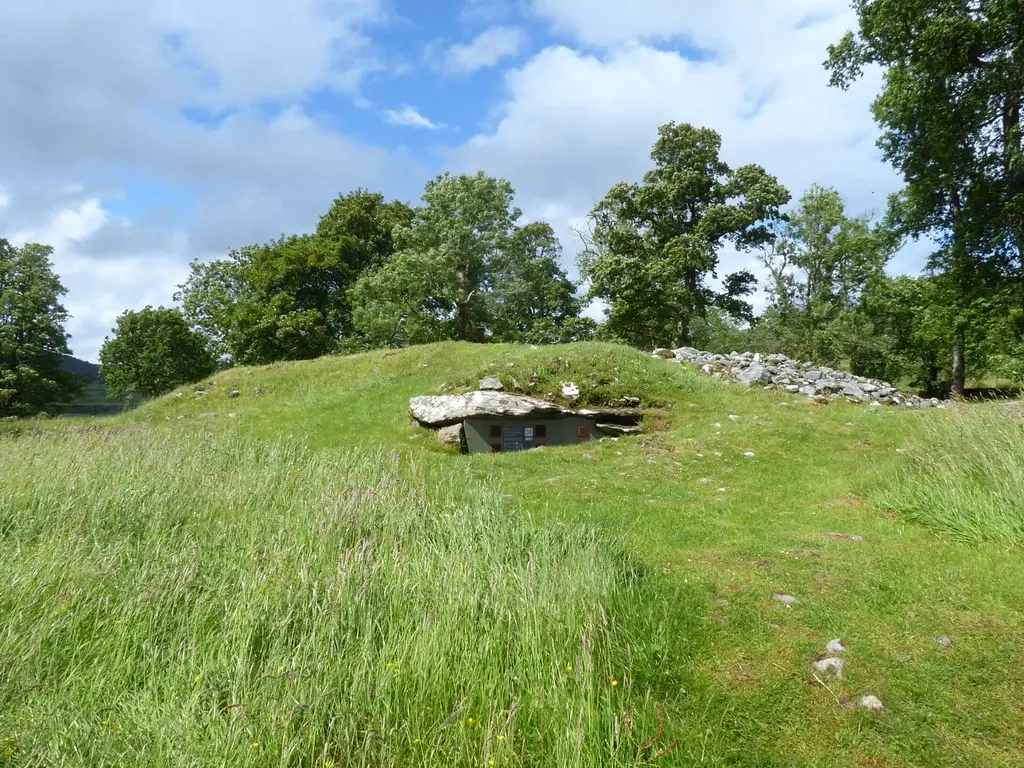
Dunchraigaig Cairn
Kilmartin, Scotland, United Kingdom
0.2 km away
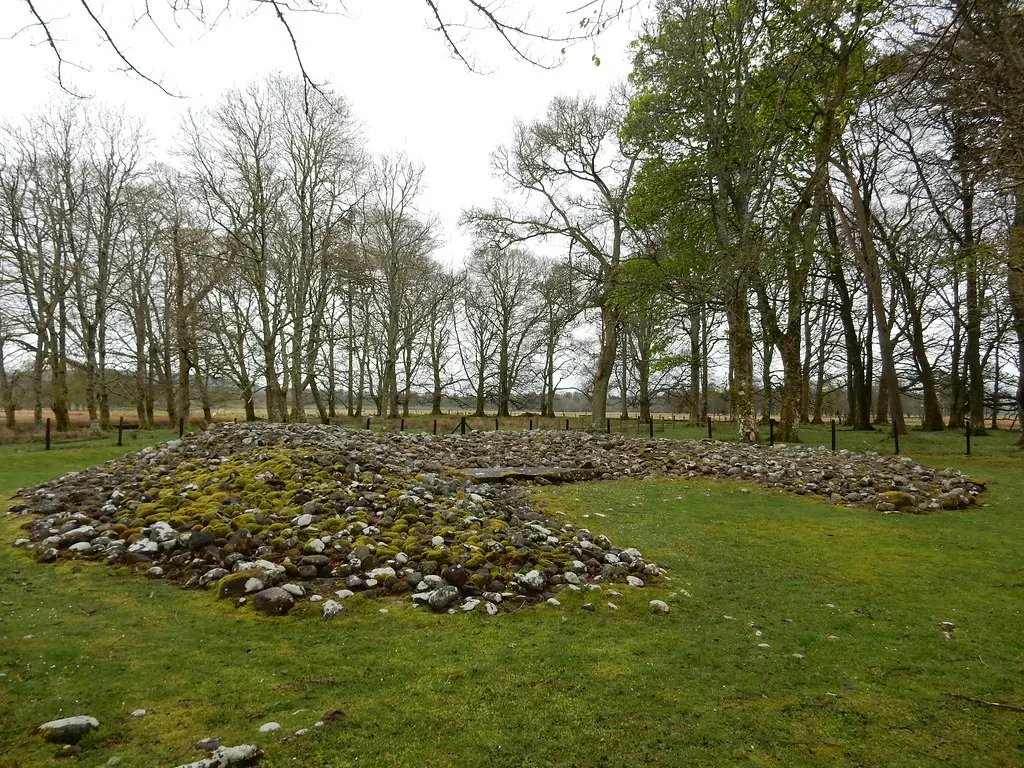
Ri Cruin Cairn
Kilmartin, Scotland, United Kingdom
0.6 km away
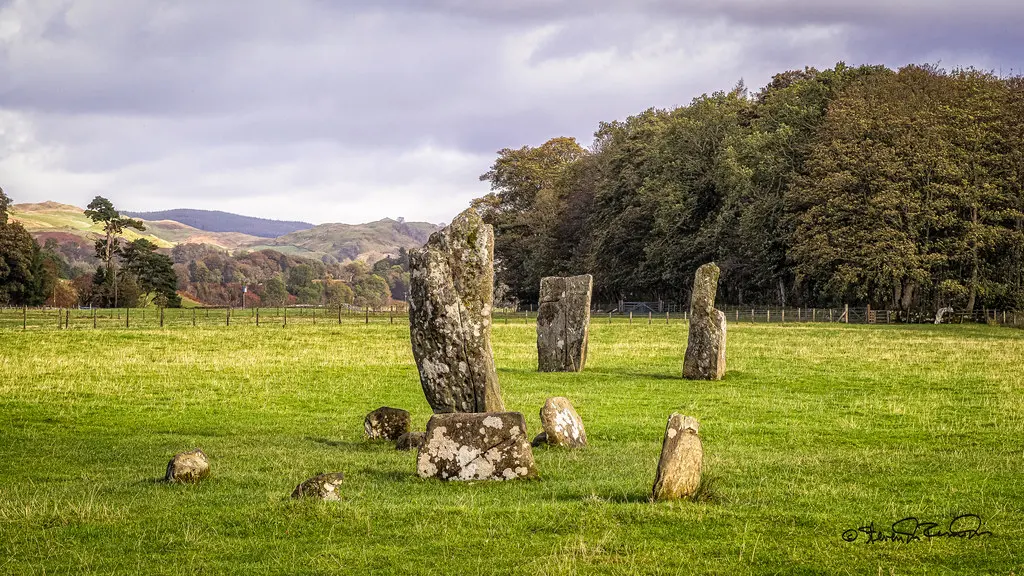
Nether Largie standing stones, Argyll, Scotland
Kilmartin, Scotland, United Kingdom
0.8 km away
Ballymeanoch Neolithic site, Kilmartin Glen
Kilmartin, Scotland, United Kingdom
0.9 km away
References
Sources consulted for this page. Source categories describe the publication, not a guarantee that every claim is verified. Traditional accounts and outside interpretations may differ.
- 01Baluachraig Cup and Ring Marks: History — Historic Environment ScotlandofficialOfficial heritage body description with archaeological context
- 02Kilmartin Glen: Baluachraig Rock Art — Historic Environment ScotlandofficialOfficial visitor information and site description
- 03Baluachraig 1 — Canmore / Historic Environment ScotlandofficialNational record of monuments with grid reference NR 83122 96959 and detailed archaeological descriptions
- 04Achnabreck Cup and Ring Marks: History — Historic Environment ScotlandofficialContext on cup and ring marks tradition across Kilmartin Glen
- 05Scottish Rock Art - Scotland's Rock Art Project — Scotland's Rock Art ProjectofficialAcademic resource on Scottish cup and ring marks
- 06Baluachraig, prehistoric rock carvings 100m south west of — Ancient Monuments UKSource contextScheduled monument listing confirming national importance
- 07Dunchraigaig Cairn and Baluachraig Rock Art — Atlas ObscuraguideVisitor-focused description of the site and nearby Dunchraigaig Cairn
- 08Baluachraig Cup and Ring Marks, Kilmartin Glen, Argyll — Britain ExpressguideVisitor guide with description and historical context
- 09Kilmartin Glen — WikipediaencyclopediaOverview of the wider archaeological landscape
- 10Baluachraig (Cup and Ring Marks / Rock Art) — The Modern AntiquarianSource contextCommunity-sourced archaeological and visitor information
Share a photo
Help visitors recognize Baluachraig Cup and Ring Marks. Every submission is reviewed before publication.