Bodowyr Dolmen
A Neolithic threshold between worlds, standing watch over Anglesey for five millennia
Understand sacred places, explore living traditions, and learn how to engage respectfully with Pilgrim Map.
Access has not been verified. Check current local guidance before planning a visit.
Llangaffo, Wales, United Kingdom
Read the sources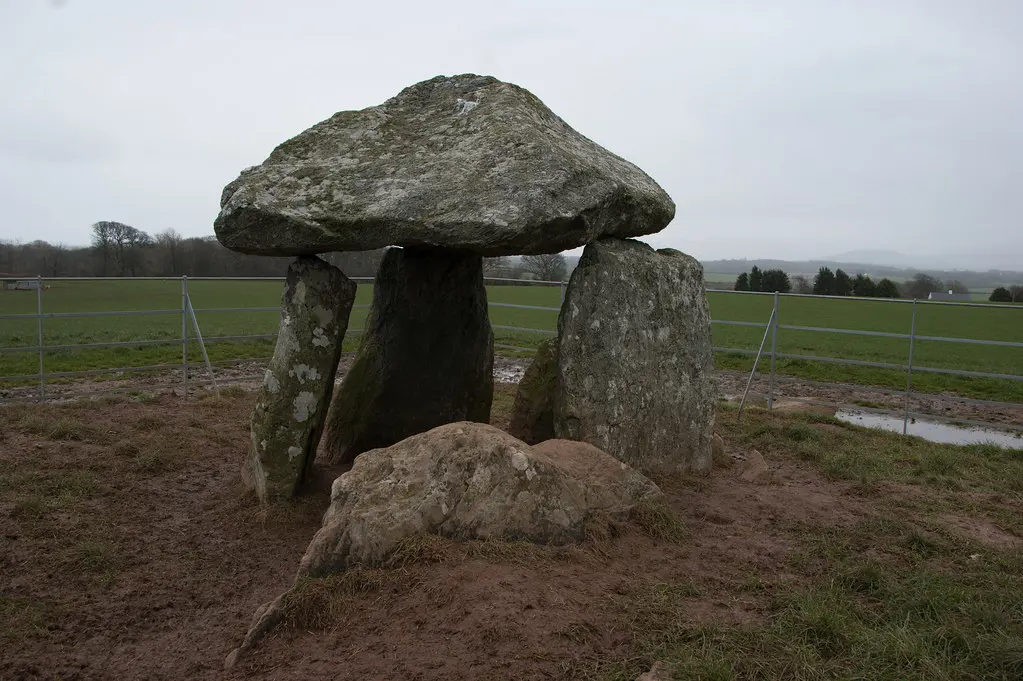
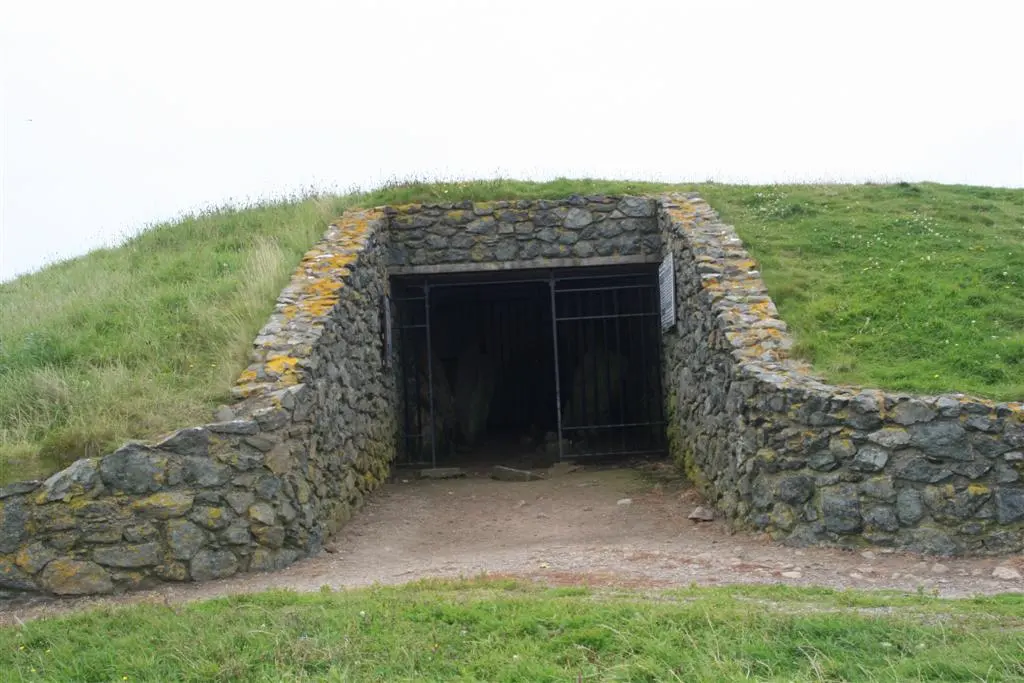
Image of Bodowyr Dolmen. Image source
Visit essentials
A quick read before you go
- Duration
- 30-45 minutes to fully appreciate the setting and take photographs
- Etiquette
- Bodowyr requires the basic respect due to any ancient monument: do not touch or climb the…
Overview
Across a farmer's field, sometimes among grazing cattle, Bodowyr resolves from an apparent outcrop into three uprights supporting a mushroom- or pyramid-shaped capstone. Its small, intimate scale belies perhaps two thousand years of Neolithic burial use. People built a passage into the chamber, covered it with earth, and returned with new burials. The mound eroded and the passage collapsed, but the chamber and its still-sealed, unexcavated contents endure.
Anglesey holds one of Britain's densest concentrations of Neolithic burial chambers. Bodowyr stands quietly among them without panels or crowds, overlooking Snowdonia. Its capstone shadow has crossed the grass for fifty centuries, leaving visitors to encounter deep time without prescribed interpretation.
Why this place is sacred
The Neolithic communities who built Bodowyr understood something about the placement of the dead. This was not random ground but chosen ground, a hilltop with views toward the peaks we now call Snowdonia. Some researchers note that Snowdon itself and the Glyderau are visible from here, with the Llanberis Pass running between them. Whether this sightline was intentional remains unproven, but the builders were not careless people. They moved massive stones without metal tools. They positioned capstones weighing tons.
Every choice was deliberate.
The passage grave form itself suggests beliefs about movement between worlds. The dead were placed within the chamber, accessed through a passage oriented to the southeast. This was not a final resting place in the sense we understand, but a house for the dead, a dwelling they could be visited in. The passage may have admitted light at certain times. It certainly admitted the living, who would have returned to add new burials over generations.
What remains unexcavated adds to the site's power. We do not know who rests here. We do not know what offerings accompanied them. The mystery is intact. For visitors attuned to such things, this incompleteness registers not as absence but as presence, a sense that the veil between knowing and not-knowing is thin here, as the veil between living and dead once was for those who built it.
Archaeological evidence indicates Bodowyr was a communal burial place serving multiple generations of a Neolithic farming community. The passage grave form, more commonly found in Ireland, suggests cultural connections across the Irish Sea. These monuments functioned as more than tombs: they were sites where the living maintained relationship with ancestors, places where the community's identity was anchored in the land across generations.
The covering mound eroded over millennia, leaving only the stone skeleton visible. Medieval Welsh speakers gave such structures the name cromlech, from words meaning bent flagstone. Local memory called it Y Ogof, The Cave. By the 18th century, antiquarian Henry Rowlands recorded the site in his Mona Antiqua Restaurata, noting its charm and describing additional features, now vanished, including a small stone circle and cairn remnants. What Rowlands saw has continued to disappear.
What we see today may be the irreducible minimum, the stones themselves, holding their position against time.
Experience and orientation
The experience begins with the approach. You park in a small layby, pass through a metal gate, and walk perhaps a hundred meters across a working farm field. Cattle may be present. The grass may be muddy. There is no visitor center, no audio guide, no queue. You simply walk toward stones that have been standing since before the pyramids were built.
The chamber itself is enclosed within protective iron railings, close enough to observe in detail but preventing direct contact. Visitors describe appreciating the mushroom-shaped capstone, its form somehow both ancient and whimsical. The three surviving uprights that support it are unworked natural stone, selected for size and shape by people who knew their materials intimately.
Beyond the stones, the view opens. Snowdonia's peaks rise across the Menai Strait, often touched with cloud or lit by shifting weather. The contrast between the intimate scale of the burial chamber and the vast sweep of mountain and sky creates a particular quality many find moving. Visitors speak of tranquility, of feeling connected to deep time, of the site's fairy-like or otherworldly atmosphere.
What visitors do not report is instruction. Bodowyr offers no narrative, no explanation of what to think or feel. You stand before something older than recorded history, something whose meaning has been lost but whose presence has not. What arises is your own.
Come without agenda. The site rewards those who approach slowly, who sit nearby and simply look, who allow time to work at its own pace. Photography is welcome, and the capstone's distinctive form photographs beautifully against the mountains. But consider also spending time without the camera, simply being present with what remains of these ancient builders and their dead.
Context and lineage
No founding narrative survives from the builders themselves, who left no written records. What we can reconstruct comes from archaeology and comparison with similar sites. Neolithic farming communities, having crossed from the continent to Britain, spread across the islands during the fourth millennium BCE. They brought not only agricultural practices but also the tradition of communal burial in stone chambers covered by earthen mounds.
The passage grave form visible at Bodowyr appears more frequently in Ireland than Wales, suggesting these early Anglesey communities maintained connections across the Irish Sea. They were not isolated but part of a cultural network spanning western Britain and Ireland, sharing beliefs about death, ancestors, and the importance of marking the landscape with permanent monuments.
The communities who built Bodowyr used it for perhaps two thousand years before abandoning such practices during the Bronze Age. The site then entered folk memory, its meaning forgotten but its presence enduring. Medieval Welsh speakers named it among the cromlechs. Antiquarians documented it. Cadw, Welsh Heritage, now protects it. The lineage of care has shifted from the living descendants of the dead to scholars and visitors who come seeking connection with the distant past.
Henry Rowlands
antiquarian
Welsh clergyman (1655-1723) who first documented Bodowyr in Mona Antiqua Restaurata (1723), describing it as 'a pretty cromlech standing at the top of a hillock' and noting additional features since lost.
Traditions and practice
The original practices are lost to us. Based on evidence from similar Welsh Neolithic tombs, the builders likely performed communal burials, placing both cremated and unburnt remains within the chamber. The passage would have been reopened for new interments. Offerings of pottery, animal bones, and flint tools may have accompanied the dead. Rituals were probably performed at the entrance or atop the covering mound. But nothing specific to Bodowyr can be confirmed without excavation.
Visitors today engage through quiet presence rather than ceremony. Walking the short path from the road, sitting near the stones, photographing the structure and its setting, allowing personal reflection to arise. Some visitors with spiritual inclinations may offer silent prayers or meditations. The site's position within Anglesey's broader sacred landscape means it may be visited as part of larger pilgrimages to the island's Neolithic sites, though Bryn Celli Ddu typically draws more organized attention.
If you seek engagement beyond observation, consider approaching the visit as pilgrimage rather than tourism. Arrive early or late, when you may have the site to yourself. Sit near the railings and simply look, allowing your eyes to trace the stones and the horizon beyond. Notice what thoughts or feelings arise without forcing them. The site has stood for five thousand years. It can hold your attention for half an hour.
Neolithic Communal Burial
HistoricalBodowyr was constructed by early Neolithic farming communities as a communal burial place serving multiple generations. The passage grave form, connecting the world of the living with the realm of the dead through an entrance passage, suggests beliefs about ancestor veneration and the ongoing relationship between the living and their forebears. The presence of such elaborate monuments indicates that the dead were not simply disposed of but maintained as part of the community.
Based on similar Welsh tombs: multiple burials of both cremated and unburnt remains were placed in the chamber over centuries. The passage was periodically reopened for new interments. Offerings may have accompanied the dead. Rituals were likely performed at the entrance or atop the covering mound. Specific practices at Bodowyr remain unknown without excavation.
Welsh Cromlech Tradition
HistoricalThe Welsh term cromlech, from crom (bent) and llech (flagstone), encompasses the many Neolithic burial chambers scattered across Wales. Anglesey contains approximately 30 such monuments, one of the densest concentrations in Britain. This suggests the island held particular significance for prehistoric peoples, a significance that may echo in its later reputation as the sacred island of the Druids.
The construction of cromlechs was itself a significant practice, requiring organized community labor to select, transport, and position massive stones without metal tools. These building projects likely carried ceremonial significance, embedding the community's identity into the landscape through shared effort.
Neo-Druidry and Earth Spirituality
ActiveAnglesey's historical association with Druidism makes the island significant for contemporary Druidic groups and earth-spirituality practitioners. The Anglesey Druid Order conducts ceremonies at various sites on the island, celebrating seasonal festivals. While Bodowyr is not a primary ceremony site, it exists within this revived sacred landscape and may be visited by individuals seeking connection with the ancient past.
Individual practitioners may visit for personal meditation, contemplation of ancestors, and connection with the land. No organized ceremonies currently occur at Bodowyr specifically. Visits may be framed as pilgrimage within a larger tour of Anglesey's sacred sites.
Perspectives and open questions
Bodowyr invites interpretation from multiple angles, though all must contend with a fundamental absence: the site has never been excavated. What we know comes from comparative archaeology, structural analysis, and the accumulated observations of visitors. What remains unknown is considerable.
Scholarly perspective
Archaeologists classify Bodowyr as a Neolithic passage grave, dating broadly to 4000-2000 BCE. The form is more commonly found in Ireland, suggesting cultural connections across the Irish Sea during the Neolithic. Three uprights currently support the distinctive mushroom-shaped capstone; a fourth has fallen, and a fifth shorter stone marks what was once the passage entrance. The original covering mound has completely eroded. Without excavation, the site's precise date, the number and nature of burials, and any associated artifacts remain unknown.
The pyramid-shaped capstone is characteristic of a regional building tradition visible at other Anglesey tombs.
Living and traditional perspectives
No indigenous tradition survives from the Neolithic builders. Later Welsh folklore assigned cromlechs various names without understanding their original purpose. Bodowyr was known locally as Y Ogof, The Cave, a name reflecting how folk memory played around these massive structures once their meaning had been forgotten.
Alternative interpretations
Some contemporary visitors understand Bodowyr as part of Anglesey's network of sacred sites, the island historically known as the heart of British Druidism. The possible sightlines toward Snowdonia's peaks intrigue those interested in landscape alignments. Modern Pagans and earth-spirituality practitioners may experience the site as carrying the accumulated presence of five millennia of human attention. These interpretations lack archaeological verification but emerge from genuine experiences visitors report.
Open questions
The mysteries of Bodowyr are substantial. Who is buried here? How many individuals, over how many generations? What offerings accompanied them? What was the exact construction date? Were the sightlines to Snowdonia intentional? Did the passage admit sunlight at significant moments? What happened to the stone circle and cairn Henry Rowlands described in 1723? These questions may never be answered. The site guards its secrets within unexcavated earth.
Plan your visit
Access and arrival
B&Bs and holiday cottages in Brynsiencyn and surrounding villages. Hotels available in Menai Bridge and Beaumaris. Bodowyr Touring and Camping Park nearby for camping.
Respectful visit
Practical outdoor clothing and sturdy waterproof footwear are essential. The field is often muddy. Welsh weather can change rapidly regardless of season.
Permitted and encouraged. The distinctive capstone shape and mountain backdrop offer striking compositions. Professional equipment may require advance permission from Cadw.
Small, biodegradable offerings may be left by those inclined, but consider the presence of grazing cattle. Food offerings should be avoided entirely. Internal offerings, silent gratitude or prayers, are more appropriate to the setting.
Official opening hours are 10am to 4pm daily, closed December 24-26 and January 1. Do not visit outside these hours. Report any damage, graffiti, or antisocial behavior to Cadw.
Do not attempt to climb the railings or touch the stones. These protections exist to preserve the monument for future generations. Small offerings, if left, should be biodegradable and must not endanger the grazing cattle who share the field. The site is not a stage for performative spirituality but a place of quiet encounter.
Current practical details
Address
Gaerwen LL60 6NH, UK
Hours
Hours, fees, and access can change — verify on the official source before you travel. Practical details last checked Jun 2026.
Location
Map loads as you approach this section.
Pilgrim reflections
A portrait of encounter, not a score
Pilgrims describe what they felt, how present they could become, and whether the place would shape a journey. There are no stars and no ranking of traditions.
No reviewed reflections yet
The first pilgrims can help describe the character of being here.
Share a reflection
Available after an account-backed “Been there.” Every reflection is reviewed before publication.
Nearby sacred places
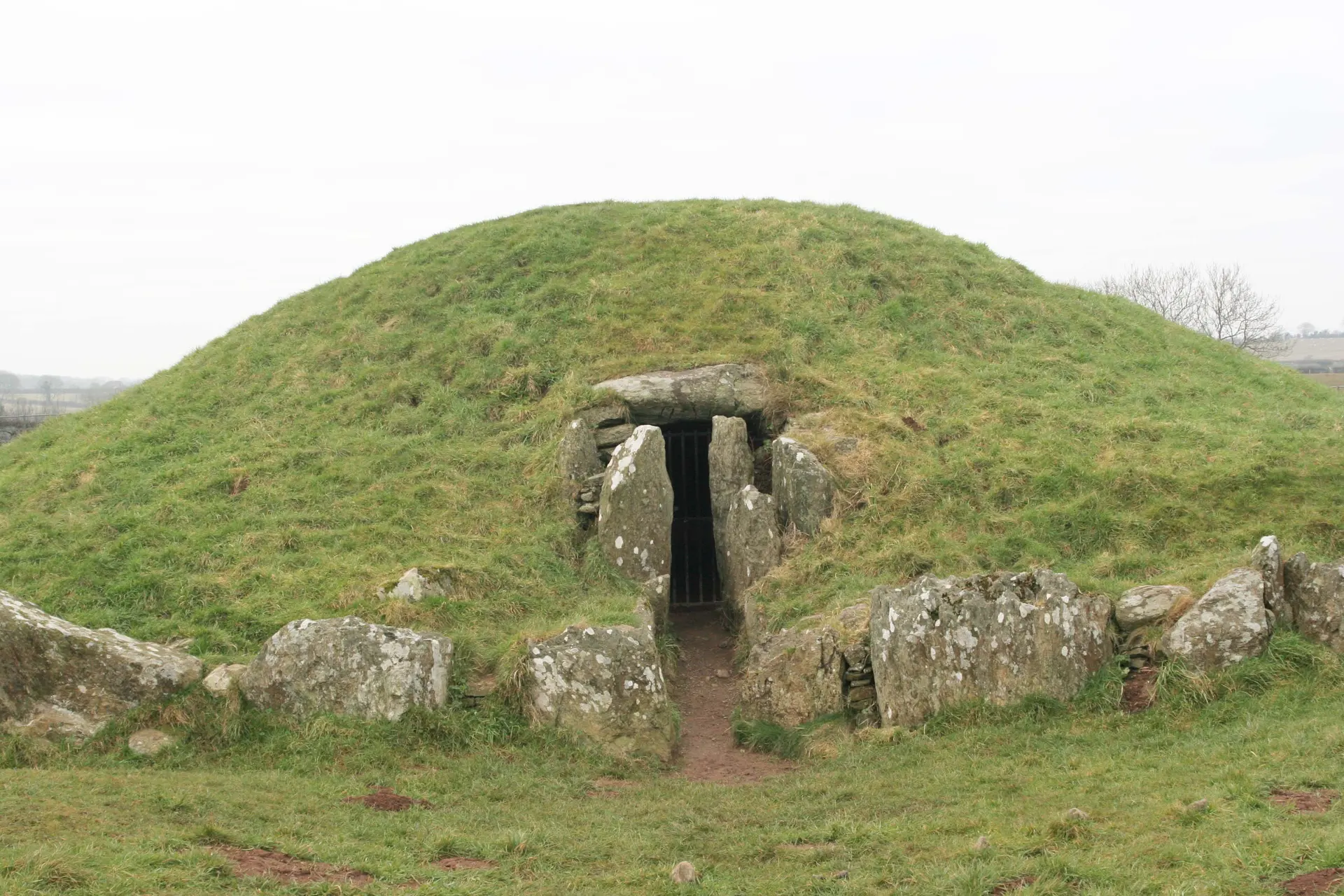
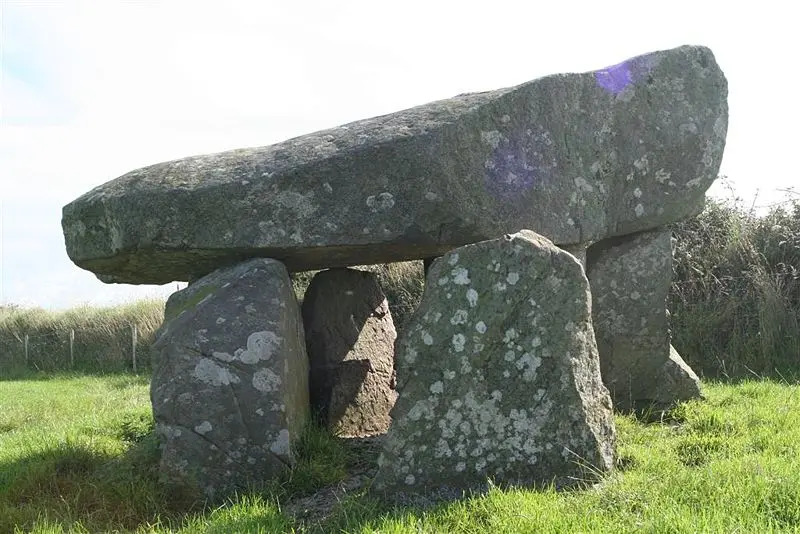
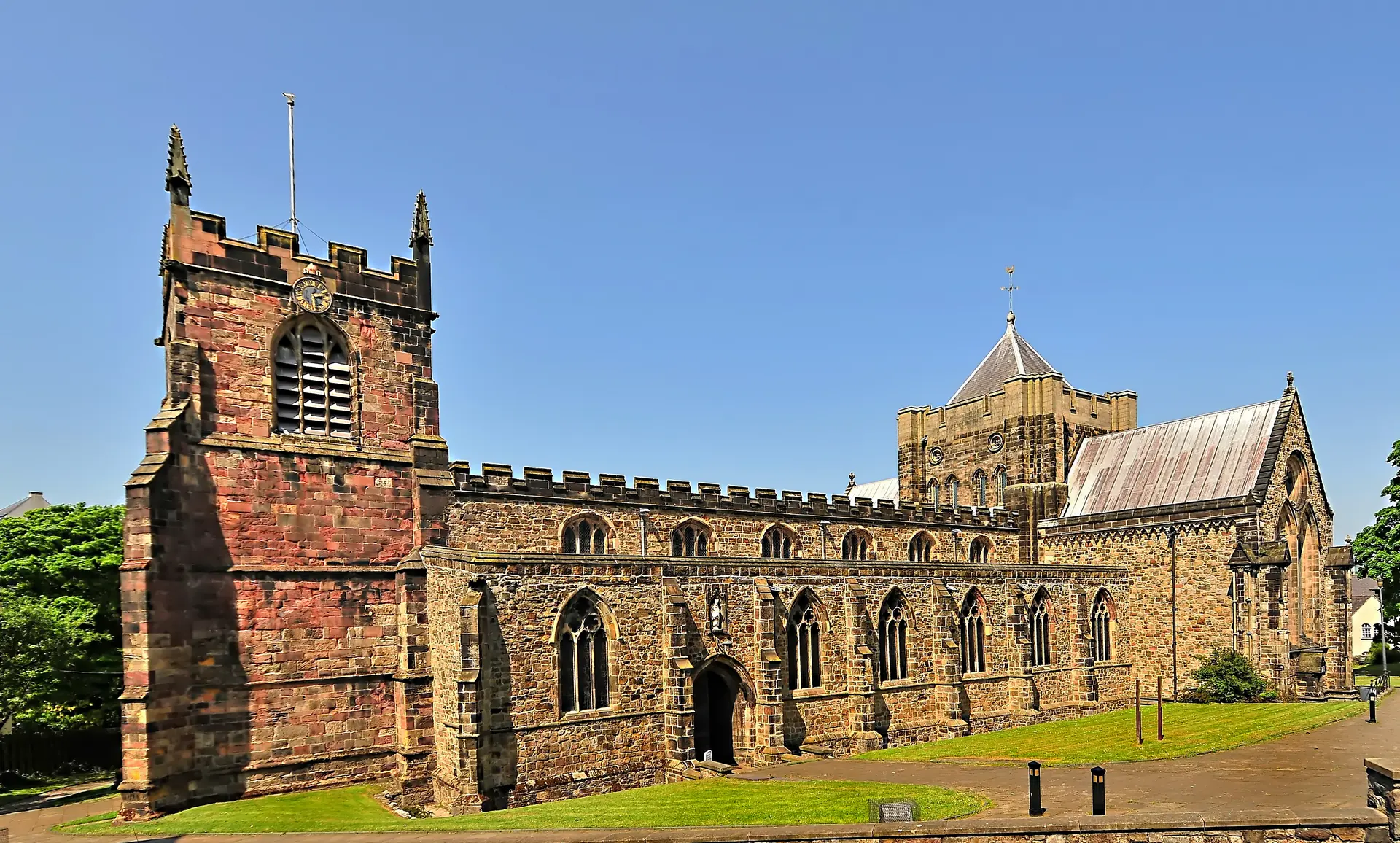
Explore other sacred places in the region. Proximity does not establish access or travel time; check each place’s guidance.
References
Sources consulted for this page. Source categories describe the publication, not a guarantee that every claim is verified. Traditional accounts and outside interpretations may differ.
- 01Bodowyr Chambered Tomb — Cadw (Welsh Heritage)officialOfficial Welsh heritage body managing the site
- 02Bodowyr Burial Chamber — Anglesey HistoryofficialLocal heritage organization with detailed site information
- 03Bodowyr Passage Grave — The Megalithic PortalSource contextDetailed archaeological and field notes
- 04Bodowyr — The Modern AntiquarianSource contextComprehensive megalithic site documentation
- 05Bodowyr Burial Chamber - Historic Anglesey Guide — Britain ExpressSource contextVisitor information and historical context
- 06The burial tombs of Stone Age Wales — Museum WalesofficialContext for Welsh Neolithic burial traditions
- 07Anglesey Druid Order — Anglesey Druid OrderofficialContemporary druidic practice on Anglesey
- 08Mona Antiqua Restaurata by Henry Rowlands — Museum WalesofficialHistorical antiquarian context
- 09Bodowyr — WikipediaencyclopediaWell-referenced article on the burial chamber
- 10Bodowyr Burial Chamber Reviews — TripAdvisorguideVisitor experience accounts
- 11Bodowyr - Neolithic tomb — Medieval HeritageSource contextDetailed architectural description
- 12The Druid Islands: A Sacred Pilgrimage To Anglesey And Holy Isle — Sacred TreksSource contextSpiritual pilgrimage context for Anglesey
Share a photo
Help visitors recognize Bodowyr Dolmen. Every submission is reviewed before publication.