Blackhammer Chambered Cairn
A Neolithic stalled cairn of modest scale and quiet presence, sheltering just two individuals in seven stone compartments for five thousand years
Understand sacred places, explore living traditions, and learn how to engage respectfully with Pilgrim Map.
Access has not been verified. Check current local guidance before planning a visit.
Rousay, Scotland, United Kingdom
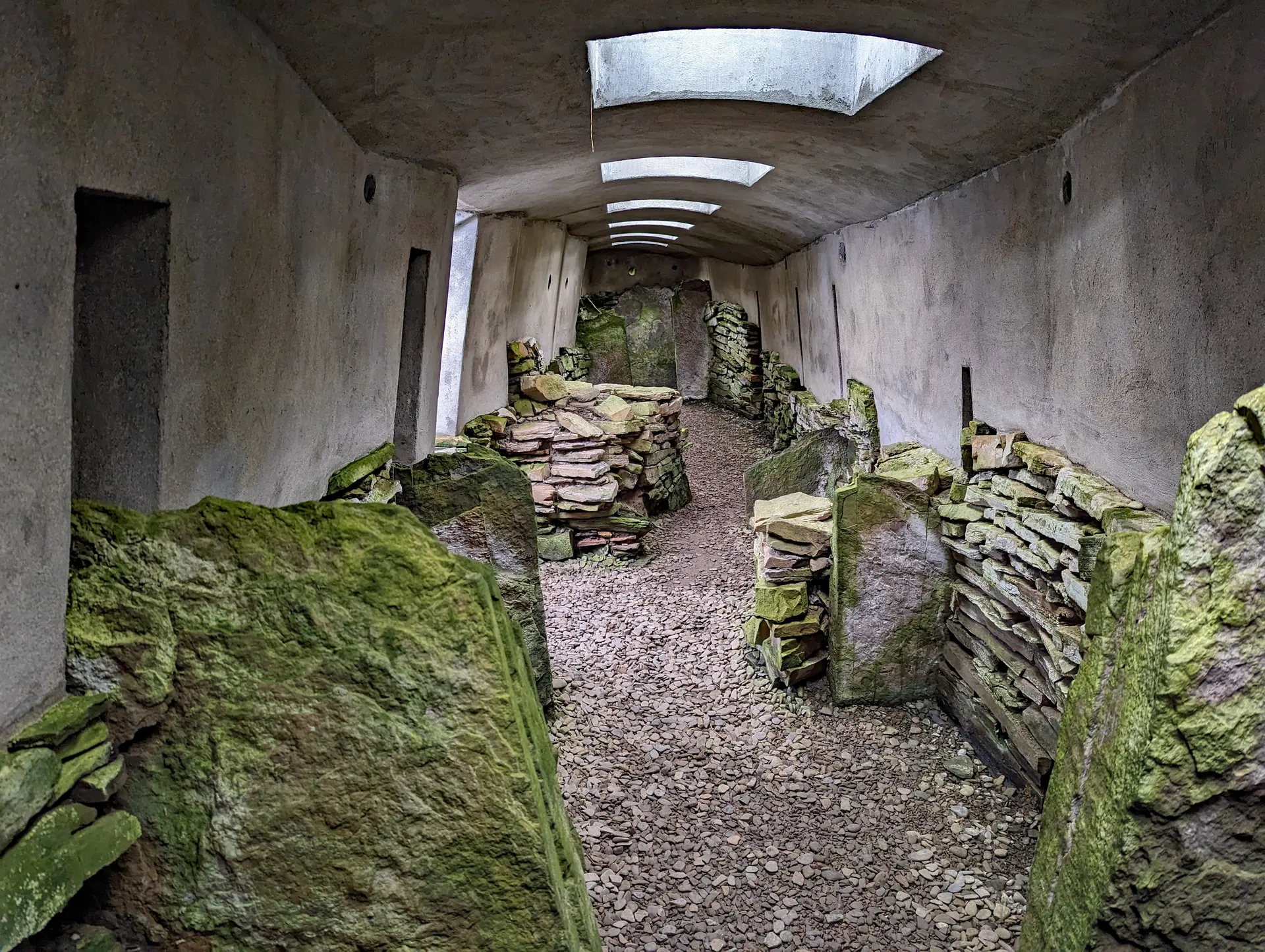
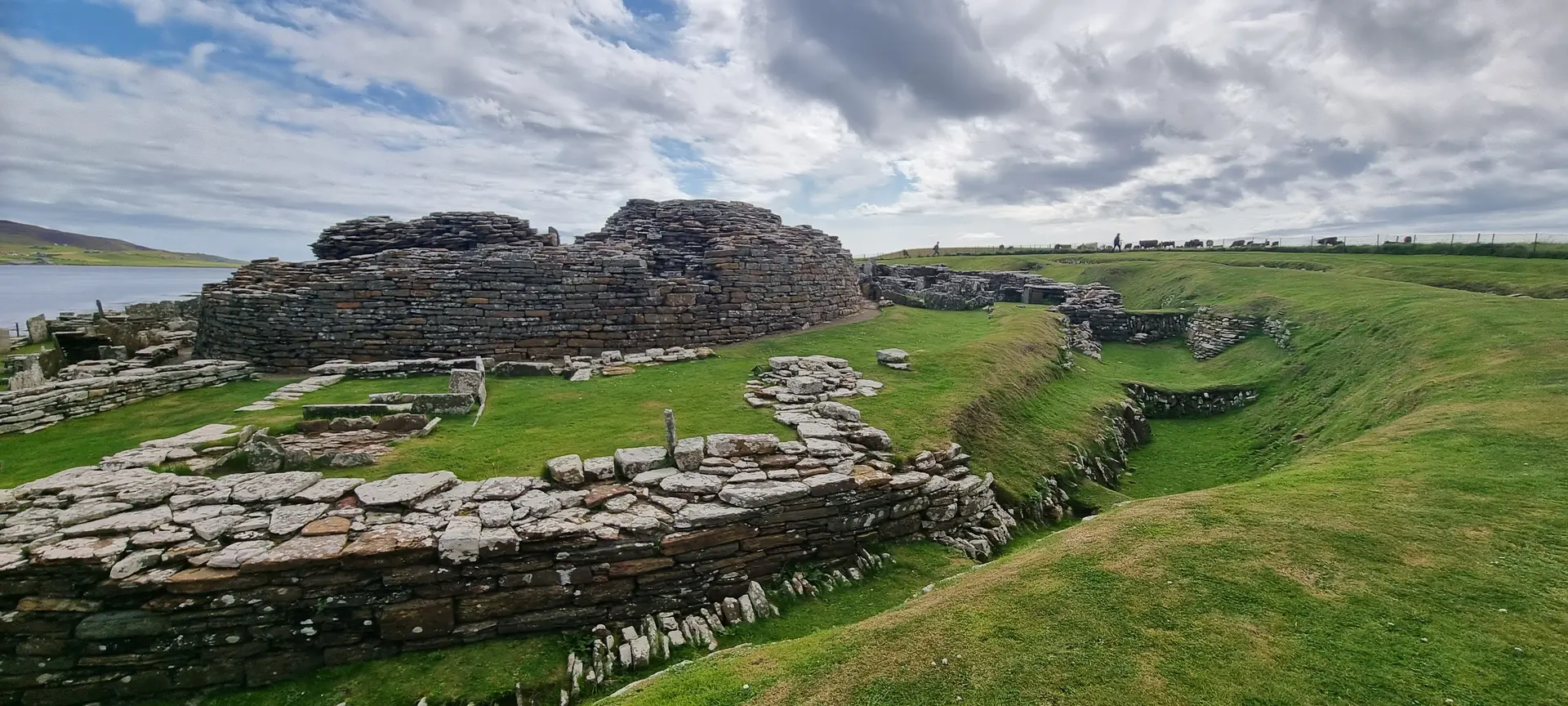
Image of Blackhammer Chambered Cairn. Image source · CC-BY-SA-4.0
Visit essentials
A quick read before you go
- Duration
- Thirty minutes to an hour, combined with the hillside climb to the Knowe of Yarso.
- Access
- Located on the B9064 road on Rousay's southern coast.
Overview
Blackhammer is quieter than Rousay's larger cairns: Midhowe overwhelms by scale and Yarso intrigues with deer skulls, while this carefully built stalled chamber runs just over thirteen metres through seven compartments. It held the remains of two individuals across what may have been centuries of use.
Callander and Grant excavated it in 1936, finding one skeleton in the blocked entrance and another in the westernmost compartment, with burnt bird and mammal bones, flint and stone tools, and Neolithic Unstan Ware sherds.
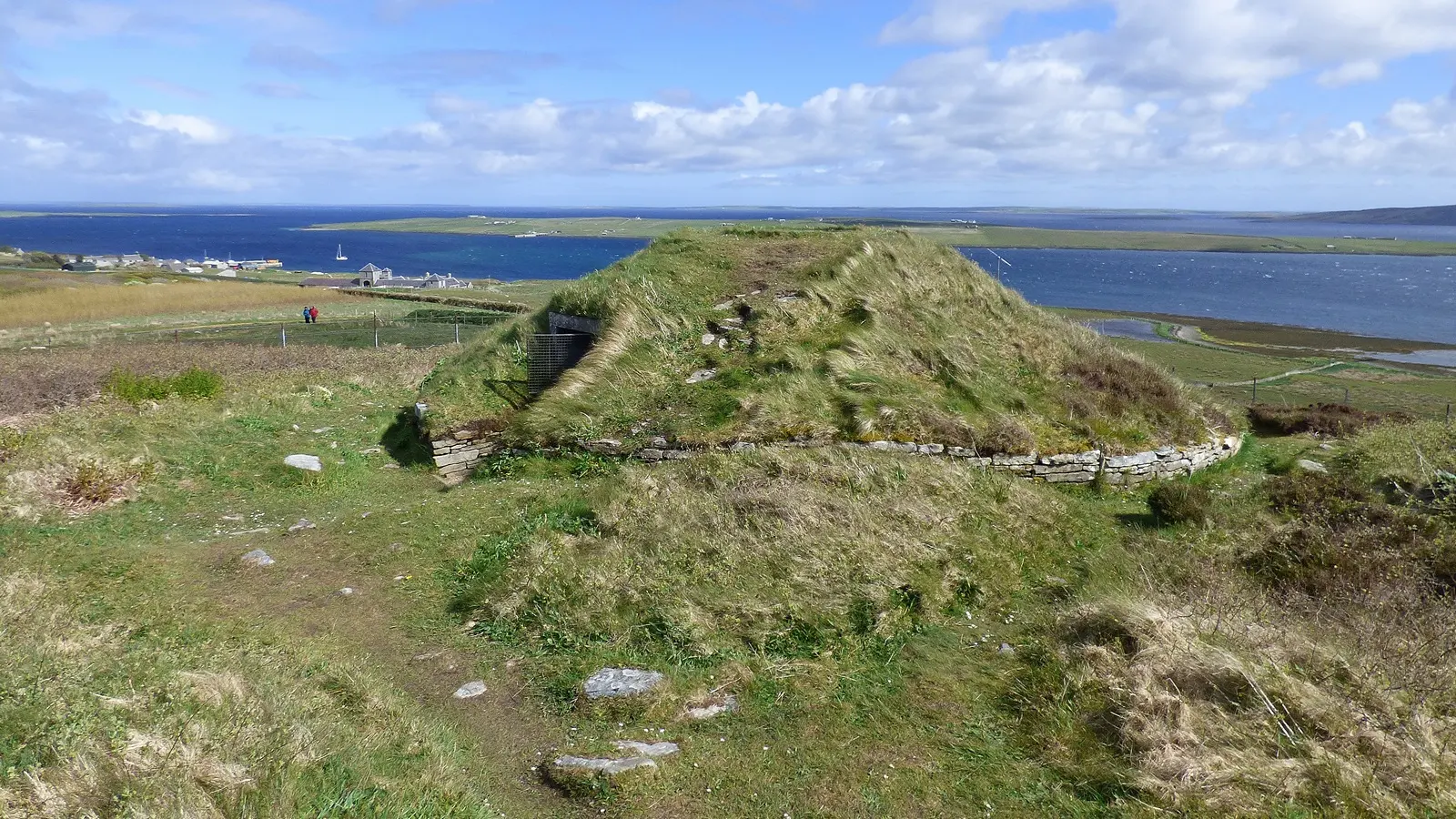
Midhowe held twenty-five people in twelve compartments and Yarso twenty-nine; Blackhammer's two in seven may reflect a smaller or more exclusive community, later bone removal, or an incomplete archaeological record. Its oblong exterior, approximately 22.5 metres by nearly 9 metres, surrounds the modest chamber with thick walls and cairn material, evidence of substantial communal labour devoted to protection and permanence. A modern shelter now keeps the stalled interior visible and accessible, its stone compartments intact after five millennia.
Why this place is sacred
The thinness at Blackhammer is intimate rather than monumental. The small chamber, its seven compartments visible and comprehensible at a glance, creates a human-scaled encounter with Neolithic mortality. You are not looking at a mass burial or a grand architectural statement. You are looking at a space built for a community that chose to house its dead with the same care and skill as larger communities, but on a smaller scale.
The presence of only two known burials sharpens this intimacy. Where larger cairns present the dead as a collective, Blackhammer allows you to contemplate individuals. Someone placed a body in the entrance, and someone placed another in the westernmost compartment. The five intervening compartments were either empty or their contents were removed at some point in the five thousand intervening years.
The burnt bird and mammal bones found alongside the human remains hint at rituals involving fire, feasting, or sacrifice. The Unstan Ware pottery connects this small cairn to the broader Orkney Neolithic tradition, reminding us that even this modest tomb participated in a culture that spanned the archipelago.
The protective shelter creates a quiet, enclosed space. Within it, the cairn exists in a state of preserved stillness, insulated from the Orkney wind. The light is even. The stone is cool. There is a simplicity here that some visitors find more moving than the grander spectacles elsewhere on Rousay.
Blackhammer functioned as a communal burial monument for a Neolithic farming community. The stalled design, consistent with other Orkney-Cromarty cairns, was engineered for the placement of the dead in stone compartments. Whether the cairn was intended for a smaller community or simply received fewer burials than expected is unknown.
Built during the Neolithic period, approximately 3000 BCE. Excavated in 1936 by Callander and Grant. The site came under state guardianship and a protective shelter was constructed. Now managed by Historic Environment Scotland.
Experience and orientation
The cairn lies a short distance from the road, making it one of the easiest archaeological sites on Rousay to reach. This accessibility belies the depth of the experience within.
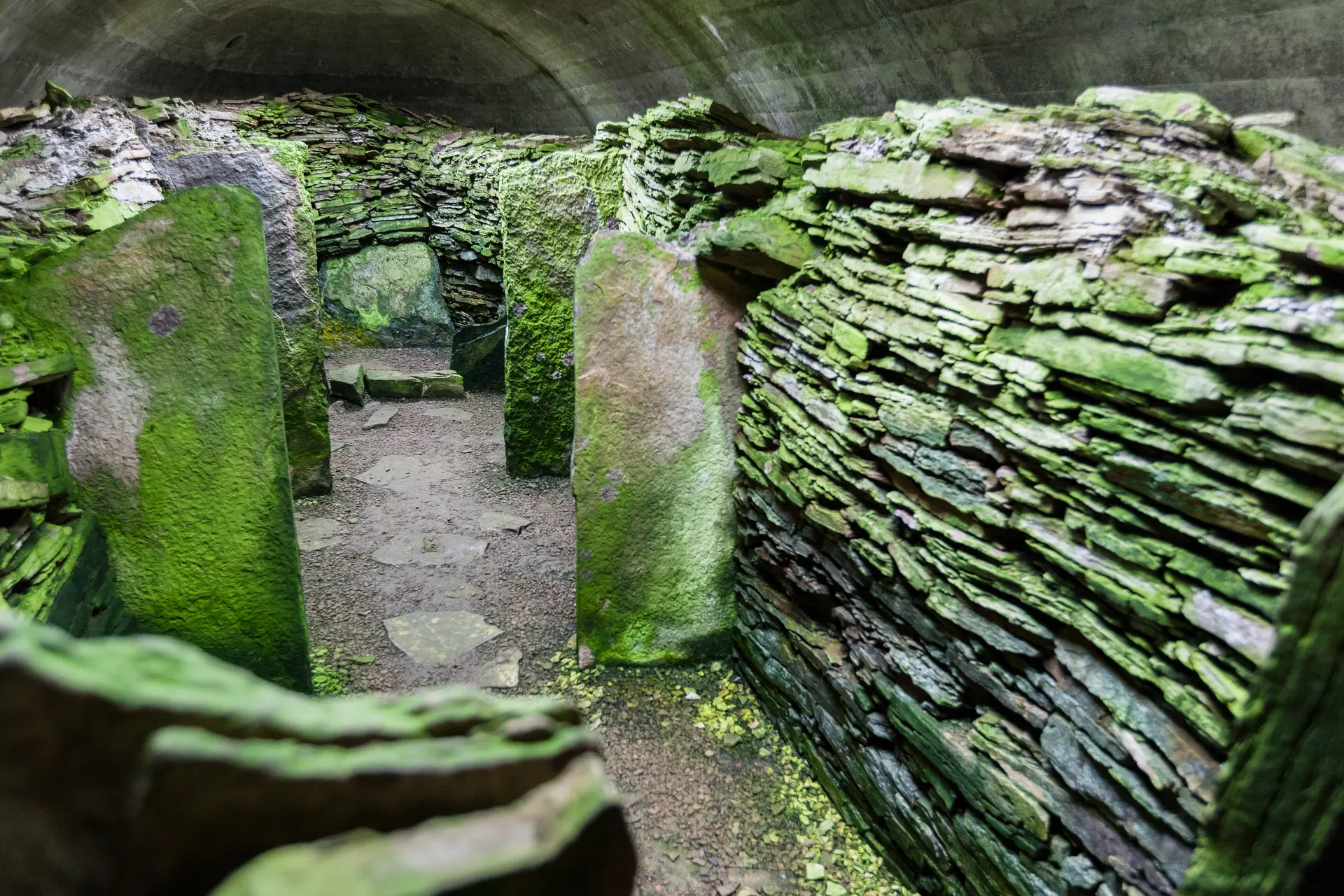
Entering the protective shelter, you find the cairn's interior exposed and intact. The seven compartments march in sequence down the chamber, divided by upright slabs whose placement demonstrates the careful stone-working of the Neolithic builders. The proportions are human: the chamber is about two metres wide and two metres high, a space you could stand in, a space designed for human occupation, though not for the living.
The two burial locations are identifiable. One skeleton was found in the blocked entrance, the other in the westernmost compartment, the furthest point from the entrance. Whether this placement carried significance, the first to die nearest the threshold, the last in the innermost chamber, or whether it simply reflects the random circumstances of death and burial, cannot be determined.
The Unstan Ware pottery found here connects Blackhammer to the wider Orkney Neolithic world. This distinctive pottery style, with its round bases and incised decoration, has been found across the archipelago, at Skara Brae, Maeshowe, and other sites. To see its traces at this small cairn is to understand that even the most modest Rousay communities participated in a shared culture.
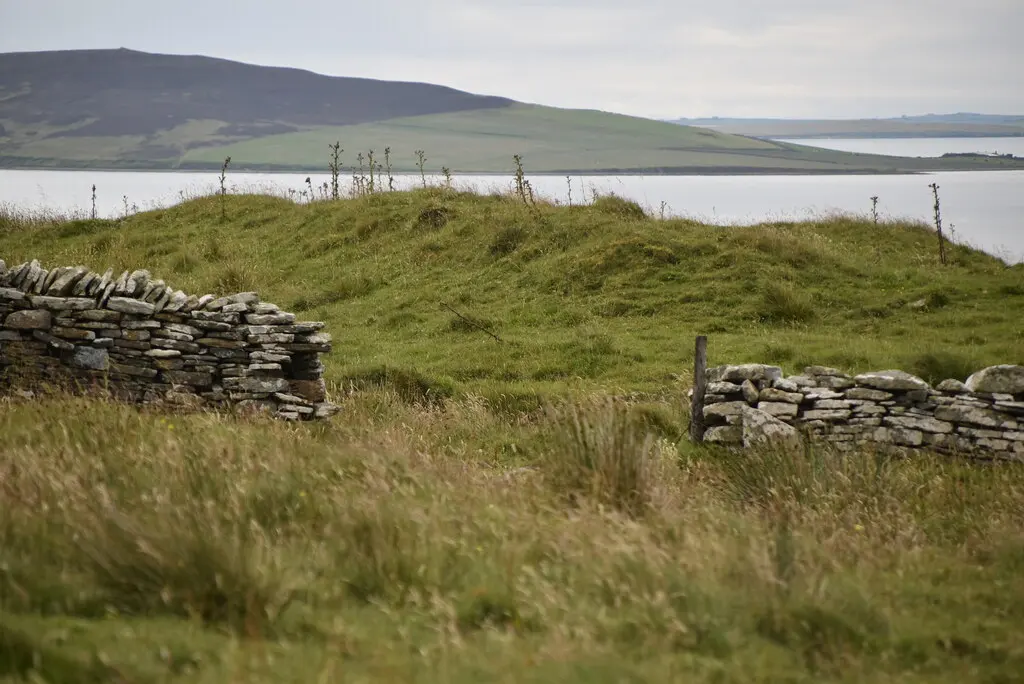
Outside the shelter, the southern coast of Rousay stretches in both directions. The views across Eynhallow Sound are fine, and other cairns are visible along the coast. The Knowe of Yarso sits on the hillside above, offering a more demanding but rewarding extension to the visit.
Blackhammer is located on the B9064 road along Rousay's southern coast, east of the Knowe of Yarso and west of Taversoe Tuick. A small layby provides parking near the site. The cairn is a short, manageable walk from the road, making it accessible to most visitors.
Context and lineage
No origin narrative survives. The cairn was constructed by Neolithic farming communities as part of Rousay's dense concentration of chambered tombs. Its position on the southern coast, with views across Eynhallow Sound, is consistent with the broader pattern of cairn placement on the island.
No continuous tradition connects the present to the Neolithic builders. The site is managed as a heritage monument.
J. Graham Callander
Walter Grant
Traditions and practice
Neolithic burial practices at Blackhammer involved placing the dead within the stalled compartments. Burnt bird and mammal bones suggest rituals involving fire. Unstan Ware pottery and flint and stone tools were deposited with the burials. The blocking of the entrance after the final burial suggests a deliberate closure of the tomb.
No active spiritual practices are maintained at the site. Visitors engage with Blackhammer as an archaeological monument.
The intimate scale of Blackhammer rewards close observation. Examine the construction of the stalls, the placement of upright slabs, the proportions of the chamber. Consider the two individuals who were laid here and the community that built this structure for them.
Neolithic Orkney-Cromarty Burial Tradition
HistoricalBlackhammer exemplifies the stalled cairn tradition at a modest scale. Its seven compartments, Unstan Ware pottery, and careful construction connect it to the broader Orkney Neolithic cultural sphere while its small number of burials distinguishes it from the island's larger tombs.
Burial of the dead in stalled compartments. Deposition of burnt animal bones, stone tools, and pottery. Deliberate blocking of the entrance after the final use.
Perspectives and open questions
Blackhammer invites reflection on scale and significance. A modest tomb in a landscape of grander monuments, it raises the question of whether intimacy and care are diminished by smaller numbers.
Scholarly perspective
Archaeologists classify Blackhammer as an Orkney-Cromarty type stalled cairn dating to approximately 3000 BCE. The 1936 excavation by Callander and Grant found remains of two adults alongside burnt bird and mammal bones, flint and stone tools, and Unstan Ware pottery. The small number of burials relative to the number of compartments has been variously interpreted: the cairn may have served a smaller community, bones may have been removed over time, or the excavation may have missed deposits.
The external dimensions of the cairn (22.5 by 8.9 metres) are disproportionately large relative to the internal chamber, suggesting the exterior massing carried its own significance.
Living and traditional perspectives
No oral tradition survives from the Neolithic builders. The beliefs that motivated the construction and use of Blackhammer are irrecoverable.
Alternative interpretations
Some visitors interested in megalithic sites read the stalled cairn design as symbolically representing the passage from life to death, with each compartment marking a stage of the journey. The small number of burials at Blackhammer has led to speculation about selective burial practices or the cairn's possible use for purposes beyond simple interment. These interpretations remain speculative.
Open questions
Why only two individuals were found in seven compartments is the central question. Whether the cairn's entrance was blocked while compartments remained empty, or whether contents were removed at some point, cannot be determined from the archaeological record. The significance of the burnt animal bones, whether representing offerings, feasting, or some other practice, remains unknown.
Plan your visit
Access and arrival
Located on the B9064 road on Rousay's southern coast. A small layby provides parking. Short walk to the cairn. Rousay is reached by ferry from Tingwall on Mainland Orkney (approximately thirty minutes).
Limited accommodation on Rousay. More options in Kirkwall on Mainland Orkney.
Respectful visit
No special requirements for the cairn itself. Sturdy footwear recommended for the surrounding terrain.
Photography permitted throughout. The sheltered interior provides good lighting conditions.
Not appropriate at a heritage monument.
Do not climb on or disturb the cairn structure. Do not remove any material.
The protective shelter limits the need for weather preparation at the cairn itself, but the approach and the broader Rousay landscape require sturdy footwear and weather-appropriate clothing.
Current practical details
Address
B9064, Orkney KW17 2PT, UK
Hours
Hours, fees, and access can change — verify on the official source before you travel. Practical details last checked Jun 2026.
Location
Map loads as you approach this section.
Pilgrim reflections
A portrait of encounter, not a score
Pilgrims describe what they felt, how present they could become, and whether the place would shape a journey. There are no stars and no ranking of traditions.
No reviewed reflections yet
The first pilgrims can help describe the character of being here.
Share a reflection
Available after an account-backed “Been there.” Every reflection is reviewed before publication.
Nearby sacred places
Explore other sacred places in the region. Proximity does not establish access or travel time; check each place’s guidance.
Share a photo
Help visitors recognize Blackhammer Chambered Cairn. Every submission is reviewed before publication.