Camster Cairns
Neolithic burial chambers rising from Scotland's ancient peatlands, where you can crawl into spaces untouched for five thousand years
Understand sacred places, explore living traditions, and learn how to engage respectfully with Pilgrim Map.
Access has not been verified. Check current local guidance before planning a visit.
Lybster, Scotland, United Kingdom
Read the sources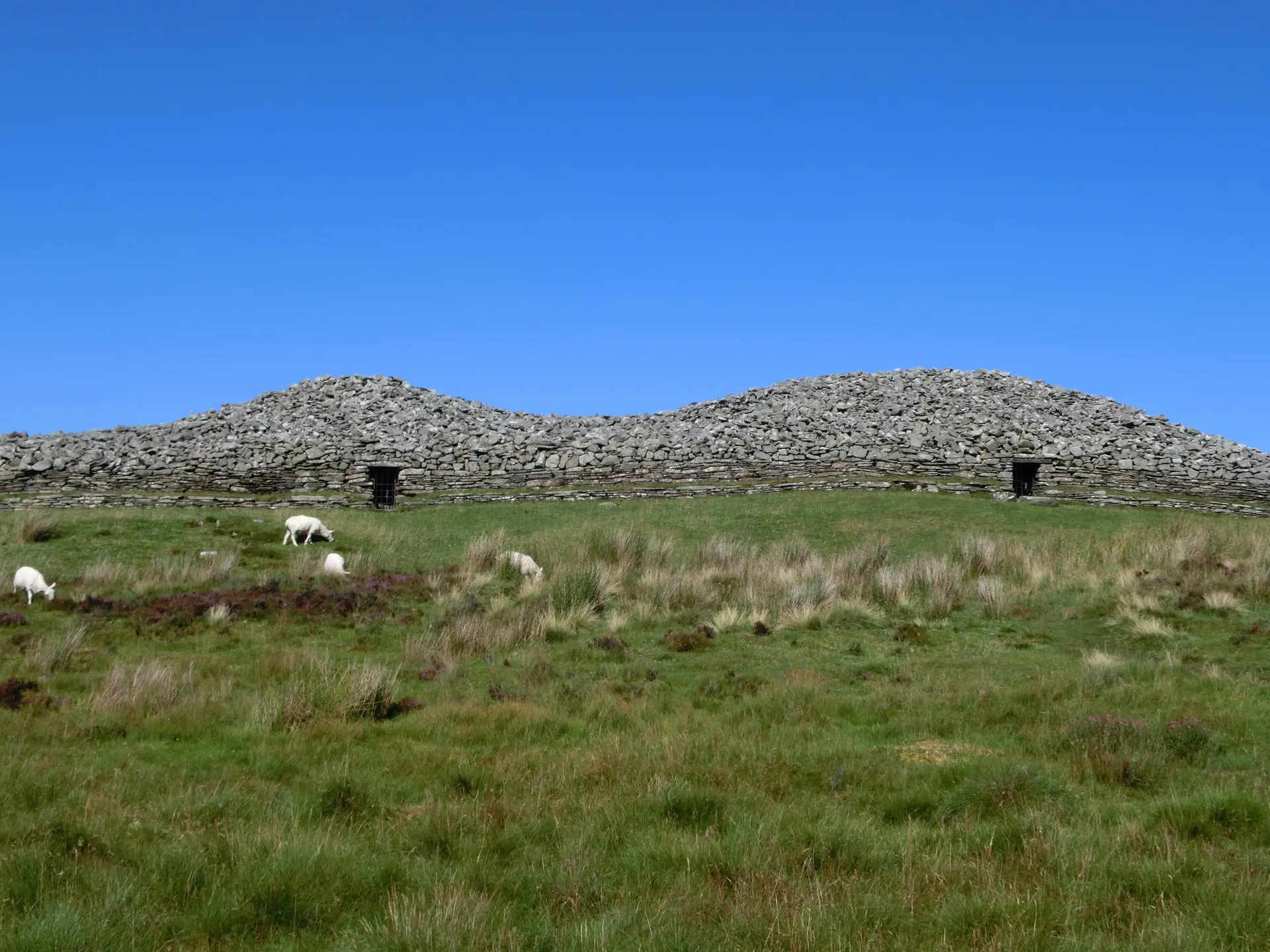
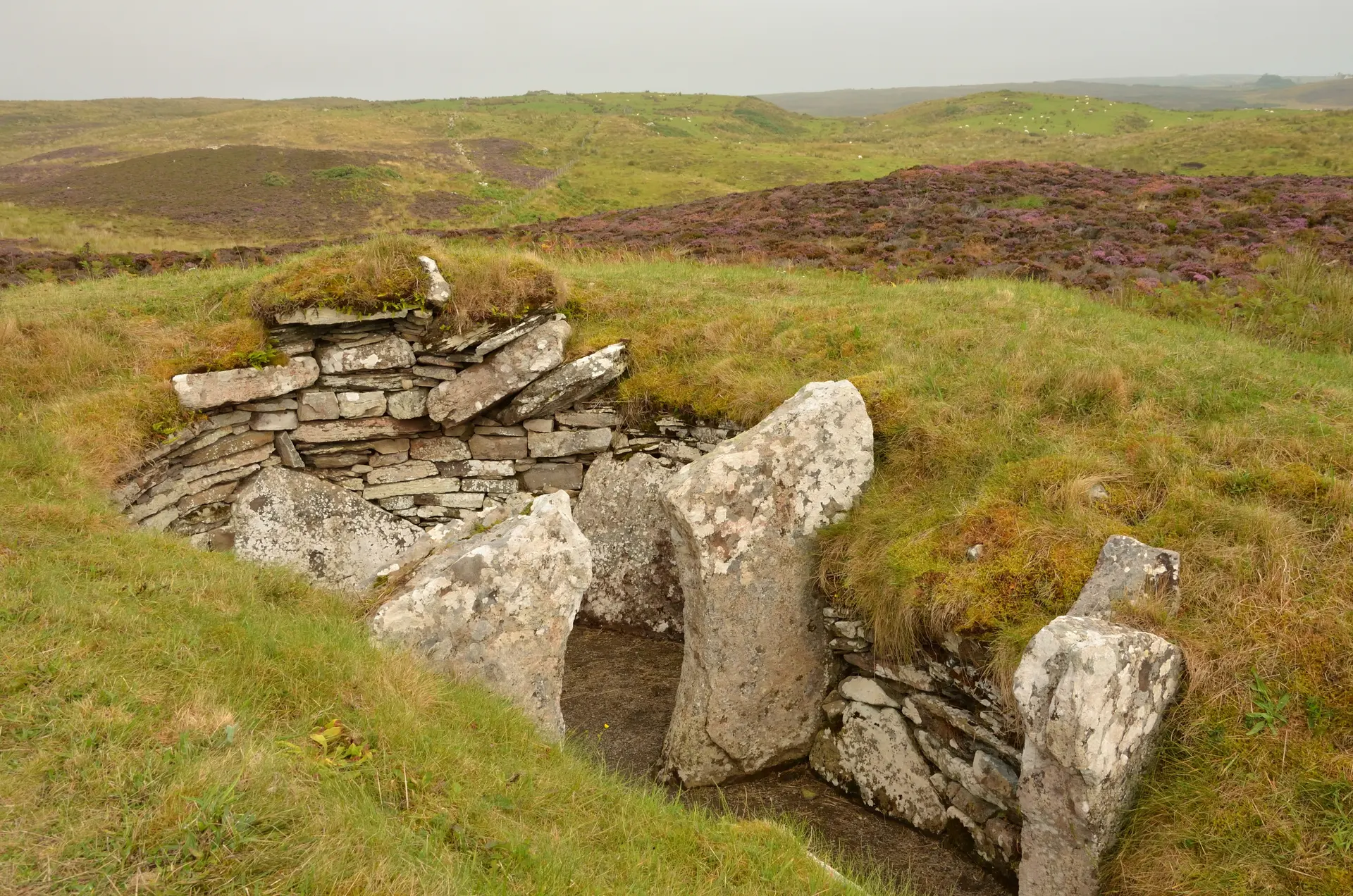
Image of Camster Cairns. Image source · CC-BY-SA-3.0
Visit essentials
A quick read before you go
- Duration
- Forty-five minutes to one hour permits full exploration of both cairns, entry into all…
- Access
- The cairns lie approximately eight miles south of Watten and five miles north of Lybster on an…
Overview
Something about the Camster Cairns defies the passing of millennia. These two stone monuments, the Round and the Long, have held their shape through five thousand Scottish winters, through the rise and fall of civilizations, through everything that has happened in human history since their creation. They predate the pyramids. They are older than Stonehenge. And they remain astonishingly intact.
What draws seekers here is not merely age but access. At most ancient monuments, visitors observe from outside, kept at respectful distance by ropes or barriers. Camster invites you in. The passages are narrow, requiring hands-and-knees crawling over stone worn smooth by time, but they lead to interior chambers that have changed little since Neolithic hands placed the last capstone.
Modern skylights now admit pale northern light, but the essential experience remains: you are inside a space created five thousand years ago to house the honored dead.
The landscape amplifies the encounter. The Flow Country surrounding these cairns is Europe's largest blanket bog, a treeless expanse of peat and heather that earned UNESCO World Heritage status in 2024. There are no crowds here, no tour buses, often no other visitors at all. The wind moves across the bog. A curlew calls. And the cairns sit in their hollow, grey against grey sky, as they have since before memory.
Why Neolithic builders chose this particular spot remains unclear. Most cairns occupy prominent hilltops; these nestle in a hollow near the source of the River Wick. Perhaps the water source held significance. Perhaps the location connected to beliefs we cannot reconstruct. The honest answer is that we do not know. This uncertainty is part of what makes Camster powerful. The cairns pose questions they will never answer.
Places within this site
Why this place is sacred
The concept of thin places describes locations where the boundary between ordinary experience and something larger grows permeable. Camster embodies this quality through several interlocking factors.
The first is sheer age. These cairns were constructed when Britain was emerging from the Stone Age, when farming was still new, when metal remained unknown. The people who built them are utterly lost to us. We cannot name them, speak their language, or reconstruct their worldview with any certainty. Yet their intention persists in every carefully placed stone. To touch these walls is to touch the work of hands that moved five thousand years ago.
The second factor is the passage experience itself. Crawling through the low entrance into the cairn chambers creates a liminal transition that standing at a monument's edge cannot provide. The passage is dark, confined, requiring effort. You move from open sky into enclosed stone, from light into shadow. When you emerge into the corbelled chamber, able to stand again, something has shifted. The architecture enforces a kind of ritual, whether or not you consciously engage with it.
The third factor is what the chambers were. These were not storage spaces or dwellings. They were houses for the dead, places where Neolithic communities interred their honored ancestors. Archaeological evidence suggests bodies were placed here in sitting positions, legs apparently removed, accompanied by pottery, tools, and the remains of animals. Whatever beliefs accompanied these practices are lost, but the function is clear: this was sacred space, threshold space, where the living encountered the dead.
Finally, the landscape matters. The Flow Country offers no distraction. There are no buildings visible, no traffic sounds, often no other people. The bog stretches to the horizon under an enormous sky. This emptiness creates a container for contemplation that busier sites cannot offer. At Camster, you are alone with the stones, alone with questions about mortality and meaning that humans have asked since we became human.
The Grey Cairns of Camster served as communal burial sites for Neolithic farming communities. Archaeological excavation has revealed human remains placed in sitting positions, often without leg bones, suggesting complex mortuary practices. Offerings of pottery, flint tools, and animal remains indicate the burials were accompanied by ritual. The elaborate construction, spanning generations, reflects beliefs about death and ancestors that we cannot fully reconstruct.
These were likely not merely tombs but sacred spaces where the living maintained connection with those who had died.
The cairns' meaning has shifted across five millennia. For their Neolithic builders, they were active sacred sites, places of ongoing ritual and ancestor veneration. Over the following centuries, the passages were blocked with stones, possibly to seal the sacred space. The site eventually fell out of active use, becoming simply part of the landscape. Local folklore emerged associating Caithness cairns with giants, whose spirits were said to wander the sites during full moons.
In 1865 and 1866, Joseph Anderson and Robert Shearer conducted the first archaeological excavations, beginning the process of scientific documentation. The cairns entered public guardianship in 1959 and underwent conservation work through the 1970s and 1980s. Modern skylights were installed to allow visitor access. Today Camster functions as a heritage site managed by Historic Environment Scotland, visited for archaeological interest, contemplation, and encounter with deep time.
Experience and orientation
The approach to Camster sets the tone. A narrow single-track road winds through peatland, past occasional sheep, into apparent emptiness. When the cairns finally appear, they seem almost modest: low stone mounds in a hollow, less dramatic than many visitors expect. This modesty is deceptive. The power reveals itself through engagement rather than spectacle.
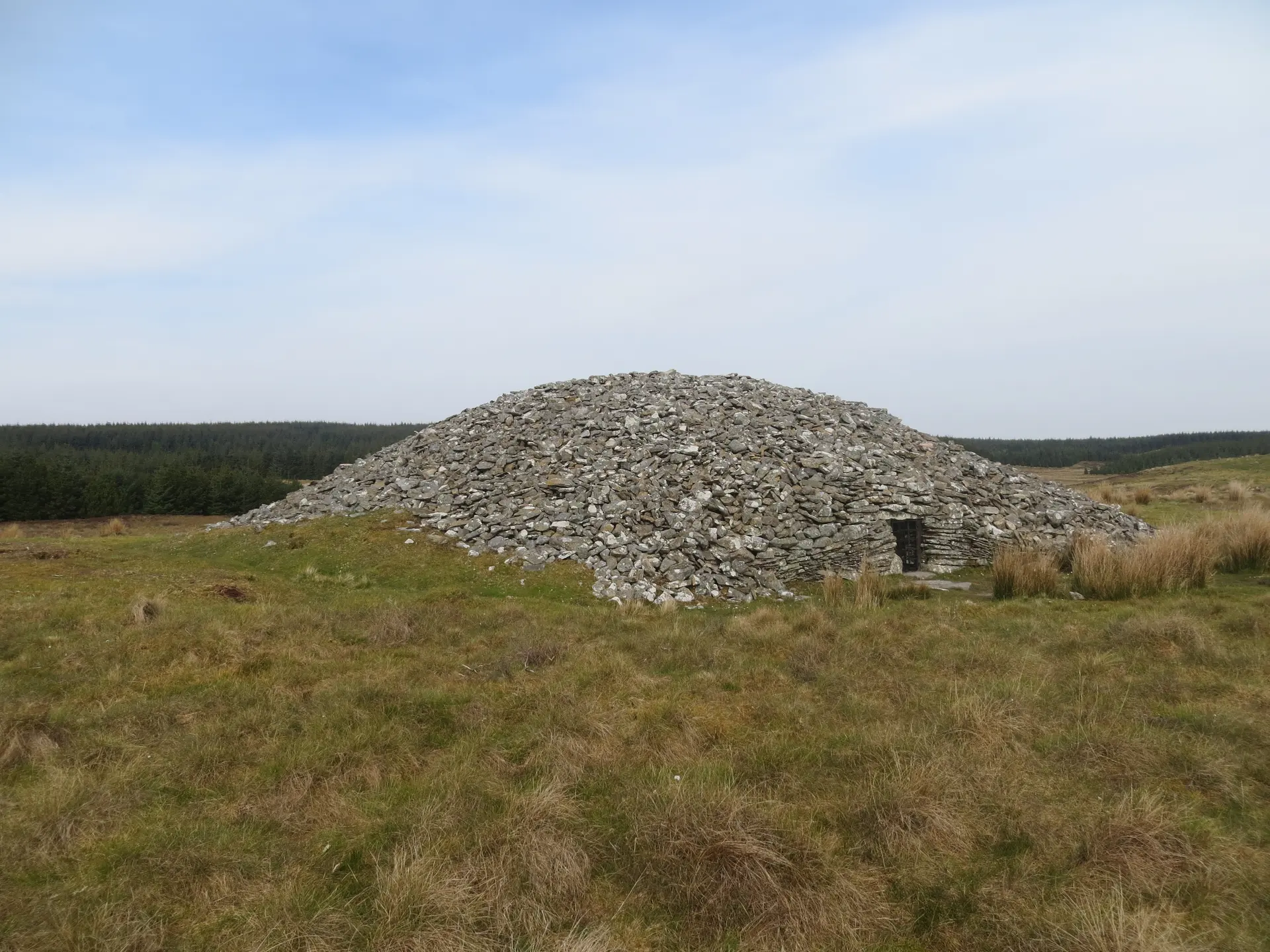
Camster Round is the smaller of the two, a circular mound roughly eighteen meters across. Its passage faces east-southeast, a narrow opening that requires crawling. The passage extends six meters, less than a meter high, over gritty stone. A torch is essential; the interior is genuinely dark. When you emerge into the central chamber, you can stand. The corbelled ceiling rises above you, stones overlapping inward to form a vault.
Skylights installed during conservation allow some illumination, but the essential character of the space remains: enclosed, still, ancient.
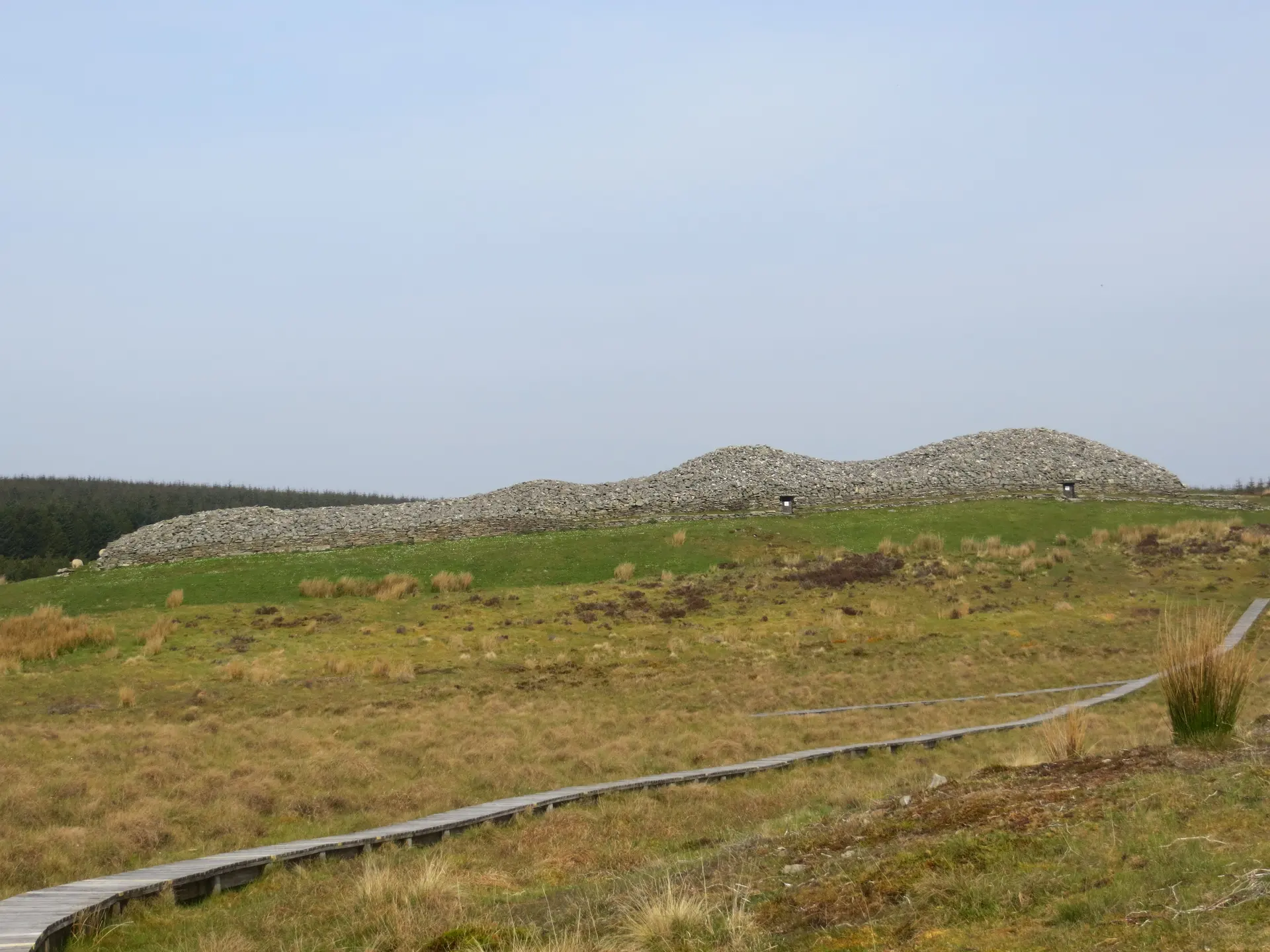
Camster Long stretches nearly seventy meters, a boat-shaped mound with projecting horns at each end. It appears to incorporate two originally separate round cairns, later merged into one structure for reasons we cannot determine. Two burial chambers are accessible through separate passages. The experience of entering is similar: the narrow crawl, the emergence into vaulted space, the sense of having crossed a threshold.
What visitors report varies. Some describe physical sensations: a change in temperature, a particular quality of stillness. Others speak of emotional responses: unexplained tears, a sense of presence, feelings of peace or solemnity. Many simply note the strangeness of standing inside something so old, of touching stones placed by people who lived before the invention of writing. The experience does not require spiritual framing to feel significant. The sheer fact of the thing is enough.
The surrounding landscape participates in the encounter. After emerging from the chambers, visitors often walk the paths between the cairns, taking in the expanse of bog and sky. There is nothing else here. The modern world falls away. Whatever you brought with you, whatever concerns or distractions, they seem less urgent in this ancient emptiness.
Visitors typically arrive at the small car park and follow the boardwalk across the marshy ground to the cairns. Camster Round lies closer; most begin there. The passage entrance is obvious, a dark opening in the stone. Before entering, ensure you have a torch (flashlight) and are prepared for the crawl. Knee pads or sturdy trousers help, as does acceptance that you will get somewhat dirty. After exploring Round, the boardwalk continues to Camster Long.
Both chambers are worth entering if mobility allows. Allow at least forty-five minutes for a full exploration, longer for photography or contemplation. The site has no facilities; plan accordingly. For the fullest experience, arrive when no other visitors are present, most likely early morning or on overcast weekdays.
Context and lineage
The builders of Camster left no written records. We know them only through what they constructed and what remains inside. They were early farmers who had arrived in northern Scotland perhaps a thousand years before the cairns' construction, bringing with them continental traditions of monumental tomb-building. Over generations, they quarried stone, shaped it, dragged it to this hollow near the River Wick's source, and assembled it into chambers meant to last forever. The labor was immense.
The stones of Camster Round alone weigh hundreds of tonnes in aggregate. That such effort was expended speaks to the profound importance these communities placed on proper treatment of the dead. Beyond this, honest archaeology cannot go. Their beliefs, their rituals, their understanding of what they were creating: all this is genuinely lost.
Camster's lineage is one of discontinuity. The Neolithic communities who built and used the cairns are utterly unknown to us. No oral tradition survives, no mythology connects contemporary peoples to these builders. The cairns simply persisted through millennia, eventually becoming objects of curiosity for antiquarians and then archaeologists. Today they are managed by Historic Environment Scotland as heritage sites. No continuous spiritual tradition links present to past here.
What remains is the physical monument itself, and the questions it poses to anyone who enters.
Joseph Anderson
Robert Shearer
John Corcoran
Lionel Masters
Traditions and practice
Archaeological evidence provides glimpses of Neolithic practice. Bodies were placed in the chambers, apparently in sitting positions with legs removed or decayed before interment. Burnt bones and ash suggest some remains were cremated. Pottery vessels, flint tools, and bones from horses, oxen, pigs, and deer were included as offerings or provisions for the dead. The passages were eventually blocked with stones, possibly to seal the sacred space.
These practices suggest beliefs about death and afterlife that centrally involved ancestor veneration, but the specific rituals and their meaning remain matters of scholarly interpretation.
No organized ceremonies or rituals occur at Camster. The site receives visitors who come for various reasons: heritage tourism, archaeological interest, photography, personal reflection. Some visitors may engage in their own spiritual practices within the chambers, but these are individual rather than communal.
For those approaching Camster as a contemplative experience rather than merely an archaeological visit, certain approaches may deepen engagement. Take time before entering the passage to pause and recognize what you are about to do: enter a space created five thousand years ago to house the dead. Move through the passage slowly, aware of the transition from outside to inside, from light to dark. Once in the chamber, simply be present. Notice what you notice.
Some find it meaningful to speak aloud, acknowledging the place and those who were once here. Others prefer silence. After emerging, take time to walk the landscape, to let the experience settle. There is no correct practice. The site accommodates whatever you bring to it.
Neolithic Funerary Practice
HistoricalThe Grey Cairns of Camster were central to the funerary and spiritual practices of Neolithic farming communities in northern Scotland. They served as communal burial sites where multiple individuals were interred over extended periods, reflecting beliefs in ancestor veneration and the continuing presence of the dead.
Archaeological evidence indicates bodies were placed in the chambers in sitting positions, apparently without leg bones. Remains of burnt bones, ash, pottery, flint tools, and animal bones suggest complex funerary rituals possibly involving cremation, feasting, and offerings. The passages were eventually blocked with stones.
Neolithic Ancestor Veneration
HistoricalIn Neolithic Scotland, ancestor worship appears to have been central to spiritual life. The elaborate construction of chambered cairns reflected the belief that the dead held immense significance and required proper treatment. These monuments served as places where ancestors could be honored and perhaps consulted.
Practices likely included periodic visits to tombs, offerings to ancestors, and rituals seeking ancestral blessing or guidance. The communal nature of burials suggests extended family or clan groupings maintained these sites over generations.
Perspectives and open questions
The Grey Cairns of Camster invite interpretation but resist certainty. Archaeological scholarship establishes what can be known through physical evidence. Beyond this, we encounter genuine mystery. The builders' beliefs, the specific meaning of their mortuary practices, the reason for this location: all remain unknown. Contemporary visitors bring their own frameworks for making meaning of the encounter, but intellectual honesty requires acknowledging how much we cannot know.
Scholarly perspective
Archaeology establishes that the Grey Cairns of Camster were constructed during the Neolithic period, likely between 3700 and 2500 BCE, making them among the oldest surviving structures in Scotland. The cairns served as communal burial sites. Excavation has revealed human remains, apparently placed in sitting positions with legs removed or absent, along with pottery, flint tools, and animal bones.
The round cairn was likely built first; the long cairn appears to incorporate two originally separate round structures merged into one, though why this was done remains unclear. The elaborate construction, requiring sustained labor over generations, indicates the burials held profound importance for the communities involved. Scholarly consensus holds that some form of ancestor veneration was central to Neolithic belief, though the specific rituals and cosmology cannot be reconstructed from archaeological evidence alone.
Living and traditional perspectives
No continuous traditional knowledge survives regarding Camster. The gap between the cairns' active use and recorded history spans millennia. What exists instead is general folklore associating Caithness cairns with giants. Local legend suggests that cairns throughout the region were built as burial sites for giants who once inhabited the land, and that on certain nights, particularly during full moons, the spirits of these giants can be seen wandering among the stones.
These stories likely emerged long after the cairns' original purpose was forgotten, representing later attempts to explain inexplicable monuments in the landscape.
Alternative interpretations
Some visitors perceive accumulated spiritual energy at Camster, believing that millennia of sacred use have charged the site. The act of crawling through dark passages into ancient burial chambers is sometimes interpreted as a symbolic death and rebirth experience, a journey into and out of the underworld. Certain contemporary practitioners may feel called to honor the ancestors interred here, even without specific knowledge of who they were. These interpretations represent ways modern seekers make meaning of genuinely mysterious places.
Open questions
What remains unknown is substantial. We do not know why Neolithic builders chose this hollow rather than a prominent hilltop. The significance of the nearby river source, if any, escapes us. Why bodies were interred without leg bones remains unexplained. The reason for merging two round cairns into one long structure is unclear. Whether the cairns had astronomical alignments has not been determined.
The specific beliefs and rituals of the builders, the cosmology that gave meaning to their practices, the name they gave this place: all are genuinely and permanently lost. These unknowns are not gaps to be filled with speculation but honest acknowledgments of the limits of knowledge when confronting such remote antiquity.
Plan your visit
Access and arrival
The cairns lie approximately eight miles south of Watten and five miles north of Lybster on an unclassified road through the moors. From Lybster on the A99, take the unclassified road heading north; the site is signposted. Free parking is available at the site. No public transport serves the location; a vehicle is essential. Boardwalks cross the marshy ground between parking and cairns. The cairn passages require crawling on hands and knees.
No facilities exist at the site itself. The nearest services are in Lybster, five miles south, which has limited accommodation and a small shop. More extensive options are available in Wick, approximately fifteen miles east. Those seeking immersion in the landscape might consider accommodation in nearby crofting communities or camping at designated sites in the area.
Respectful visit
No formal dress requirements exist. Practical outdoor clothing is essential: sturdy shoes for uneven and potentially muddy terrain, trousers or waterproof overtrousers you do not mind getting dirty, layers for changeable Highland weather. Gloves are helpful for crawling over the gritty passage floors.
Photography is freely permitted throughout the site, including inside the chambers. Interior photography requires a torch or flash due to limited light. Be mindful of other visitors; allow those seeking quiet contemplation to have their experience undisturbed.
Leaving offerings is not part of any active tradition at Camster. Historic Environment Scotland prefers that nothing be left inside the chambers. If you feel moved to make some gesture, choose something entirely natural and biodegradable, placed outside rather than inside the cairns.
Few formal restrictions apply. Do not damage or remove any stones. Do not leave objects inside the chambers. Close gates after passing through to keep livestock out. The site is on open moorland; normal countryside courtesy applies regarding livestock and terrain.
Though no formal restrictions exist, respect is appropriate. These were burial chambers; human remains were placed here with intention and care. Treat the space accordingly. If you encounter other visitors, allow them privacy for their own experience. The passages require physical effort; those with claustrophobia or limited mobility may find entry challenging or inadvisable.
Current practical details
Address
Unnamed Rd, Banff KW3 6BD, UK
Hours
Hours, fees, and access can change — verify on the official source before you travel. Practical details last checked Jun 2026.
Location
Map loads as you approach this section.
Pilgrim reflections
A portrait of encounter, not a score
Pilgrims describe what they felt, how present they could become, and whether the place would shape a journey. There are no stars and no ranking of traditions.
No reviewed reflections yet
The first pilgrims can help describe the character of being here.
Share a reflection
Available after an account-backed “Been there.” Every reflection is reviewed before publication.
Nearby sacred places
Explore other sacred places in the region. Proximity does not establish access or travel time; check each place’s guidance.
References
Sources consulted for this page. Source categories describe the publication, not a guarantee that every claim is verified. Traditional accounts and outside interpretations may differ.
- 01Grey Cairns of Camster - Historic Environment Scotland — Historic Environment ScotlandofficialOfficial heritage body managing the site
- 02Grey Cairns of Camster: History - Historic Environment Scotland — Historic Environment ScotlandofficialOfficial historical information
- 03Grey Cairns of Camster - Neolithic Studies — Stetson University Neolithic StudiesacademicAcademic archaeological resource
- 04Religion and Ritual in Neolithic Scotland — Scottish Archaeological Research Framework (ScARF)academicAcademic archaeological research framework
- 05Prehistory Places of Ancient Belief — Historic Environment ScotlandofficialContext on prehistoric Scottish beliefs
- 06The Flow Country - UNESCO World Heritage Site — The Flow CountrySource contextUNESCO World Heritage status of surrounding landscape
- 07Grey Cairns of Camster - Wikipedia — Wikipedia contributorsencyclopediaGeneral reference with archaeological details and citations
- 08Grey Cairns of Camster Feature Page — Undiscovered ScotlandguideComprehensive heritage tourism guide
- 09Grey Cairns of Camster, Caithness, Scotland — Britain ExpressguideHeritage tourism information
- 10The Grey Cairns of Camster — NorthLink FerriesguideRegional travel information with historical context
- 11Grey Cairns of Camster - North Coast 500 — North Coast 500officialOfficial NC500 route tourism information
- 12The Grey Cairns of Camster, Scotland — My Voyage ScotlandguideTravel guide with practical visiting information
- 13Camster Cairns - Caithness and Sutherland — Caithness and Sutherland TourismofficialRegional tourism authority
- 14Camster Cairns - People Are Culture — People Are CultureguideCultural tourism with folklore references
- 15Grey Cairns of Camster - Tripadvisor Reviews — Various visitorsSource contextVisitor experience reports - useful for practical information
Share a photo
Help visitors recognize Camster Cairns. Every submission is reviewed before publication.