Carn Ingli
Where a Celtic saint met angels on a windswept summit above the Preseli Hills
Understand sacred places, explore living traditions, and learn how to engage respectfully with Pilgrim Map.
Access has not been verified. Check current local guidance before planning a visit.
Newport, Wales, United Kingdom
Read the sources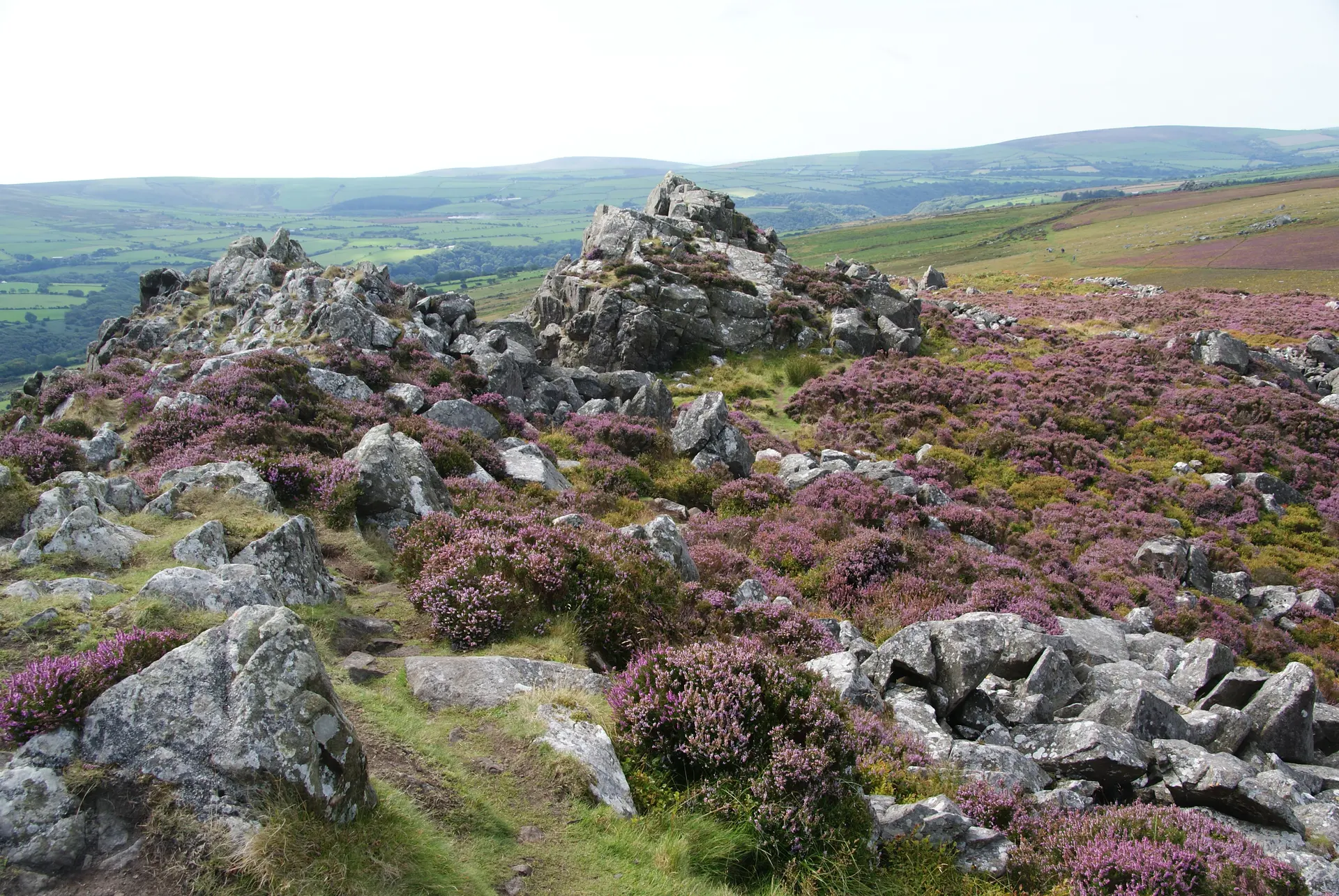
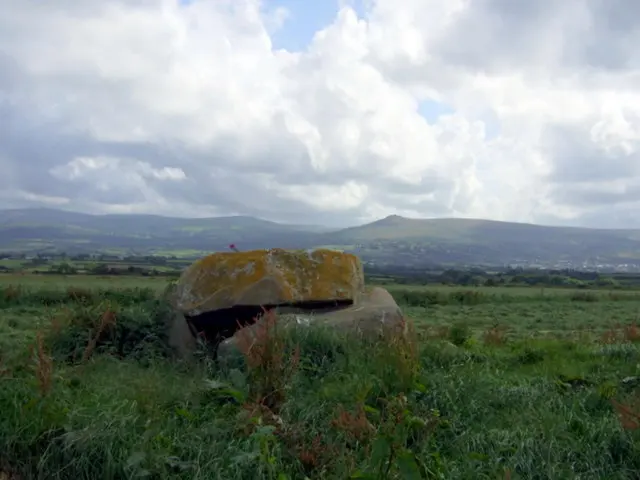
Image of Carn Ingli. Image source · CC-BY-SA-2.0
Visit essentials
A quick read before you go
- Duration
- The walk from the car park to the summit and back takes approximately 2-3 hours including time…
- Access
- Park in the small car park on the mountain road southwest of Newport.
Overview
Carn Ingli means 'Mountain of Angels,' commemorating a tradition from fifteen centuries ago. Irish-born wandering Celtic saint Brynach left his monastery in the valley to pray on this rocky summit. Among wind, solitude, and frost-shattered volcanic stones, he met beings he understood as angels; his communion became permanent, and tradition says they gathered him from this peak at death and carried him to heaven.
Brynach's experience remains beyond verification, though visitors report something difficult to name. Documented magnetic anomalies add a scientific dimension to those accounts, while the prehistoric landscape below shows human recognition of the place for at least four thousand years. Christian pilgrims, earth-spirituality practitioners, and those seeking ordinary-life distance receive the same invitation: climb, sit, and attend.
The rocks are remnants of an ancient eruption exposed by millennia of weathering. On clear days, views reach Snowdonia, Cardigan Bay, and the Pembrokeshire coast; wild ponies graze the moorland, and stillness settles between sounds.
Why this place is sacred
The Celtic Christian tradition recognizes certain places as 'thin'—locations where the barrier between the material world and the divine becomes permeable. Carn Ingli earned this designation through the experiences of St. Brynach, but the mountain's reputation as a place apart may extend much further back.
The summit hosts one of the largest Iron Age hillforts in west Wales, its stone ramparts and hut circles speaking to significant prehistoric occupation. The fort has twelve gateways, an unusual number that has led some researchers to suggest ceremonial rather than purely defensive functions. Below the summit, the landscape unfolds in Bronze Age field systems, trackways, round barrows, and the remains of ancient farmsteads. This is one of the great surviving ancient landscapes of southern Britain.
The Dragon Project, a research initiative studying anomalous phenomena at sacred sites, documented extreme compass deviations at Carn Ingli. In certain spots, the needle swung to point due south rather than north. Whether this explains something of what visitors experience, or simply adds another layer to the mystery, remains an open question.
The Preseli Hills of which Carn Ingli forms a part were the source of the bluestones that form Stonehenge's inner circle. Those stones were transported 180 miles to Salisbury Plain roughly five thousand years ago. Whatever understanding of sacred geography prompted that extraordinary effort, Carn Ingli exists within it.
Seen from certain angles, the mountain's profile resembles a reclining female figure, her head to the east, her hair streaming out behind her, her arms crossed over her abdomen. Some call this the 'sleeping goddess.' Whether the ancient peoples saw this too, and what they made of it, we cannot know. But the land continues to speak to those who attend.
The mountain appears to have served multiple functions across time: defensive refuge in the Iron Age, hermitage for St. Brynach's contemplative practice in the 6th century, and pilgrimage destination in the centuries since. The prehistoric communities who built the hillfort and settled the surrounding landscape presumably recognized something about this location that drew them here, though their understanding is lost to us.
After St. Brynach's death, likely on April 7th of some year in the 6th century, the mountain retained his name and his association. The medieval hagiography that recorded his story called it 'Mons Angleorum'—Mountain of Angels. Pilgrims would walk from his monastery at Nevern to the summit, following the route he had walked. In more recent centuries, the tradition dimmed but never disappeared entirely.
Today, seekers from Celtic Christian, earth spirituality, and other traditions continue to climb, each bringing their own framework but encountering, by their accounts, remarkably similar experiences.
Experience and orientation
The climb itself becomes part of the experience. Leaving the car park, you walk upward through moorland where semi-wild ponies graze, sheep scatter at your approach, and the sounds of the valley fade. The rocks underfoot grow larger as you ascend. By the time you reach the summit, the effort has cleared something in the mind.
Then the stillness sets in. Visitors describe it as peace, but not passive peace—something more alert, more present. The rocky summit, shattered by millennia of frost into jumbled formations, offers places to sit, to settle into, to disappear among. The views extend in every direction: the coast to the north, the Preseli ridgeline stretching east, Cardigan Bay opening to the west, and on clear days, the mountains of Snowdonia on the horizon.
Many report a sense of being closer to sky than earth, as though the summit exists in a different register from ordinary ground. Christians who come seeking connection with St. Brynach often describe feeling that his presence somehow persists, or that the place retains the imprint of his prayers. Those from other traditions use different language—energy, presence, thinning of veils—but the substance of their reports is remarkably consistent.
There is a quality of being witnessed here. The mountains watch. Whether that watching is the apersonal attention of geology or something more, visitors must determine for themselves. But the sensation is common enough to take seriously.
Carn Ingli rewards those who approach it as pilgrimage rather than hike. Consider climbing in silence, treating the ascent as walking meditation. Bring no expectations beyond genuine openness to whatever arises. Allow time at the summit—not minutes, but an hour or more. Find a place among the rocks where you can sit unseen, unmoving, attending to the particular quality of silence that gathers there. The mountain does not perform for those in a hurry.
Context and lineage
Brynach was Irish by birth, known in Welsh as Brynach Wyddel—'the Irishman.' His life unfolded in the patterns common to Celtic saints: travel to Rome, time in Brittany, wandering in search of the place God intended for him. He arrived at Milford Haven and moved through Pembrokeshire, founding small oratories but never settling, until a dream directed him to Nevern. The local lord Clether gave him land, and there Brynach established his monastery.
His holiness was such that wild beasts became tame for him. Stags pulled his cart. A wolf guarded his milk cow. His special bird was the cuckoo, which even now is said to sing first in Nevern each spring before traveling to the rest of west Wales.
But the monastery grew busy, and Brynach sought solitude. He would climb to the rocky summit of the mountain above, and there, in prayer and fasting, he met and conversed with angels. Over time, his communion with these beings became permanent. When he died on April 7th, tradition holds that angels gathered him from the summit and carried him to heaven. The mountain has borne the name Carn Ingli—Mountain of Angels—ever since.
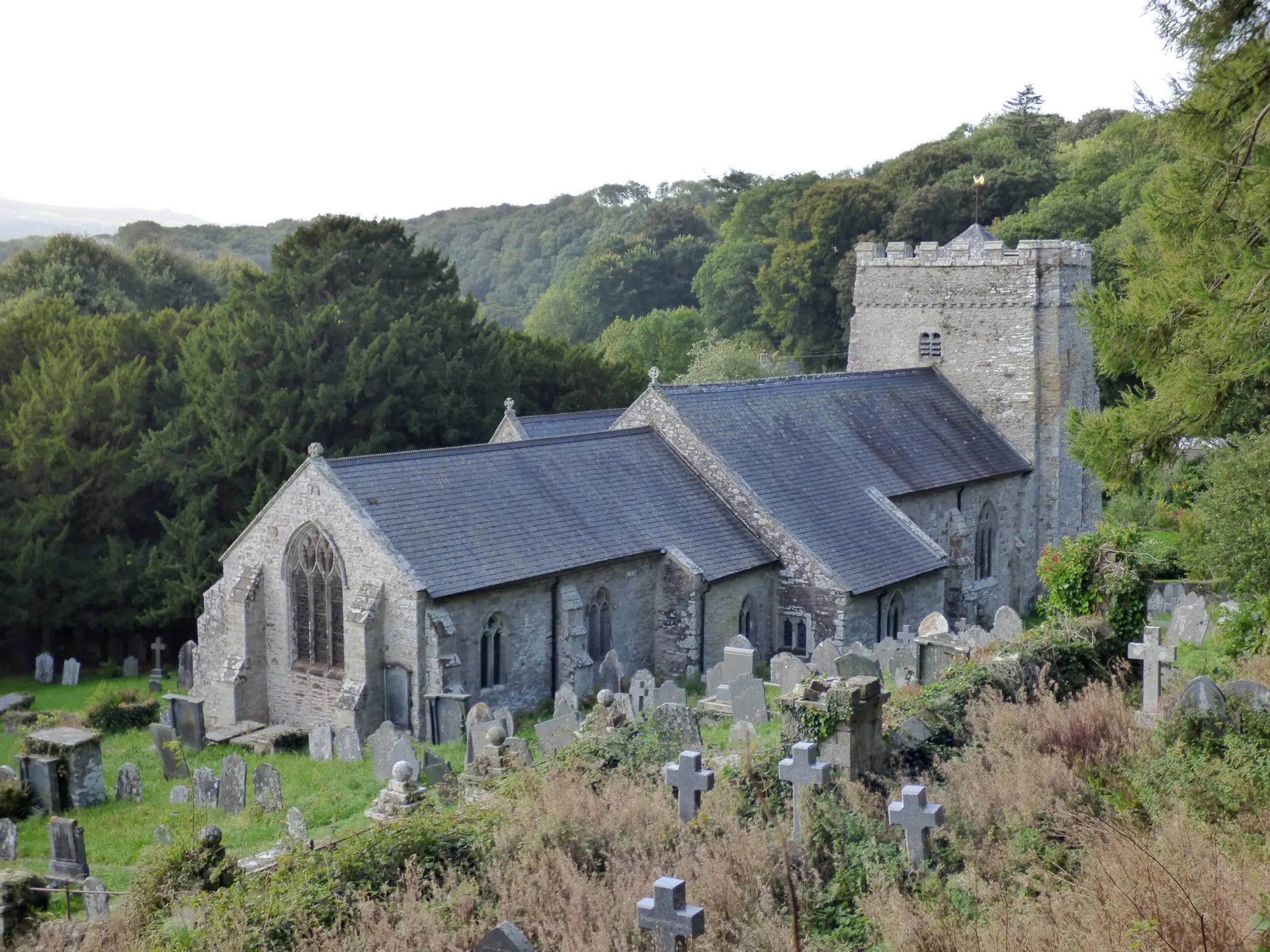
St. Brynach's legacy continues through St. Brynach's Church at Nevern, which preserves one of the finest Celtic crosses in Britain and maintains Celtic Christian observance. The pilgrimage route from church to summit remains walkable. Contemporary Celtic Christians, earth spirituality practitioners, and seekers of various traditions continue to climb the mountain, adding their presence to the accumulated weight of human attention that has gathered here over millennia.
St. Brynach
historical/saint
6th-century Irish-born saint who founded a monastery at Nevern and regularly climbed Carn Ingli to pray. His reported communion with angels gave the mountain its name. Feast day is April 7th.
Traditions and practice
St. Brynach's practice involved extended periods of prayer, fasting, and contemplation at the summit, seeking communion with angels. This was a form of what the Celtic tradition called 'green martyrdom'—voluntary exile and ascetic practice in wild places. The feast of St. Brynach, celebrated on April 7th, marks his death and translation to heaven, though the main celebrations occur at Nevern church rather than the mountain.
Visitors engage in personal prayer, meditation, and contemplation. Some walk the route from Nevern church to the summit as an intentional pilgrimage, pausing at the church first to connect with St. Brynach's story. Earth spirituality practitioners may conduct personal ceremonies or energy work at the summit rocks. Some time their visits for sunrise, sunset, or the feast day. The mountain offers no organized experience—what happens here is what each visitor brings and receives.
Consider beginning at St. Brynach's Church in Nevern before climbing to the summit. The church contains the 6th-century saint's legacy: a magnificent Celtic cross, the mysterious 'bleeding yew,' and inscribed stones from the earliest Christian centuries. From there, walk to the mountain as Brynach did, treating the ascent as transition from ordinary life into contemplative space. At the summit, find a place among the rocks where you can sit unseen. Stay longer than you think necessary.
The mountain works at its own pace.
Celtic Christianity
ActiveCarn Ingli is intrinsically linked to St. Brynach, a 6th-century Celtic saint of Irish origin who founded his monastery at nearby Nevern. According to his hagiography, Brynach would retreat to this rocky summit to pray, fast, and commune with angels. His holiness was so profound that he eventually achieved permanent communion with angelic powers. When he died on April 7th, tradition says angels gathered him from the summit and transported him to heaven. The mountain represents a quintessential Celtic Christian 'thin place' where the veil between heaven and earth was believed to be especially permeable.
Pilgrims and spiritual seekers climb to the summit for prayer, meditation, and contemplation. Some walk from Nevern church to the summit, recreating St. Brynach's route. The feast of St. Brynach is celebrated on April 7th, primarily at Nevern church. No formal rituals occur at the summit, but personal devotions, silent prayer, and meditation are common.
Earth Spirituality
ActiveCarn Ingli is recognized as an earth energy site with documented unusual magnetic properties. Research documented significant compass deviations at the summit, including spots where the needle pointed due south. The mountain is viewed as a power place within the sacred Preseli landscape that sourced the Stonehenge bluestones. The mountain's profile, seen from certain angles, resembles a reclining female figure—the 'sleeping goddess'—adding another dimension to its significance.
Meditation and energy sensing at the summit rocks. Some practitioners spend extended time at the summit. Personal rituals and ceremonies. Engagement with the landscape's perceived power and with the 'sleeping goddess' formation.
Iron Age/Prehistoric
HistoricalThe summit hosts one of the largest Iron Age hillforts in west Wales, featuring stone ramparts, enclosures, hut circles, and defensive walls. The surrounding landscape contains an exceptional concentration of Bronze Age remains including field boundaries, cairns, round huts, farmsteads, and trackways. This prehistoric landscape is considered one of the great surviving ancient landscapes of southern Britain. The site's pre-Christian sacred significance is implied by its later adoption by Celtic Christianity.
Unknown. The prehistoric communities likely used the site for ceremonial, defensive, and domestic purposes. The unusual gateway configuration may indicate ritual functions beyond defense.
Perspectives and open questions
Carn Ingli invites understanding from multiple directions. The Celtic Christian tradition, earth spirituality, archaeology, and personal experience each offer genuine insight. The mountain is old enough and strange enough to hold all of these without contradiction.
Scholarly perspective
Archaeologists recognize the Iron Age hillfort crowning the summit as one of the largest in west Wales, though no systematic excavation has been conducted. The twelve gateways—unusual for a defensive structure—have prompted suggestions that parts may date to the Neolithic or Bronze Age, or that the site served ceremonial as well as defensive functions. The earliest written reference to the mountain as 'Mons Angleorum' (Mountain of Angels) appears in a 12th-century Latin hagiography of St.
Brynach, several centuries after the events it describes. Historian A.H.A. Hogg proposed that the widespread destruction of hillfort walls may indicate Roman military action following the conquest of Wales.
Living and traditional perspectives
For Welsh Christians, St. Brynach holds an important place among the Celtic saints who established Christianity in Wales. His miraculous relationship with animals, his prophetic cuckoo, and especially his angelic communion make him a figure of enduring significance. The mountain's name preserves the tradition of angels gathering at its summit. The preservation of his feast day and the continued use of Nevern church maintain living connection with the saint's legacy.
Alternative interpretations
Earth spirituality practitioners view Carn Ingli as a power center within the sacred Preseli landscape. The Dragon Project's documentation of extreme magnetic anomalies provides apparent scientific support for claims of unusual earth energies. The mountain's position in the Preseli Hills—source of the Stonehenge bluestones—places it within a landscape recognized as sacred for at least five thousand years. Some interpret St.
Brynach's angels as his perception of energies or presences that the ancient peoples who built the hillfort may also have sensed.
Open questions
Why the hillfort has twelve gateways remains unexplained. Whether the site held sacred significance for its prehistoric inhabitants, and what they may have experienced or practiced here, is unknown. The nature of St. Brynach's angelic experiences—what he actually perceived—cannot be determined from the hagiographic accounts. The cause of the documented magnetic anomalies awaits full explanation. These open questions are part of the mountain's character.
Plan your visit
Access and arrival
Park in the small car park on the mountain road southwest of Newport. From Newport, take the road signposted 'Cwm Gwaun' and continue upward to the parking area. Public transport: Service bus T5 to Newport; Poppit Rocket 405 (seasonal). Walk from Newport town center. Paths cross open moorland and can be rough; some routes involve steep sections. GPS coordinates: 51.999337 N, -4.824358 W. Elevation: 347 metres (1,138 ft). Free entry—open access land.
Newport offers B&Bs and small hotels. The surrounding Pembrokeshire Coast National Park provides numerous accommodation options. Those seeking deeper engagement might consider staying in the area for several days, allowing multiple visits to the mountain at different times of day.
Respectful visit
No specific requirements. Hiking boots or sturdy footwear recommended. Waterproof layers advisable as weather can shift quickly. The summit is exposed; bring warm clothing.
Welcome. The views, rock formations, and wild ponies offer compelling subjects. Be mindful of others in prayer or meditation.
No traditional offerings are associated with the site. Leave no objects at the summit. The appropriate offering is presence—time spent in silent reverence.
Keep dogs on leads. Do not disturb the archaeological remains of the hillfort. Respect the SSSI designation. The mountain is open access with no formal visiting hours.
Current practical details
Address
Mynydd Carningli, Newport SA42 0QH, UK
Hours, fees, and access can change — verify on the official source before you travel. Practical details last checked Jun 2026.
Location
Map loads as you approach this section.
Pilgrim reflections
A portrait of encounter, not a score
Pilgrims describe what they felt, how present they could become, and whether the place would shape a journey. There are no stars and no ranking of traditions.
No reviewed reflections yet
The first pilgrims can help describe the character of being here.
Share a reflection
Available after an account-backed “Been there.” Every reflection is reviewed before publication.
Nearby sacred places
Explore other sacred places in the region. Proximity does not establish access or travel time; check each place’s guidance.
References
Sources consulted for this page. Source categories describe the publication, not a guarantee that every claim is verified. Traditional accounts and outside interpretations may differ.
- 01Newport and Carn Ingli - Pembrokeshire Coast National Park — Pembrokeshire Coast National Park AuthorityofficialOfficial national park source with legend and heritage information
- 02St Brynach's Church, Nevern, Newport - British Pilgrimage Trust — British Pilgrimage TrustofficialPilgrimage context and St. Brynach's connection to the site
- 03St Brynach's Church, Nevern - Official Website — St Brynach's ChurchofficialOfficial church website with St. Brynach information
- 04A pilgrimage walk to Nevern - National Churches Trust — National Churches TrustofficialPilgrimage context and route information
- 05Mynydd Carningli - Wikipedia — Wikipedia contributorsencyclopediaComprehensive overview of geography, geology, and archaeology
- 06Brynach - Wikipedia — Wikipedia contributorsencyclopediaBiographical information about St. Brynach
- 07Mynydd Carningli (Sacred Hill) - The Modern Antiquarian — The Modern AntiquarianacademicDetailed archaeological and earth energy research information
- 08Carn Ingli Mountain Fort - The Megalithic Portal — The Megalithic PortalacademicArchaeological details of the hillfort and prehistoric landscape
- 09Mynydd Carningli, Pembrokeshire: The ancient volcano in the shape of a reclining woman — Country LifeacademicGeological and landscape profile information
- 10Brynach - OrthodoxWiki — OrthodoxWikiofficialHagiographical details about St. Brynach
- 11Carningli Hillfort - Transceltic — TranscelticspiritualCeltic cultural perspective on the site
- 12Carn Ingli - PeakVisor — PeakVisorguideGeographical and hiking information with coordinates
Share a photo
Help visitors recognize Carn Ingli. Every submission is reviewed before publication.