Ballygowan Rock Art
Five-thousand-year-old cup marks on a Scottish hillside, still holding their silence
Understand sacred places, explore living traditions, and learn how to engage respectfully with Pilgrim Map.
Access has not been verified. Check current local guidance before planning a visit.
Kilmartin, Scotland, United Kingdom
Read the sources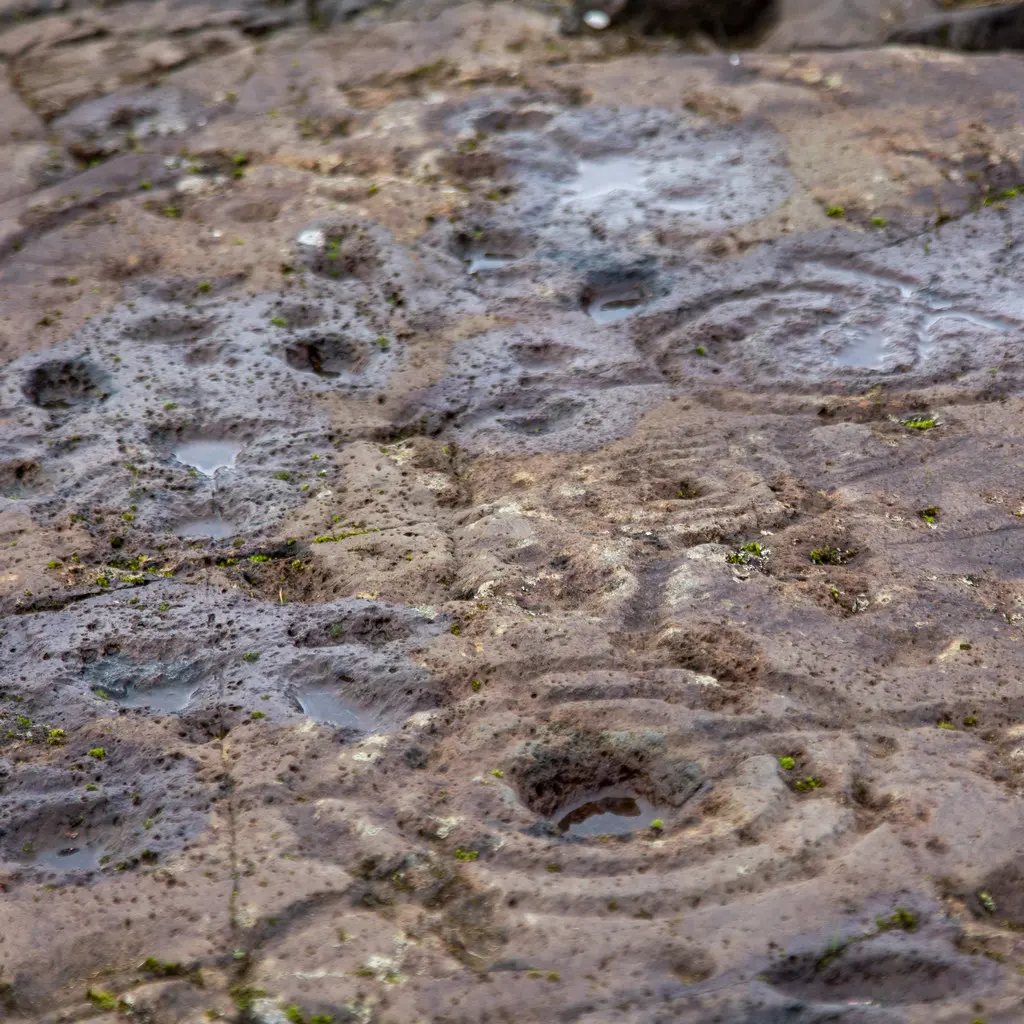
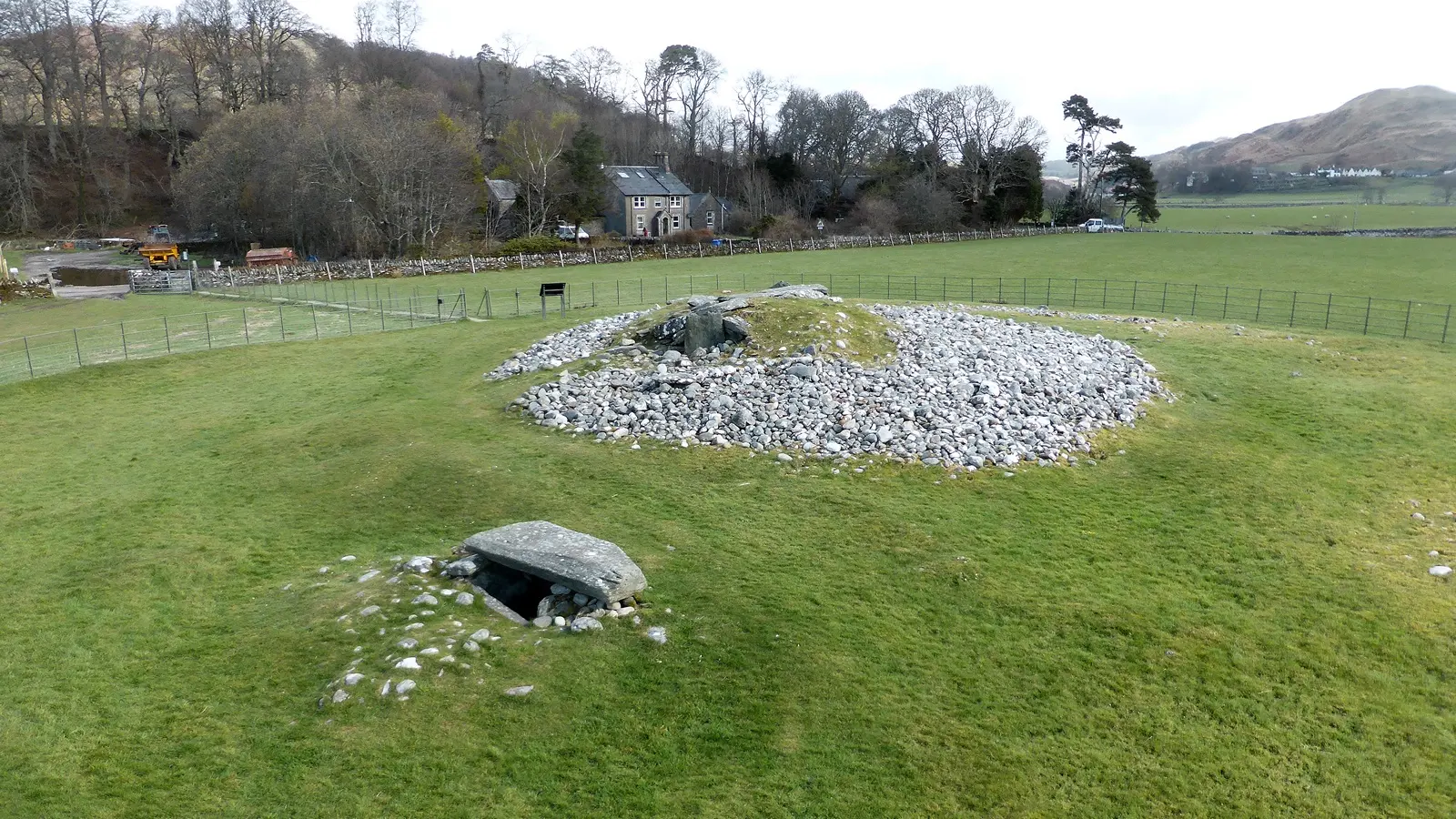
Image of Ballygowan Rock Art. Image source
Visit essentials
A quick read before you go
- Duration
- One to two hours including the walk from Slockavullin.
- Access
- Free open access at all times.
Overview
On a rise above Kilmartin Glen, Ballygowan belongs to a landscape unmatched in Scotland: over eight hundred standing stones, cairns, circles, and carved rocks within six miles. It is among the oldest.
More than forty-three plain cups and about seventy cup-and-ring marks cover the exposed stone, without Achnabreck's elaborate spirals four kilometres south or metre-wide concentric rings. Their quiet force is the act itself—hammerstone-pecked hollows in living rock. Non-overlap suggests one concentrated period rather than centuries of accumulation.
One unique glen motif, a horseshoe-shaped ring around a cup, may be unfinished, deliberate variation, or something else; its significance is unknown.
Ballygowan derives from Gaelic 'Baile a' Ghobhainn,' settlement of the blacksmith. The carvings predate that later name, language, and every subsequent glen tradition.
Why this place is sacred
Something draws a person back to marks they cannot read. At Ballygowan, the thinness comes not from answers but from the quality of the unknowing. These are among the oldest human-made marks in Kilmartin Glen, a landscape whose density of prehistoric monuments suggests it mattered enormously to its builders. Yet no oral tradition, no written record, no archaeological consensus explains why someone knelt on this rock and pecked these hollows into its surface.
The simplicity of the carvings amplifies the mystery. At Achnabreck, the elaborate spirals and massive ring marks suggest complex intention, something worth puzzling over in detail. At Ballygowan, the marks are mostly plain cups, unadorned depressions in stone. They resist narrative. They resist symbolism. They simply are: present, ancient, inexplicable.
The elevated position matters. From the carved outcrop, the glen opens below, studded with cairns and standing stones visible across the moorland. The people who carved here could see the landscape they were part of. The marks may have been made in sight of other monuments, in relationship to routes through the valley, in awareness of a geography we can only partly reconstruct.
Standing where they stood, looking at what they saw, visitors occupy the same physical position while inhabiting an entirely different world of meaning.
Time behaves differently at places like this. Five thousand years is an abstraction until your fingers find a cup mark and you feel the edge where hammerstone met bedrock. The carver's hand moved here. The mark endures. Everything between has vanished.
The original purpose of the cup and ring marks at Ballygowan remains unknown. They belong to a tradition of rock art found across Atlantic Europe, from Galicia to Scandinavia, spanning thousands of miles and centuries of carving. Theories include astronomical recording, territorial marking, ritual symbolism, maps of spiritual or physical journeys, records of altered states of consciousness, and purposes beyond modern imagination. The consistent appearance of similar motifs across such vast distances suggests the symbols carried specific, widely understood significance.
At Ballygowan, the non-overlapping character of the marks suggests a deliberate, possibly single-episode act of inscription rather than gradual accumulation.
The rock art at Ballygowan appears to belong to a single phase of creation, unlike sites where overlapping carvings indicate return and recarving across centuries. After the marks were made, perhaps between 3500 and 2500 BCE, there is no evidence of further modification. The site was neither embellished nor erased. Later peoples named the area for a blacksmith's settlement, a function entirely disconnected from the prehistoric marks.
The rock outcrop was eventually recognized as archaeologically significant and is now protected as a scheduled monument by Historic Environment Scotland, fenced with a railing and accessed via a stile.
Experience and orientation
The journey to Ballygowan begins at the edge of Slockavullin, where a cattle grid and a sign mark the end of motor access. Walk up the road, then take the rough track heading uphill to the right. Follow it past a house, then leave the track and cross open, often boggy ground toward the treeline on the skyline. The railing around the rock art will appear.
This approach matters. Ballygowan does not announce itself. There is no car park, no interpretation board visible from the road, no crowd to follow. The walk across the wet, uneven ground is its own preparation, slowing the pace, requiring attention to where you place your feet. By the time you reach the carved outcrop, you have earned the encounter.
The rock surface is broad and gently angled, tilting away from the viewer. In bright midday sun, the cup marks nearly disappear, reduced to subtle variations in the stone's texture. Return in late afternoon when the sun sits low, and shadows pool in each carved hollow. The marks emerge as if surfacing from the rock itself. Photography captures what the eye sometimes misses, and the camera's flash can illuminate marks invisible in natural light.
Run your hand across the surface. The cups are shallow, their edges softened by five millennia of Scottish weather. Some follow natural fissures in the rock, as though the carvers worked with the stone's existing character. Others stand isolated, precise, deliberate. The horseshoe-shaped ring, when you find it, feels different from the cups: more complex, more intentional, more mysterious.
From this position, the glen opens below. On a clear day, the landscape of cairns and standing stones stretches toward Kilmartin village. You occupy the same vantage point as the carvers. The view has changed in detail but not in character: water, stone, sky, the long valley opening northward. The silence is often complete.
Ballygowan lies approximately half a mile south-west of Slockavullin and about one mile south-west of Kilmartin village. The rock art sits on an elevated outcrop reached by walking uphill from the end of the motor road. The carved surface faces generally south-west, catching afternoon light that best reveals the marks. The protective railing encloses the main carved area. For interpretive context before visiting, Kilmartin Museum in the village provides excellent displays on the glen's prehistoric landscape.
Context and lineage
No origin narrative survives from the prehistoric carvers. The marks were created by unknown peoples of western Scotland's Neolithic or Early Bronze Age, using hammerstones or pecking tools to dimple the natural rock surface. The carvings belong to a tradition found across Atlantic Europe, from the Iberian Peninsula through Brittany and Ireland to Scotland and Scandinavia. Why this particular rock, in this particular position above the glen, was chosen for marking is unknown.
The Gaelic name 'Baile a' Ghobhainn' (settlement of the blacksmith) dates from a much later period and refers to subsequent habitation of the area, not to the prehistoric carvings.
Ballygowan's lineage is one of absence rather than continuity. The prehistoric carvers left their marks and vanished from the record. No later culture claimed the carvings or continued the practice. Gaelic-speaking settlers named the area for a blacksmith, a prosaic association that acknowledges habitation without recognizing the rock art's significance. Modern archaeological recognition came much later, when the carved surface was identified, documented, and designated as a scheduled monument.
Today Historic Environment Scotland manages the site, while Kilmartin Museum provides interpretive context. Visitors from archaeological, contemplative, and spiritual traditions continue to find their way to the outcrop.
Unknown Neolithic/Bronze Age peoples
Traditions and practice
Original practices associated with the creation of cup and ring marks are entirely unknown. The marks may have accompanied ritual activity, marked boundaries or routes, recorded astronomical observations, or served purposes beyond modern reconstruction. Their presence on a natural outcrop along routes through the landscape suggests possible connection to movement patterns through the glen.
No formal ceremonies take place at Ballygowan. Visitors engage through quiet contemplation, photography, and personal reflection. The site's relative obscurity and difficult access mean visits are typically solitary. Some visitors touch the cup marks, feeling the edge where tool met stone five thousand years ago.
Arrive in late afternoon, when low-angle sunlight reveals the cup marks most clearly. Walk slowly from Slockavullin, letting the approach prepare you. At the rock surface, take time before looking at the carvings. Notice the view first: the glen, the sky, the quality of light. Then look down. Let your eyes adjust to the subtle marks. Touch the surface if moved to do so, feeling for the cups with your fingertips. Spend longer than you think you need.
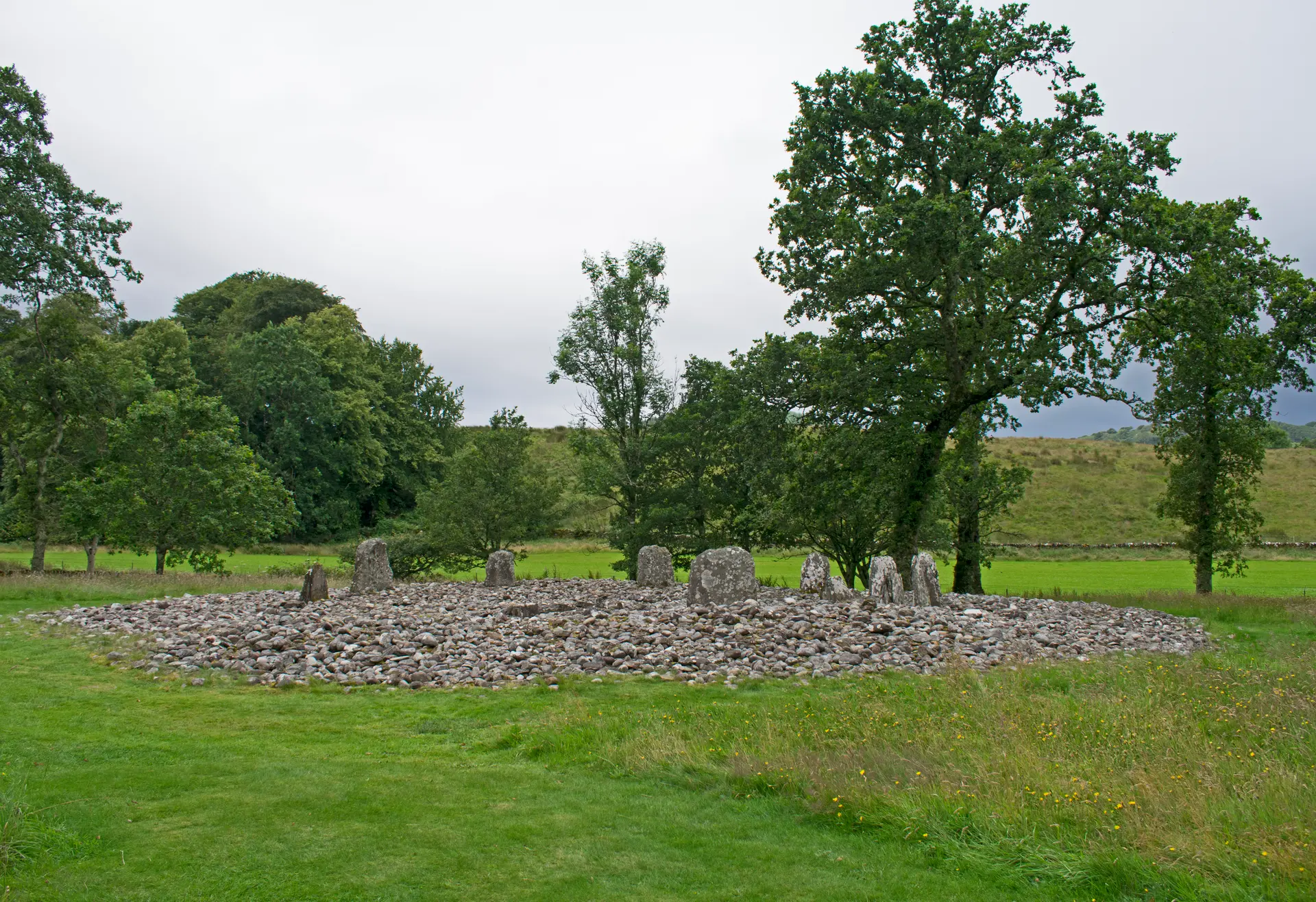
The marks reveal themselves gradually. If time allows, continue to Baluachraig and Temple Wood to experience the carved and built landscape in sequence.
Neolithic/Bronze Age rock art tradition
HistoricalThe cup and ring marks at Ballygowan belong to a tradition of rock art found across Atlantic Europe, from the Iberian Peninsula through Brittany and Ireland to Scotland and Scandinavia. Created between approximately 3500 and 2500 BCE, they represent one of the oldest forms of symbolic expression in Kilmartin Glen. The carvings' non-overlapping character suggests deliberate, concentrated creation during a single period of use.
Unknown. The creation of cup and ring marks involved pecking the rock surface with hammerstones or similar tools. The carvings may have accompanied ritual activity, marked boundaries or routes, recorded astronomical observations, or served purposes entirely beyond modern understanding.
Perspectives and open questions
Ballygowan resists definitive interpretation. The marks are present, tangible, undeniable. Their meaning is absent. This honest gap between evidence and explanation is what gives the site its particular character. Each perspective offered here illuminates something, but none claims completeness.
Scholarly perspective
Archaeological consensus dates the Ballygowan carvings to approximately 3500-2500 BCE, placing them among the oldest prehistoric remains in Kilmartin Glen. The carvings are dominated by plain cup marks, with approximately seventy cup-and-ring marks of various sizes. Their non-overlapping character suggests a single phase of creation. The distinctive horseshoe-shaped ring is unusual within the Scottish rock art corpus. The site forms part of an extraordinary concentration of rock art in Kilmartin Glen that also includes Achnabreck, Baluachraig, Cairnbaan, and Kilmichael Glassary.
The purpose of cup and ring marks remains one of the great unsolved questions of European prehistory. Despite their consistent appearance from Galicia to Scandinavia, no convincing interpretation has achieved scholarly consensus.
Living and traditional perspectives
No continuous tradition survives from the prehistoric carvers. The Gaelic name for the area, 'Baile a' Ghobhainn' (settlement of the blacksmith), dates from a much later period and refers to subsequent habitation rather than prehistoric activity. No folk traditions specifically associated with the Ballygowan rock art have been documented. The marks existed in silence long before any living tradition arrived to notice them.
Alternative interpretations
Various interpretations of cup and ring marks have been proposed by researchers and spiritual seekers: symbols of the Mother Goddess or solar cults; records of visionary experience or altered states of consciousness; astronomical maps or calendars; territorial markers; art for its own sake. Some contemporary visitors perceive energy at rock art sites or interpret the marks as evidence of spiritual practices connected to the land.
These interpretations cannot be proved or disproved; they represent ways modern seekers make meaning of genuinely mysterious remains.
Open questions
The meaning of cup and ring marks remains one of the great unsolved puzzles of European archaeology. Despite appearing across Atlantic Europe in consistent forms, no interpretation has achieved scholarly consensus. At Ballygowan specifically, additional questions persist: why these particular marks on this particular rock; why the carvings are simpler than at nearby Achnabreck; what the horseshoe-shaped ring signifies; whether the marks relate to the other monuments visible from the outcrop.
These gaps in knowledge are not failures of research but honest acknowledgments of limits. The carvers did not leave instructions. The marks endure, and their silence is part of what they offer.
Plan your visit
Access and arrival
Free open access at all times. The site lies approximately half a mile south-west of Slockavullin, accessed by walking uphill from the cattle grid at the end of the motor road. Follow the rough track past a house, then cross open boggy ground toward the treeline. The protective railing will come into view. A stile provides access over the fencing. The terrain is uneven and often waterlogged. Sturdy waterproof footwear is essential. The site is not wheelchair accessible.
Limited accommodation in the immediate area. Kilmartin Hotel offers rooms near the museum. More options in Lochgilphead (6 miles) and Oban (30 miles). For an immersive experience, consider staying locally to allow visits at different times of day when light conditions vary.
Respectful visit
No dress code applies. Waterproof boots are essential. The approach crosses boggy, uneven ground that will soak any ordinary footwear. Layers accommodate Scotland's changeable weather, and a waterproof jacket should be carried even on clear days.
Photography is freely permitted and encouraged. Low-angle light from late afternoon sun reveals the cup marks most dramatically. A flashlight held at a low angle can also reveal marks invisible in natural light. Consider that you may be sharing the site with others seeking quiet contemplation.
Leaving offerings is not historically traditional at Ballygowan. No tradition of votive practice is associated with the site. If you feel called to leave something, choose items that are natural, biodegradable, and unobtrusive. Remove anything that could be considered litter.
Do not damage the rock surface in any way. Do not make rubbings or casts. Do not climb over or damage the protective railing. The site is a scheduled monument under Scottish law; damaging it is a criminal offense.
The rock surface is a scheduled monument. Do not scratch, mark, or make rubbings of the carvings. Do not disturb the protective railing. The approach crosses boggy, uneven ground; appropriate footwear prevents both personal discomfort and environmental damage. If leaving anything, consider whether the gesture is appropriate at a site not historically associated with offerings.
Current practical details
Address
4FFP+32, Lochgilphead PA31 8QF, UK
Hours, fees, and access can change — verify on the official source before you travel. Practical details last checked Jun 2026.
Location
Map loads as you approach this section.
Pilgrim reflections
A portrait of encounter, not a score
Pilgrims describe what they felt, how present they could become, and whether the place would shape a journey. There are no stars and no ranking of traditions.
No reviewed reflections yet
The first pilgrims can help describe the character of being here.
Share a reflection
Available after an account-backed “Been there.” Every reflection is reviewed before publication.
Nearby sacred places
Explore other sacred places in the region. Proximity does not establish access or travel time; check each place’s guidance.
References
Sources consulted for this page. Source categories describe the publication, not a guarantee that every claim is verified. Traditional accounts and outside interpretations may differ.
- 01Kilmartin Glen: Ballygowan Rock Art — Historic Environment ScotlandofficialOfficial heritage body managing the site; primary source for visitor information and archaeological summary
- 02Ballygowan Cup and Ring Marks: History — Historic Environment ScotlandofficialDetailed history page with archaeological description, dating, and context
- 03Kilmartin Museum — Kilmartin MuseumofficialLocal museum reopened September 2023 after major renovation; provides interpretive context
- 04Cup & Ring Marks: Who made them, and why? — Jeff Nisbet / ScARFacademicAcademic overview of cup and ring mark interpretation theories
- 05Ballygowan (Cup and Ring Marks / Rock Art) — The Modern AntiquarianSource contextCommunity-sourced site with coordinates, visitor reports, and field notes
- 06Ballygowan Rock Art — The Megalithic PortalSource contextIncludes coordinates and archaeological description
- 07Ballygowan Rocks, Argyll and Bute, Scotland — The Journal of AntiquitiesblogDetailed photographic record and visitor account
- 08Kilmartin Glen — WikipediaencyclopediaContext for the wider sacred landscape of Kilmartin Glen
- 09Cup and ring mark — WikipediaencyclopediaGeneral background on cup and ring mark tradition across Atlantic Europe
- 10Kilmartin Glen Rock Art — Scotland Off the Beaten TrackblogVisitor-focused descriptions of rock art sites in Kilmartin Glen
Share a photo
Help visitors recognize Ballygowan Rock Art. Every submission is reviewed before publication.