Carrol Broch
A substantial Iron Age broch commanding the heights above Loch Brora, its walls still standing after two millennia of Highland weather
Understand sacred places, explore living traditions, and learn how to engage respectfully with Pilgrim Map.
Access has not been verified. Check current local guidance before planning a visit.
Brora, Scotland, United Kingdom
Read the sources
Image of Carrol Broch. Image source · CC-BY-SA-2.0
Visit essentials
A quick read before you go
- Duration
- Two to three hours to explore the broch thoroughly and absorb the landscape.
- Access
- From the A9, turn west toward Loch Brora at Brora.
Overview
The walk to Carrol Broch is part of its character. From the River Brora ford, a forestry track follows the south bank of Loch Brora before a stile over a deer fence marks the transition from managed landscape into rougher ground. The broch sits in a large clearing among scattered birch trees, its walls rising from a mound of excavation spoil that gives it the appearance of a small hill until you climb up and look inside.
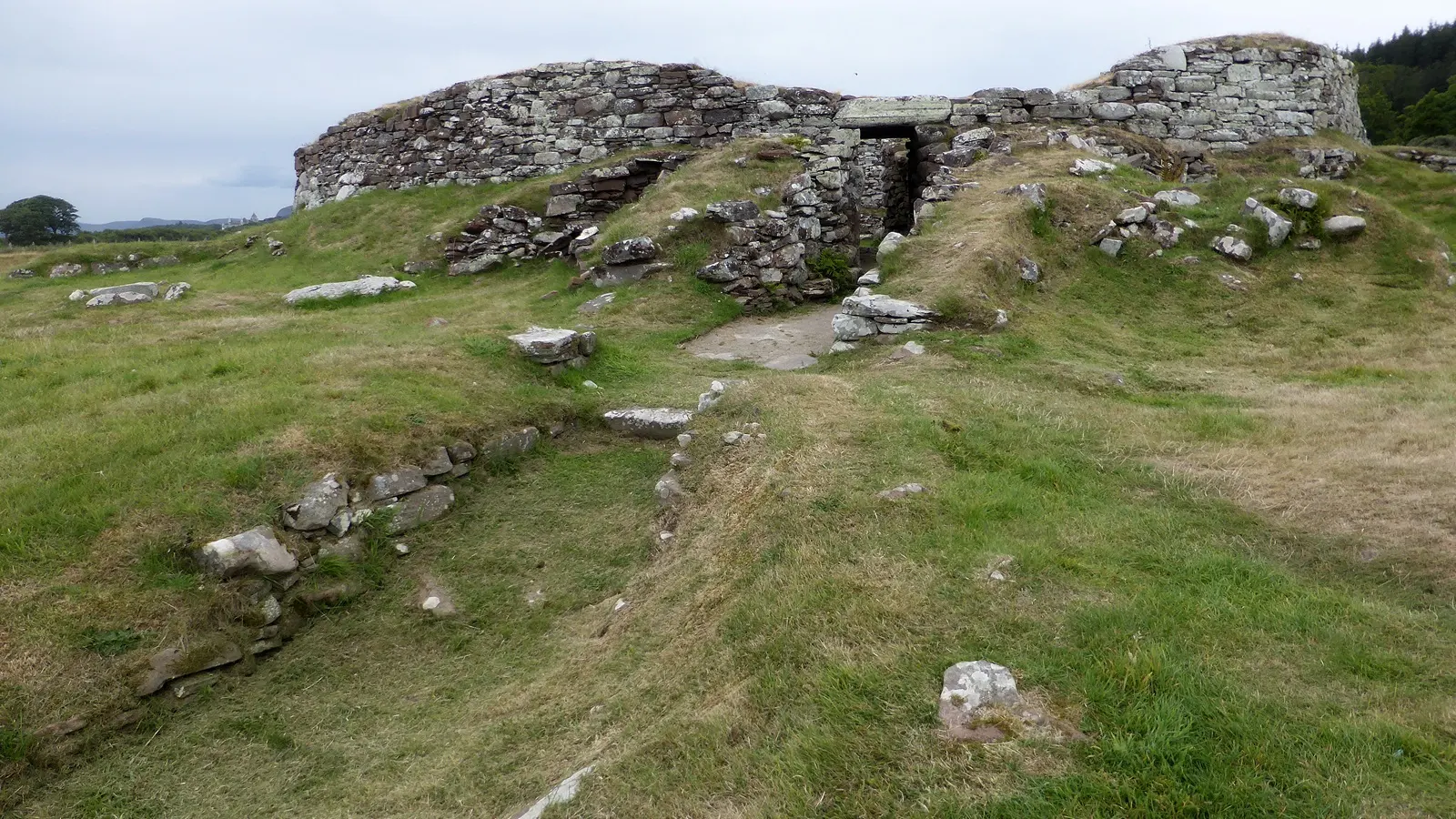
The interior is remarkable. Walls of carefully laid drystone masonry stand nearly four metres high around the full circumference, creating an enclosed circular space roughly nine metres across. The entrance passage on the east-southeast side retains its lintel stones, forming a low, roofed corridor that channels visitors through the same threshold the Iron Age inhabitants used daily. Inside the passage, a guard chamber opens to one side, a small room where someone may have controlled access to the interior.
Beyond the passage, the broch opens out, and the scale of the construction becomes apparent.
Carrol Broch was excavated by order of the Duke of Sutherland around 1870, and the findings were documented by Reverend J. M. Joass in 1873. The excavation, conducted by the standards of its day rather than by modern archaeological methods, uncovered remains of at least one staircase rising within the double walls, evidence of an upper gallery, and a range of artefacts including a steatite cup, shale rings, and an ox horn plate with iron rivets.
These objects, now in Dunrobin Castle Museum, speak to a community engaged in craft production and trade, with connections that may have reached as far as Shetland or Norway.
The Royal Commission on the Ancient and Historical Monuments of Scotland surveyed the site in 1909, recording measurements and architectural details that remain the primary reference for the broch's dimensions. The external diameter is approximately seventeen metres, with walls five metres thick at the base. The broch was scheduled as an Ancient Monument in 1935.
Why this place is sacred
The remoteness of Carrol Broch is central to its atmosphere. This is not a site designed for tourist convenience. The walk through woodland, the climb over the deer fence, the crossing of rough ground, all serve as a gradual separation from the ordinary world. By the time the broch comes into view, you have already left behind the familiar.
The broch itself amplifies this sense of crossing over. The entrance passage, still roofed and intact, demands that you bend low to enter, physically reducing yourself before the threshold. This architectural requirement was intentional; the builders designed the entrance to control access, to create a moment of transition between outside and inside, between public and domestic space. Two thousand years later, that transition still functions.
Inside, the circular walls create a contained space that feels both protective and ancient. The quality of the masonry, the careful placement of stone upon stone without mortar, speaks to skill and intention. These walls were not hastily built. They represent a sustained investment of communal labour, an assertion that this place mattered enough to warrant the best construction the community could achieve.
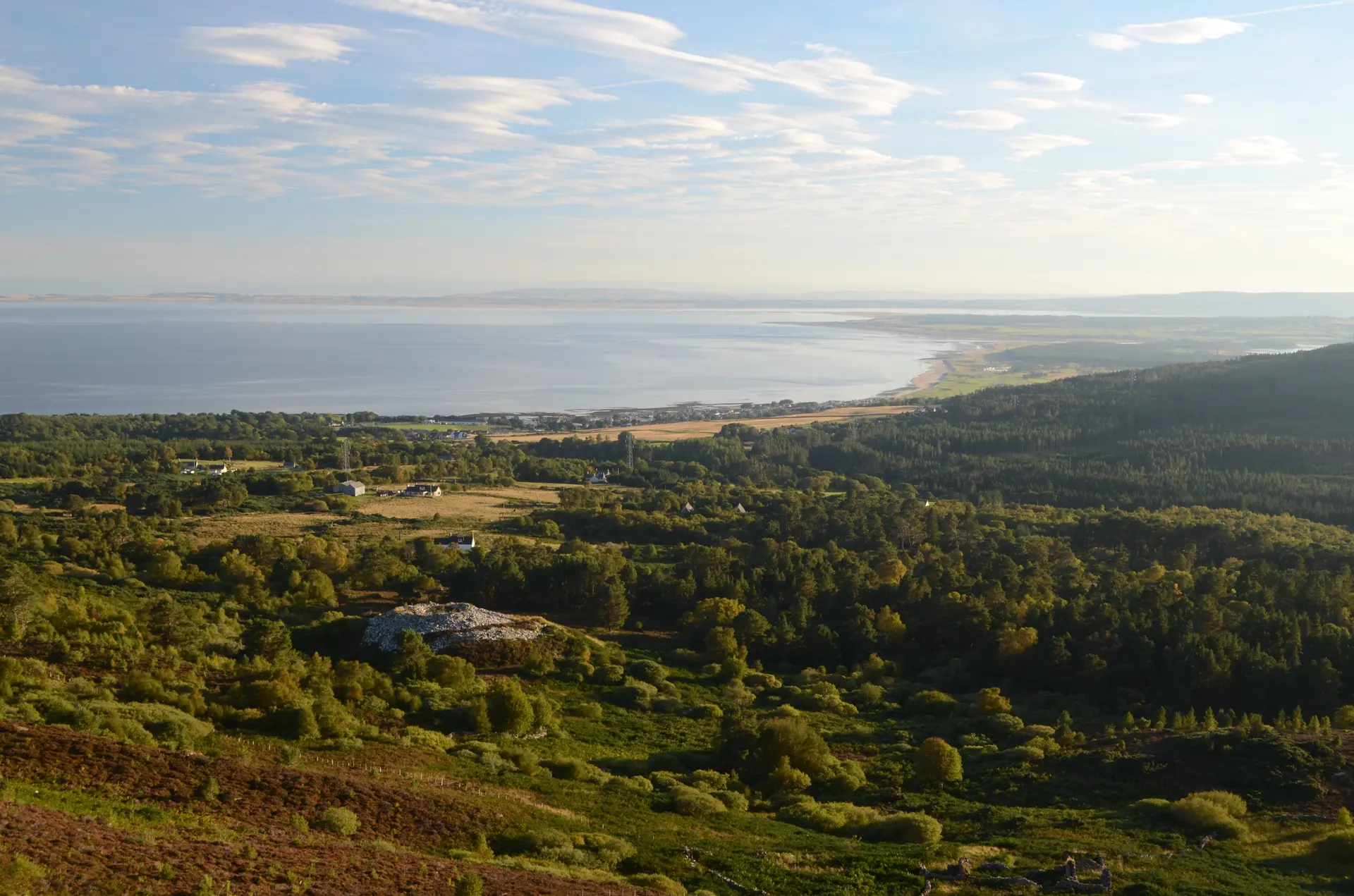
The view from the broch's upper ramparts, created inadvertently by the excavation spoil banked around the exterior, extends over Loch Brora and the surrounding hills. The landscape is essentially unchanged from what the Iron Age inhabitants would have seen: water, hills, sky, the slow movement of weather across the strath. This continuity of landscape, combined with the persistence of the structure, collapses the distance between past and present in a way that can feel genuinely uncanny.
Archaeological consensus identifies Carrol Broch as a high-status dwelling of the later Iron Age, probably constructed between 200 BCE and 100 CE. The broch served as both a residence and a statement of power and status for a farming community controlling the fertile land around Loch Brora. The double-walled construction with internal galleries, guard chamber, and controlled entrance passage reflect a society concerned with both security and prestige.
The broch likely evolved through several phases of use. The surrounding outer wall, ditch, and connecting passage represent a defended settlement complex that may have grown around the central tower over time. Whether the outer structures were contemporary with the broch or represent later occupation remains unresolved. The site was excavated in the 1870s, surveyed in 1909, and scheduled as an Ancient Monument in 1935. It has received no further archaeological attention since.
Experience and orientation
Park at the ford across the River Brora and follow the forestry track along the south bank of Loch Brora. The walk is approximately two kilometres along the track before you reach the point where a tall stile crosses the deer fence, marked with a blue marker post. Beyond the stile, the terrain changes. You cross a stream and head southwest through scattered birch woodland, the ground rougher now, heather and tussock grass replacing the managed track.
The broch appears first as a large mound among the trees. It does not announce itself dramatically. Only when you climb the spoil heap that surrounds it, banked there by the 1870s excavators who simply threw the interior fill over the walls, do you see the true structure. The walls rise around you, nearly four metres of carefully laid drystone masonry, the full circumference intact. Below, the interior space opens out, circular, contained, and unmistakably architectural.
The entrance passage is on the east-southeast side. It is still roofed, still dark, still requiring you to stoop or duck to pass through. The lintels overhead have held their position for two thousand years. On the right side of the passage, the guard chamber opens, a small recess where someone once sat and watched the only way in or out. Beyond the passage, the broch's interior holds its silence.
You are likely alone here. Carrol Broch receives very few visitors. The solitude, combined with the exceptional preservation and the beauty of the loch and hill setting, creates conditions for an experience that more accessible sites cannot replicate.
From the A9, turn west at Brora toward Loch Brora. Follow the minor road to the ford on the River Brora. Park here and follow the forestry track along the south bank of the loch. After approximately two kilometres, look for a tall stile over the deer fence with a blue marker. Cross the stile, cross the stream, and head southwest approximately 450 metres to the broch.
The round trip walk takes approximately 1.5 to 2 hours including time at the broch. Combine with Carn Liath Broch near Golspie for a full day of broch exploration.
Context and lineage
No origin narrative survives for Carrol Broch. The builders left no written records and spoke a language that has not survived. The name Carrol derives from the local settlement on the shores of Loch Brora. Like many brochs, Carrol was historically referred to as a Pictish tower, reflecting eighteenth and nineteenth century assumptions that brochs were built by the historical Picts. Modern archaeology has established that brochs predate the Picts by several centuries.
No continuous tradition of practice connects the present to the Iron Age community that built Carrol Broch. The specific beliefs and social structures of the builders are unknown. The broch passed through centuries of abandonment before entering recorded history through the Duke of Sutherland's excavation. The artefacts recovered are held in Dunrobin Castle Museum near Golspie.
Reverend J. M. Joass
Traditions and practice
Iron Age practices at the broch are inferred from the architecture and artefacts rather than documented in texts. The guard chamber and controlled entrance suggest concern with defence or the display of authority. The internal hearth and floor indicate domestic habitation. Finds of steatite, shale, and iron-riveted ox horn point to craft production and trade. Whether any ritual activities took place within the broch is unknown.
No organised practices take place at the site. It is visited primarily by walkers, history enthusiasts, and those exploring the brochs of Sutherland.
Let the walk to the broch become a form of preparation. Cross the deer fence, enter the woodland, and allow the landscape to change around you. At the broch, take time to walk through the entrance passage, to stand within the walls, to observe the quality of the masonry. From the raised ramparts, look out over Loch Brora and consider what it meant to live here, at this lochside, two thousand years ago. The solitude of the site invites silence.
Iron Age Broch Culture
HistoricalCarrol Broch belongs to the broch-building tradition of northern and western Scotland, dating to the later Iron Age. Sutherland contains one of the densest concentrations of brochs in Scotland, with eighty-four recorded sites. The broch served as both dwelling and status symbol for an agricultural community controlling the fertile land around Loch Brora. The scale of construction, requiring substantial communal labour, indicates the wealth and organisational capacity of the community.
The broch community practiced mixed agriculture on the surrounding land. The double-walled construction with internal galleries, guard chambers, and controlled entrance reflects a society concerned with security and prestige. Artefacts including steatite, shale, and iron-riveted ox horn indicate craft production and trade connections extending to Shetland or Norway.
Perspectives and open questions
Carrol Broch invites reflection on the broch-building tradition of Iron Age Scotland, a uniquely Scottish architectural achievement whose purpose and social context remain subjects of scholarly debate.
Scholarly perspective
Brochs are understood by archaeologists as monumental round tower-houses of the Scottish Iron Age, built between approximately 400 BCE and 200 CE. Their scale and engineering represent the wealth and organisational capacity of elite farming communities. Carrol Broch is one of the best-preserved examples in Sutherland, with walls surviving to nearly four metres and architectural features clearly visible. The 1870s excavation, though not conducted to modern standards, was documented by J. M. Joass and the RCAHMS.
The broch's external wall, ditch, and outer settlement indicate a defended complex. Finds of steatite, shale, and iron-riveted materials indicate trade connections and craft activity. No modern excavation or dating programme has been conducted.
Living and traditional perspectives
No indigenous oral tradition survives for this broch. Historical references classified it as a Pictish tower, a label that modern archaeology has corrected. The name Carrol derives from the local settlement.
Alternative interpretations
Some visitors approach Scottish brochs through the lens of earth mysteries or Celtic spirituality, viewing them as energy centres in the landscape. The broch's circular form and entrance orientation have attracted occasional speculation about astronomical alignment, though this is not supported by evidence specific to Carrol.
Open questions
The exact purpose of brochs remains debated. Why broch-building began and ended as a tradition within a few centuries is not fully understood. The relationship between Carrol Broch and its surrounding outer settlement is unresolved. What happened to the community that built and lived in the broch is unknown.
Plan your visit
Access and arrival
From the A9, turn west toward Loch Brora at Brora. Follow the minor road approximately 4.5 miles to the ford across the River Brora. Park on the verge. Follow the forestry track along the south bank of Loch Brora for approximately 2 kilometres. Cross the deer fence via the tall stile with blue marker. Head southwest 450 metres through scattered birch to the broch. Grid reference: NC 890 040. No public transport to the site. Not accessible to wheelchairs.
Limited accommodation in Brora village including hotels and guest houses. More options available in Golspie and Dornoch.
Respectful visit
No specific requirements beyond practical outdoor clothing for the Scottish Highlands. Highland weather is changeable; layered, windproof clothing is advisable. Waterproof boots essential; insect repellent advisable in summer.
Photography is permitted throughout. The entrance passage, interior walls, and views over Loch Brora are particularly rewarding subjects.
Do not leave offerings at the site. As a scheduled monument, its integrity must be preserved.
Do not damage, disturb, or remove any stones or material. Do not climb on unstable wall sections. Close gates and respect the working landscape.
The terrain is rough and can be boggy, especially after rain. Midges can be intense in summer months. The entrance passage requires stooping; those with claustrophobia may find it uncomfortable. Do not climb on unstable walls.
Current practical details
Address
Brora KW9 6NJ, UK
Hours
Hours, fees, and access can change — verify on the official source before you travel. Practical details last checked Jun 2026.
Location
Map loads as you approach this section.
Pilgrim reflections
A portrait of encounter, not a score
Pilgrims describe what they felt, how present they could become, and whether the place would shape a journey. There are no stars and no ranking of traditions.
No reviewed reflections yet
The first pilgrims can help describe the character of being here.
Share a reflection
Available after an account-backed “Been there.” Every reflection is reviewed before publication.
Nearby sacred places
Explore other sacred places in the region. Proximity does not establish access or travel time; check each place’s guidance.
References
Sources consulted for this page. Source categories describe the publication, not a guarantee that every claim is verified. Traditional accounts and outside interpretations may differ.
- 01Carrol - Canmore (National Record of the Historic Environment) — Historic Environment ScotlandofficialOfficial Scottish national monument record, Canmore site 6493. Primary reference for archaeological data and bibliography.
- 02Carrol, broch 600m SSW of, Loch Brora (SM1846) - Historic Environment Scotland Portal — Historic Environment ScotlandofficialOfficial scheduled monument designation record. Scheduled 6 April 1935.
- 03MHG10822 - Broch, Carrol - Highland Historic Environment Record — Highland CouncilofficialHighland council heritage record with detailed description and measurements.
- 04Carrol Broch - Highland Brochs — Highland BrochsSource contextSpecialist broch website with visiting information, metric dimensions, and access directions.
- 05Carrol (Broch) - The Modern Antiquarian — The Modern AntiquarianSource contextCommunity site with visitor reports and detailed walking directions.
- 06Carrol Broch - The Megalithic Portal — The Megalithic PortalSource contextDatabase record for the broch with community visitor reports.
- 07Carrol, broch 600m SSW of, Loch Brora - Ancient Monuments — Ancient Monuments UKSource contextUK ancient monuments database record.
Share a photo
Help visitors recognize Carrol Broch. Every submission is reviewed before publication.