Broch of Mousa
The best-preserved Iron Age tower in the world, standing 13 metres tall on an uninhabited Shetland island, home to nesting storm petrels
Understand sacred places, explore living traditions, and learn how to engage respectfully with Pilgrim Map.
Access has not been verified. Check current local guidance before planning a visit.
Mousa, Scotland, United Kingdom
Read the sources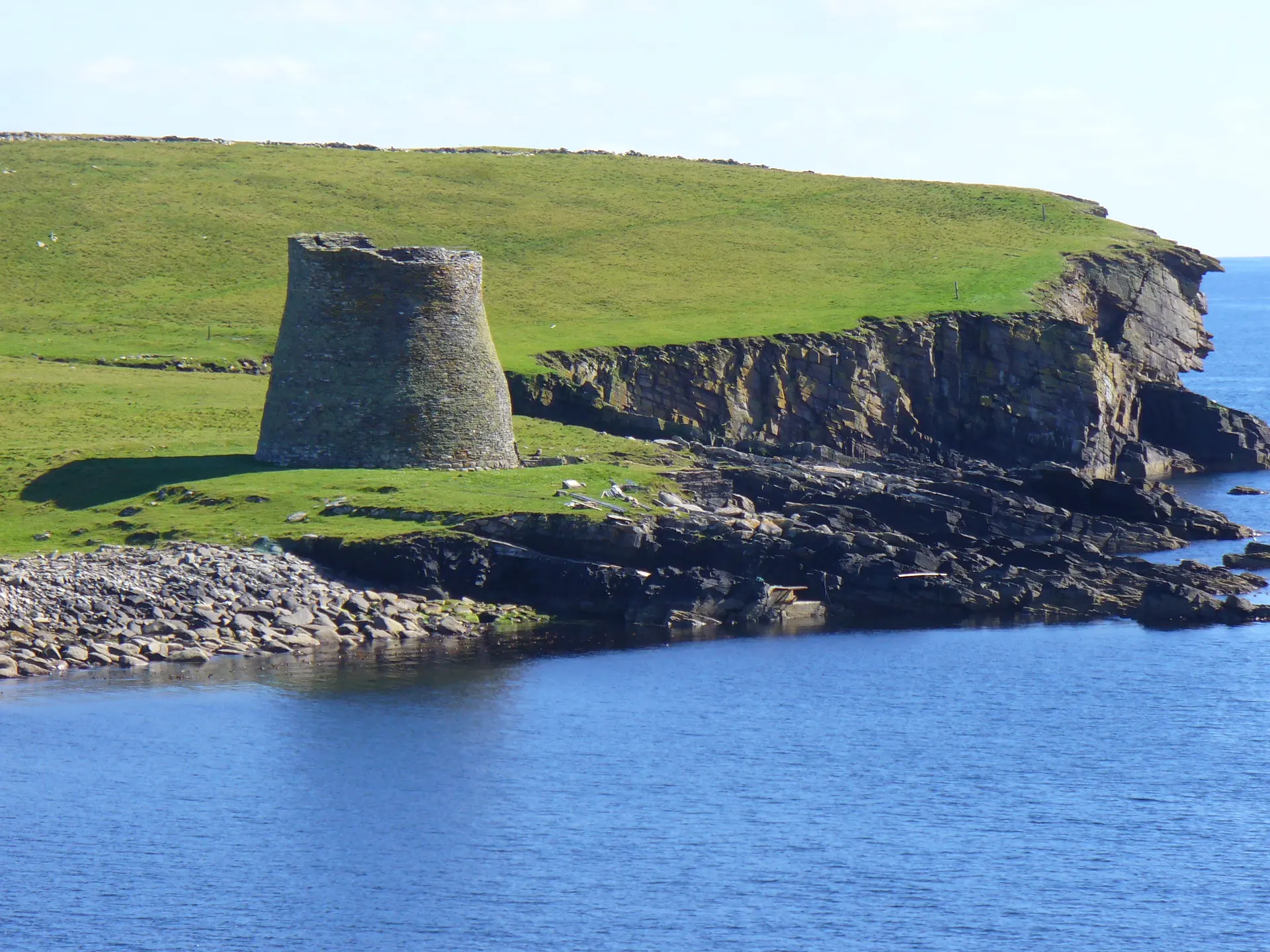
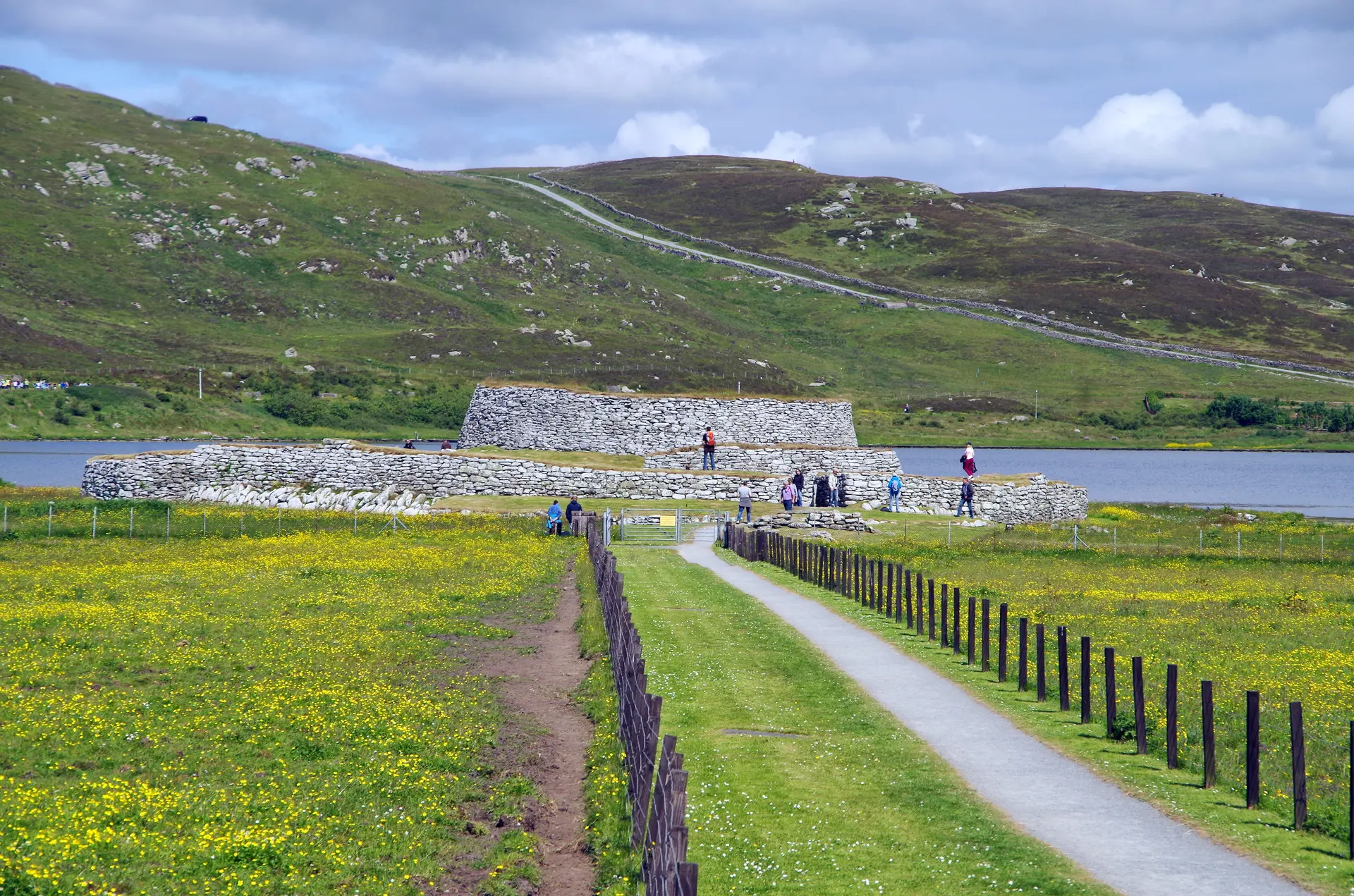
Image of Broch of Mousa. Image source · CC-BY-SA-2.0
Visit essentials
A quick read before you go
- Duration
- Three hours for a thorough exploration of the broch and a walk around the island.
- Access
- Departs from Sandsayre, Leebitton, in the Sandwick area of south Mainland Shetland.
Overview
On low, treeless Mousa, this tapering drystone tower still reaches its original 13.3-metre height. Its five-metre-thick base encloses two concentric wall shells, six superimposed galleries, a roughly 0.9-metre-wide clockwise stair, and a compact 6.1-metre-diameter interior with three intramural cells, a central hearth, and a floor tank. A single low west doorway requires visitors to stoop.
Built around 300 BCE—some scholars give a range of 300 to 100 BCE—Mousa is the best-preserved achievement of a culture that built more than five hundred brochs across northern and western Scotland. The builders remain unknown. Its massive walls, small interior, and island setting have resisted two millennia of Shetland weather.
Norse accounts show it still in use long afterward: Egil's Saga places a shipwrecked eloping couple here around 900 CE, while the Orkneyinga Saga describes Earl Harald Maddadsson's negotiated end to a siege around 1153 CE because the broch was 'an unhandy place to attack.'
Historic Environment Scotland now manages the monument and the RSPB the nature reserve. One of the British Isles' largest European storm-petrel colonies nests in its walls, returning at night from late May to mid-July. Mousa also joins Old Scatness and Jarlshof on the UK's UNESCO World Heritage Tentative List.
Why this place is sacred
Thin places are often characterised by a sense of temporal collapse, a feeling that the boundary between past and present has become permeable. At Mousa, this collapse is architectural. The broch stands essentially as it was built. The stones you touch were placed by Iron Age hands. The staircase you climb was designed for Iron Age feet. The view from the wall-head is the same view the original inhabitants knew: open sea, low island, immense sky.
The sea crossing is central to the experience. Leaving the mainland by boat, crossing open water to an uninhabited island, creates a separation from the ordinary that few sites can replicate. The island itself amplifies this. Mousa is treeless, exposed, its landscape reduced to the essentials of wind, grass, rock, and sea. There are no buildings other than the broch. No roads. No electricity.
The conditions that the Iron Age builders contended with, weather, isolation, the fundamental challenge of survival in an exposed environment, remain immediately present.
Inside the broch, the experience intensifies. The low doorway requires stooping. Beyond it, the interior is compact, its circular wall rising around you like the inside of a well. Looking up through thirteen metres of perfectly preserved masonry, the stones receding toward the sky, is vertiginous and humbling.
Climbing the narrow staircase through the wall cavity, feeling the walls close around you in the dark, ascending through galleries that have stood undisturbed for over two millennia, and emerging at the top with panoramic views of the Shetland seas, is an experience unlike any other accessible in European archaeology.
The storm petrels add a dimension that transcends the archaeological. These tiny birds, weighing less than a robin, spend their lives at sea, returning to land only to nest. At Mousa, they have chosen the ancient walls as their nesting site, filling the gaps between the stones with their eggs and their bodies.
On summer evenings, as the light fades into the prolonged twilight of the simmer dim, thousands of storm petrels stream back to the broch, their churring calls filling the air, their silhouettes flickering past against the pale sky. Sitting quietly beside a 2,300-year-old tower as these birds return from the open ocean connects visitors to cycles of nature and time far beyond the human scale.
The broch's primary purpose remains debated. The defensive interpretation, a tower built to resist seaborne raiders, dominated for two centuries but is now challenged by scholars who view brochs as status symbols, communal gathering places, or expressions of social identity. The floor tank and central hearth indicate domestic habitation. The intramural cells served as storage or living spaces.
Recent scholarship suggests that Iron Age domestic architecture in Atlantic Scotland may have had sacred dimensions, with the dwelling understood as a sacred refuge.
The broch was constructed around 300 BCE and appears to have been inhabited through the Iron Age and into the Norse period. Norse reuse as shelter and fortification is documented in two medieval sagas. The structure was first described by antiquarian George Low in 1774. First detailed survey and plans were drawn in 1861. The broch was placed into state guardianship in 1919. It was included on the UK's UNESCO World Heritage Tentative List in 2011.
Experience and orientation
The experience begins at Sandsayre, near Sandwick, where the Mousa Boat departs. The crossing of Mousa Sound takes roughly fifteen minutes. Seals are often visible on rocks near the landing point, and seabirds accompany the boat.
From the landing, a well-worn path leads across the island. Mousa is low and treeless. The landscape is moorland and shore, the sky vast. The broch appears as a dark shape on the skyline, growing larger as you approach until its full scale is apparent.
The entrance is a single low doorway on the west side. You stoop to enter. Inside, the circular interior is compact but the vertical space is immense. Thirteen metres of perfectly preserved drystone masonry rise above you, the stones gradually converging as the walls taper inward. Three intramural cells at ground level open off the main space. A central hearth and floor tank are visible on the floor.
The staircase begins at the first gallery level. Narrow and dark, it spirals clockwise through the wall cavity, passing through six superimposed galleries. The passage is roughly 0.9 metres wide with low headroom. A torch or head-lamp is useful. The ascent is gradual but the enclosure is total: you are within the fabric of the broch itself, surrounded by stones placed over two thousand years ago.
Emerging at the wall-head, the panorama unfolds. The sea extends in every direction. Mainland Shetland is visible across the sound. The wind, held back within the broch, returns with force. The sense of elevation and exposure is dramatic.
The storm petrel trips operate on late evenings from late May to mid-July. The boat departs in the evening and returns around midnight or later. As the light fades into the simmer dim, the storm petrels begin their return, streaming in from the sea to their nesting sites in the broch walls.
Their churring calls, the flicker of tiny wings against the pale sky, and the presence of the ancient tower in the half-light create an experience that is genuinely moving.
The Mousa Boat departs from Sandsayre, Leebitton, in the Sandwick area of south Mainland Shetland. The broch is approximately a 30-minute drive from Sumburgh Airport or Lerwick. Daytime sailings run April to September, daily except Saturdays, weather dependent. Storm petrel evening trips operate late May to mid-July. The walk from the landing point to the broch takes approximately 20 minutes. Allow 2-3 hours for the island visit including boat crossings.
Context and lineage
No foundation narrative survives for the Broch of Mousa. The builders' identity is unknown. They were part of a wider broch-building culture in Shetland and across Scotland. The Norse sagas provide the earliest recorded narratives associated with the broch: a couple sheltering during a winter shipwreck in Egil's Saga, and a siege in the Orkneyinga Saga. George Low provided the first antiquarian description in 1774.
No continuous cultural tradition connects the present to the Iron Age builders. Norse reuse is documented in saga literature. The broch entered state guardianship in 1919. It is now managed by Historic Environment Scotland as a heritage monument and by the RSPB as a nature reserve. The UNESCO tentative list nomination recognises its Outstanding Universal Value alongside Old Scatness and Jarlshof.
George Low
Traditions and practice
No specific ritual practices are documented for the broch. Iron Age ritual activity in brochs remains a subject of scholarly speculation. The interior contained a hearth and floor tank; whether any ceremonial function attached to these features is unknown. Recent scholarship suggests domestic architecture in Iron Age Atlantic Scotland may have had sacred dimensions.
The broch is visited as a heritage site and natural history destination. The RSPB manages Mousa as a nature reserve. Storm petrel monitoring is the primary ongoing scientific activity.
Allow the sea crossing to serve as a transition. Walk slowly across the island, attending to the landscape. At the broch, approach without haste. Enter through the low doorway and allow your eyes to adjust. Look up through the thirteen metres of masonry. If comfortable in enclosed spaces, climb the staircase to the wall-head and stand where the Iron Age builders once stood.
If visiting during a storm petrel evening trip, sit quietly near the broch as darkness gathers and listen for the birds. The experience of ancient stone and wild birds in the simmer dim is unlike anything else.
Iron Age Broch Culture (Atlantic Scotland)
HistoricalThe Broch of Mousa is the finest surviving example of the broch tradition, a uniquely Scottish architectural form of the Iron Age. Over 500 brochs were constructed across Scotland, primarily in the north and west. Mousa represents the zenith of this tradition: its 13.3-metre height, five-metre wall thickness, six internal galleries, and intramural staircase demonstrate engineering knowledge and construction skill that remain impressive. The builders were Iron Age communities of Atlantic Scotland whose identity and social organisation are unknown.
The interior contained a central hearth and floor tank suggesting domestic habitation. Three intramural cells at ground level served as storage or living spaces. The upper galleries and wall-head platform may have served multiple functions. Whether ritual practices occurred within the broch is unknown, though recent scholarship suggests Iron Age domestic architecture may have had sacred dimensions.
Norse Saga Tradition
HistoricalThe Broch of Mousa appears in two medieval Norse sagas, confirming its continued use and prominence centuries after construction. In Egil's Saga (set c. 900 CE), a couple eloping from Norway are shipwrecked on Mousa and shelter in the broch for the winter. In the Orkneyinga Saga (c. 1153 CE), Earl Harald Maddadsson besieges the broch and finds it 'an unhandy place to attack.' These references testify to the broch's structural integrity over twelve centuries.
Norse use was opportunistic: shelter during shipwreck and fortification during disputes. The saga accounts suggest the broch retained its defensive reputation over a thousand years after construction.
Perspectives and open questions
The Broch of Mousa is universally recognised as the finest surviving example of Iron Age architecture in Scotland and one of the most important prehistoric structures in Europe. Its exceptional preservation, remote island setting, and dual role as heritage monument and wildlife habitat make it a site of multiple significances.
Scholarly perspective
The Broch of Mousa is the defining example of the broch tradition. Its construction around 300 BCE using sophisticated double-wall drystone techniques with internal galleries and intramural staircase represents the pinnacle of a uniquely Scottish building tradition. The broch's exceptional preservation is attributed to its unusually massive construction, with walls five metres thick at the base, and its island location, which protected it from stone-robbing.
The close pairing with Burraland Broch across Mousa Sound supports theories about visual display and territorial signalling. The UNESCO tentative list nomination emphasises the site's Outstanding Universal Value as representing the zenith of Iron Age Shetland. Norse saga references confirm the broch's structural integrity over twelve centuries after construction.
Living and traditional perspectives
No indigenous tradition from the original builders survives. The Norse sagas provide the earliest narrative context. Egil's Saga and the Orkneyinga Saga document practical use of the broch as shelter and fortification in the Norse period, testifying to its continued structural soundness centuries after construction.
Alternative interpretations
The experience of ascending the internal staircase, from darkness to light, from enclosure to open sky, has been interpreted by some as a metaphor for spiritual transformation. The circular form and the ascending spiral staircase have attracted comparison to labyrinth traditions. These interpretations have no archaeological support but reflect the powerful experiential quality of the broch's architecture.
Open questions
The identity and social organisation of the builders remain unknown. Whether the broch served primarily as a dwelling, fortification, status symbol, communal gathering place, or some combination is not determined. The relationship with Burraland Broch, whether complementary, competitive, or sequential, is not understood. What beliefs, if any, the builders attached to the structure's form and orientation are entirely lost. The reason for the eventual decline of broch-building across Scotland remains debated.
Plan your visit
Access and arrival
Departs from Sandsayre, Leebitton, in the Sandwick area of south Mainland Shetland. To reach Shetland: NorthLink Ferries from Aberdeen (12-14 hours) or flights from Aberdeen, Edinburgh, Glasgow, and other Scottish airports to Sumburgh Airport. The broch is approximately 30 minutes drive from Sumburgh Airport or Lerwick. Daytime sailings: adults approximately GBP 18, children GBP 8. Storm petrel night trips: adults approximately GBP 30, children GBP 10. Daytime sailings do not require advance booking. Storm petrel trips should be booked online.
All sailings are weather dependent and may be cancelled at short notice.
Accommodation in the Sandwick area is limited. More options in Lerwick, approximately 15 km north. Hotels, guest houses, and self-catering throughout Shetland.
Respectful visit
Warm, waterproof clothing and sturdy footwear essential. Shetland weather is changeable and the island is exposed. Layers recommended even in summer.
Photography permitted throughout. Tripods useful for storm petrel night trips. Do not use flash near nesting birds.
No offerings expected. The boat trip fare supports the site's accessibility.
Do not remove stones or climb on fragile sections. No dogs during storm petrel nesting season. No flash photography near nesting birds. All sailings are weather dependent.
The staircase is narrow with uneven steps and low headroom. Not suitable for those with severe claustrophobia or significant mobility limitations. Flash photography should not be used near nesting birds. Dogs are not permitted during storm petrel nesting season (May-August).
Current practical details
Address
Shetland ZE2 9HP, UK
Hours
Hours, fees, and access can change — verify on the official source before you travel. Practical details last checked Jun 2026.
Location
Map loads as you approach this section.
Pilgrim reflections
A portrait of encounter, not a score
Pilgrims describe what they felt, how present they could become, and whether the place would shape a journey. There are no stars and no ranking of traditions.
No reviewed reflections yet
The first pilgrims can help describe the character of being here.
Share a reflection
Available after an account-backed “Been there.” Every reflection is reviewed before publication.
Nearby sacred places
Explore other sacred places in the region. Proximity does not establish access or travel time; check each place’s guidance.
References
Sources consulted for this page. Source categories describe the publication, not a guarantee that every claim is verified. Traditional accounts and outside interpretations may differ.
- 01Mousa Broch - Historic Environment Scotland — Historic Environment ScotlandofficialOfficial custodian of the monument; authoritative visitor and historical information
- 02Mousa Broch: History - Historic Environment Scotland — Historic Environment ScotlandofficialDetailed historical narrative from the official custodian
- 03Mousa, Old Scatness and Jarlshof: the Zenith of Iron Age Shetland - UNESCO World Heritage Centre — UNESCOofficialUNESCO Tentative List nomination document with justification for Outstanding Universal Value
- 04Mousa - Shetland Heritage — Shetland HeritageSource contextLocal heritage organisation with detailed archaeological and historical information
- 05Mousa Nature Reserve - RSPB — Royal Society for the Protection of BirdsofficialRSPB reserve information covering storm petrel colony and wildlife
- 06The Mousa Boat - Shetland's Essential Boat Trip — The Mousa BoatofficialOfficial boat operator providing access to Mousa island
- 07Site in Focus - Mousa Broch - Archaeology Shetland — Archaeology ShetlandacademicArchaeological organisation providing specialist interpretation
- 08Mousa - the broch and RSPB reserve - WalkHighlands — WalkHighlandsguideWalking guide with practical visitor information
- 09Broch Architecture - Odyssey Adventures — Odyssey AdventuresacademicDetailed architectural analysis of broch construction techniques
- 10Broch of Mousa - Wikipedia — Wikipedia contributorsencyclopediaGood overview with architectural details and Norse saga references
- 11Broch of Mousa - Atlas Obscura — Atlas ObscuraguidePopular travel guide with visitor perspective
- 12Storm Petrels at Mousa Broch in Shetland - NorthLink Ferries — NorthLink FerriesguideVisitor experience description of storm petrel trips
Share a photo
Help visitors recognize Broch of Mousa. Every submission is reviewed before publication.