Beverley Minster
Where Saxon sanctuary and Gothic grandeur mark thirteen centuries of unbroken prayer
Understand sacred places, explore living traditions, and learn how to engage respectfully with Pilgrim Map.
Access has not been verified. Check current local guidance before planning a visit.
Beverley, England, United Kingdom
Read the sources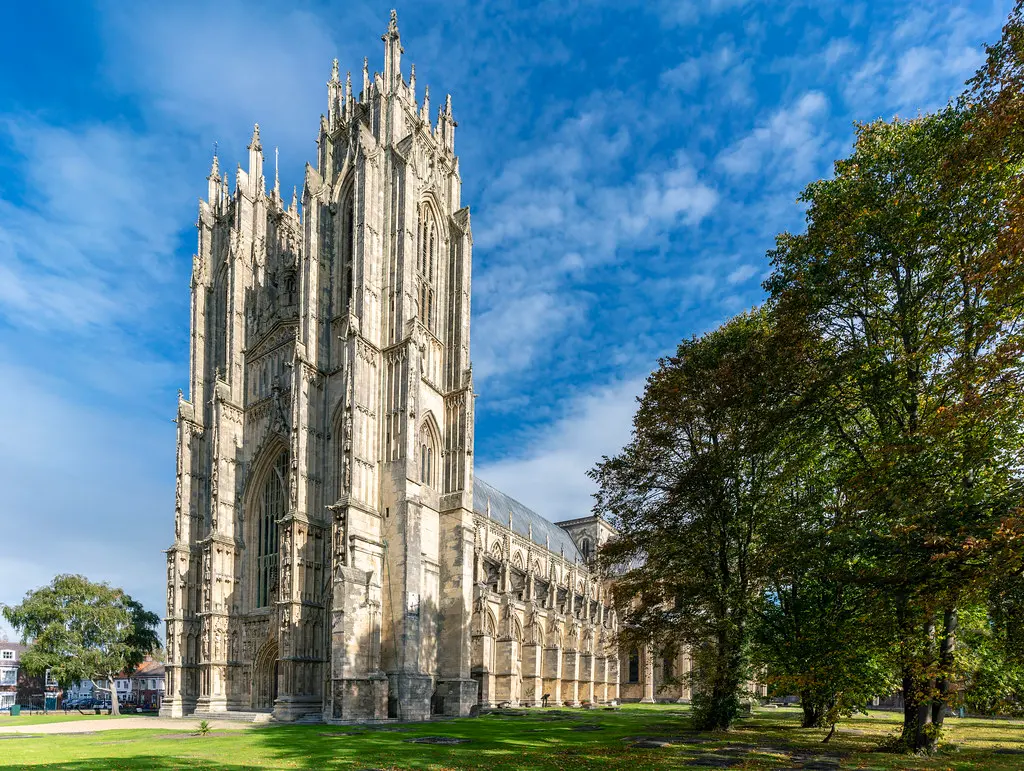
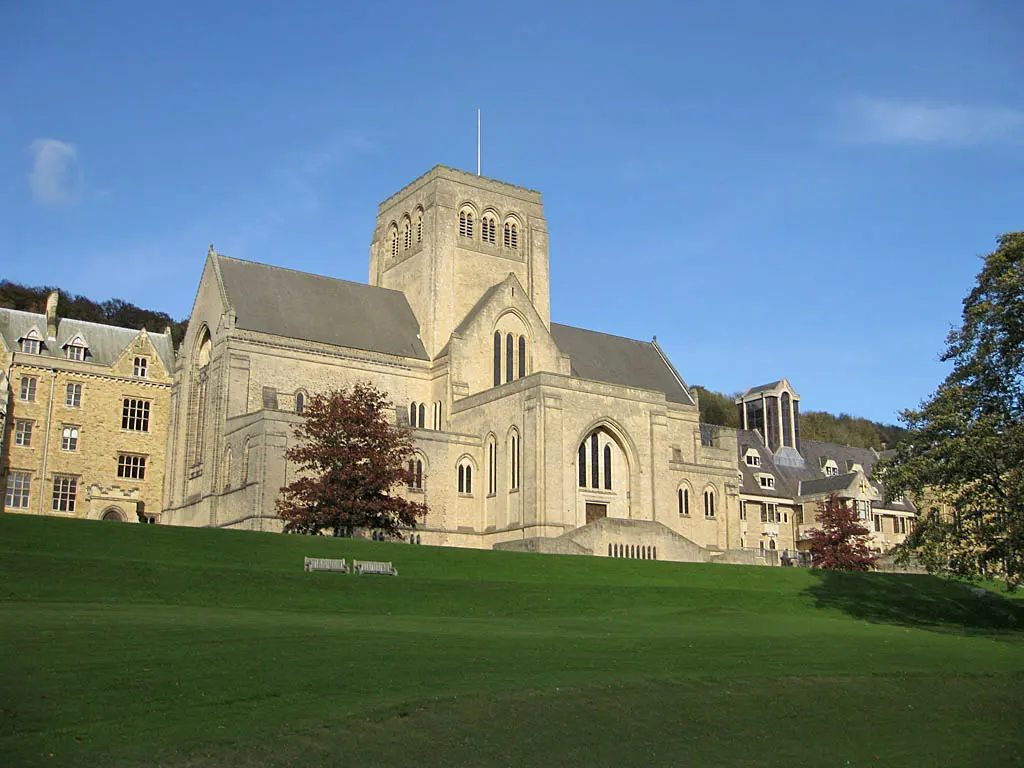
Image of Beverley Minster. Image source
Visit essentials
A quick read before you go
- Duration
- A thorough visit requires one to two hours for the building itself.
- Access
- Beverley is accessible by train from Hull (approximately 15 minutes) and by road via the A164.
Overview
Beverley Minster's age, beauty, and devotional scale often silence visitors. St John of Beverley, a Bishop of York, withdrew from his see around 700 AD to found a monastery in what is now East Yorkshire. After his death in 721, reported tomb miracles drew pilgrims who reshaped the town; canonization in 1037 accelerated the flow.
The present building rose between 1190 and 1420, joining three Gothic styles in a harmony architectural historians consider exceptional: Early English choir, Decorated nave, and Perpendicular towers read as a unified vision. Sixty-eight misericords, more than any parish church in England, open carved windows into medieval life, while over seventy musical-instrument carvings suggest sound mattered as much as stone.
Near the altar, the rough Saxon frith stool once granted sanctuary to anyone who reached it. For nearly seven hundred years this stone chair stood between fugitives and the law. Its power ended in 1624, but it remains worn smooth by centuries of desperate hands.
Why this place is sacred
The minster stands on ground that has been consecrated for over thirteen centuries. This is not merely historical continuity but a kind of saturation. Every stone has absorbed the prayers of generations beyond counting.
St John of Beverley was no obscure saint. He taught the Venerable Bede, ordained him as deacon and priest. Five English kings came to pray at his shrine before battle, including Henry V on his way to Agincourt. The miracles attributed to his intercession filled medieval chronicles. When you stand above the vault where his remains lie beneath the nave, you stand at a node of medieval English faith.
The frith stool adds another dimension entirely. Sanctuary was not metaphor here but legal reality. Anyone who reached this chair could claim protection from arrest, trial, and punishment for thirty days. The church became a liminal space, neither fully within the world's jurisdiction nor entirely outside it. Something of that in-between quality persists. Visitors often describe the minster as suspended, a place where ordinary time moves differently.
The architecture itself seems designed to thin the veil. The Gothic builders understood that proportion and light could create effects beyond the merely aesthetic. The great east window floods the choir with morning sun. The stone forest of pillars draws the eye upward until the roof vanishes into shadow. Whatever the medieval masons knew about engineering, they also knew something about consciousness.
The original monastery founded by St John served the usual Benedictine functions: daily offices, education, care for the poor, and prayer for benefactors living and dead. After the saint's death and subsequent miracles, the site transformed into a major pilgrimage centre, requiring the grand architecture that could house both worship and the flow of pilgrims seeking healing at the shrine.
The collegiate church that replaced the monastery continued these functions until the Reformation, when the shrine was destroyed but the building preserved as a parish church.
The Reformation stripped away the pilgrimage apparatus, the relics, the side altars, and the religious community that had maintained them. St John's shrine was demolished. Yet the building survived, too large and too loved to be destroyed or abandoned. The parish absorbed it, continuing daily prayer in a structure built for far grander purposes.
In the centuries since, Beverley Minster has served as both ordinary parish church and extraordinary monument. Restoration work in the 18th and 19th centuries saved it from collapse. Today it functions as a working church, concert venue, and heritage site, drawing visitors who come for history, architecture, music, or prayer, often finding all four intertwined.
Experience and orientation
The first impression is scale. Beverley Minster is larger than one-third of English cathedrals, yet it carries its size with grace rather than aggression. The Gothic proportions lift the eye without crushing the spirit. Light enters through clerestory windows high above, creating a luminosity that seems independent of weather.
Many visitors describe what might be called temporal dislocation. The medieval misericords depict scenes both sacred and scandalous, as though the carvers felt free to be fully human here. The Percy tomb, with its canopy of extraordinary delicacy, holds a noblewoman dead for nearly seven centuries yet somehow present. The frith stool, rough and ancient, speaks of desperate hope in a voice older than the Gothic walls that surround it.
Those who sit quietly in the choir often report a settling quality, as though the accumulated prayer of thirteen centuries exerts a kind of gravity. This is not a dramatic or destabilizing experience but something gentler: a sense of being held within a continuity larger than individual life. Seekers in transition find this particularly affecting. The minster has witnessed so many generations that personal upheaval can feel both significant and held.
The musical tradition adds another layer. Over seventy carvings of medieval instruments line the walls, and the minster maintains an active choral programme. To hear evensong here is to encounter sound shaped by spaces designed specifically to receive it.
Beverley Minster rewards unhurried attention. The guided audio tour provides historical context, but the deeper experience requires sitting, often in the choir where the proportions concentrate, and allowing the space to work at its own pace.
The frith stool, located near the altar, deserves particular attention. Consider what it meant for this stone chair to stand between a hunted person and their pursuers. Consider what kind of society would honour such a boundary. The questions may be more valuable than answers.
If timing permits, attend a service. The minster is not a museum but an active church. The sound of prayer in this space connects you to every voice that has risen here since St John first gathered his community.
Context and lineage
John was a scholar and bishop in the early English church, known for his learning and his care for the poor and disabled. Bede, whom John ordained, recorded several miracles performed during his lifetime, including healing a mute youth and curing a dying nun. Around 700 AD, John withdrew from his duties as Bishop of York to found a monastery at Beverley, where he spent his final years in prayer and contemplation.
His death in 721 was the beginning rather than the end of his story. Miracles continued at his tomb with such frequency that pilgrims began arriving in numbers that would transform the small settlement. By the time he was officially canonized in 1037, Beverley had become one of the most important pilgrimage sites in northern England, its economy and identity shaped by the flow of the faithful seeking the saint's intercession.
The monastery St John founded continued until the Norman Conquest, when it was re-established as a collegiate church served by secular canons rather than monks. This community maintained the shrine and the daily round of prayer until the Reformation, when the religious establishment was dissolved but the building was preserved as a parish church.
The loss of the shrine did not end pilgrimage entirely. Throughout the centuries since, visitors have continued to come, drawn by the saint's memory even without the apparatus of medieval devotion. The minster today maintains an active parish life while welcoming thousands who come for history, architecture, music, and something harder to name.
St John of Beverley
founder
Bishop of York who founded the monastery at Beverley around 700 AD. His tomb became a major pilgrimage site after his death in 721, with miracles reported for centuries. Canonized in 1037, he remains the spiritual heart of the minster.
The Venerable Bede
historical
The great historian and theologian of early England was ordained both deacon and priest by John of Beverley. Bede's writings provide our earliest records of John's miracles and character.
Lady Eleanor Percy
historical
A noblewoman of the powerful Percy family whose elaborate tomb, dating to around 1340, is considered one of the finest examples of medieval English funerary sculpture.
Traditions and practice
Medieval pilgrims would have approached the shrine of St John through a carefully orchestrated sequence of spaces, building anticipation before the climactic encounter with the saint's relics. They would have made offerings, often of candles or coins, and perhaps kept vigil through the night. Some sought specific healings; others came in thanksgiving for miracles already received.
The sanctuary tradition required specific rituals. A fugitive reaching the frith stool had thirty days of protection, during which they were fed by the church. If they confessed their crime and agreed to abjure the realm, they could depart safely for exile. The physical act of sitting in the chair was legally binding, creating a space where neither civil nor criminal law could reach.
Today the minster offers daily services including morning and evening prayer, with Eucharist on Sundays and feast days. The choral tradition is maintained by a professional choir, with evensong a particular highlight for visitors seeking to experience the building through sound.
Concerts, recitals, and special services mark the liturgical calendar. St John of Beverley's feast day on October 7th sees commemorative services. The minster also hosts educational programmes, guided tours, and events that bring the community together within its ancient walls.
If you seek more than a tourist visit, consider these approaches. Attend evensong if timing permits, allowing the music to reveal what the architecture cannot show. Sit in the choir stalls where medieval canons once chanted the daily offices, and notice how the proportions change the quality of attention.
Visit the frith stool with genuine contemplation of what sanctuary meant, not as historical curiosity but as spiritual principle. What would it mean to create spaces where normal rules do not apply? What would it mean to reach such a space?
Before leaving, light a candle near the site of St John's shrine. The act connects you to the thirteen centuries of pilgrims who came before, each bringing their own burdens, hopes, and gratitude.
Church of England
ActiveBeverley Minster serves as an active parish church within the Church of England, continuing a tradition of Christian worship on this site that stretches back over 1,300 years. The building represents the continuity of English Christianity from its Anglo-Saxon roots through the medieval period to the present day.
Regular services include morning and evening prayer, Sunday Eucharist, and choral evensong. The liturgical calendar is observed with particular attention to major feasts. St John of Beverley is commemorated on October 7th. The choral tradition is maintained by a professional choir that sings regularly during term time.
Medieval Pilgrimage
HistoricalFrom the 8th century until the Reformation, Beverley was one of the most important pilgrimage sites in northern England. Pilgrims came to seek the intercession of St John of Beverley, whose miracles were reported for centuries after his death. The shrine was destroyed in the 1540s, ending the formal pilgrimage tradition.
Medieval pilgrims would have approached the shrine through a sequence of liturgical spaces, made offerings, and perhaps kept vigil hoping for healing or blessing. The most desperate sought not the shrine but the frith stool, claiming sanctuary from persecution.
Perspectives and open questions
Beverley Minster invites interpretation from multiple angles: architectural, historical, spiritual, and personal. Each perspective reveals aspects the others cannot reach, and the fullest understanding holds them together without forcing resolution.
Scholarly perspective
Architectural historians regard Beverley Minster as one of England's finest Gothic buildings, notable for the unusual harmony achieved across three distinct stylistic periods. The coherence of the design, despite construction spanning over two centuries, suggests continuity of vision or exceptional sensitivity by later builders to earlier work.
Historians of medieval religion emphasize the minster's importance as a pilgrimage site. The cult of St John of Beverley was one of the most significant in northern England, drawing pilgrims from across the region and beyond. The sanctuary rights associated with the frith stool provide valuable evidence for understanding the relationship between church and secular power in medieval England.
Musicologists note the exceptional collection of medieval instrument carvings, over seventy in total, which provide evidence for instrumental practice in 14th-century England. The minster's ongoing musical tradition maintains connection with this heritage.
Living and traditional perspectives
For the Church of England, Beverley Minster represents the continuity of English Christianity from its earliest roots. St John of Beverley connects the present church to the missionary age when England was being converted. The building itself embodies the medieval church's ambition to create spaces that lifted the soul toward God.
The sanctuary tradition speaks to a Christian understanding that the church must sometimes stand between power and the powerless. The frith stool represents a claim that there exist spaces where ordinary justice yields to mercy, where the hunted may find rest.
Alternative interpretations
Some visitors approach the minster through an interest in medieval symbolism, seeing in its carvings and proportions encoded knowledge about sacred geometry, musical harmony, or cosmological understanding. The musical instrument carvings in particular have attracted interpretation as records of medieval sound theory with possible esoteric dimensions.
The frith stool draws interest from those exploring concepts of sacred space and liminal zones. The idea that a physical location could create legal protection, that sitting in a particular chair could change one's status under law, resonates with those who understand sacred sites as places where ordinary rules shift.
Open questions
Significant questions remain about the minster's early history. The form of St John's original monastery, the extent of pilgrimage activity before and after his canonization, and the full history of sanctuary claims are all imperfectly known. The original appearance of the medieval shrine, destroyed at the Reformation, is uncertain. The exact purpose of some architectural features and the identity of many figures depicted in carvings remain matters of scholarly interpretation rather than established fact.
Plan your visit
Access and arrival
Beverley is accessible by train from Hull (approximately 15 minutes) and by road via the A164. The minster is located in the town centre at 38 Highgate. Parking is available in nearby town car parks. The building is largely accessible to wheelchair users, with ramps and accessible facilities.
Beverley offers a range of accommodation from hotels to bed and breakfasts. Hull and York, both within easy reach, provide additional options. No dedicated retreat facilities exist at the minster, but visitors seeking extended engagement might consider combining a visit with a stay at a regional retreat house.
Respectful visit
No formal dress code applies, but modest clothing appropriate for a church is appreciated. Comfortable shoes are advisable given the size of the building and the stone floors.
Photography for personal use is permitted throughout most of the building. Flash photography and tripods require advance permission. During services, no photography should be taken. Commercial photography requires formal arrangement with the minster office.
Entry is free, but the minster relies on donations to maintain its fabric and ministry. Donation points are located throughout the building. Candles may be lit at designated stands.
The minster may close or restrict access during services, concerts, and special events. Check the published schedule before visiting if timing is important. Some areas, including the choir during practice, may be temporarily inaccessible.
The minster is an active place of worship. Services take priority over tourism, and certain areas may be restricted during liturgical celebrations. Photography is generally permitted but should be exercised with discretion, particularly during prayer. Large bags and tripods require advance permission.
Current practical details
Address
38 Highgate, Beverley HU17 0DN, UK
Phone
Hours
Hours, fees, and access can change — verify on the official source before you travel. Practical details last checked Jun 2026.
Location
Map loads as you approach this section.
Pilgrim reflections
A portrait of encounter, not a score
Pilgrims describe what they felt, how present they could become, and whether the place would shape a journey. There are no stars and no ranking of traditions.
No reviewed reflections yet
The first pilgrims can help describe the character of being here.
Share a reflection
Available after an account-backed “Been there.” Every reflection is reviewed before publication.
Nearby sacred places
Explore other sacred places in the region. Proximity does not establish access or travel time; check each place’s guidance.
References
Sources consulted for this page. Source categories describe the publication, not a guarantee that every claim is verified. Traditional accounts and outside interpretations may differ.
- 01Beverley Minster — Beverley MinsterspiritualOfficial minster website
- 02History of Beverley Minster — English HeritageofficialHeritage information
- 03Beverley Minster — WikipediaencyclopediaEncyclopedia entry
- 04Beverley Minster — Britain ExpressSource contextHeritage tourism
Photo gallery
3 curated photos
Share a photo
Help visitors recognize Beverley Minster. Every submission is reviewed before publication.