Country guide
Turkey
Turkey brings together sacred architecture, pilgrimage traditions, and landscapes shaped by memory, ritual, and local devotion.
195 sacred sites across 45 regions. Use the tradition links to narrow in.
Sacred journeys
Pilgrimages in Turkey
Follow routes that connect sacred places across Turkey. Mapped-place counts reflect the current atlas.
Christianity · Aegean and western Anatolia (ancient Roman Asia)
Seven Churches of Revelation
Ἀποκάλυψις Ἰωάννου — αἱ ἑπτὰ ἐκκλησίαι
Seven first-century congregations addressed by name in the Book of Revelation, each given a specific commendation or rebuke.
9 mapped places in Turkey · 7 numbered stations + auxiliary places
Christianity · Antalya & Isparta Provinces (ancient Pamphylia and Pisidia)
St Paul Trail
Aziz Paul Yolu
A modern waymarked trail through the Taurus Mountains, following where Paul's first mission is believed to have passed.
7 mapped places in Turkey · 7-station pilgrimage
Ancient Greek religion · Aegean (Ege Bölgesi), near modern Didim
Sacred Way of Didyma
Ἱερὰ Ὁδός (Hiera Hodos) / Kutsal Yol
A defunct processional road linking a Greek city to the oracle sanctuary second only to Delphi.
2 mapped places in Turkey · 2-station pilgrimage
Browse by region
Explore Turkey region by region
Open a regional guide to see its sacred sites, traditions, and map.
Explore Turkey by facet
Refine the atlas
Related Turkey guides
Showing 145-192 of 195 sites in this country guide

Pinara
Muğla, Turkey
Pinara is one of the least-visited major Lycian cities, set on the flanks of Mount Babadağ with hundreds of rock-cut tombs honeycombed into sheer cliffs above the ruins....

Ploutonion at Hierapolis
Denizli, Turkey
The Ploutonion at Hierapolis is a sanctuary built over a CO2 vent on the Pamukkale fault, where the ancient world's most convincing proof of Hades's existence was...

Priene
Aydın, Turkey
Priene is the most completely preserved Hellenistic city on Earth — a street grid carved into the hillside below Mount Mycale, still legible after two thousand years of...
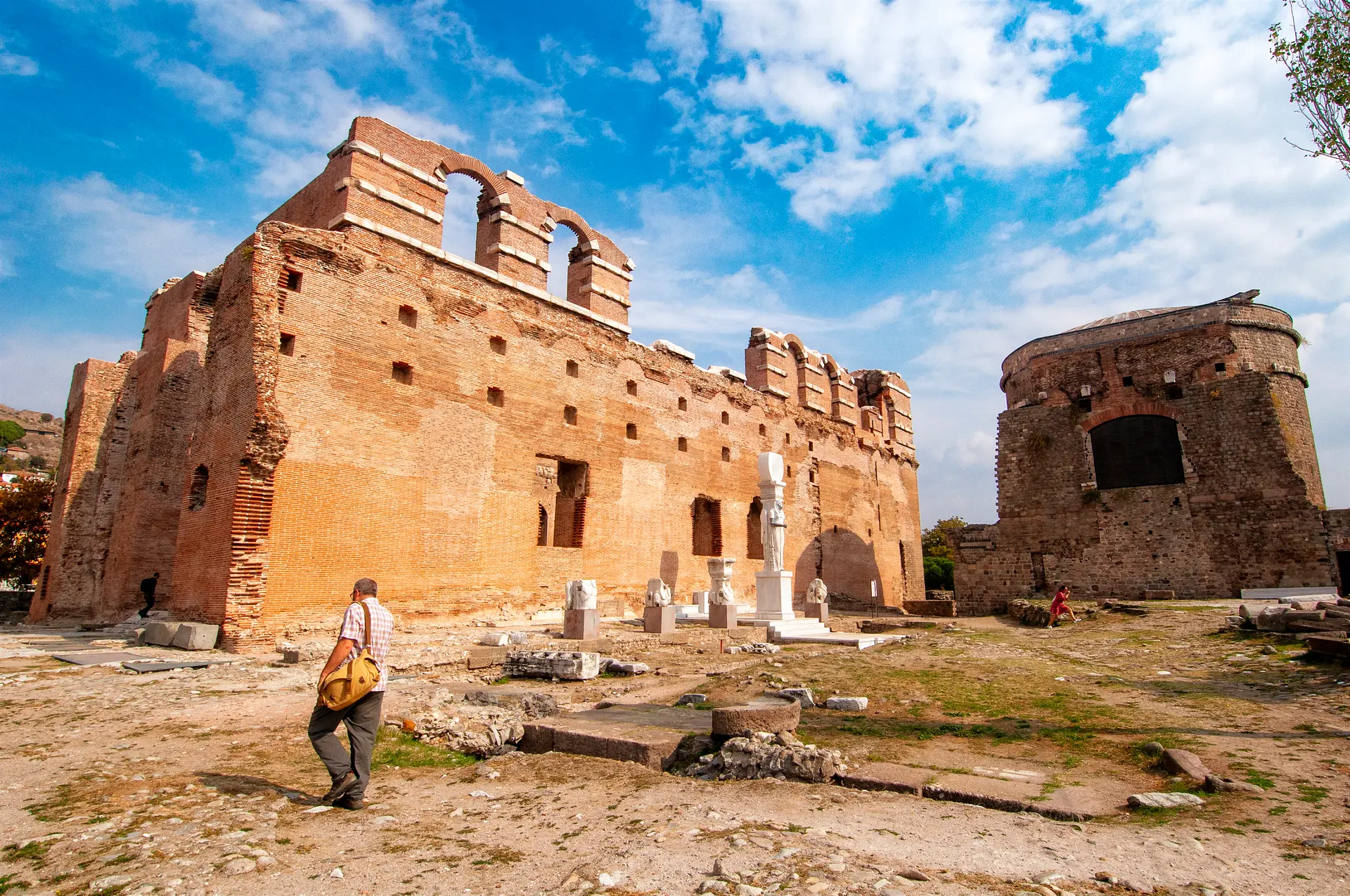
Red Basilica
İzmir, Turkey
The Red Basilica at Pergamon is one of the ancient world's most layered sacred spaces....

Rhodiapolis
Antalya, Turkey
Rhodiapolis stands on a hill above the Kumluca plain, largely unvisited, carrying one of the most extraordinary monuments in the ancient world: the mausoleum of Opramoas,...

Sagalassos
Burdur, Turkey
Set at 1,450–1,700 metres in the Taurus Mountains, Sagalassos rose from a Hittite-era predecessor to become Rome's most lavishly honoured city in Pisidia....

Samuha
Sivas, Turkey
Samuha was called the 'religious foyer of the Hittite Empire' — the supreme cult center of Šauška, goddess of love and war. A future Hittite king served as her priest here....

Šapinuwa
Çorum, Turkey
Šapinuwa was a royal Hittite city that may have briefly displaced the capital Hattusa itself, and its archive of 3,000-plus tablets—written in Hittite, Hurrian, Akkadian,...

Sardis
Manisa, Turkey
Sardis was the capital of the Lydian Empire, the city where coinage was invented, and a site where Artemis, Cybele, Yahweh, and Christ each in turn held sacred space....

Sardis Temple of Artemis
Part of Sardis
Manisa, Turkey
Two surviving Ionic columns rising against the Lydian hills are what remains of the fourth largest temple in the ancient world — a structure that replaced a Lydian...

Sarissa
Sivas, Turkey
Sarissa was a royal cult city of the Hittite Empire, dedicated to the supreme Weather God....
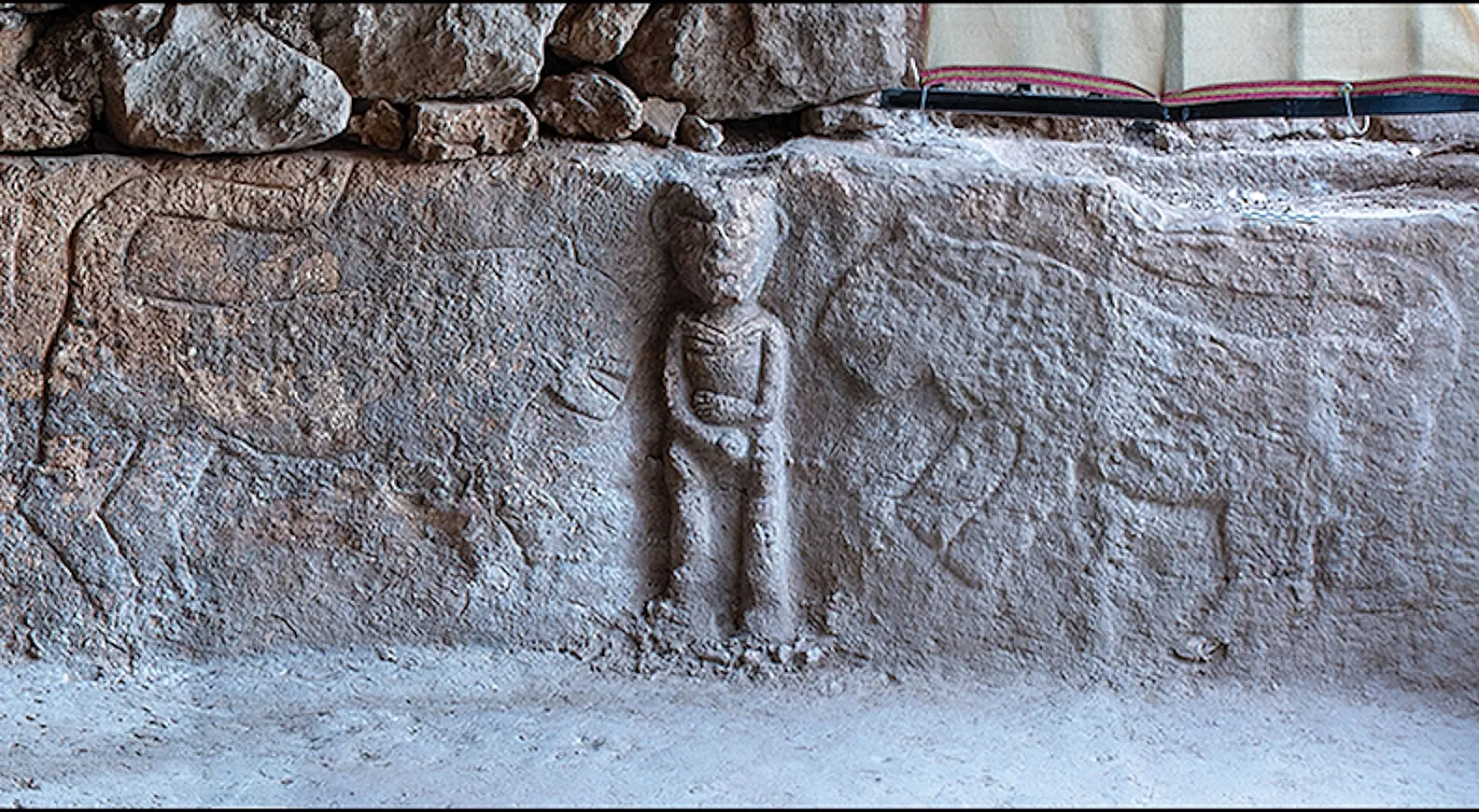
Sayburç
Şanlıurfa, Turkey
Sayburç holds the oldest known narrative artwork in human history: a 3.7-metre stone bench relief depicting a man holding his phallus, flanked by leopards, followed by a...

Sefertepe
Şanlıurfa, Turkey
Sefertepe is the easternmost site of Turkey's Taş Tepeler Neolithic network, and among the most revelatory for understanding how ancient communities managed the transition...

Selge
Antalya, Turkey
Selge occupied a natural fortress at 1,250 metres in the Taurus, overlooking the gorges of what is now Köprülü Canyon National Park....

Side
Antalya, Turkey
Side was one of the great port cities of ancient Pamphylia — a dense peninsula-city of temples, theatres, and harbor gates, unique in having its own indigenous language...
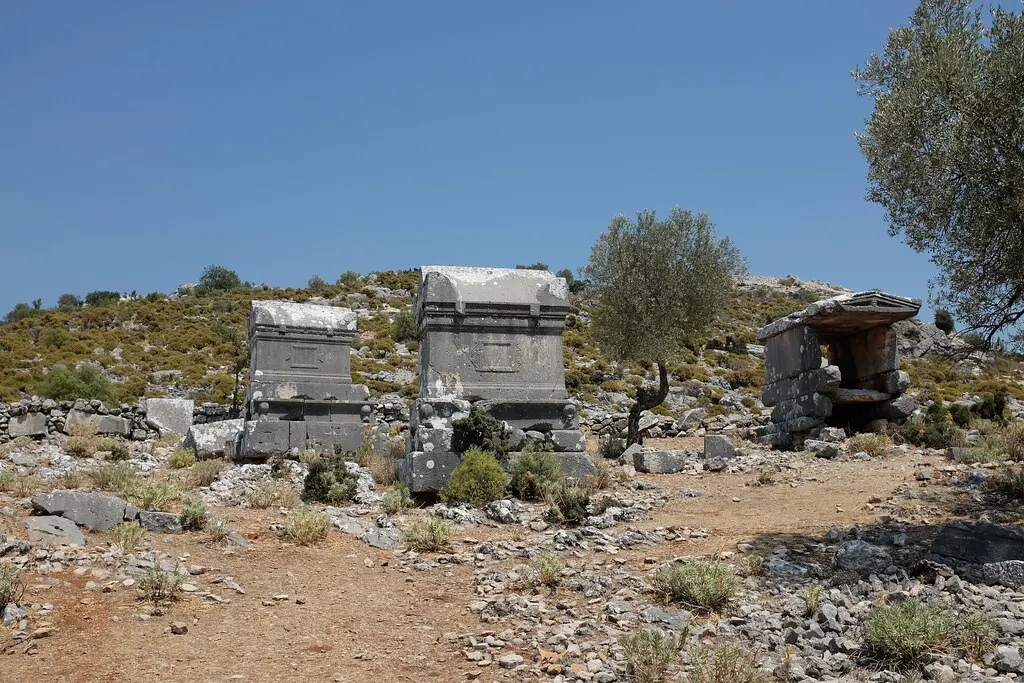
Sidyma
Muğla, Turkey
Sidyma is one of the most evocative unexcavated Lycian cities: approximately 100 tomb monuments — pillar tombs, house tombs, sarcophagi on podia — scattered through the...
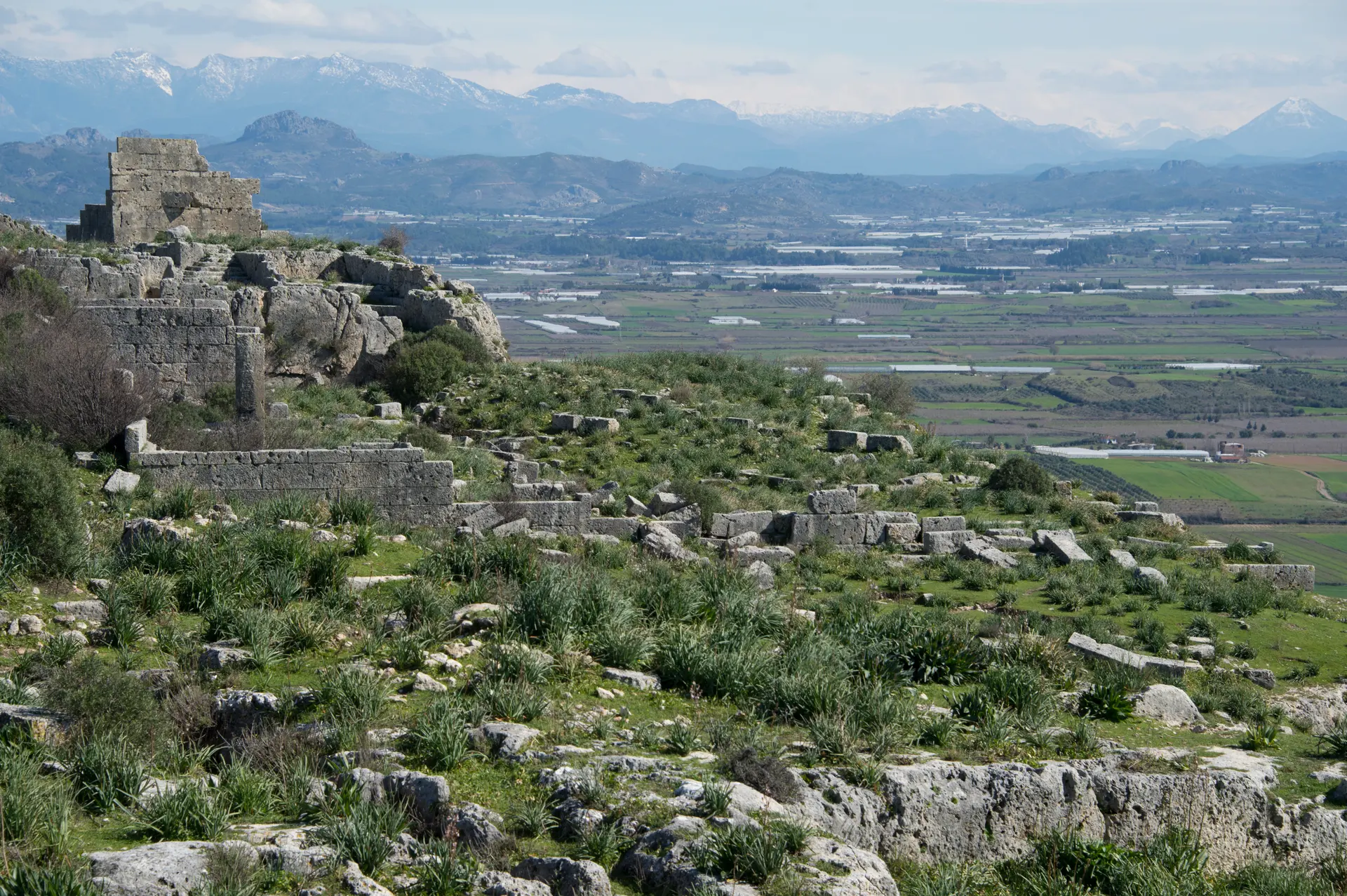
Sillyon
Antalya, Turkey
Sillyon rises 200 metres above the Pamphylian coastal plain on a clifftop acropolis that was continuously inhabited from the Hittite period through the Ottoman era — a...

Simena
Antalya, Turkey
Simena, known today as Kaleköy, is a living village built across a Lycian acropolis above the sunken ruins of the Kekova coast....

Soğmatar
Şanlıurfa, Turkey
In the Tektek Mountains southeast of Şanlıurfa, Soğmatar preserves the physical remains of a Sabian sacred landscape — seven satellite shrines surrounding a central hill...
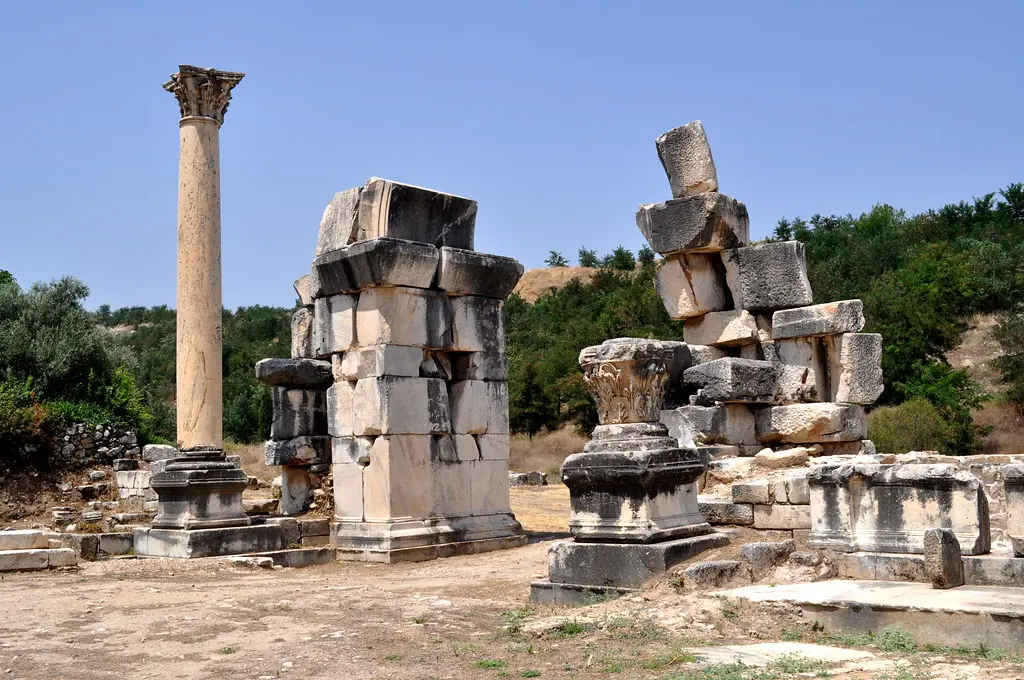
Stratonikeia
Muğla, Turkey
Stratonikeia was the unique Carian city linked by sacred procession roads to two major divine sanctuaries: the Temple of Hecate at Lagina and the Temple of Zeus...

Sumaki Höyük
Batman, Turkey
Sumaki Höyük was a Late Pre-Pottery Neolithic B and Early Pottery Neolithic settlement in the Lower Garzan Valley of Batman Province, occupied from approximately 7300 to...
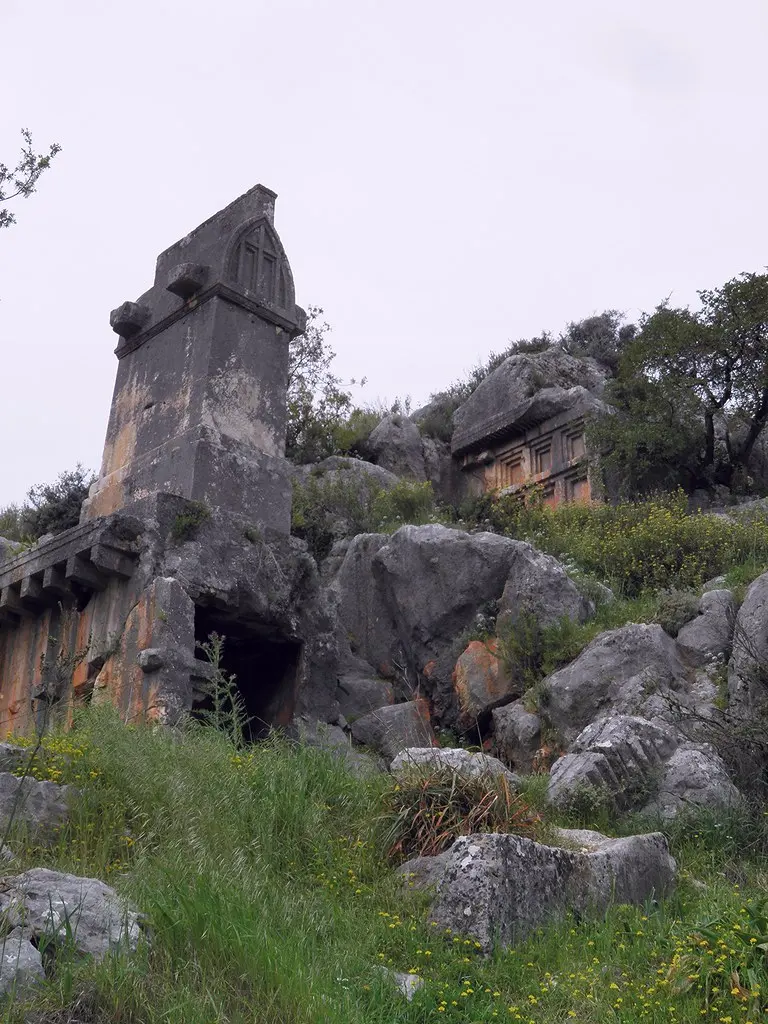
Sura
Antalya, Turkey
On a marshy inlet near ancient Myra, the oracle of Sura operated for centuries without a philosopher or priestess in sight — only fish....
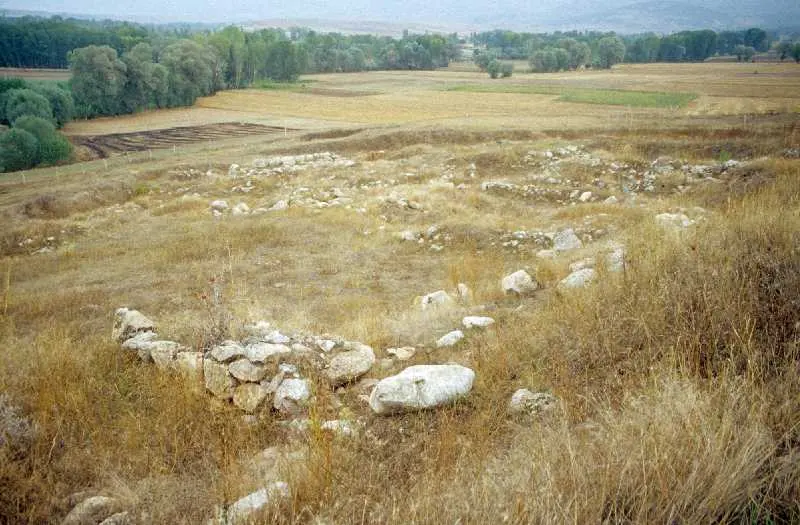
Tapikka
Tokat, Turkey
Tapikka was the Hittite Empire's northernmost garrison city, positioned on the frontier with the Kaska people....

Taşçı Reliefs
Kayseri, Turkey
Carved into cliff faces deep within a narrow gorge at the confluence of two rivers, the Taşçı Reliefs are among the most remote sacred monuments of the Hittite Empire....

Tell Tayinat
Hatay, Turkey
Tell Tayinat was the royal capital Kunulua of the Neo-Hittite Kingdom of Patina — a city of carved lion-flanked temples whose tripartite sacred architecture mirrors, in...

Telmessos Rock Tombs
Muğla, Turkey
The Telmessos rock tombs are Lycian funerary architecture at its most public: carved directly into a limestone cliff above the harbor of modern Fethiye, visible from...
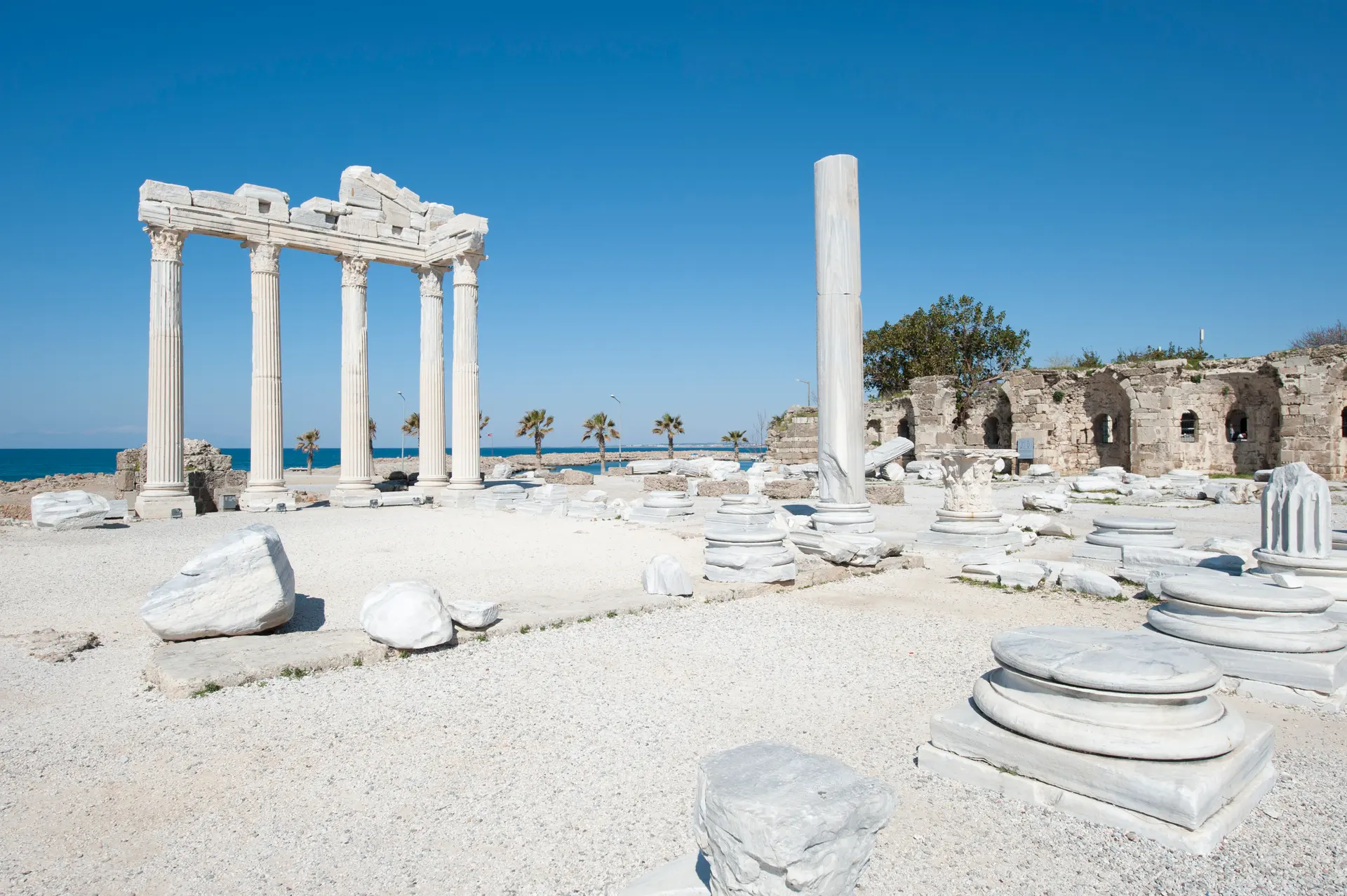
Temple of Apollo and Athena at Side
Part of Side
Antalya, Turkey
The temples of Apollo and Athena at Side occupy the westernmost tip of a Mediterranean peninsula — a harbor sacred area where two Olympian deities once watched over every...

Temple of Apollo, Didyma
Part of Didyma
Aydın, Turkey
At Didyma, the ancient world came for answers. Second only to Delphi as a prophetic sanctuary, the Didymaion was one of the largest temples ever built — its 122 Ionic...

Temple of Artemis
İzmir, Turkey
For over a millennium, the Temple of Artemis at Ephesus was the holiest sanctuary in the ancient Mediterranean world — and the largest building the Greeks ever constructed....

Temple of Athena at Assos
Çanakkale, Turkey
Perched at 235 metres above the Aegean Sea on the acropolis of Assos, the Temple of Athena has occupied this promontory since approximately 540 BC — the sole surviving...
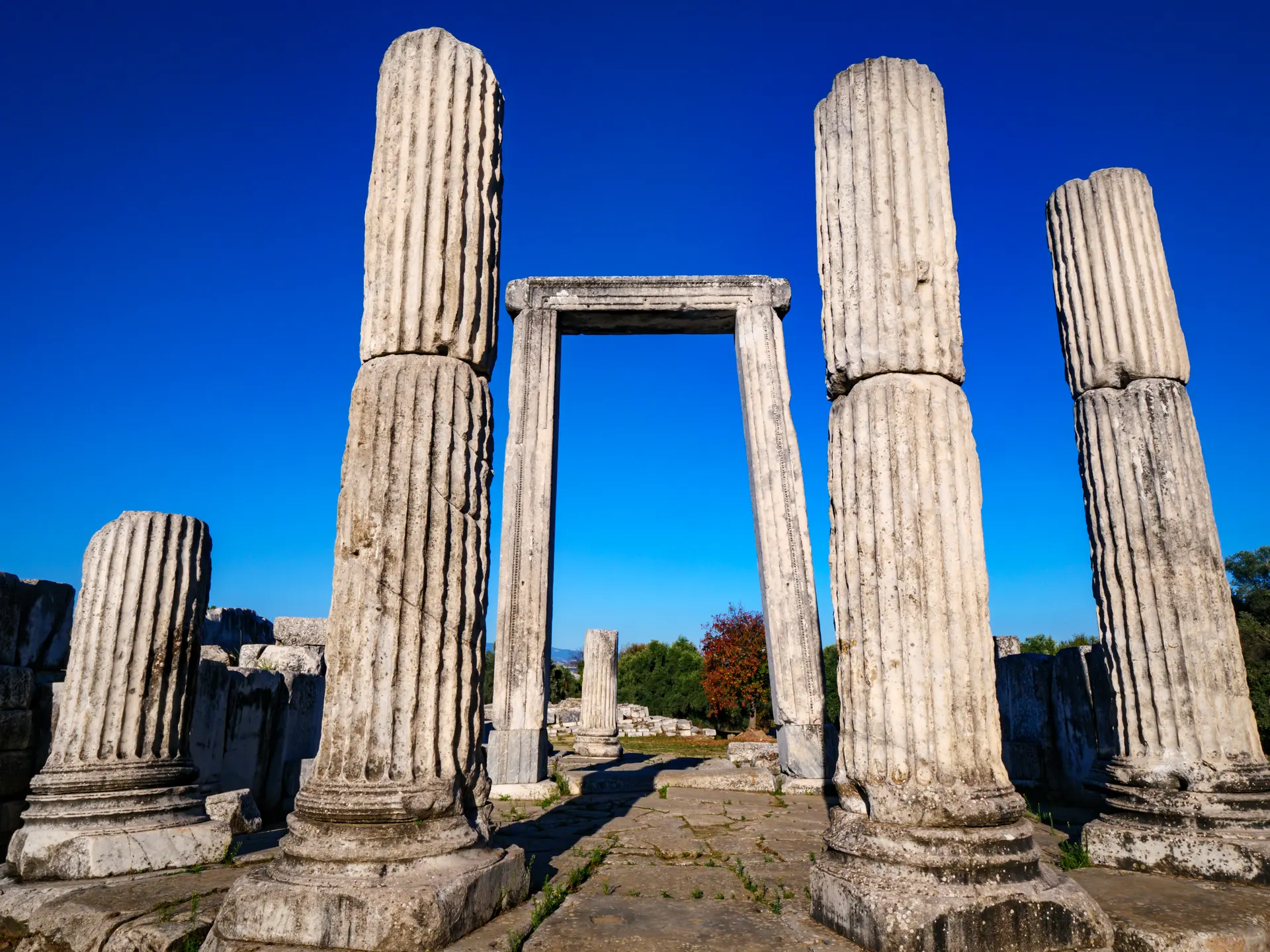
Temple of Hecate at Lagina
Muğla, Turkey
Lagina holds the largest and most important sanctuary of Hecate ever built — a site where she was not a supplementary figure in someone else's pantheon but the principal...

Teos
İzmir, Turkey
Teos was an Ionian coastal city that served as the worldwide headquarters of the Dionysiac Artists guild — the professional association of actors, musicians, and poets who...

Termessos
Antalya, Turkey
Termessos stands on a near-inaccessible summit of Güllük Dağı at almost 1,000 metres, ringed by cliffs that turned back Alexander the Great in 333 BCE....
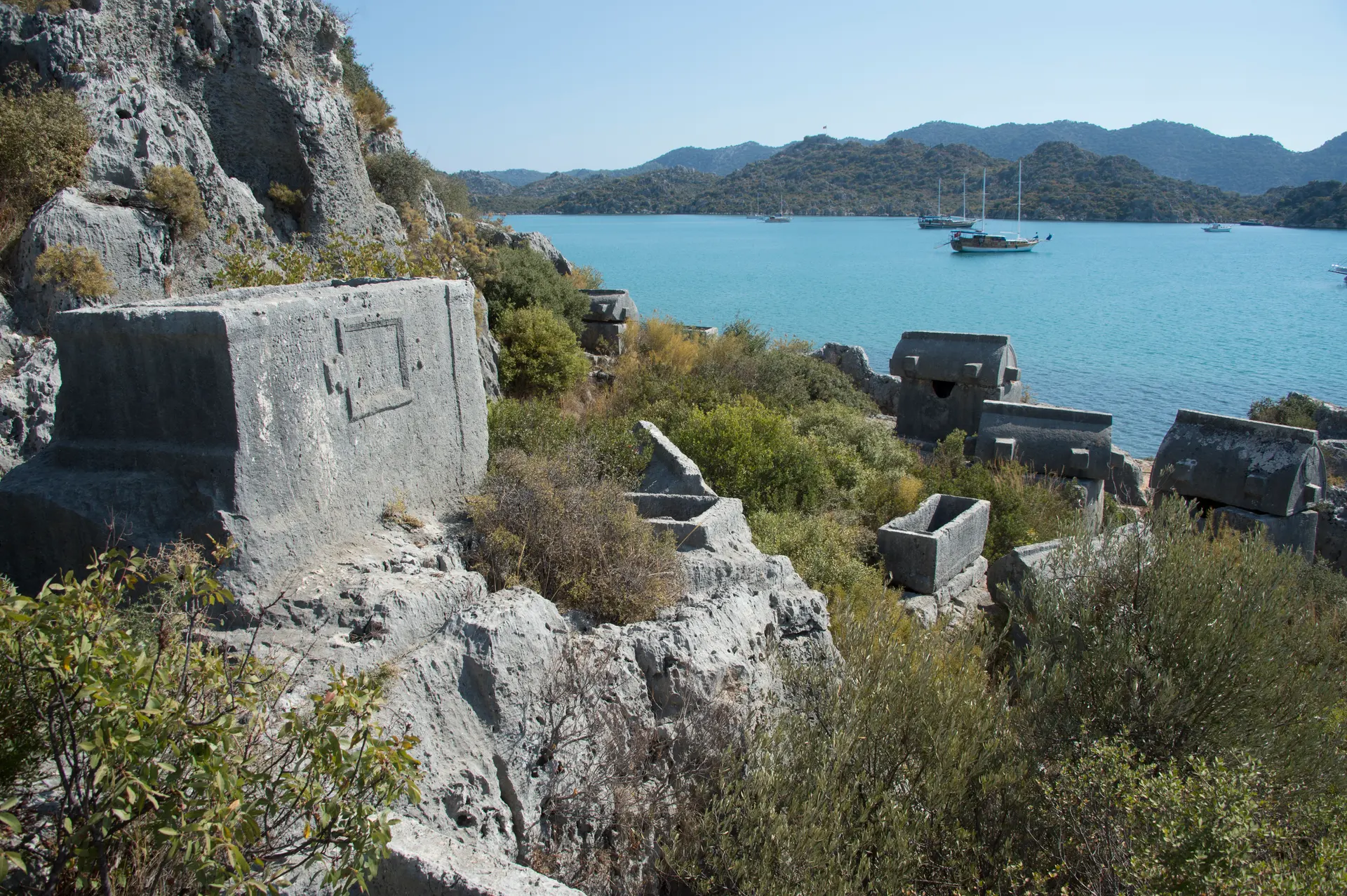
Theimussa
Antalya, Turkey
At Üçağız, the ancient village of Theimussa, the line between archaeology and daily life has never fully closed....

Thyatira
Akhisar, Manisa, Turkey
Thyatira was the smallest of the seven cities addressed in the Book of Revelation, yet it received the longest of Christ's seven letters — commended for endurance,...

Tilmen Höyük
Gaziantep, Turkey
Tilmen Höyük is a Bronze Age tell mound near Islahiye in southeastern Turkey, set within a Ramsar-protected wetland valley....
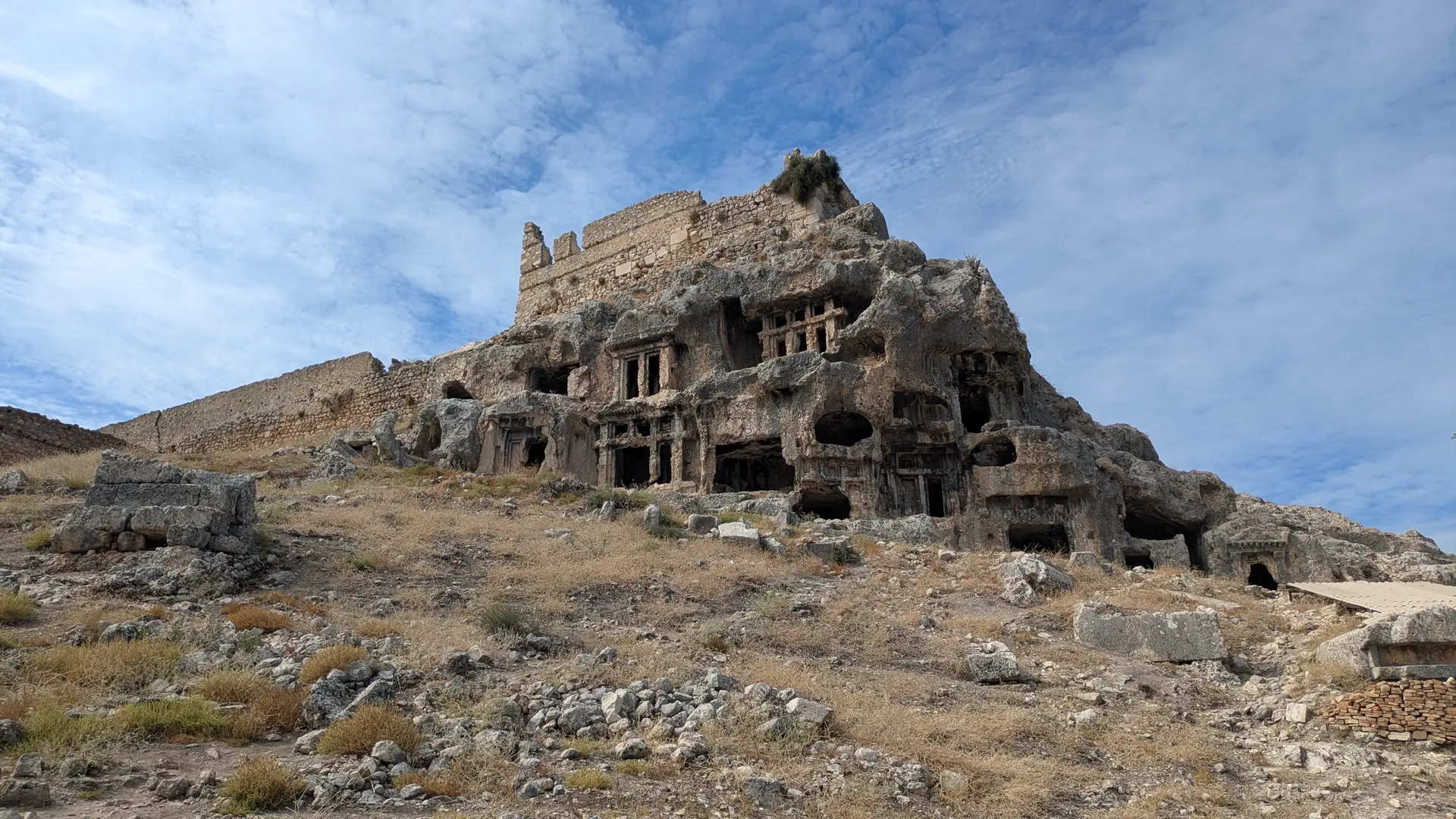
Tlos
Muğla, Turkey
Tlos has been continuously occupied since the Bronze Age and carries the fullest record of Lycian history of any city on the coast — from Hittite texts and the myth of...

Topada Rock Inscription
Nevşehir, Turkey
On a natural cliff plateau in the Cappadocian borderlands, King Wasusarma of Tabal carved the most historically detailed royal inscription from Iron Age central Anatolia:...

Tripolis on the Maeander
Denizli, Turkey
Tripolis on the Maeander stood at the precise meeting point of three ancient regions — Lydia, Phrygia, and Caria — a location that ancient geography understood as...

Troy
Çanakkale, Turkey
Troy (Troia / Truva) is a multi-period Bronze Age to Roman city mound near Çanakkale, where nine distinct occupation layers span from around 3000 BC to AD 400....

Uzuncaburç
Mersin, Turkey
Uzuncaburç was once the divine capital of the Olba kingdom, where a priestly dynasty ruled in the name of Zeus Olbios....

Van Fortress
Van, Turkey
Van Fortress (Tushpa) was the sacred capital of the Urartian Kingdom from the 9th to 6th centuries BCE — a massive conglomerate rock rising from the shore of Lake Van...

Xanthos
Antalya, Turkey
Xanthos was the greatest city of Lycia, an ancient Anatolian civilization whose most distinctive expression was the pillar tomb: the dead raised on stone columns above the...

Yalburt Pool Monument
Isparta, Turkey
At 1,300 metres in the highland meadows of western Konya, a rectangular basin of inscribed limestone blocks marks the place where a Hittite king bound his military...

Yazılıkaya
Çorum, Turkey
Yazılıkaya is the largest known open-air Hittite sanctuary, located 2 km northeast of Hattusha in central Turkey....
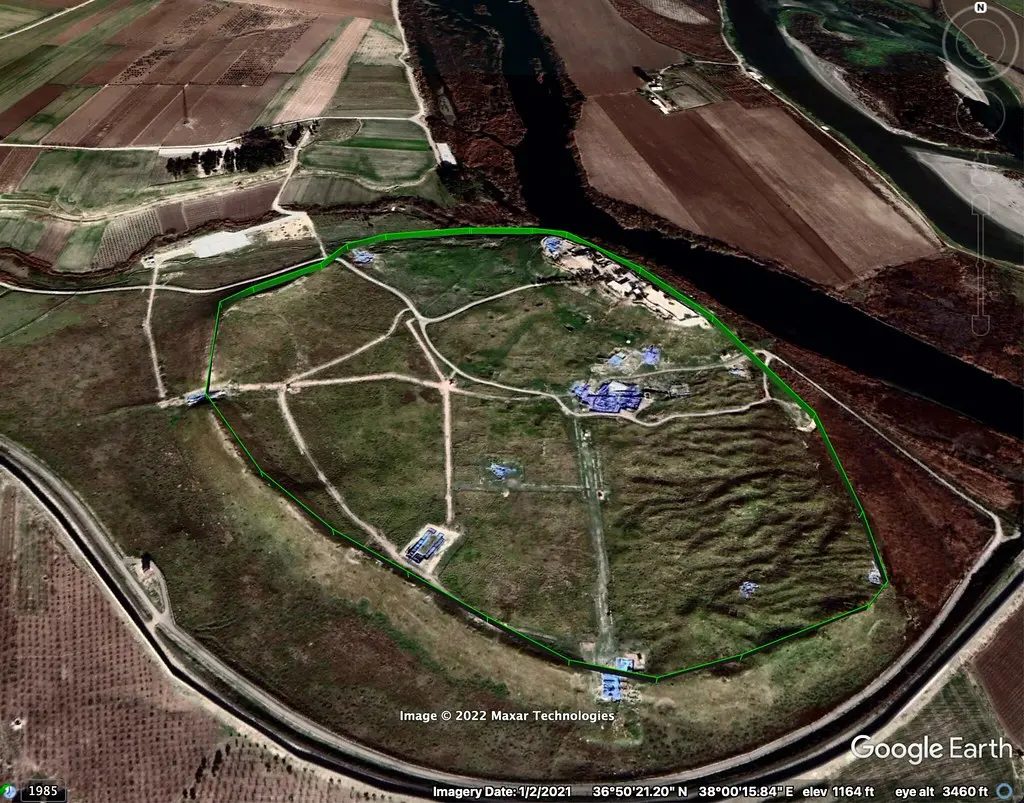
Yesemek
Gaziantep, Turkey
Yesemek is an ancient quarry and sculpture workshop in southern Turkey where the Hittite Empire produced sacred guardian figures — sphinxes, lions, and mountain gods —...

Yeşilova Höyük
İzmir, Turkey
Yeşilova Höyük is a Neolithic and Chalcolithic tell mound in Bornova, İzmir, occupied from around 6500 to 4000 BC....

Zerzevan Castle
Diyarbakır, Turkey
Zerzevan Castle, on Turkey's UNESCO Tentative List, holds one of the world's best-preserved Mithraea — a rock-cut underground chamber where Roman frontier soldiers enacted...
Showing 145-192 of 195 sites
Key questions
Turkey sacred-site questions
What sacred sites can I explore in Turkey?
Pilgrim Map lists sacred places in Turkey across living worship sites, heritage landmarks, pilgrimage destinations, and culturally significant landscapes. The current guide lists 195 sites organized by region and tradition.
Which traditions are represented in Turkey?
The most represented traditions include Ancient, Multi-tradition, Hellenistic Greek, Prehistoric, Christianity, Phrygian.
How should I plan a sacred-site visit in Turkey?
Start with regional clusters, compare nearby places on the map, then open individual site pages for coordinates, etiquette, and sacred context where available.
Can I view Turkey sacred sites on a map?
Yes. Switch to map view to compare geographic clusters, then open individual site pages for coordinates, visiting context, and related places.