Samuha
The Hittite Empire's foremost goddess sanctuary, where a future king served as high priest
Understand sacred places, explore living traditions, and learn how to engage respectfully with Pilgrim Map.
Access has not been verified. Check current local guidance before planning a visit.
Sivas, Turkey
Read the sources
Visit essentials
A quick read before you go
- Duration
- 1–2 hours for the tell and any open excavation areas.
- Access
- Near Kayalıpınar village, Yıldızeli district, approximately 40 km west of Sivas city center.
Overview
On a low tell above the Anatolian plain near the Kızılırmak watershed in Sivas Province, excavation continues confirming ancient Šamuḫa's distinction. Hittite scholar René Lebrun called it the 'religious foyer of the Hittite Empire,' the most important sacred city after Hattusha.
Šamuḫa was the foremost sanctuary of Šauška, the Hittite form of Ishtar: goddess of love and war, associated with Venus, whose power stretched from Mesopotamia to Anatolia's edges. As Inanna in Sumer, Ishtar in Babylon, and Šauška in Hatti, this pan-cultural force predated and outlasted individual empires.
Here the goddess-king relationship was personal. Mursili II appointed his son Hattusili 'priest of the Ishtar of Samuha,' shaping the future king's understanding of divine favor and military success. As Hattusili III, he negotiated the Treaty of Kadesh and credited the goddess's protection throughout his career. Šamuḫa also served as Hittite military command base during the great reconquest after enemies sacked the capital, joining divinity and victory, love and war, in one sacred geography.
Why this place is sacred
Šauška was among the most extensively worshipped divine figures in the ancient Near East. Her precursor Inanna appears in the oldest written literature — the Sumerian hymns of Enheduanna, composed around 2300 BCE — as a being who holds the fundamental powers of civilization. By the time her cult reached Samuha, that accumulated density of worship had been compressing into this Anatolian place for over a millennium.
The quality that makes Samuha compelling for the seeker is precisely this compression: the goddess who governed love and war was worshipped here not in a context of peaceful piety but at the nerve center of an empire under military pressure. The Hittite king Tudhaliya III established Samuha as his military base when enemies had sacked the capital. His army prayed to Šauška before campaigns and credited victories to her intervention.
The future king Hattusili III served as her priest here and recorded, in surviving texts, his conviction that the goddess had saved his life in battle and guided him toward kingship. This entanglement of military necessity, royal aspiration, and feminine divine power gives Samuha a layered intensity that most ancient sites do not carry.
The recent discovery of a well-preserved bird omen text at the site — tablets used to read the flight patterns of birds as divine messages — opens another dimension: Samuha was also a place where the boundaries between natural and supernatural were thought permeable, where trained observers could read the sky for guidance. The bird omen tradition is one of the oldest forms of divination in the ancient world, and to possess a well-preserved specimen from Samuha is archaeologically extraordinary.
Premier Hittite cult city of the goddess Šauška (Ishtar); military command capital during the Hittite reconquest; center of royal priestly service and divination.
Human settlement at the site traces back to the Chalcolithic (5th millennium BCE). Assyrian merchants were present in the 18th century BCE. Hittite prominence peaked between the 15th and 12th centuries BCE. The city was abandoned around 1200 BCE with the broader collapse. Byzantine-period occupation followed in later centuries, adding another layer to the tell. Modern excavations began in 2004–2005.
Experience and orientation
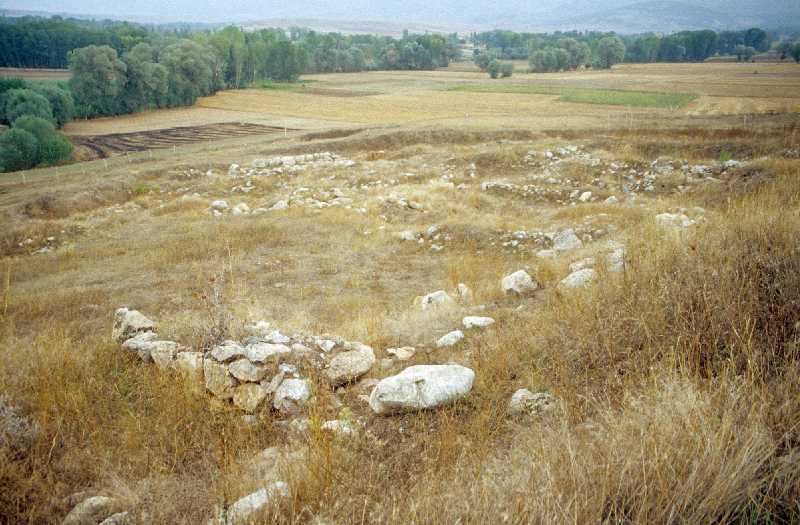
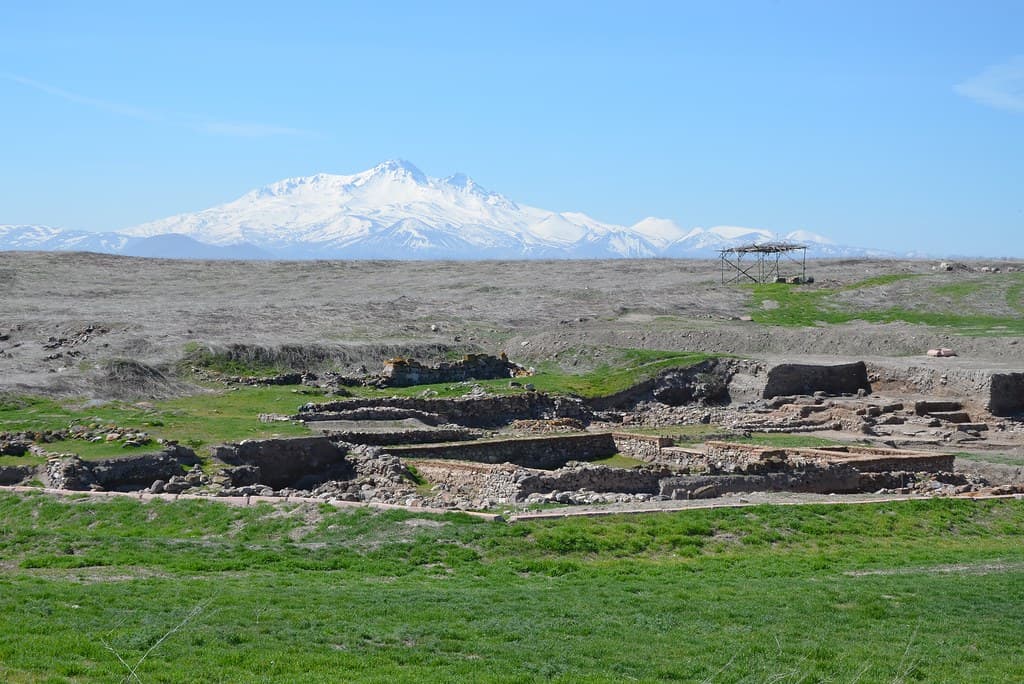
Samuha sits on a tell — an accumulation mound — that rises modestly above the flat plain near Kayalıpınar village. From a distance, the mound reads as a gentle interruption of the agricultural landscape, nothing dramatic. But the approach changes that perception slowly: as you climb the mound, the surrounding plain falls into view in all directions, and the quality of openness — the sense of being above and exposed — registers as something significant.
The excavated Hittite buildings visible during the field season include sections of mudbrick architecture with preserved wall courses that give a real sense of the spatial organization of a Bronze Age city. The area identified as a possible temple of Šauška is being carefully uncovered; if confirmed, it will be the first physical temple of the goddess identified in the Hittite heartland.
The archive room where cuneiform tablets have been found is compact and unassuming — it takes a moment to register that in this small space, priests recorded the flight paths of birds as messages from the divine.
The surrounding landscape holds its own resonance. The Kızılırmak River watershed that runs near Samuha was one of the sacred natural features of the Hittite interior. Plains, rivers, and their seasonal flooding were part of the religious geography of the empire. Visiting in spring, when the plain has color and the sky is active with bird movement, the most ancient layer of Samuha's significance — divination through bird-watching — becomes intuitively legible in ways that a museum display cannot replicate.
The site was planned for formal visitor access from 2024; infrastructure is developing. Even before formal opening, it rewards those willing to travel to a place still in the act of being discovered.
Approach via Kayalıpınar village, Yıldızeli district. The tell is visible from the village road. During excavation season, follow team guidance for visitor areas. Outside of field season, the mound perimeter is generally accessible on foot.
Context and lineage
Samuha became the religious heart of the empire through a crisis. When enemies — described in Hittite texts as a coalition that included Kaska, Arawanna, Arzawa, and others — sacked the Hittite capital Hattusha, King Tudhaliya III retreated to Samuha and made it his military base for the reconquest.
This combination of sacred and martial purpose defined the city's character: the goddess Šauška, whose domains spanned love and war with equal authority, was perfectly suited to a sanctuary that served both divine worship and military command. The Hittite texts describe Šauška as having a personal, interventionist relationship with the royal family at Samuha — she did not merely receive offerings but actively protected her priests in battle and guided them toward power.
Šauška / Ishtar cult tradition — one of the oldest continuously worshipped divine figures in the ancient Near East, from Sumerian Inanna through Babylonian Ishtar to Hittite Šauška, associated with Venus, love, war, and liminal states.
Traditions and practice
Samuha's religious practice centered on temple rituals for Šauška conducted by a priestly staff that included members of the royal family. The Hittite king Mursili II's appointment of his son Hattusili as priest was a formal state act, reflecting the goddess's supreme importance. Bird omen divination — reading the flight patterns, calls, and behavior of birds as divine messages — was practiced here by trained diviners, and a well-preserved example of such a text has been found in the archive.
Military campaigns were preceded and followed by invocations of the goddess, with votive offerings made in gratitude for victories attributed to her favor.
No active religious practices exist at the site. Archaeological fieldwork continues annually, and heritage visitor access was planned from 2024 under Sivas provincial cultural authorities.
Walk the mound perimeter at a pace that allows the plain below to register: this elevation above flatland was part of the city's sacred geography. In spring, observe the sky and bird movement over the plain — the same sky that Hittite diviners read as divine text. If you can visit during excavation season, the presence of active archaeological work adds a particular temporal quality: you are witnessing the ongoing act of recovery of a place still partially concealed.
The archive area — where the bird omen tablet was found — rewards quiet attention even without visible text: this was a room where natural observation was converted into sacred knowledge.
Hittite Ishtar / Šauška Cult
HistoricalSamuha was the Hittite Empire's most important sanctuary of the goddess Šauška, whose domains encompassed love, war, and divine favor in battle. The royal family maintained direct priestly connection to the goddess here, and cuneiform texts record her personal interventions on behalf of those who served her faithfully.
Temple rituals; royal priestly service; bird omen divination; offering festivals; military invocations and post-battle thanksgivings.
Archaeological and Scholarly
ActiveExcavations since 2004–2005 have confirmed Samuha's identity and are uncovering what may be the first known physical temple of Šauška in the Hittite heartland. The bird omen tablet find is considered among the most significant recent discoveries in Hittite religious studies.
Annual field campaigns; cuneiform archive study; public heritage development under Sivas cultural authorities.
Perspectives and open questions
Samuha is read differently through the lens of comparative goddess studies, Hittite military history, and the archaeology of divination — each revealing distinct layers of its significance.
Scholarly perspective
The 2014 discovery of cuneiform tablets at Kayalıpınar conclusively identified the site as ancient Samuha. The subsequent recovery of the well-preserved bird omen text is considered a landmark find for understanding Hittite divination practice — such tablets are rare, and a well-preserved specimen from a confirmed sacred context is archaeologically exceptional.
René Lebrun's designation of Samuha as the 'religious foyer of the Hittite Empire' reflects scholarly consensus: the city's combination of highest-level goddess cult, royal priestly connection, and military significance placed it second only to Hattusha in the empire's religious hierarchy.
Living and traditional perspectives
No living tradition survives at the site. The theological meaning of Šauška's worship at Samuha — the belief that the goddess of love and war personally intervened in the affairs of kings who served her faithfully — belongs to the historical record. What remains is the testimony of Hattusili III, who wrote that the goddess had saved him repeatedly in battle and guided him to the throne, crediting her power throughout the autobiographical texts he left behind.
Alternative interpretations
Šauška's identification with Venus has attracted interest from scholars tracing the astral dimensions of ancient Near Eastern religion. The planet's cycles — its disappearance and reappearance as morning and evening star — mapped onto the goddess's domains of love, war, and transformation in ways that researchers of comparative mythology continue to explore. Samuha as the earthly center of this Venusian cult carries particular significance in these frameworks.
Open questions
The precise boundaries and architecture of the temple of Šauška have not been fully excavated. The full extent of the cuneiform archive is unknown. The nature of the Paleolithic occupation traces found at the site — pushing human presence back to unexpectedly remote periods — has not been studied in detail. The integration of bird omen divination into military command decision-making at Samuha is still being analyzed from the recently found tablet.
Plan your visit
Access and arrival
Near Kayalıpınar village, Yıldızeli district, approximately 40 km west of Sivas city center. D100 highway connects Sivas to the general area; local road to Kayalıpınar village. Private vehicle recommended; limited public transport. Sivas is the nearest city with full services.
Sivas city center, approximately 40 km east, offers hotels and full travel services and is the practical base for a visit.
Respectful visit
No religious dress requirements. Practical clothing for an exposed plain-level tell; sun protection is important in summer.
Generally permitted. During excavation season, ask team members before photographing open trenches or recently uncovered finds.
Not applicable.
Do not disturb excavation areas, equipment, or marked trenches. Follow all guidance from site staff present during field season.
Active excavation trenches are marked; do not enter restricted areas. Summer on the open Anatolian plain can be very hot; visit in morning hours. Visitor infrastructure was still developing as of 2024 — confirm current access status with the Sivas provincial culture directorate before a dedicated trip.
Location
Map loads as you approach this section.
Pilgrim reflections
A portrait of encounter, not a score
Pilgrims describe what they felt, how present they could become, and whether the place would shape a journey. There are no stars and no ranking of traditions.
No reviewed reflections yet
The first pilgrims can help describe the character of being here.
Share a reflection
Available after an account-backed “Been there.” Every reflection is reviewed before publication.
Nearby sacred places
Explore other sacred places in the region. Proximity does not establish access or travel time; check each place’s guidance.


References
Sources consulted for this page. Source categories describe the publication, not a guarantee that every claim is verified. Traditional accounts and outside interpretations may differ.
- 01Religion in Samuha during the Hittite period — UBC Library Open CollectionsacademicAcademic thesis on religious practices at Samuha
- 02Šamuḫa - Wikipedia — Wikipedia contributorsencyclopediaGood overview of historical role and cult significance
- 03Well-Preserved Hittite Bird Omen Text Discovered at Kayalıpınar–Samuha — ArkeonewsacademicReports recent discovery of bird omen tablet and its religious significance
- 04Archaeologists Discover Rare Hittite Cuneiform Bird Omen Text at Samuha — Anatolian ArchaeologySource contextCoverage of excavation findings from 2020s fieldwork
- 05Archaeologists may have found the temple of Šauška at Samuha — Anatolian ArchaeologySource contextReport on possible identification of main cult temple
- 06The Hittite city of Samuha will be open to visitors in 2024 — Anatolian Archaeologyguide2023 announcement of planned public opening in 2024
- 07Byzantine traces unearthed in 4,000-year-old Samuha settlement — Hurriyet Daily NewsSource contextReports depth of occupation layers at site
- 08Hittite Monuments - Kayalıpınar — hittitemonuments.comSource contextSite photographs and brief description
- 09Kayalipinar [Kayalıpınar, Samuha] Ancient Sites — Megalithic PortalguideCoordinates and site listing
Share a photo
Help visitors recognize Samuha. Every submission is reviewed before publication.