Šapinuwa
A Hittite city of five sacred languages, frozen in fire at the height of its ritual life
Understand sacred places, explore living traditions, and learn how to engage respectfully with Pilgrim Map.
Access has not been verified. Check current local guidance before planning a visit.
Çorum, Turkey
Read the sources
Visit essentials
A quick read before you go
- Duration
- 1–2 hours at the excavation site; 2–3 hours at Çorum Museum (which also houses major Hattusha…
- Access
- The site is 3 km southwest of Ortaköy town in Çorum Province, approximately 70 km east of…
Overview
Sixty kilometers east of Hattusha, in a rural valley near modern Ortaköy, lies a city whose name was lost for three thousand years and whose tablets are still being read. Discovered at the Ortaköy excavation in 1990, Šapinuwa was more than a provincial Hittite town. Under Tudhaliya II or III in the 14th century BCE, it served as royal residence when Hatti's kings left their capital, becoming a temporary imperial and religious center.
Its 3,000-plus cuneiform tablets include administration and royal correspondence alongside an extraordinary concentration of Hurrian ritual texts. Approximately 600 document the itkalzi purification ceremonies, cleansing rites that used Hurrian sacred knowledge to maintain divine favor for the royal family. Written in five languages, the archive is the ancient Near East's most linguistically plural religious document collection.
Around 1350 BCE, Šapinuwa burned, most likely in a raid by the Kaska people from the northern mountains. The fire baked and preserved the tablets. The city was abandoned and never resettled at the same scale, caught at its sacred height by a destruction that also preserved it.
Why this place is sacred
Šapinuwa's sacredness operated at multiple levels simultaneously. As a royal residence, it was by definition a sacred space in the Hittite understanding of kingship—the king's presence consecrated wherever he dwelled. As the site of an extensive sacred district—a physically demarcated area with sacrificial pits, a stone-paved ceremonial ground, ritual water structures, and workshops producing cult objects—it was a deliberate landscape of divine encounter.
As the repository of 600 Hurrian-language ritual tablets, it was a place where the most powerful purification technology known to the Hittite royal court—the Hurrian itkalzi rites—was practiced and preserved. The multilingual character of the archive speaks to something deeper: Šapinuwa was a city where different sacred traditions met, were translated into one another, and were held in simultaneous practice. Hattian, the oldest sacred language in the Hittite world, is used here in foundation rituals alongside Hittite and Hurrian.
This is not religious confusion but religious sophistication—the conscious preservation and layering of multiple ways of approaching the divine. The city's destruction sealed this convergence in time. To visit Šapinuwa is to approach the remains of a city that was, at the moment of its ending, the most ritually concentrated place in the Hittite world.
Royal Hittite city serving as alternative capital and major religious center; site of the Hittite sacred district with water purification and sacrifice; archive center for the Hurrian ritual corpus.
Early Bronze Age settlement on the site → major Hittite city from ca. 1500 BCE → royal residence and possible temporary capital during Tudhaliya II/III reign (ca. 1400–1380 BCE) → destruction by fire ca. 1350 BCE (attributed to Kaska raids) → abandonment → rediscovery at Ortaköy in 1990 → ongoing excavation by Ankara University
Experience and orientation
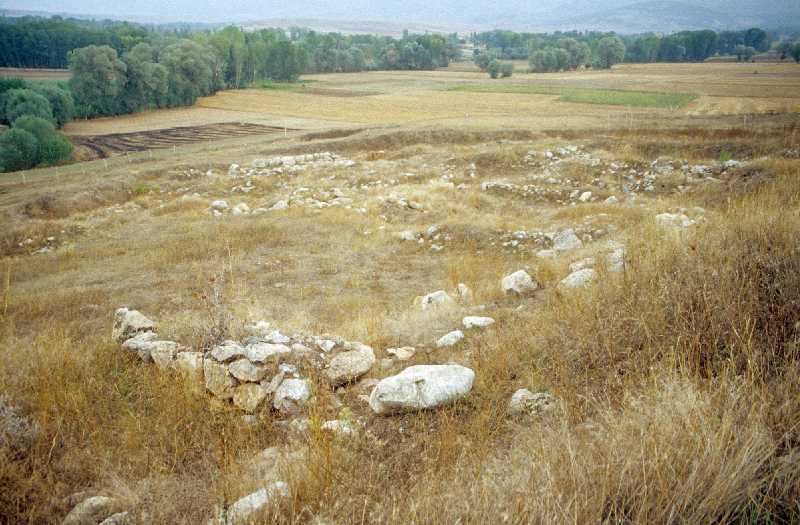
The site lies 3 km southwest of Ortaköy town in a quiet rural setting. The excavation has exposed the outlines of the major palatial buildings—labeled Buildings A, B, C, and D by the excavators—and the sacred district, which is physically distinct from the administrative palace complex. The sacred district's stone pavement and the positions of the sacrificial pits are visible in the excavated areas.
Moving through these foundations, even without the original structures above them, gives a sense of a city that was architecturally organized around the principle of sacred separation: here is the palace; here, deliberately placed apart, is the place of ritual. The scale of the palace buildings is significant—these are monumental structures, fitting for a city that received kings. The surrounding valley landscape has not changed dramatically in three thousand years, and the sense of distance from Hattusha is tangible.
Šapinuwa was not a suburb of the capital; it was a separate world. At Çorum Museum, the tablet facsimiles, seal impressions, and ceramic assemblage from Šapinuwa are housed alongside finds from Hattusha and Alacahöyük.
The multilingual character of the archive—five languages in a single collection—is not easy to convey in a museum display, but the sheer number of tablets and their physical variety (small private archives, large state texts, bilingual ritual tablets) gives a material sense of the document culture that once operated here.
Visit Çorum Museum before the site, then drive to Ortaköy and approach the excavation from the town. If visiting during the excavation season (May–September), inquire at Ortaköy about access to the active dig; the excavation team is based there and may provide orientation.
Context and lineage
The excavations at Ortaköy began in 1990 under Aygül and Mustafa Süel of Ankara University, initially in rescue archaeology context. The discovery of cuneiform tablets in the very first season established the extraordinary importance of the site, and the identification as Šapinuwa—known from Hittite state texts as a significant city—was made relatively quickly. The tablets emerged from archive rooms within the palace complexes, apparently sealed by the fire that destroyed the city.
Among them were the Hurrian-language itkalzi purification ritual texts, which document in greater detail than any other source the elaborate cleansing rites that the Hittite royal family underwent to maintain divine favor. These rites involved bathing, ritual recitation in Hurrian and Hittite, the use of water as a purifying medium, and invocations of a specific Hurrian divine pantheon.
The Hattian-Hittite foundation ritual texts found here—in both the oldest known sacred language of Anatolia and the imperial Hittite—document the ceremonies by which buildings were consecrated and spaces were made sacred.
Bronze Age settlement on site → Hittite city from ca. 1500 BCE → royal residence / temporary capital phase (ca. 1400–1380 BCE) → destruction by fire (ca. 1350 BCE) → abandonment for centuries → rediscovery in modern excavation from 1990
Traditions and practice
The Hurrian itkalzi purification rituals documented at Šapinuwa were among the most elaborate in the Hittite world. The king and queen underwent physical bathing combined with ritual recitation—Hurrian invocations addressed to a specific divine pantheon—to cleanse them of accumulated ritual impurity and restore their capacity to mediate between the human and divine worlds. This was not merely symbolic: in Hittite theology, the king's ritual purity was a precondition for divine favor toward the entire kingdom.
The sacred district at Šapinuwa was the physical infrastructure of this theology: a dedicated zone where sacrifices were performed in designated pits, where water was used for purification, and where workshops produced the ritual objects required for ceremony. The Hattian-Hittite foundation rituals documented in the tablets show how the construction of any significant building was itself a sacred act—prayers were offered, deposits were buried beneath foundations, and the space was formally addressed to the divine before occupation.
State religious festivals involving divine processions, animal sacrifice, and communal ceremony were also part of Šapinuwa's sacred calendar.
No active religious practices. The site is a secular archaeological excavation under Ankara University's direction.
Approach the sacred district area within the excavation and stand at its edge before entering. The physical demarcation between the palatial and the sacred—the distinct zone where the ritual pits and water features were placed—is the architectural expression of the Hittite understanding that the divine required its own space within the human city. Walk the sacred district slowly, moving between the visible pit positions and the stone-paved ceremonial area.
Consider the role of water here: the itkalzi rites centered on water as the physical medium of purification, and the sacred district's placement (potentially near a water source) was not incidental. At the Çorum Museum, if the cuneiform tablets include any displayed with translation, seek out the Hurrian ritual texts—even a few lines of a purification invocation give a direct window into the spoken sacred language of this place.
Hittite State Religion and Royal Cult
HistoricalAs a probable royal residence and temporary capital, Šapinuwa hosted the full apparatus of Hittite state religion, including royal ceremonies, divine festivals, and the administration of temple estates.
State religious festivals; royal cult ceremonies; divine processions; sacrifice and libation; administration of sacred offerings.
Hurrian Ritual Tradition (itkalzi purification)
HistoricalThe Šapinuwa archive contains the fullest surviving corpus of Hurrian-language purification ritual texts, documenting the itkalzi rites that the Hittite royal family used to maintain divine favor through elaborate cleansing ceremonies.
Bathing and physical cleansing combined with Hurrian divine invocations; use of water as purification medium; bilingual Hittite-Hurrian recitations bridging the two sacred traditions.
Sacred District Ritual Practices
HistoricalA physically distinct sacred district with sacrificial pits, stone pavement, cultic workshops, and ritual water features made Šapinuwa a planned sacred landscape, not merely a palace complex with incidental religious use.
Animal sacrifice in designated pits; water purification in the ritual district; production of cult implements in sacred workshops; silo storage for ritual offerings.
Hattian-Hittite Foundation Rituals
HistoricalFoundation ritual texts in both Hattian (the oldest Anatolian sacred language) and Hittite document the ceremonies by which buildings at Šapinuwa were consecrated, embedding sacred meaning in the city's physical fabric.
Building consecration ceremonies; burial of foundation deposits; divine address in Hattian combined with Hittite.
Archaeological Heritage
ActiveDiscovered in 1990, Šapinuwa is one of the most significant and recently identified Hittite sites; ongoing excavation and tablet translation are actively expanding the scholarly record.
Excavation by Ankara University; finds in Çorum Museum; academic publication of tablets; international scholarly collaboration.
Perspectives and open questions
Šapinuwa is a site whose significance has been understood only since 1990; scholarly interpretation is still active, and the full translation of its 3,000-plus tablets is ongoing.
Scholarly perspective
Šapinuwa is now recognized as one of the three most important Hittite archaeological sites in Turkey, alongside Hattusha and Alacahöyük. Its position as a probable temporary capital is supported by the royal character of the archive and the architectural scale of the palace buildings.
The Hurrian ritual tablets constitute the fullest surviving corpus of Hurrian sacred texts from any single site, and their presence at Šapinuwa confirms the strong Hurrian religious influence on Middle Hittite royal cult that is also visible at Yazılıkaya. The multilingual archive is a significant data point for understanding Bronze Age Near Eastern religious syncretism.
Living and traditional perspectives
No living indigenous tradition connects directly to the site. Turkish national heritage frameworks incorporate Hittite sites as part of Anatolian civilizational legacy.
Alternative interpretations
The five-language sacred archive invites interpretation of Šapinuwa as a conscious religious synthesis project—a place where the Hittite royal court actively sought to gather and combine divine knowledge from across the ancient Near East: Hattian (the oldest Anatolian sacred language), Hittite (the imperial language), Hurrian (the prestige ritual language from the east), Akkadian (the international diplomatic and scholarly language), and Luwian (the southern Anatolian sacred tradition). This diversity was not incidental but deliberate.
Open questions
The precise cause of the city's destruction—attributed to Kaska raids but not confirmed by direct evidence—remains debated. The full extent of the sacred district has not been excavated. Not all of the 3,000-plus tablets have been fully translated. The specific deities housed in the sacred district buildings have not all been identified. Why Šapinuwa was chosen as the royal alternative to Hattusa is not fully explained by current evidence.
Plan your visit
Access and arrival
The site is 3 km southwest of Ortaköy town in Çorum Province, approximately 70 km east of Hattusha/Boğazkale and 55 km east of Çorum city. By car from Çorum: take the D190 road eastward, approximately 1 hour, then follow signs to Ortaköy. From Hattusha: continue east from Boğazkale on the regional road toward Ortaköy (approximately 70 km). Ortaköy is served by irregular minibuses from Çorum; from Ortaköy town a short taxi ride or walk reaches the site.
No direct public transport to the excavation.
Çorum city (55 km) offers the widest accommodation range. Boğazkale village near Hattusha has small hotels and pensions for archaeological tourists, suitable as a base for a combined Hattusha/Yazılıkaya/Šapinuwa itinerary. Ortaköy town has limited accommodation.
Respectful visit
No dress requirements; practical outdoor clothing and sturdy footwear essential for uneven excavation terrain.
Photography permitted at the site. Çorum Museum rules apply for museum photography; flash may be restricted in display areas.
Not applicable.
Do not enter active excavation trenches. Do not touch exposed architectural remains or pottery sherds. Do not remove any material from the site.
Active excavation trenches must not be entered. The site has limited visitor signage; do not attempt to enter without understanding the active dig areas. The terrain is uneven; sturdy footwear is required.
Location
Map loads as you approach this section.
Pilgrim reflections
A portrait of encounter, not a score
Pilgrims describe what they felt, how present they could become, and whether the place would shape a journey. There are no stars and no ranking of traditions.
No reviewed reflections yet
The first pilgrims can help describe the character of being here.
Share a reflection
Available after an account-backed “Been there.” Every reflection is reviewed before publication.
Nearby sacred places
Explore other sacred places in the region. Proximity does not establish access or travel time; check each place’s guidance.


References
Sources consulted for this page. Source categories describe the publication, not a guarantee that every claim is verified. Traditional accounts and outside interpretations may differ.
- 01Şapinuwa - Turkish Archaeological News — Turkish Archaeological NewsofficialCurrent site news and excavation status
- 02Šapinuwa (Ortaköy) - Livius — Livius.org / Jona LenderingacademicScholarly article on the site with Hittite historical context
- 03Ortaköy - Centro Ricerche Archeologiche e Scavi di Torino (CRAST) — Centro Ricerche Archeologiche e Scavi di TorinoacademicAcademic excavation partner documentation
- 04The Hattian-Hittite Foundation Rituals from Ortaköy — Academia.eduacademicDetailed study of building/foundation rituals documented in the Ortaköy tablets
- 05Ortakoy Sapinuva Archaeological Research — Sapinuva Archaeological Project (Ankara University)officialOfficial excavation project website with site details
- 06Sapinuwa - Wikipedia — Wikipedia contributorsencyclopediaGeneral overview of city history, tablets, and destruction
- 07The religious significance and sacredness of the Hittite capital city Sapinuwa — Academia.eduacademicSpecific focus on religious and sacred character of the site
- 08Sapinuwa - Archiqoo — ArchiqooguideSite description and access information
Share a photo
Help visitors recognize Šapinuwa. Every submission is reviewed before publication.