Taşçı Reliefs
Twin Hittite reliefs hidden in a river gorge where stone, water, and cave once touched the sacred
Understand sacred places, explore living traditions, and learn how to engage respectfully with Pilgrim Map.
Access has not been verified. Check current local guidance before planning a visit.
Kayseri, Turkey
Read the sources
Visit essentials
A quick read before you go
- Duration
- Allow 1–2 hours to visit both reliefs, explore the gorge, and observe the cave shafts above.
- Access
- Located approximately 2 km south of Taşçı village in Develi district, Kayseri Province.
Overview
Descend into the gorge where the Zamantı Irmağı and Şamaz Dere rivers meet near Develi in Kayseri Province, and you reach a space that no ancient road passed through. The Taşçı Reliefs were not wayside markers but carvings placed in an already sacred cleft where water, cliff, and cave converged and the Hittite conception of the divine boundary between living and underworld could be made visible in stone.
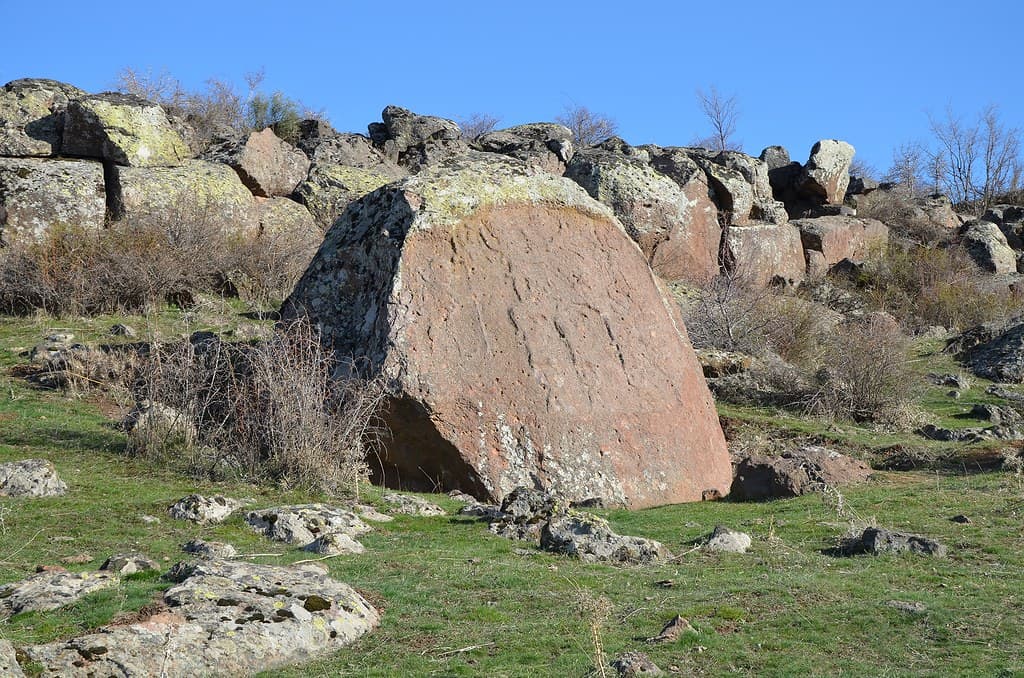
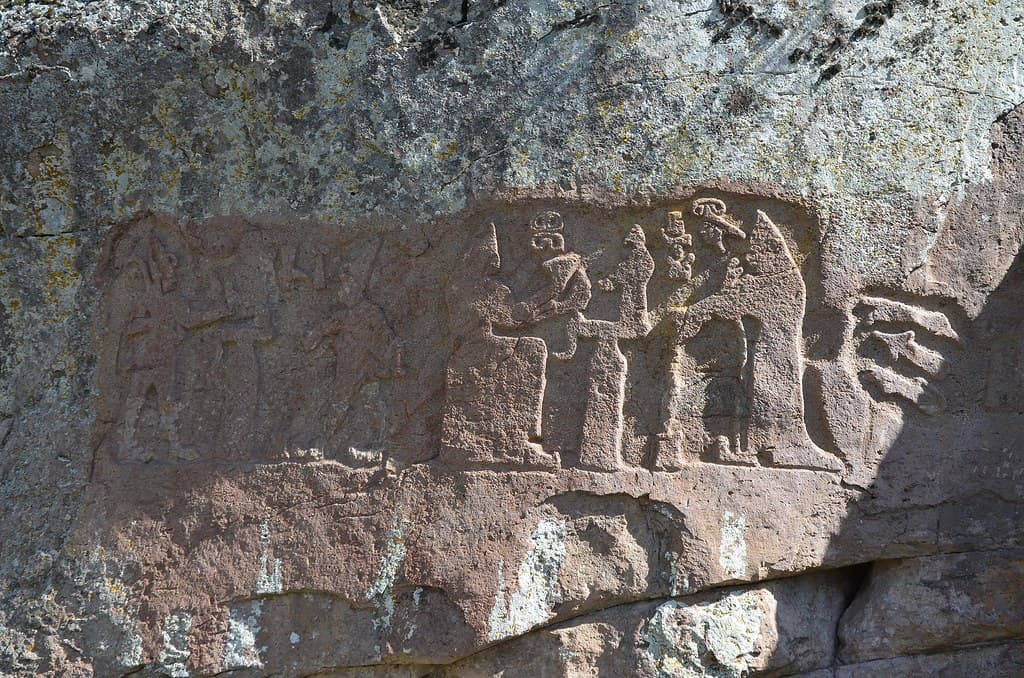
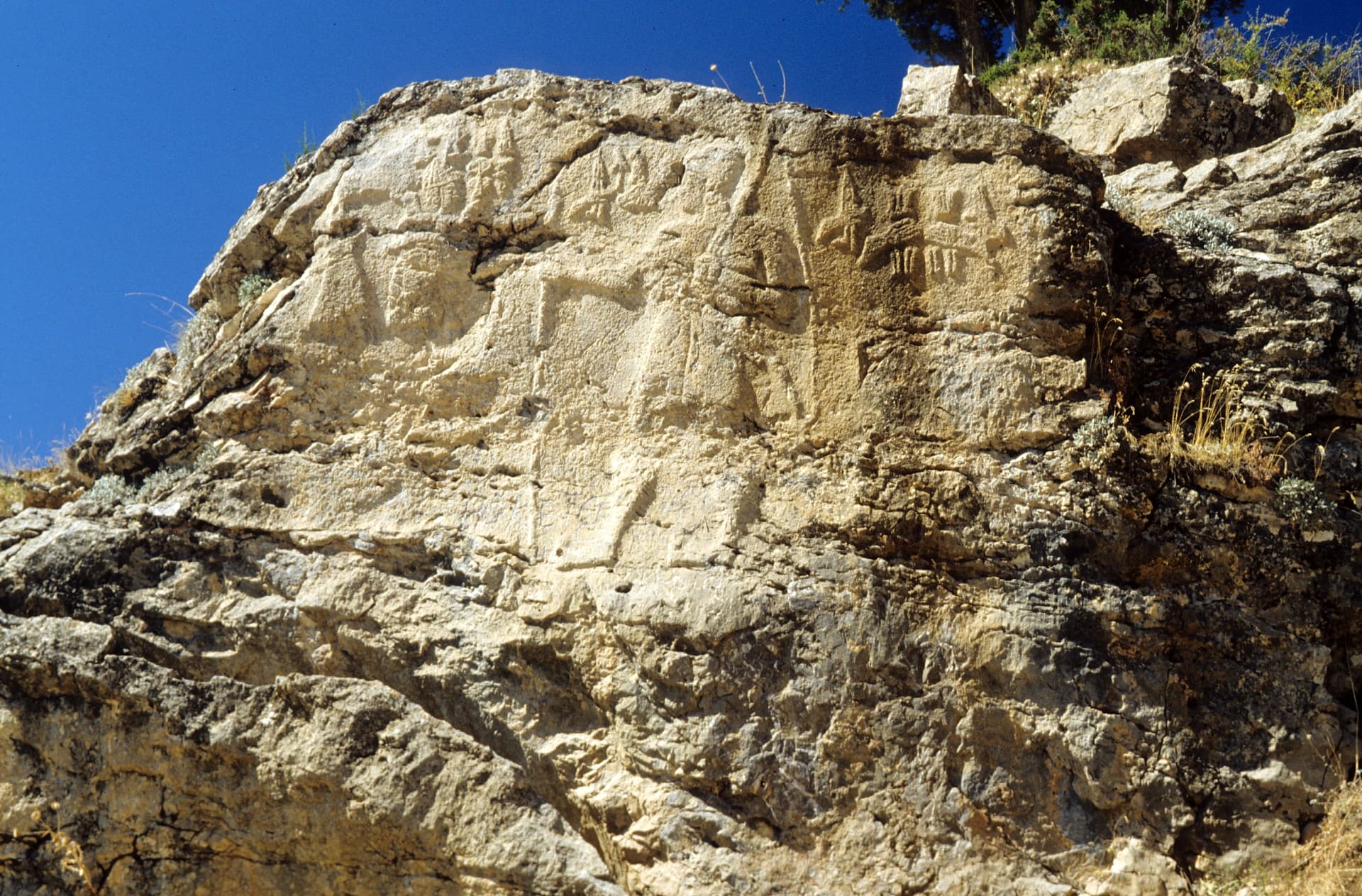
Taşçı A, the longer of the two panels at approximately three meters, bears a female figure flanked by male figures and hieroglyphic Luwian inscriptions. Its carved faces reward close study; the identity of the female figure remains a subject of ongoing scholarly discussion. Less than a hundred meters upstream, Taşçı B depicts a solitary male figure in priestly robes and a horned cap — a dedicant frozen in perpetual offering posture, his inscriptions now worn to near-illegibility.
Above both reliefs, vertical water-shaft caves drop from the gorge rim toward the water below. In Hittite theology, such shafts were thresholds — passages by which underworld deities could be approached, by which water moved between the realm of the living and the realm beneath. The gorge's narrowness amplifies sound: the river becomes louder, the cliffs closer.
Why this place is sacred
Hittite sacred geography was not abstract. It read the physical world — cliffs, springs, rivers, caves — as the actual dwelling-places of divine forces. Rivers were inhabited by protective and chthonic powers; springs were points of contact with the underworld; caves were passages. When Hittite priests and rulers identified a site as sacred, they were acknowledging what the landscape already was.
The Taşçı gorge satisfies the full catalogue of Hittite sacred elements simultaneously. The confluence of two rivers concentrates divine water power. The vertical shaft caves above the reliefs pierce downward toward the subterranean world that Hittite theology held to be inhabited by the gods of the deep.
The narrowness of the gorge — the compression of walls, the increased sound of moving water, the filtered light — creates the experiential quality of a threshold: you are neither on the surface of the world nor beneath it, but in a passage between.
The gorge's inaccessibility is its own statement. No ancient road crossed here. The reliefs were not carved for passersby but for the site itself, and for whoever was willing to enter it. That the space remains difficult to reach today means the original quality of deliberate sacred remoteness persists.
To mark and consecrate a naturally liminal space — a river confluence, cave-shaft zone, and narrow gorge — as a point of contact with water and chthonic deities in the Hittite religious landscape.
Hittite religious practice at the site ended with the empire's collapse around 1200 BC. The gorge preserved the reliefs largely through its inaccessibility. Local residents retained the name Yazılı Kaya — 'Inscribed Cliffs' — as ambient memory of the carvings, without specific religious attachment. Modern study has situated the Taşçı Reliefs within the broader sacred corridor of Hittite rock monuments along the Zamantı River valley, alongside the Fıraktın and İmamkullu reliefs.
Experience and orientation
The approach from Taşçı village already narrows the world. The path into the gorge follows the river, and the walls close. Sound changes before you see anything — the water is louder, the acoustics reverberant in a way that open landscape never produces.
Taşçı A appears on the cliff face at eye level and slightly above. Take time before moving closer. The carvings reward patient looking rather than quick inspection: the figures resolve from the surface gradually, especially in morning or late-afternoon light when the angle of shadow deepens the carved lines.
The female figure at center holds her own mystery — her identity debated across a century of scholarship — and the hieroglyphic inscriptions running beside the figures are legible only to specialists, though their presence as a visual form is itself significant, a record of dedicated utterance made permanent.
Less than a hundred meters upstream, Taşçı B is smaller and more isolated: a single priestly figure on a boulder, facing right, his inscriptions now worn past legibility. The horned cap identifies him as performing, or representing, a sacred function. Stand at this point and look back down the gorge. The vertical cave shafts are visible above both reliefs in the gorge walls. The ancient makers chose this spot understanding how it would feel from inside it.
Approach from Taşçı village in Develi district by vehicle to the gorge entrance, then on foot along the riverbank. Allow your eyes to adjust to the shade of the gorge before attempting to read the carvings. Morning light is ideal for Taşçı A. The terrain is uneven and the riverbank can be slippery; practical footwear is required.
Context and lineage
No myth specific to the Taşçı site survives, but the carvings were commissioned within the context of Hittite imperial religion's deep engagement with the natural landscape. The placement — at a river confluence, beneath cave shafts, in a gorge with no road — indicates deliberate choice of a location that already held sacred meaning within the Hittite reading of the physical world.
Rivers, springs, and caves were dwellings of underworld and protective deities; their convergence here made this spot particularly potent. The hieroglyphic Luwian inscriptions suggest royal or priestly dedication formulae, asserting divine protection or royal presence within the sacred zone.
The Taşçı Reliefs belong to the tradition of Hittite open-air rock sanctuaries, a form of sacred expression distinct from temple architecture. Riverine rock reliefs, including Fıraktın and İmamkullu in the same Kayseri region, formed a sacred corridor along the Zamantı River valley, collectively marking the landscape with royal and divine presence. This tradition drew on earlier Anatolian practices of honoring sacred landscape features while expressing specifically Hittite imperial ideology.
Hans Rott
First recorded Taşçı A, 1906
Sedat Alp and Ekrem Akurgal
Described Taşçı B, 1947
Hans Gustav Güterbock
Visited and documented the site, 1954
Piero Meriggi
First full scholarly publication, 1975
Traditions and practice
The gorge setting, combining river confluence with vertical cave shafts, points toward Hittite chthonic and water-deity veneration. Rivers and springs in Hittite religion were inhabited by underworld divine powers, and ceremonies at such sites typically involved libations — offerings of liquid poured into or beside the water — and the utterance of dedication formulae. The hieroglyphic Luwian inscriptions on both panels likely record such formulae.
The priestly figure of Taşçı B, facing right with inscriptions above and below his arms, may depict the act of dedication itself: a priest permanently inscribed in the moment of sacred utterance.
No active religious practice is associated with the site. Scholarly and heritage visits form the primary contemporary engagement.
The gorge calls for patient, slow movement. Enter on foot from the river path and let the walls close around you before orienting yourself to the reliefs. At Taşçı A, stand at a middle distance first — five to eight meters back — to see the composition as a whole before moving close to study individual figures. Notice the light on the carvings at different angles; the figures change as you move.
At Taşçı B, sit or stand quietly beside the boulder. The inscription above the priestly figure's arms is worn to near-invisibility; trace its ghost with your eye rather than your hand. Look upward at the gorge walls to locate the shaft caves that the ancient makers saw as part of the same sacred system as the carvings below.
Hittite imperial religion
HistoricalThe reliefs were carved during the Hittite Empire period (c. 14th–13th century BC) as sacred markers at a river confluence site held to be a meeting point between the living world and the chthonic divine. Their placement at the convergence of two rivers and beneath vertical cave shafts indicates a deliberate engagement with Hittite sacred geography, where water, rock, and void were understood as dwelling places of divine power.
Water-deity veneration; chthonic offerings at riverine sacred spaces; priestly and royal dedication formulae inscribed in Hieroglyphic Luwian.
Archaeological heritage
ActiveThe Taşçı Reliefs are an important component of the cluster of Hittite riverine rock monuments in the Kayseri region, forming a sacred corridor that includes Fıraktın and İmamkullu. Scientific documentation methods including photogrammetric recording have been applied to the reliefs to preserve their iconographic detail.
Academic fieldwork, graphical and photogrammetric documentation, heritage registration in the Turkish Cultural Inventory.
Perspectives and open questions
The Taşçı Reliefs sit at the intersection of several interpretive frameworks — religious geography, imperial politics, and the unresolved question of what the carved figures mean. Scholarly and alternative perspectives each illuminate different aspects of what was created here.
Scholarly perspective
Scholars broadly accept the Taşçı Reliefs as Hittite Empire-period sacred monuments whose meaning is inseparable from their physical context. The river confluence, the cave shafts, and the gorge itself were not neutral backgrounds but were integral to the sacred function of the carvings. The reliefs form part of a coherent sacred corridor of Hittite rock monuments along the Zamantı River valley, alongside Fıraktın and İmamkullu, collectively marking the landscape with divine and royal presence.
The identity of the female figure on Taşçı A remains debated; she may represent a goddess (Hepat, the Hurrian queen of heaven, is one candidate) or a royal consort performing a cultic role.
Living and traditional perspectives
No living religious tradition is specifically attached to the Taşçı site. Local awareness preserves the name Yazılı Kaya — 'Inscribed Cliffs' — without specific knowledge of the Hittite context. This vernacular name itself is significant: the perception of something written, something intentional, persisted through millennia of cultural change.
Alternative interpretations
The vertical water-shaft caves above the reliefs have attracted speculation about oracle practices, water divination, or ritual communication with subterranean divine powers — practices attested at other Hittite sacred sites and in broader ancient Near Eastern contexts. While no direct textual evidence links the Taşçı shafts to such practices, the physical arrangement strongly implies awareness of them as part of the site's sacred architecture.
Open questions
The identity of the female figure on Taşçı A and the original dedication formulae preserved in the now partially illegible inscriptions remain open questions. The precise function of the water-shaft caves — whether they were used for specific ritual purposes or were recognized as sacred presences without prescribed ritual — is unknown.
Plan your visit
Access and arrival
Located approximately 2 km south of Taşçı village in Develi district, Kayseri Province. Drive to Taşçı village (southeast of Develi town), then follow the path into the gorge on foot. Four-wheel drive or high-clearance vehicle recommended for the final road approach. Mobile phone signal is likely to be limited or absent in the gorge; inform others of your plans before visiting. No emergency services or formal visitor infrastructure at the site.
Develi town (~10 km) offers basic accommodation. Kayseri city (~60 km) has the widest range of lodging and is the most practical base for visiting multiple sites in the region.
Respectful visit
No religious dress requirement. Practical outdoor clothing for rough terrain and possible water exposure; sturdy, non-slip footwear is essential.
Permitted. Natural light — particularly morning or late-afternoon angled light — renders the carved surfaces most clearly. No artificial lighting equipment needed.
None expected or appropriate at this archaeological site.
Do not touch, trace, or lean against the carved surfaces. Do not use chalk or any marking material on the reliefs. Do not disturb rocks or materials in the gorge vicinity.
Do not touch or trace the carvings; the carved stone surface is vulnerable to oils and abrasion. The riverbank terrain can be slippery, particularly in spring when water levels are higher.
Location
Map loads as you approach this section.
Pilgrim reflections
A portrait of encounter, not a score
Pilgrims describe what they felt, how present they could become, and whether the place would shape a journey. There are no stars and no ranking of traditions.
No reviewed reflections yet
The first pilgrims can help describe the character of being here.
Share a reflection
Available after an account-backed “Been there.” Every reflection is reviewed before publication.
Nearby sacred places
Explore other sacred places in the region. Proximity does not establish access or travel time; check each place’s guidance.
References
Sources consulted for this page. Source categories describe the publication, not a guarantee that every claim is verified. Traditional accounts and outside interpretations may differ.
- 01Hittite Monuments – TaşçıacademicSpecialist catalogue of Hittite monuments with detailed descriptions
- 02Hittite Inscription, Taşçı A – Koç University Digital CollectionsacademicArchival photograph of inscription panel
- 03Stonemason Rock Monuments – Turkish Cultural InventoryofficialTurkish Ministry of Culture inventory listing
- 04Graphical documentation of antic relief surfaces – ScienceDirectacademicScientific documentation methods applied to Hittite rock reliefs including Taşçı
- 05Taşçı reliefs – WikipediaencyclopediaGood overview of both reliefs, discovery history, iconography and ritual significance
- 06Taşçı B – Vici.orgguideLocation and description data
- 07Reliefs of Taşçı – WikidataencyclopediaStructured data including coordinates
Share a photo
Help visitors recognize Taşçı Reliefs. Every submission is reviewed before publication.