Sayburç
The world's earliest narrative scene — a 12,000-year-old carved story still readable in stone
Understand sacred places, explore living traditions, and learn how to engage respectfully with Pilgrim Map.
Access has not been verified. Check current local guidance before planning a visit.
Şanlıurfa, Turkey
Read the sources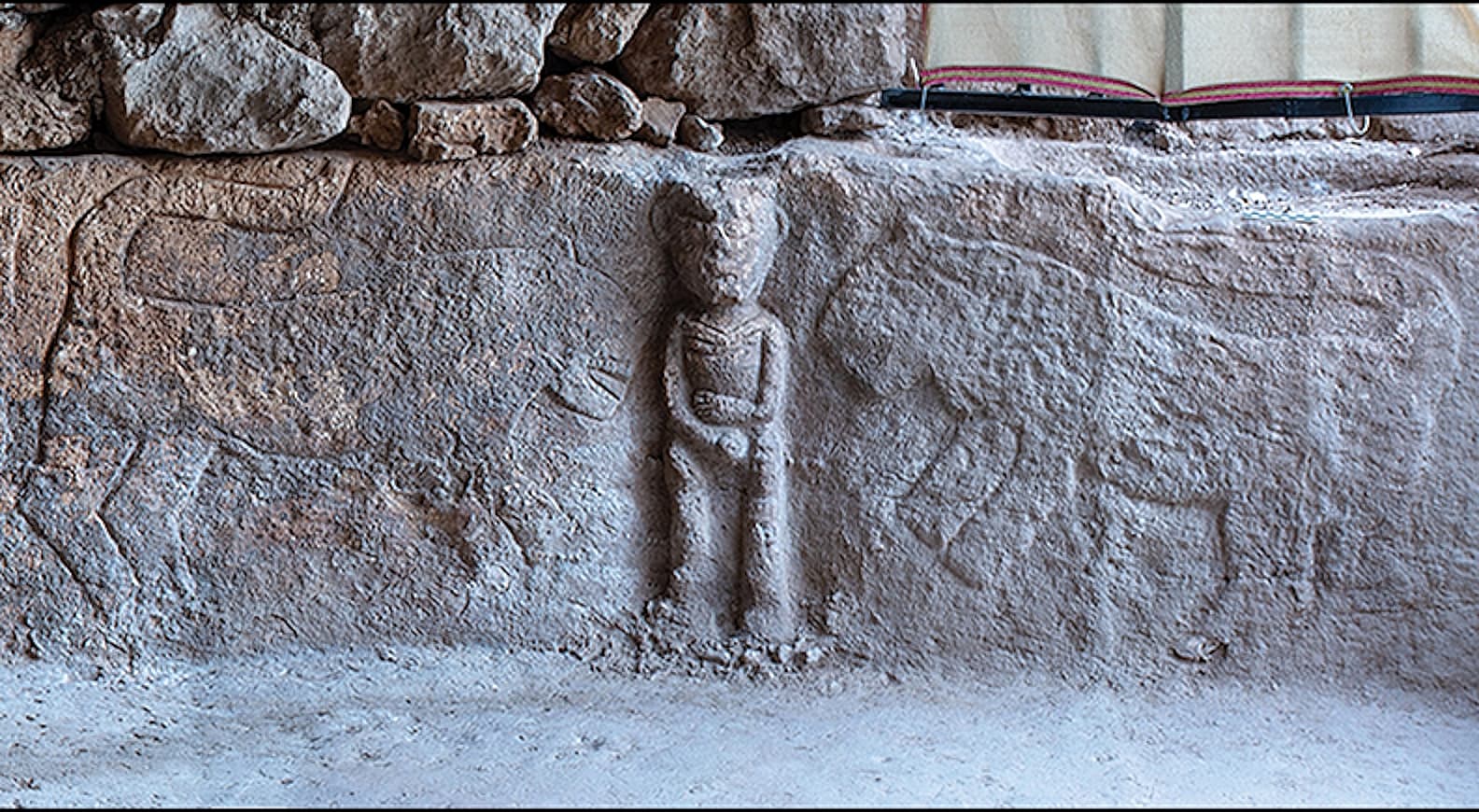
Image of Sayburç. Image source
Visit essentials
A quick read before you go
- Duration
- Allow 2–3 hours for the Sayburç visit with guide; a full-day itinerary combining Sayburç with…
- Access
- Approximately 20 km southwest of Şanlıurfa city center; accessible by car (approximately 30…
Overview
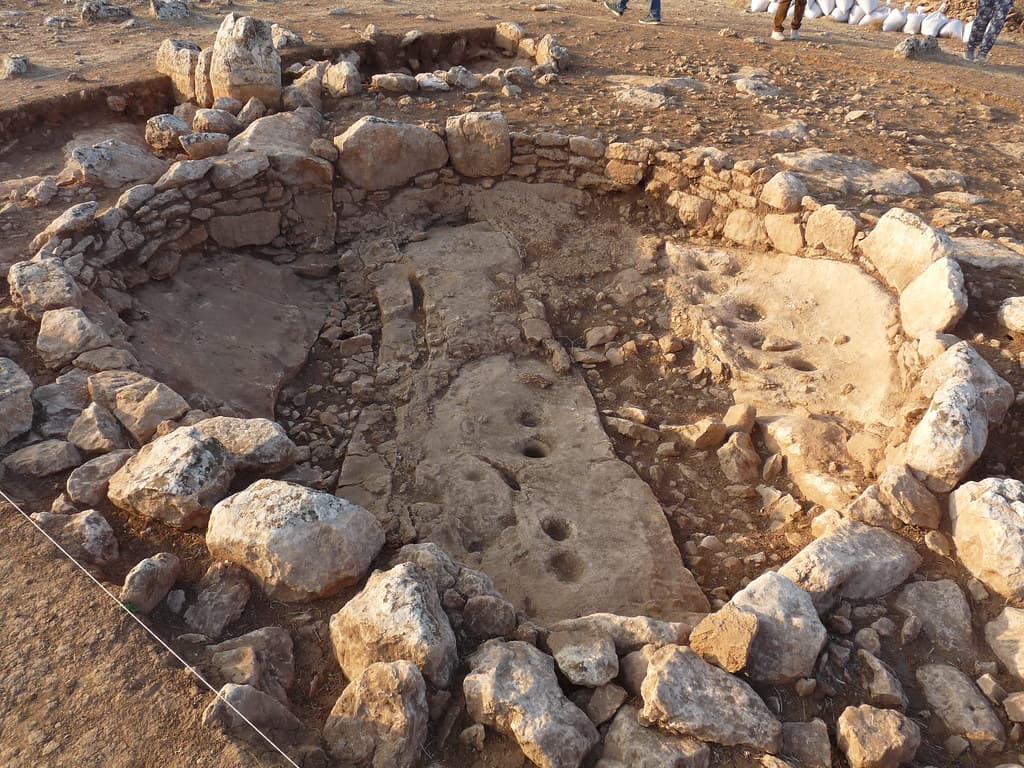
Twenty kilometers southwest of Şanlıurfa, a limestone plateau holds dozens of hills. Most are ordinary erosion; a few preserve the world's earliest monumental culture. Sayburç is a Pre-Pottery Neolithic A site excavated since 2021 through Turkey's Taş Tepeler Project. More than fifty structures have emerged, centered on a large circular communal building partly hewn from bedrock.
Inside, excavators found a 3.7-metre bench relief depicting people with wild animals—leopards, serpent, and bull. Unlike isolated Neolithic symbols, its coherent scenes are sequential and show action. One man holds his genitals in a specific gesture of assertion, not merely fertility symbolism, while two leopards face him. Beside it, another figure stands with a serpent and bull.
This story was carved in a community building in the 9th millennium BCE, at least 7,000 years before writing. It is the first evidence that early humans arranged symbols into narrative sequences, the cognitive basis of mythology, literature, and history. Even when filtered through a guided tour and separated from the carvings by protective barriers, standing where that story was first told is an encounter with something at the root of human meaning-making.
Why this place is sacred
What makes a place thin — permeable between worlds, between times — is sometimes structural and sometimes semantic. Sayburç's thinness is semantic: it is the place where narrative was first committed to stone. Not symbols, not figures in isolation, but a sequence — a before and an after, a figure and an opponent, an event that requires another event to complete it.
When the Cambridge Antiquity paper formally described the Sayburç reliefs as 'the earliest known narrative scene in the world,' the phrase carried a weight that can easily be overlooked. Narrative is how humans organize experience into meaning. Every prayer, every myth, every sacred text is built on the assumption that events can be arranged in a meaningful sequence — that there is a before and an after that matters.
The reliefs at Sayburç are the oldest known evidence of that assumption being given visible form. The figure flanked by leopards — read by researchers as the 'master of animals' motif — is itself an ancient sacred theme: the human who commands wild nature, who stands at the threshold between the domestic and the wild, the controlled and the uncontrollable. This motif recurs across the ancient world, from Mesopotamian cylinder seals to Greek hero myths.
At Sayburç, it is older than all of them. The communal building in which the relief was carved was a gathering space — a place where the community assembled, where shared stories were told or enacted. The story carved in stone for that gathering was about power, wildness, and the relationship between human will and animal force. Twelve thousand years have not made those themes less compelling.
Large circular communal building (~14 metres diameter) with a carved bench — a specialized gathering space separate from but adjacent to domestic dwellings; likely used for communal ceremonies, assembly, or ritualized storytelling
Occupied as a Pre-Pottery Neolithic A community in the 9th millennium BCE; subsequently abandoned and covered by sediment; rediscovered during survey and first excavated from 2021 under the Taş Tepeler Project; a village museum on-site is planned as part of Turkey's expanded Neolithic heritage promotion
Experience and orientation
Sayburç is not yet a polished heritage destination. This is part of its quality. The excavations began in 2021 and are ongoing; the site is still in the process of being understood. Visiting through a Taş Tepeler guided tour — currently the primary means of access — means arriving at a site where the excavation itself is part of what you witness.
The limestone plateau of the Şanlıurfa region has a particular quality in different lights: bleached pale in midday sun, warm and textured in early morning or late afternoon. The site sits within a rolling landscape where the awareness of other Taş Tepeler sites — Göbekli Tepe forty kilometres northeast, Karahantepe fifty kilometres east — creates a cumulative sense of inhabiting a Neolithic ceremonial world rather than visiting a single monument. The central experience at Sayburç is the communal building.
Hewn partly from bedrock, with a long stone bench along its interior, the structure has an intimacy despite its scale — perhaps fourteen metres in diameter, large enough for a significant community gathering but not so large as to feel impersonal. The bench relief runs along this interior wall. Confronting it — the two scenes, the figures in relationship with animals, the compositional intelligence of its arrangement — generates a response that comes before interpretation. The images are expressive.
The figure flanked by leopards communicates something recognizable even without knowing what it means. Spend time looking before reading. Then read. Then look again.
Access is through organized Taş Tepeler tours departing from Şanlıurfa. The site is approximately 20 km southwest of the city center, reachable by car in about 30 minutes. Tours typically include both Sayburç and other Taş Tepeler sites in a combined itinerary; book in advance through Taş Tepeler Travels (tastepelertravels.com) or through Şanlıurfa Museum tour programs.
Context and lineage
Sayburç's structures date to the Pre-Pottery Neolithic A period, with earliest occupation estimated at approximately 10,600 BCE and the main phase in the 9th millennium BCE. The site was built by communities culturally related to those who constructed Göbekli Tepe, Karahantepe, and the other Taş Tepeler sites of the Şanlıurfa Plateau. Excavation began in 2021 under the direction of Bahattin Çelik, working under the supervision of Şanlıurfa Museum as part of the Turkish Ministry of Culture's Taş Tepeler Project.
In 2022, Çelik and colleagues published the discovery of the bench relief in Cambridge's Antiquity journal, formally establishing Sayburç as the site of the world's oldest known narrative scene. More than fifty structures have now been identified, including a mix of domestic buildings and special-purpose communal spaces.
Sayburç belongs to the Pre-Pottery Neolithic A cultural network of the Şanlıurfa Plateau, a landscape that produced the densest concentration of early monumental sites in the world within a fifty-kilometre radius. The site shares architectural conventions (T-shaped pillars, large circular communal buildings) and iconographic themes (human-animal relationships, the 'master of animals' motif) with Göbekli Tepe, Karahantepe, Karahan Tepe, Harbetsuvan Tepesi, and other Taş Tepeler sites. It represents the westernmost confirmed large-scale narrative scene in this network.
Bahattin Çelik
Excavation director; published the formal description of the Sayburç reliefs as the world's earliest narrative scene in Antiquity (2022)
Taş Tepeler Project / Turkish Ministry of Culture
The institutional framework for excavation, which has prioritized the simultaneous excavation and promotion of multiple Pre-Pottery Neolithic sites across the Şanlıurfa region
Pre-Pottery Neolithic A community (c. 9th millennium BCE)
The original builders, culturally connected to the Göbekli Tepe builders; their shared symbolic vocabulary — including T-shaped pillars and human-animal iconography — suggests a network of interrelated communities rather than isolated settlements
Traditions and practice
The communal circular building at the center of Sayburç was a gathering space rather than a domestic dwelling — its scale, its hewn-bedrock construction, and the carved bench with its narrative relief all indicate specialized use. Gatherings in this space likely involved the bench relief as a focal point: the carved scene may have been used as a backdrop for ritual enactment, storytelling, or ceremony.
Communal feasting is documented at other Taş Tepeler sites and was likely practiced here as well. The T-shaped pillars found in the communal structures of Sayburç echo the anthropomorphic pillars of Göbekli Tepe, suggesting a shared iconographic language across the network — possibly a shared mythological world expressed through consistent architectural and sculptural vocabulary.
Excavation is ongoing under the Taş Tepeler Project, with Şanlıurfa Museum overseeing the program. Guided tours through Taş Tepeler Travels offer access to the site during non-restricted periods. A village museum on-site is planned as part of Turkey's heritage promotion strategy for the Neolithic landscape.
If you have time for only one experience at Sayburç, make it this: stand in front of the bench relief for longer than is comfortable. The first minute will be about understanding what you are seeing. The second will be about chronology — twelve thousand years, what does that mean? By the third or fourth minute, something different begins to happen. The figures become less exotic and more familiar. The man flanked by leopards is asserting something.
The arrangement is intentional. Someone made a decision about what to show and how to show it. Let yourself encounter the person who made that decision — not the archaeology, not the cultural horizon, but the specific mind that carved this specific story and placed it where the community would gather. Walk the exterior of the communal building if permitted. The scale of the space — fourteen metres of diameter, hewn partly from rock — is better understood from outside.
Archaeological / Scholarly
ActiveOne of the Taş Tepeler network of Pre-Pottery Neolithic sites in Şanlıurfa; location of the world's earliest known narrative carved scene, published in Cambridge Antiquity in 2022; ongoing excavations revealing the full extent of a 50+ structure settlement
Excavations since 2021 under Bahattin Çelik, supervised by Şanlıurfa Museum; part of the Turkish Ministry of Culture Taş Tepeler Project; guided tours increasingly available through Taş Tepeler Travels
Pre-Pottery Neolithic A Communal Ritual
HistoricalThe communal circular building with its narrative bench relief represents the oldest known purpose-built gathering space used for shared storytelling or ceremony; the iconographic vocabulary shared with Göbekli Tepe and other Taş Tepeler sites suggests a regional ceremonial culture rather than isolated practices
Communal gatherings in large circular buildings hewn from bedrock; carved bench reliefs as focal points for narrative and ceremony; T-shaped pillars as architectural markers of sacred or communal spaces; possible communal feasting
Perspectives and open questions
The Sayburç relief invites fundamentally different readings depending on the interpretive framework brought to it. Each is partial; none is definitive. The scenes are specific enough to invite interpretation and general enough to resist it.
Scholarly perspective
The Cambridge Antiquity paper of 2022 (Çelik et al.) formally established the Sayburç bench relief as the earliest known narrative scene in human history. The paper distinguishes the relief from other contemporaneous symbolic art — including the monumental pillars of Göbekli Tepe — by its narrative coherence: two sequential scenes, each featuring a human figure in active relationship with specific animals.
The 'master of animals' identification for the central figure is well supported by comparative iconography, though the authors note that the precise meaning of the gestures and arrangements is not recoverable from archaeological evidence alone. The site's connection to the Taş Tepeler network is established architecturally (T-shaped pillars, circular communal buildings) and iconographically (shared human-animal themes).
Living and traditional perspectives
No living tradition is directly connected to Sayburç or to the Pre-Pottery Neolithic culture that produced it. The site falls within the territory of modern southeastern Turkey, a region with a Kurdish-majority population whose historical memory does not extend to this prehistoric period. The Taş Tepeler Project has made efforts to integrate the sites into a broader Turkish national heritage narrative.
Alternative interpretations
The 'master of animals' figure has been widely compared to shamanic traditions in which ritual specialists were believed to command animal spirits through ceremony or trance. Some researchers see the Taş Tepeler sites collectively as evidence of an early specialist class — possibly a proto-priestly function — managing communal ritual in settings that were not yet state-level societies but had already developed institutional roles for certain individuals.
The phallus-holding gesture of the central figure at Sayburç has been interpreted variously as a fertility motif, an assertion of masculine dominance over nature, and as a ritual gesture with no direct modern analog.
Open questions
The identity of the central figures remains unknown: are they mythological beings, ritual specialists, revered ancestors, or divine archetypes? The relationship between the two scenes — are they separate events, sequential moments in a single story, or parallel themes? — is still debated. The full extent of the Sayburç settlement, including how many communal buildings it contained and what other relief scenes may remain unexcavated, is yet to be determined.
Plan your visit
Access and arrival
Approximately 20 km southwest of Şanlıurfa city center; accessible by car (approximately 30 minutes on paved roads) or through organized Taş Tepeler tours. Şanlıurfa (GAP Airport, also known as Şanlıurfa-GAP Airport) has connections to Istanbul, Ankara, and other Turkish cities. Guided tours are available through Taş Tepeler Travels (tastepelertravels.com). Mobile signal is generally available in Şanlıurfa city but may be unreliable in the rural plateau area near the site; carry a charged phone and confirm tour logistics before departing.
Şanlıurfa Museum displays finds from Sayburç and other Taş Tepeler sites.
Şanlıurfa offers a full range of accommodation options, from budget guesthouses to mid-range hotels. The city is also the gateway for Göbekli Tepe and other Taş Tepeler sites, making it the natural base for a multi-site visit to the region. Booking accommodation near the old city bazaar area provides walkable access to Şanlıurfa Museum.
Respectful visit
Modest dress appropriate for rural southeastern Turkey; practical footwear for uneven archaeological terrain; sun protection is essential in summer months when temperatures on the exposed plateau can be extreme.
Check with your Taş Tepeler guide before photographing the reliefs; there may be restrictions during active seasons or near specific features. Personal photography of the landscape and architectural context is generally acceptable.
None customary.
Do not touch the bench relief or any carved surfaces. Do not enter restricted excavation areas. Follow all instructions from Taş Tepeler guides, whose authority on access issues should be treated as definitive.
The reliefs are fragile and access is controlled. Do not touch the carved surfaces under any circumstances. Photography restrictions may apply during active excavation periods; follow guide instructions. The site is in a rural area of southeastern Turkey with limited infrastructure — ensure your tour arrangement includes transport from Şanlıurfa.
Location
Map loads as you approach this section.
Pilgrim reflections
A portrait of encounter, not a score
Pilgrims describe what they felt, how present they could become, and whether the place would shape a journey. There are no stars and no ranking of traditions.
No reviewed reflections yet
The first pilgrims can help describe the character of being here.
Share a reflection
Available after an account-backed “Been there.” Every reflection is reviewed before publication.
Nearby sacred places
Explore other sacred places in the region. Proximity does not establish access or travel time; check each place’s guidance.


References
Sources consulted for this page. Source categories describe the publication, not a guarantee that every claim is verified. Traditional accounts and outside interpretations may differ.
- 01The Sayburç reliefs: a narrative scene from the Neolithic — Çelik, Bahattin et al.academicPeer-reviewed Cambridge Antiquity paper formally describing the reliefs as the earliest known narrative scene
- 02The Sayburç reliefs: a narrative scene from the Neolithic (PDF) — Çelik, Bahattin et al.academicOpen-access version of the Antiquity paper
- 03Sayburç - Taş Tepeler Official Site — Taş Tepeler ProjectofficialOfficial Turkish Ministry of Culture Taş Tepeler project page for the site
- 04Sayburç - Wikipedia — Wikipedia contributorsencyclopediaOverview of site, reliefs, and excavation context
- 05Sayburç Excavations Reveal 12,600-Year-Old Neolithic Settlement with Over 50 Structures — Anatolian ArchaeologySource contextRecent excavation news detailing settlement scale and T-pillars
- 06Sayburç to Feature a Village Museum Showcasing Neolithic Heritage and Urfa's Living Culture — Anatolian ArchaeologyofficialPlans for on-site village museum
- 07Discovering a New Neolithic World - Archaeology Magazine — Archaeology MagazineacademicFeature article placing Sayburç within the broader Taş Tepeler discovery context
- 0810 Questions About Sayburç — Stone MoundsguideQ&A format site guide for visitors
- 09Mysterious T-Shaped Pillars and 50 Neolithic Structures Found in Sayburç — ArkeonewsSource contextNews coverage of T-pillar discovery and expanded structural footprint
Share a photo
Help visitors recognize Sayburç. Every submission is reviewed before publication.